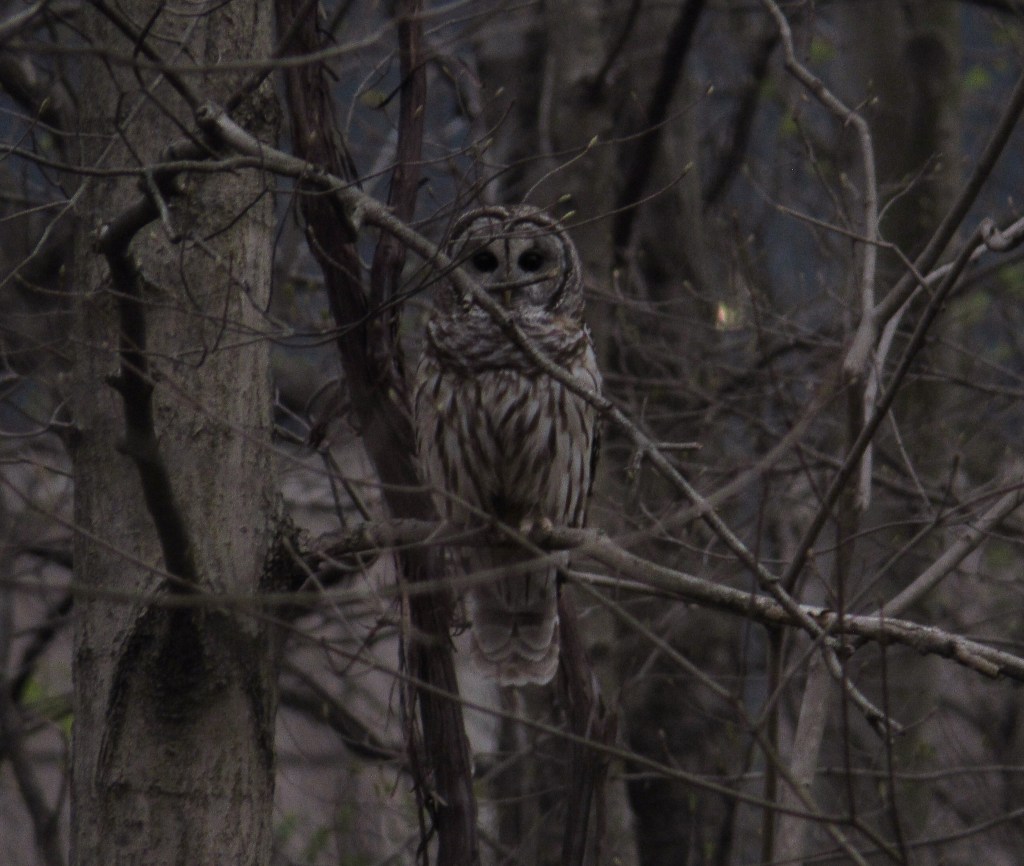
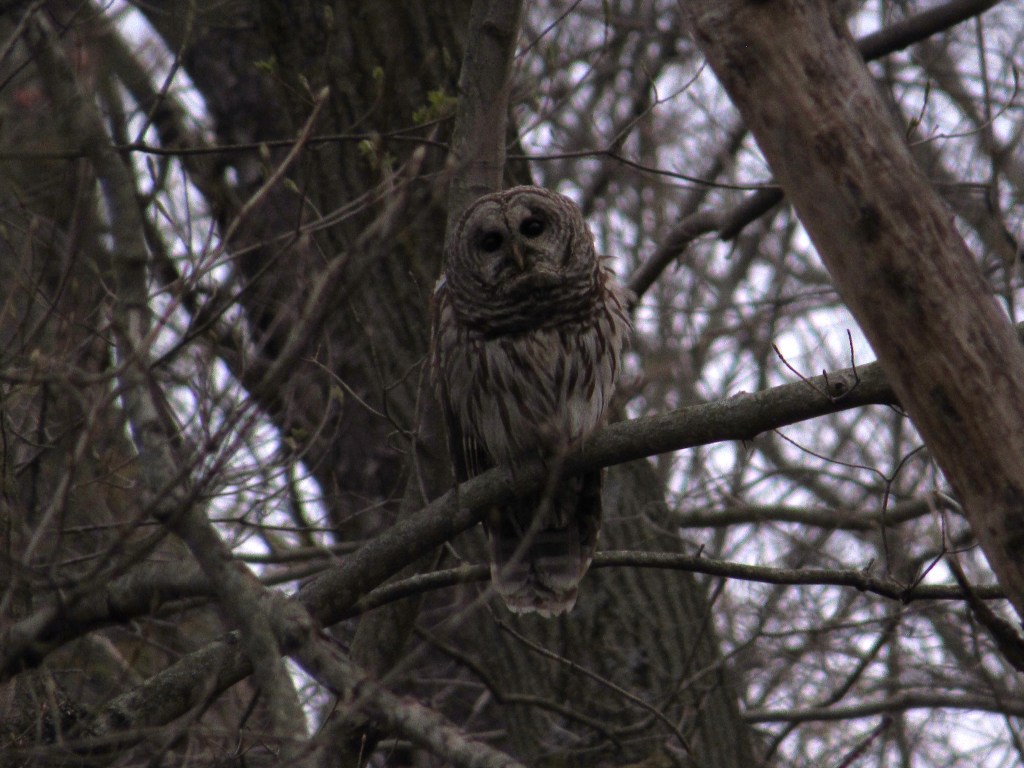
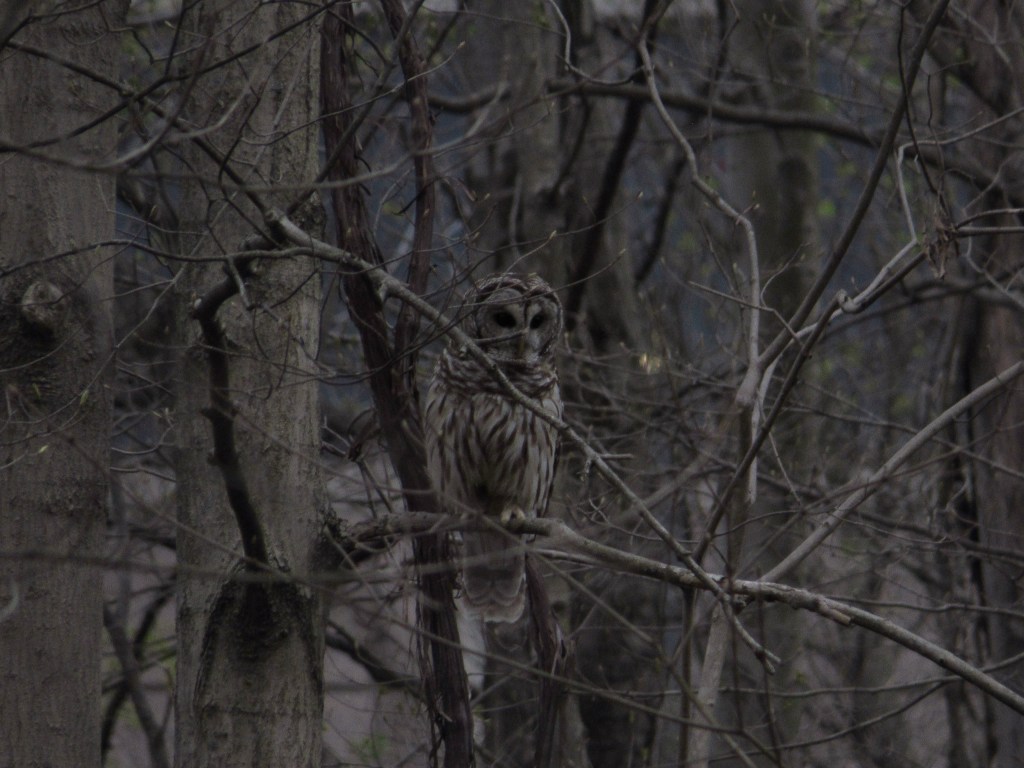

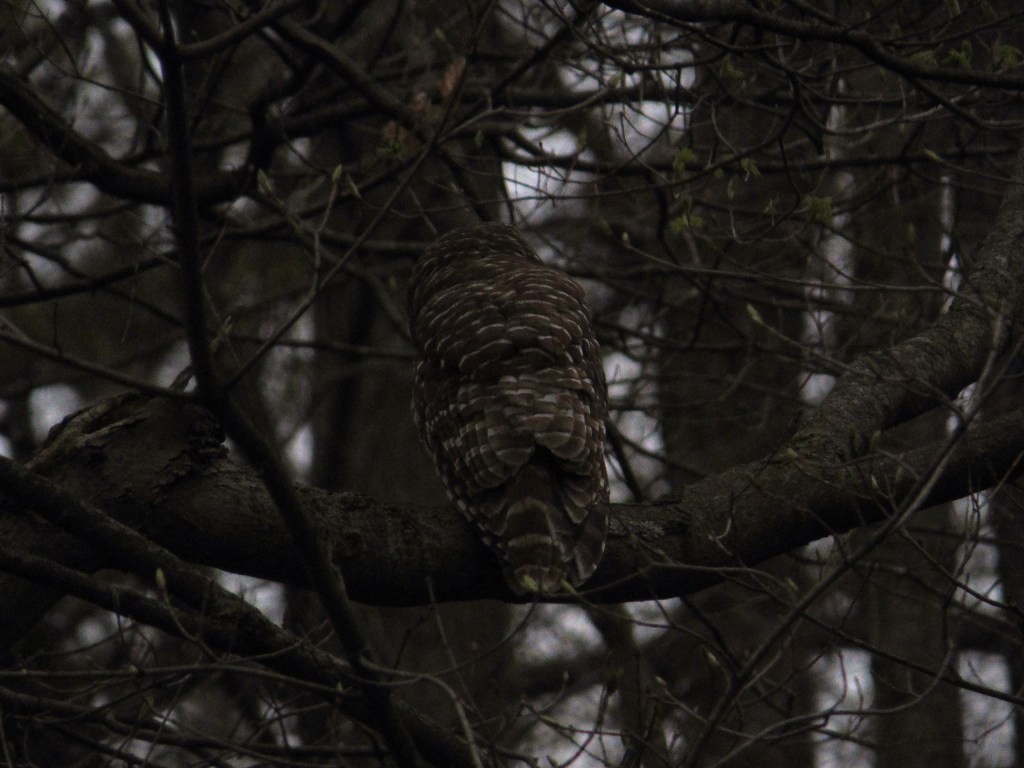
The Barred Owl (Strix varia), also known as the hoot owl due to its distinctive call, is a medium-sized owl native to North America. Here’s a deep dive into this fascinating bird:
Physical Characteristics
Barred Owls are easily recognizable by their mottled brown and white plumage, which provides excellent camouflage in the forests they inhabit. They have striking dark brown eyes, unlike most other North American owls that have yellow eyes. They have a rounded head with no ear tufts, and their faces are framed with concentric rings of feathers. Adults typically weigh between 1 to 2.5 pounds, with a wingspan of around 40 to 50 inches.
Habitat
Barred Owls are primarily forest dwellers, preferring old-growth forests with a mix of large trees and wetlands. They are found across a wide range of habitats, including deciduous and coniferous forests, swamps, and river bottoms. They are particularly drawn to areas with dense tree cover and water sources like ponds, marshes, and streams.
Range and Migration Patterns
Barred Owls have a broad range that spans much of eastern and central North America, from the eastern United States and southern Canada all the way to Florida and Texas. Their range has been expanding westward in recent decades, particularly into the Pacific Northwest, where they now overlap with the endangered Spotted Owl (Strix occidentalis). Unlike many birds, Barred Owls are non-migratory. They are year-round residents of their chosen territories, although some northern populations may move slightly southward during extremely harsh winters.
The westward expansion of Barred Owls has been one of the most notable changes in their range in recent history. They began spreading into the Pacific Northwest in the early 1900s, aided by human activities such as deforestation and habitat changes, which created corridors for them to move into new areas. Their presence in the Pacific Northwest has led to increased competition with the smaller and more sensitive Spotted Owl.
Diet and Hunting
Barred Owls are carnivorous and have a varied diet, which includes small mammals (such as squirrels, rabbits, and voles), birds, amphibians, reptiles, and even insects and fish. They are opportunistic hunters and will adapt their diet to what is available in their environment. Barred Owls typically hunt at night, relying on their excellent vision and hearing to locate prey. Their flight is almost completely silent, allowing them to sneak up on their prey undetected.
Behavior
Barred Owls are primarily nocturnal, becoming active at dusk. However, they can sometimes be seen hunting during the day, especially in winter when food is scarcer. These owls are territorial and will defend their nesting sites aggressively, even against larger predators.
One of the most famous characteristics of the Barred Owl is its distinctive hooting call. Their call is often described as sounding like “Who cooks for you? Who cooks for you all?” This rhythmic hooting can be heard from great distances and is often exchanged between pairs or neighboring owls.
Breeding and Nesting
Barred Owls begin breeding in early spring. They prefer to nest in tree cavities but will also use old nests of other large birds, such as hawks or crows, or even artificial nest boxes. Both the male and female participate in selecting a nesting site, but the female does the majority of the incubation. A typical clutch consists of 2-4 eggs, which hatch after about 28 to 33 days. The young owls, called owlets, fledge about four to five weeks after hatching but remain dependent on their parents for several months.
Barred Owls typically mate for life, and pairs will remain in the same territory for many years, returning to the same nesting sites annually.
Fun Facts about Barred Owls
Excellent Camouflage: Their streaked and barred plumage makes them blend seamlessly into the trees, providing protection from predators. Silent Flight: Barred Owls, like other owls, have specialized feathers that allow for near-silent flight, making them stealthy hunters.
Calls and Vocalizations: In addition to their iconic hooting, Barred Owls can make a variety of sounds, including screams, cackles, and even a wild monkey-like caterwaul during mating season.
Interspecies Competition: Barred Owls have been known to compete with Spotted Owls, sometimes even hybridizing with them, leading to concerns for the Spotted Owl’s survival in some regions.
Nocturnal and Diurnal Activity: While primarily nocturnal, Barred Owls are occasionally active during the day, especially when raising young or during the winter when prey is scarce.
Low Movement: They tend to stay within a small home range, usually around 1 to 3 square miles, for most of their lives unless forced to move due to environmental changes or food scarcity.
Conservation Status
Barred Owls are classified as “Least Concern” by the International Union for Conservation of Nature (IUCN), as their populations are stable and they are found in a wide range of habitats. Their adaptability to different environments has helped them thrive in both urban and rural areas. However, their expansion into the western U.S. has led to conservation concerns for the Spotted Owl, which is already endangered.
In summary, Barred Owls are remarkable birds that have adapted well to a variety of habitats, have a fascinating array of vocalizations, and play an important role in their ecosystems.
 Wild Bird Journal
Leave a comment