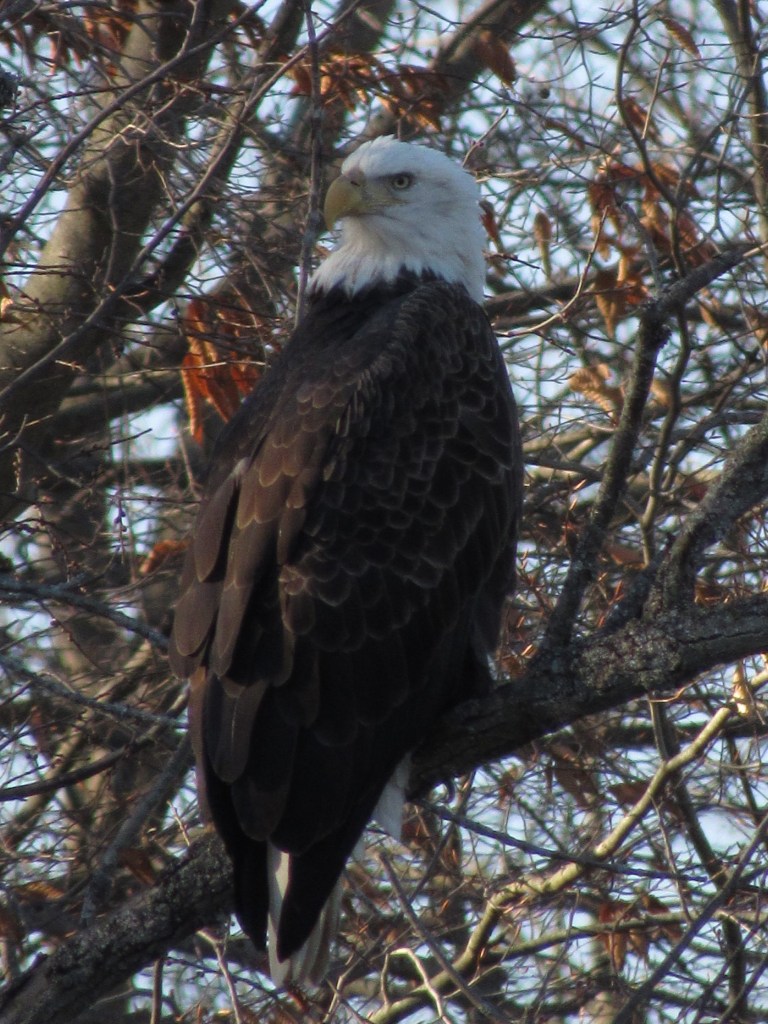

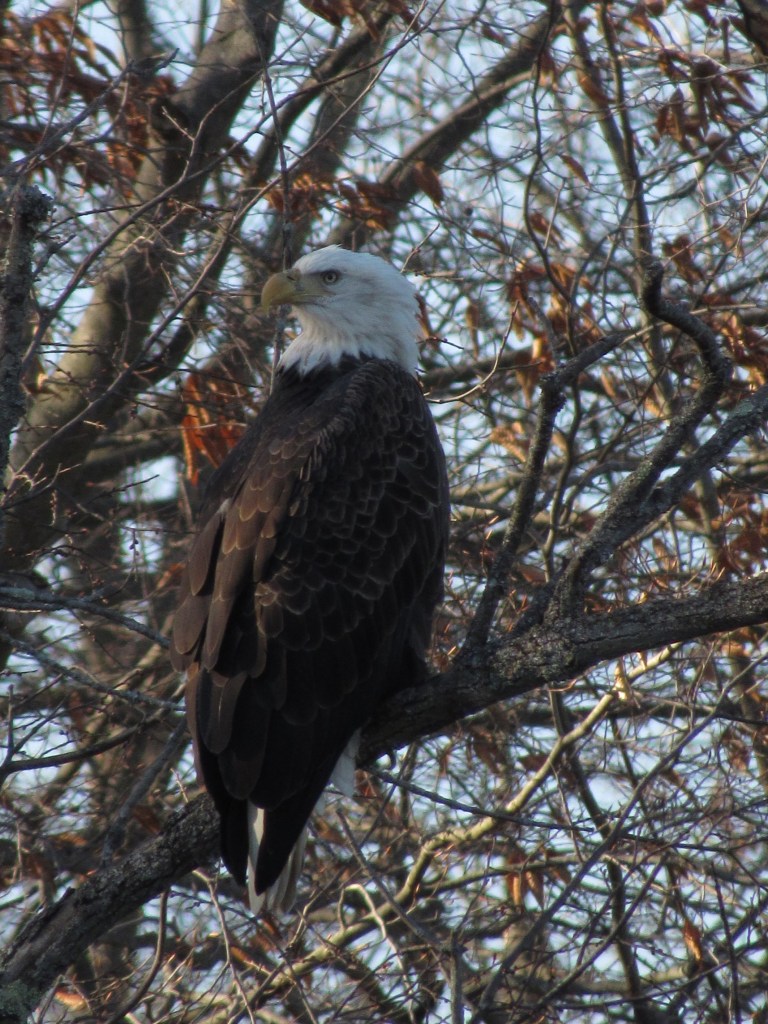

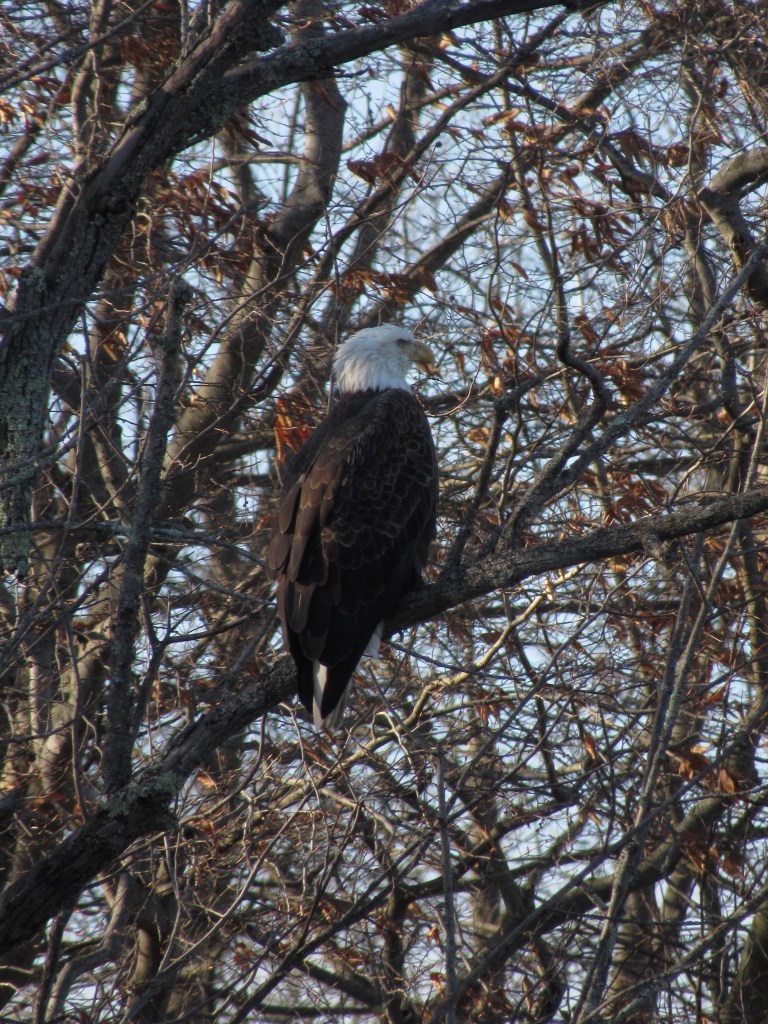
The Bald Eagle (Haliaeetus leucocephalus) is a majestic bird of prey and the national bird of the United States. It is easily recognized by its white head and tail, dark brown body, and yellow beak. Despite the name, bald eagles are not actually bald; the term “bald” comes from an old English word “balde,” meaning white. Here’s a comprehensive look at the bald eagle, including some interesting facts and details on its migration patterns.
Physical Characteristics
Size: Bald eagles are large birds, with a wingspan ranging from 6 to 7.5 feet (1.8 to 2.3 meters) and weighing between 6.6 to 13.9 pounds (3 to 6.3 kg), with females typically larger than males.
Lifespan: They can live up to 20-30 years in the wild, and even longer in captivity. Vision: Bald eagles have incredibly sharp eyesight, which allows them to spot prey from great distances. Their vision is about four to eight times better than that of a human.
Beak and Talons: Their beak is strong and hooked, perfect for tearing into prey, while their talons are sharp and powerful, making them excellent hunters.
Habitat and Range
Bald eagles are found mainly in North America, particularly near large bodies of open water like lakes, rivers, and coastal regions where food is abundant. They prefer areas with plenty of fish, which makes up the majority of their diet, though they are opportunistic and will also eat birds, mammals, and carrion.
Their range extends across much of Canada, the United States, and northern Mexico. Alaska has the largest population of bald eagles, followed by Florida, where they thrive in subtropical environments.
Fun Facts
Symbol of Freedom: The bald eagle has been the national bird of the United States since 1782, symbolizing strength, courage, and freedom.
Not Really Bald: As mentioned, the name comes from “piebald,” which means marked with white, referring to the white feathers on its head.
Huge Nests: Bald eagles build enormous nests, often called aeries. These nests can be as large as 13 feet deep and 8 feet wide, and can weigh up to a ton! They are usually constructed high in trees or cliffs near water. Monogamous for Life: Bald eagles are generally monogamous, meaning they mate with the same partner for life. They only find a new mate if their original mate dies.
Impressive Flight: Bald eagles are powerful fliers, reaching speeds of 35-43 mph (56-70 km/h) when gliding and even faster when diving (up to 100 mph or 160 km/h). Eagle Dance: During courtship, bald eagles often perform dramatic aerial displays. This includes locking talons and free-falling, breaking apart just before hitting the ground.
Recovery from Near Extinction: Bald eagles were once listed as an endangered species in the United States, primarily due to habitat destruction and the use of DDT, a harmful pesticide. Conservation efforts, including banning DDT and protecting eagle habitats, have helped the species recover, and they were removed from the endangered list in 2007.
Feather Care: Bald eagles spend a lot of time preening and taking care of their feathers. This is essential for keeping them in good shape for flight and insulation.
Diet
Bald eagles primarily eat fish, such as salmon, herring, and trout. They are skilled hunters but will also scavenge for food. In addition to fish, they eat small mammals like rabbits and raccoons, waterfowl like ducks, and sometimes carrion (dead animals).
Migration Patterns
Not all bald eagles migrate. Migration patterns depend on where they live and their access to food:
Northern Bald Eagles: Eagles that live in northern regions (like Canada or Alaska) typically migrate south during the winter when their primary food sources (fish) become scarce due to frozen lakes and rivers. They may travel thousands of miles to warmer regions in the southern U.S. or even northern Mexico, where water remains unfrozen and food is available.
Partial Migration: In contrast, eagles living in the southern U.S. or coastal regions where water does not freeze often do not migrate at all, or they may only migrate short distances in search of food. Timing: Migration usually begins in the fall (late August to early December) and lasts until the spring (March to May). Eagles return to their breeding territories as ice begins to thaw, providing access to fish once again.
Youth Migration: Juvenile bald eagles, those under five years old, typically migrate farther than adults. They may travel up to 1,500 miles away from their nesting areas before returning. Once they reach adulthood, they establish a territory and migrate shorter distances.
Concentration Areas: During migration, bald eagles are often seen in large numbers at certain key locations. One famous spot is the Chilkat Bald Eagle Preserve in Alaska, where as many as 4,000 bald eagles congregate in late fall and early winter to feed on salmon.
Conservation Status
Bald eagles are a conservation success story. Due to widespread conservation efforts, they were removed from the U.S. Endangered Species list in 2007. They are now considered a species of “Least Concern” by the International Union for Conservation of Nature (IUCN), though continued efforts are needed to protect their habitats, particularly from development and pollution.
Cultural Significance
The bald eagle holds a special place in Native American cultures. Many tribes regard the eagle as a sacred animal, symbolizing strength, wisdom, and spiritual connection. Its feathers are often used in ceremonies and traditional regalia.
In conclusion, the bald eagle is not only a symbol of strength and freedom in the United States but also an incredible bird with fascinating habits, impressive physical abilities, and important ecological roles.
 Wild Bird Journal
Leave a comment