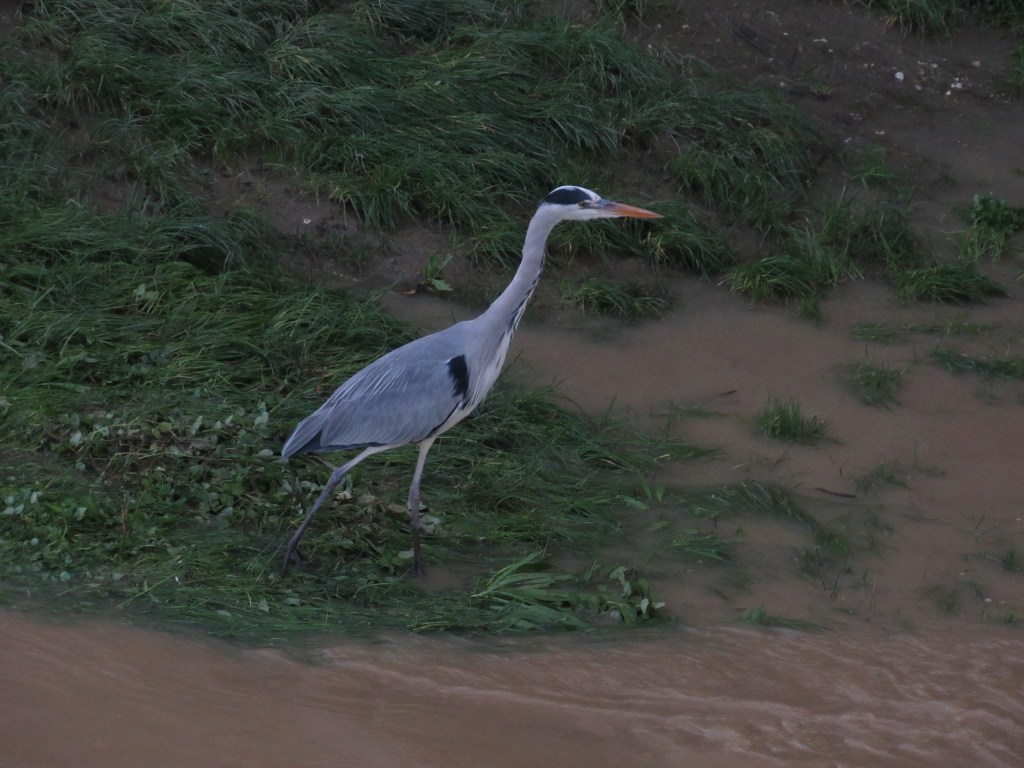
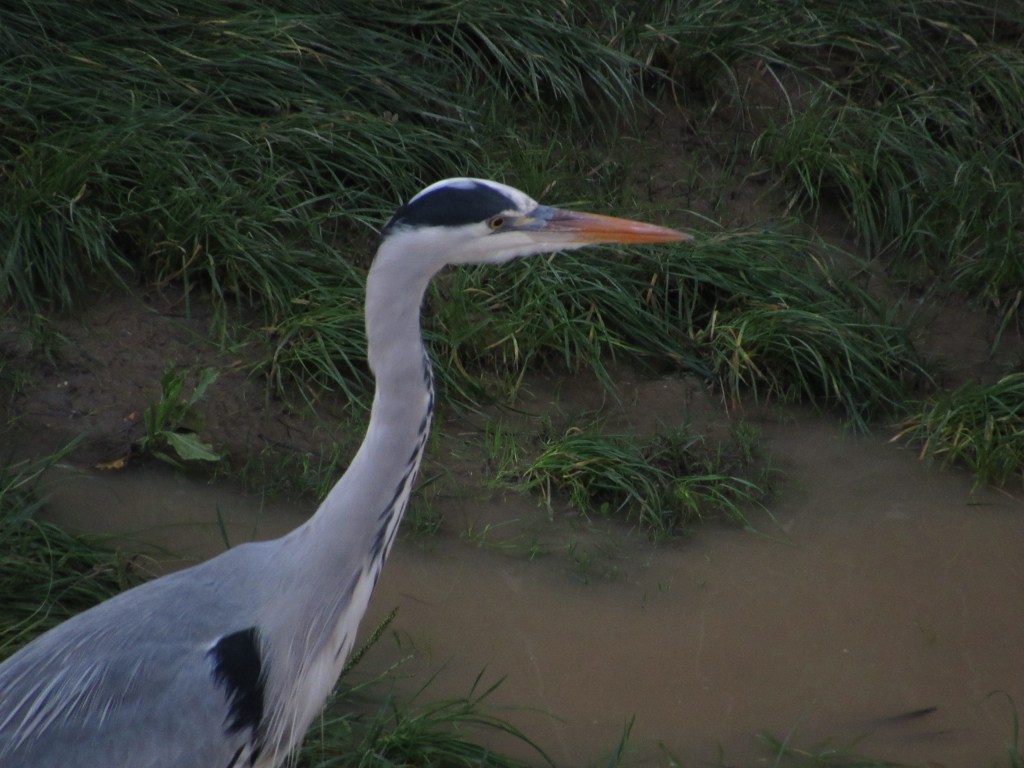

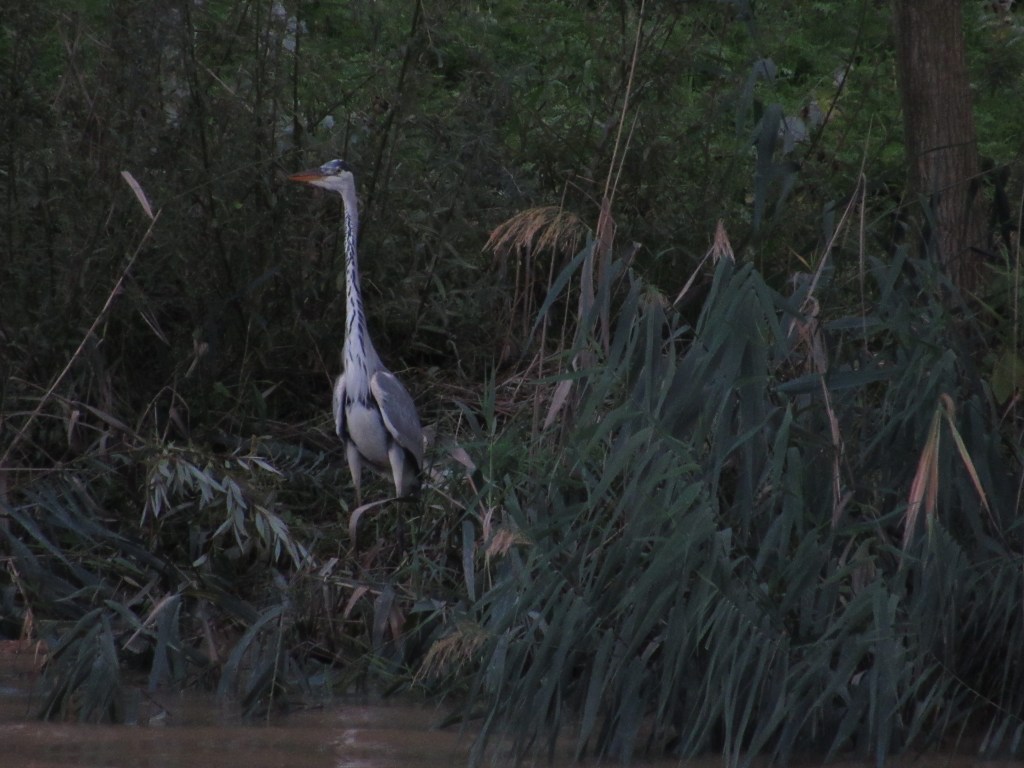
The Gray Heron (Ardea cinerea) is a large wading bird of the heron family, widely distributed across Europe, Asia, and parts of Africa. This bird is often found near water sources like rivers, lakes, ponds, marshes, and even coastal areas, where it feeds primarily on fish, amphibians, small mammals, and insects. It is recognizable by its tall, slender stature, long neck, and sharp beak, with distinctive gray plumage on its back, wings, and flanks, while the underside is white. The Gray Heron is one of the most common and widespread herons in its range.
Physical Description
Size: They can stand over 1 meter (about 3 feet) tall, with a wingspan of around 155-195 cm (about 5-6.5 feet).
Plumage: Adults have gray upperparts and white underparts. Their head is white with a distinctive black streak running from the eye down the neck. The legs and beak are yellowish in color. Beak and Legs: In breeding season, their beaks can turn a more vibrant orange and the legs take on a reddish tint.
Flight: When in flight, they retract their necks into an S-shape, which is typical of herons and distinguishes them from other long-necked birds like cranes or storks.
Habitat and Behavior
Gray Herons are typically solitary feeders, often seen wading slowly or standing still in shallow water, waiting for prey to come within reach. Their hunting technique is highly effective; they can stand motionless for long periods before striking with lightning speed to spear a fish or other prey with their sharp bill.
Diet
They are opportunistic feeders, with a diet consisting mainly of
Fish: Small to medium-sized fish form the bulk of their diet. Amphibians: Frogs and newts are common prey. Invertebrates: They also eat insects, worms, and crustaceans. Small Mammals and Birds: Occasionally, they will hunt small mammals like voles and small birds.
Breeding
Gray Herons nest in colonies known as heronries, usually in trees near water. The nests are large, made of sticks, and often reused year after year. A typical clutch contains 3 to 5 eggs, which are pale blue. Both parents take turns incubating the eggs and feeding the chicks after they hatch.
Migration Patterns
Gray Herons show varied migratory behavior depending on where they live. Generally, birds in northern parts of Europe and Asia tend to migrate to warmer regions during the winter, while those in more temperate or southern regions tend to be sedentary or exhibit only short-distance movements.
European Populations: Herons from northern and eastern Europe migrate south to spend the winter in southern Europe, North Africa, and parts of the Middle East.
Asian Populations: Herons from colder parts of Asia migrate south to tropical parts of Asia, like India, Southeast Asia, and southern China.
African Populations: Most populations in Africa are non-migratory but may show some local movements depending on water availability.
Fun Facts
Patience in Hunting: Gray Herons are masters of patience, often standing still for minutes or even hours before striking at prey.
Distinct Flight: Their S-shaped neck in flight is characteristic of the heron family and makes them easy to identify. Symbolism in Culture: In some cultures, herons are symbols of patience, wisdom, and tranquility due to their calm and deliberate movements.
Flexible Diet: While fish make up most of their diet, they are known to eat small mammals, birds, and even other herons’ eggs on occasion. Long Lifespan: The Gray Heron can live up to 25 years in the wild, though many do not survive their first year due to predation and harsh conditions.
Vocalization
Gray Herons are not very vocal, but during flight or in their colonies, they produce harsh croaking sounds, especially when disturbed. They often emit a loud “fraaank” or “kraark” sound.
Adaptability
They are highly adaptable birds, capable of thriving in a range of environments, from urban parks to remote wetlands. Gray Herons have even been known to hunt in garden ponds, much to the dismay of pond owners.
Threats
Despite being widespread, Gray Herons face threats from habitat loss due to wetland drainage, pollution, and human disturbance at nesting sites. However, conservation efforts, particularly those focused on wetland preservation, have helped maintain healthy populations in many regions.
The Gray Heron, with its graceful movements and efficient hunting techniques, is a striking and fascinating bird that plays a vital role in the ecosystems where it resides.
 Wild Bird Journal
Leave a comment