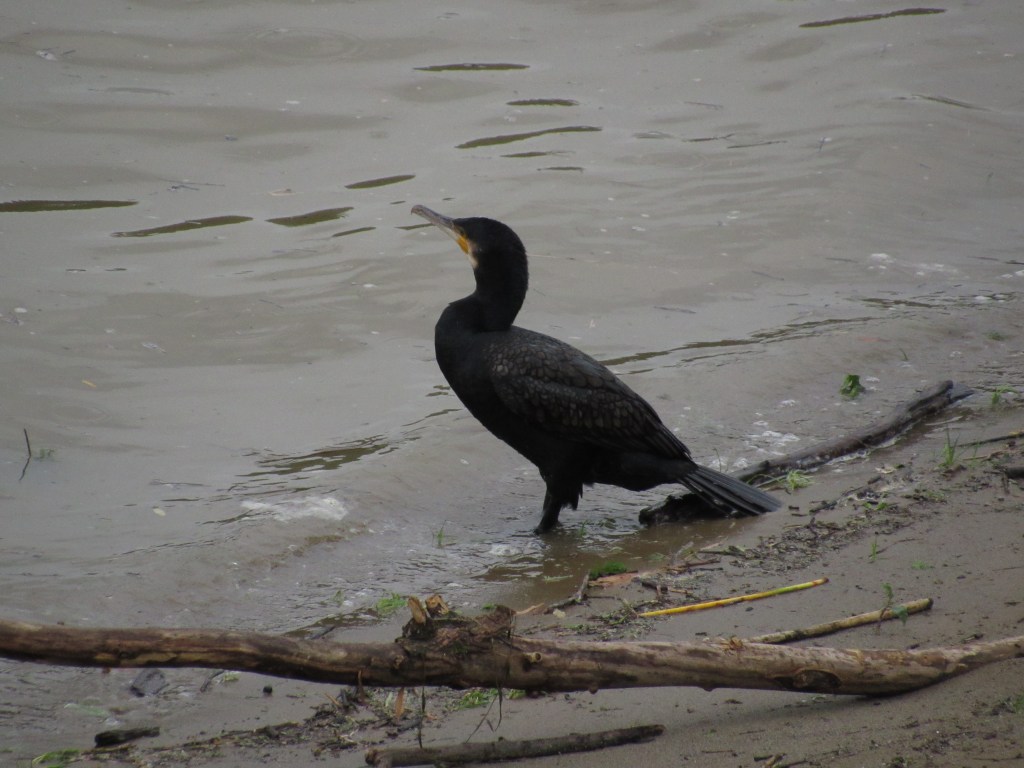

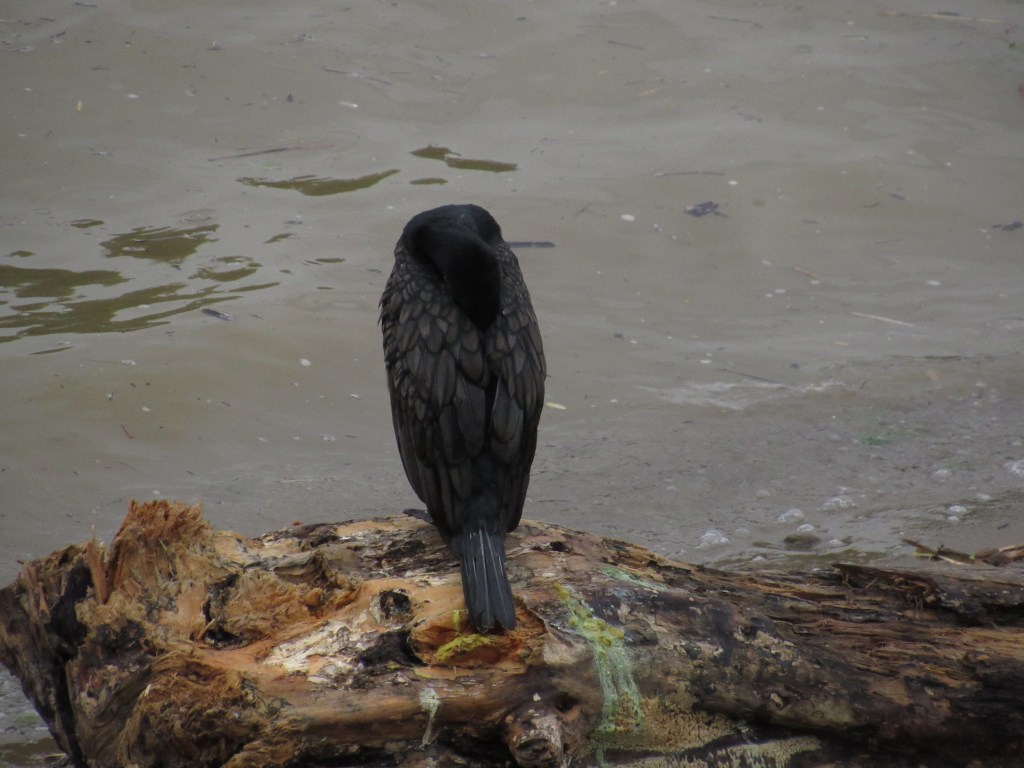

The Great Cormorant (Phalacrocorax carbo) is a large water bird commonly found along coasts and inland waters across much of the world. It is one of the most widespread members of the cormorant family and is known for its striking black plumage, long neck, and sharp beak. Here’s a comprehensive overview of the species, including its physical characteristics, behavior, diet, and migration patterns, along with some fun facts!
Physical Characteristics
Size: The Great Cormorant can grow up to 70–100 cm (27–39 inches) in length, with a wingspan of 120–160 cm (47–63 inches). Males are slightly larger than females. Plumage: Adult cormorants are black with a greenish or bronze sheen, and in the breeding season, they develop white patches on their thighs and face. Juveniles are brown with lighter underparts. Beak: Their long, hook-tipped beak is excellent for catching slippery fish.
Habitat and Range
Great Cormorants are highly adaptable birds, inhabiting both freshwater and marine environments. They can be found on lakes, rivers, coastal waters, and estuaries. These birds are common in Europe, Asia, Africa, North America (on the East Coast), Australia, and parts of New Zealand. They often nest in colonies on cliffs, trees, or even man-made structures like bridges.
Behavior and Diet
Diet: The Great Cormorant primarily feeds on fish. It is a skillful diver, capable of plunging underwater to catch fish with its powerful beak. It can dive up to 6 meters (20 feet) or more and stay underwater for around 30–70 seconds. It also feeds on amphibians, crustaceans, and other small aquatic creatures. Fishing Techniques: They dive into the water using their feet for propulsion and can pursue prey with remarkable agility. After a successful dive, you might see them spreading their wings wide open to dry them, as their feathers are not fully waterproof. Social Behavior: Great Cormorants are social birds, often forming large colonies, especially during breeding. However, they can be territorial when it comes to their feeding grounds.
Migration Patterns
The Great Cormorant’s migration habits vary greatly depending on the region. Some populations are migratory, while others are resident.
Europe: Northern European populations of Great Cormorants are migratory. In colder months, they typically move south toward Mediterranean regions, including Spain, Italy, and parts of Africa. They may also winter along the coasts of the North Sea, where milder conditions persist. Asia: Cormorants in Central Asia and Siberia often migrate south to escape harsh winters, heading towards southern Asia, including India and Southeast Asia. North America: In North America, the subspecies Phalacrocorax carbo carbo is found along the Atlantic coast from Canada to the northeastern U.S. During winter, they tend to move southward, though they do not usually migrate far.
Breeding
Nesting: Great Cormorants are colony nesters, often choosing cliffs, trees, or structures near water. Nests are typically made of sticks and seaweed. Incubation: The female lays 3–5 eggs, and both parents take turns incubating the eggs for about a month. The chicks are born naked and helpless, depending on their parents for food. Fledging: After around 7 weeks, the chicks are ready to fledge, although they continue to be fed by the parents for some time after leaving the nest.
Fun Facts
Wing-Drying Behavior: One of the Great Cormorant’s most famous behaviors is its characteristic pose of spreading its wings after a dive. Since their feathers are not fully waterproof, this helps them dry off more efficiently.
Name Origin: The word “cormorant” comes from the Latin words corvus (crow) and marinus (of the sea), meaning “sea crow.” Fishermen’s Helpers: In some parts of Asia, particularly in China and Japan, Great Cormorants have been used by fishermen to catch fish. A ring is tied around the bird’s neck to prevent it from swallowing the fish, which it then brings back to the fisherman.
Diving Abilities: They are expert divers, capable of staying underwater for extended periods, making them highly efficient fish hunters. Some have been recorded diving to depths of up to 45 meters (150 feet), though they generally dive much shallower.
Long Lifespan: In the wild, the Great Cormorant can live for over 20 years. The oldest recorded individual was over 23 years old.
Conservation
In some regions, the Great Cormorant is considered a pest because of its impact on fisheries. However, their populations are generally stable and even increasing in some areas due to conservation efforts. They are not currently considered endangered.
The adaptability of the Great Cormorant to different environments and its impressive fishing skills have made it a successful and widespread species across the globe!


 Wild Bird Journal
Leave a comment