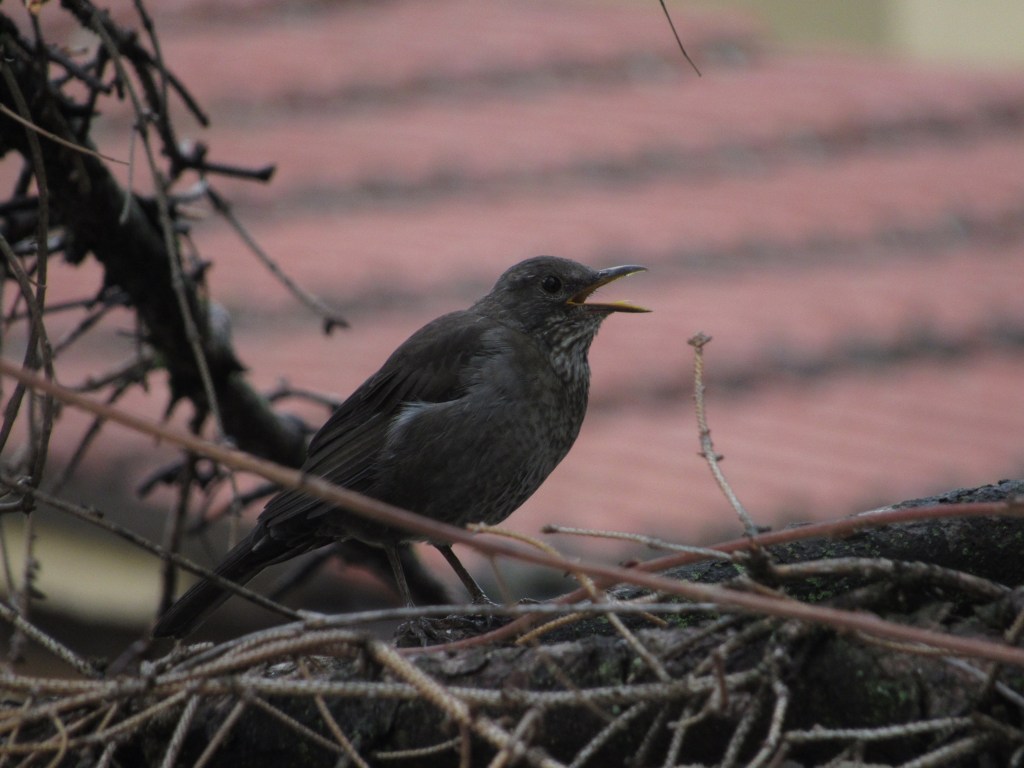

The female Eurasian Blackbird (Turdus merula), a common sight across Europe, Asia, and North Africa, is known for its characteristic brown plumage and sweet, melodic songs. Unlike the male, which is jet black with a bright yellow-orange beak and eye-ring, the female is generally brown with a duller beak, which may sometimes have an orange tint. The underparts of the female are streaked or mottled with darker brown, giving her a slightly speckled appearance.
Identification
- Size: The Eurasian blackbird is around 24–25 cm in length with a wingspan of 34–38 cm.
- Coloration: As mentioned, females are brown with streaked underbellies and darker wings. Their legs are also brown, and their eyes often lack the striking yellow eye-ring seen in males.
- Song: The blackbird’s song is a rich, fluty warble, especially prominent during the breeding season. Females also produce quieter, shorter calls, often in response to the calls of males or to communicate with chicks.

Habitat
Female blackbirds are versatile and can be found in a wide range of habitats, from dense forests to urban gardens and parks. They are typically ground feeders, hopping across lawns and leaf litter in search of insects, worms, berries, and fruits. This adaptability has helped them thrive in both rural and urban settings.

Fun Facts
- Good Moms: Female Eurasian blackbirds are attentive mothers. They build nests using grasses, mud, and other plant materials in secluded areas like bushes, trees, or even urban ledges. They usually lay 3-5 eggs, which they incubate for about two weeks before the chicks hatch.
- Song Learning: While male blackbirds are known for their song, female blackbirds also participate in communication, though they are generally quieter. Males often sing from rooftops and trees to establish territory and attract mates.
- Distinctive Behavior: Blackbirds, both male and female, exhibit a behavior called “anting,” where they allow ants to crawl over their feathers. The ants release formic acid, which helps blackbirds keep their plumage free from parasites.
- Urban Adapters: Female blackbirds are particularly successful in urban environments due to their flexible diet and ability to make nests in a wide range of locations. Some urban populations have even shifted their behaviors, such as altering their feeding times and adjusting their songs to combat noise pollution.

Migration Patterns
Migration in the Eurasian blackbird varies significantly depending on their geographical location:
- Northern Populations: In northern regions like Scandinavia and Russia, female blackbirds (along with males) are partially migratory. As winter approaches, they move southward to escape the colder climates, often traveling to milder areas in Western and Southern Europe. These migrations can be short or long distances depending on the severity of the winter weather.
- Central and Southern Populations: Blackbirds in more temperate regions, such as the UK, France, or southern parts of Europe, tend to be sedentary. However, in particularly cold winters, even these populations may make short migrations to warmer regions or urban areas where food is more readily available.
- Sex Differences in Migration: In some populations, female blackbirds are more likely to migrate than males, especially in harsh winters. Males tend to remain in their territories to defend them through the winter, even at the risk of food scarcity.
- Irruptive Movements: Occasionally, female blackbirds will engage in irruptive movements, where large numbers suddenly migrate due to food shortages or extreme weather. This can happen after particularly harsh breeding seasons when resources are low.
Breeding and Nesting
Female Eurasian blackbirds typically breed between March and July. After mating, the female constructs a nest, usually low to the ground, in dense shrubs or trees. She is responsible for incubating the eggs, while the male may help by bringing food. After about 12-14 days, the eggs hatch, and the female continues to care for the chicks, feeding them a diet of insects and worms for another two weeks until they fledge. In urban settings, these birds can sometimes have multiple broods per season due to the abundance of food.
Conservation
Eurasian blackbirds, including females, are not currently considered at risk. They are classified as a species of “Least Concern” by the IUCN, and their populations remain stable or even increasing in urban areas. Their adaptability to various habitats, from forests to city gardens, has allowed them to thrive across their range. However, like many bird species, they can be affected by habitat loss, pollution, and changes in climate, particularly in areas where food sources are altered or where migration patterns may be disrupted.


 Wild Bird Journal
Leave a comment