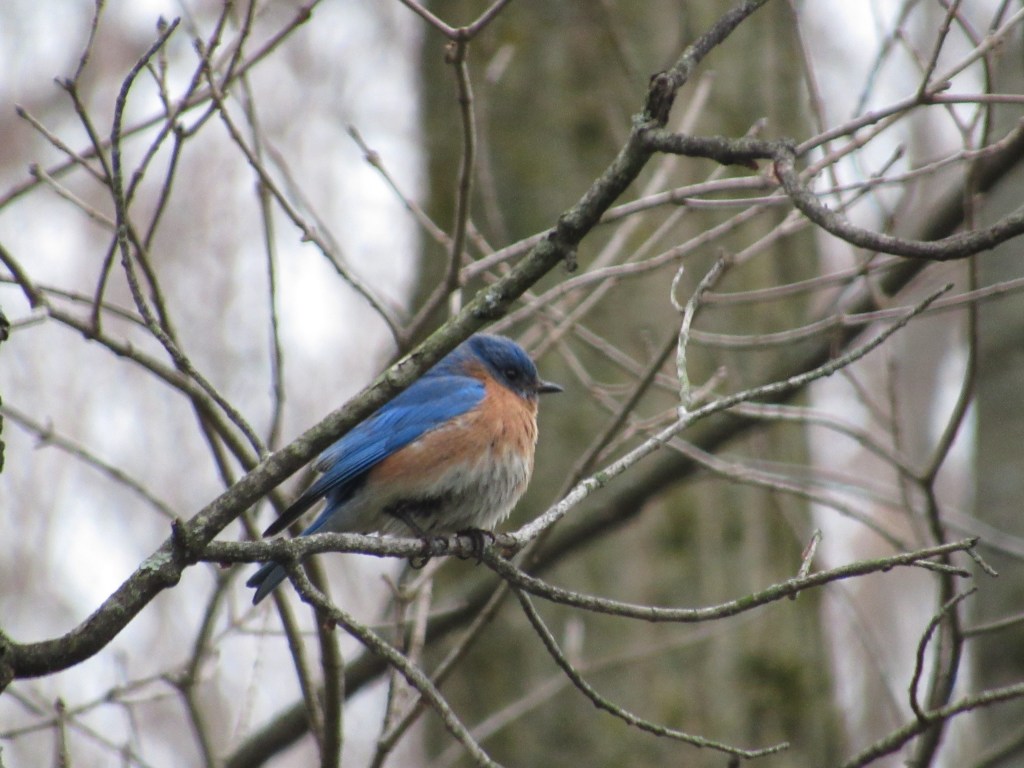


The Eastern Bluebird (Sialia sialis) is a small, vibrantly colored songbird native to North America. Known for its cheerful blue feathers and melodious calls, it is commonly found in open woodlands, fields, orchards, and suburban areas. Eastern Bluebirds are a delight for birdwatchers, and their numbers have seen recovery thanks to conservation efforts and nest box installations.
Physical Description
Male Eastern Bluebirds are especially striking, with bright blue upper bodies and rusty-red chests and throats. Females are similar in size but sport more subdued blue-gray feathers on their wings, with hints of rusty red on their chests. These birds are about 6-8 inches in length, with a wingspan of around 9-12 inches.
Habitat
Eastern Bluebirds are found across eastern North America, from the Great Plains eastward, and are also common in parts of Central America, especially in Mexico during winter. Their ideal habitats are open areas with sparse trees or along woodland edges where they can spot prey easily and nest in available cavities.
Diet
These bluebirds are insectivores, feeding primarily on insects like beetles, caterpillars, grasshoppers, and spiders during the warmer months. In winter, when insects are scarce, they switch to berries and small fruits from native plants like dogwood, holly, and juniper. Suet pellets are also perfect for them as seen pictured.
Migration Patterns
Eastern Bluebirds are partially migratory. Birds in northern parts of their range typically migrate south to warmer regions, while those in the southern parts remain year-round. Migration patterns vary depending on food availability and weather; some may stay put in the north during mild winters. Bluebirds generally begin migrating south between September and November, returning to their breeding grounds in March or April. Their migration is not long-distance, typically only moving a few hundred miles from breeding grounds to wintering areas.
Breeding and Nesting
Eastern Bluebirds begin their breeding season in early spring. Males display by fluttering and singing near a potential nesting cavity to attract a female. The female then builds the nest, usually in natural cavities or man-made nest boxes. Eastern Bluebirds are cavity nesters, meaning they rely on holes in trees, fence posts, or birdhouses. The female lays 3-7 pale blue or sometimes white eggs, which she incubates for about two weeks.
Eastern Bluebirds can have two or even three broods in a single season if conditions are favorable. Both parents feed the young until they fledge, typically about 15-20 days after hatching.
Fun Facts
- Color Variance: Eastern Bluebird feathers are not actually pigmented blue; the color comes from microscopic structures in their feathers that reflect light.
- Song: Males are known for their soft, musical calls, often described as a “cheerful cheer” or “tur-a-lee” that can lift spirits on spring mornings.
- Natural Pest Control: These birds play a significant role in controlling insect populations, making them a farmer’s friend.
- Cavity Competition: Eastern Bluebirds often face competition from other cavity-nesting species like House Sparrows, European Starlings, and Tree Swallows, which sometimes take over their nests. However, humans have helped by providing specialized nest boxes that exclude larger, more aggressive species.
- Longevity: While the average lifespan of an Eastern Bluebird is around 6-10 years, some have been recorded to live up to 10 years in the wild.
Conservation Status
The Eastern Bluebird population declined significantly in the 20th century due to habitat loss and competition from invasive species. However, with the rise of “bluebird trails”—routes with multiple nest boxes for bluebirds to use—their populations have made a remarkable comeback.


 Wild Bird Journal
Leave a comment