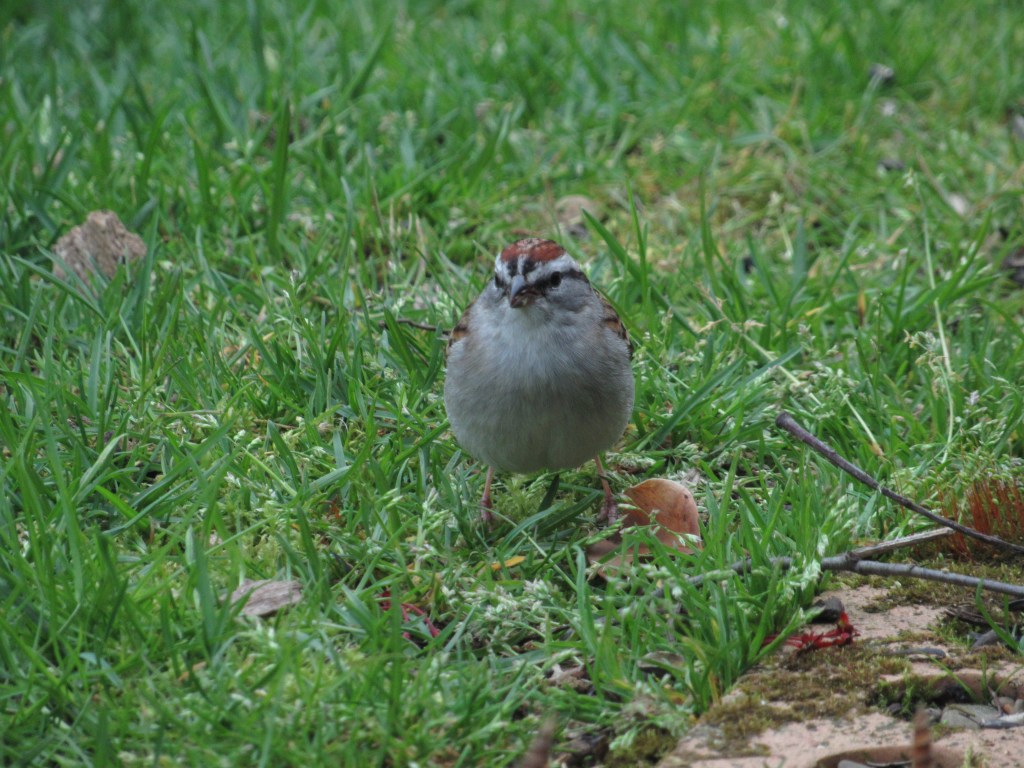


The Chipping Sparrow (Spizella passerina) is a small, charming songbird native to North America. It’s a member of the sparrow family and is easily recognized by its distinctive markings and melodic songs. This bird is known for its rufous (reddish-brown) cap, black eye line, and pale underparts, with grayish-brown streaked wings and back. Chipping Sparrows are common across many landscapes, including forests, fields, gardens, and urban parks, where they feed primarily on seeds and insects. Let’s dive into their interesting habits, migration patterns, and some fun facts!
Fun Facts About the Chipping Sparrow
- Vocal Songs: Chipping Sparrows have a distinctive, high-pitched, and rapid trill that is often heard during the breeding season. Males use this trill to attract mates and establish territory.
- Nest-Building Habits: These sparrows are prolific nest builders. They create compact nests primarily made from grasses, pine needles, and animal hair. Sometimes they use artificial materials like string, and the nest is often placed in shrubs, small trees, or even dense vines. Remarkably, they often switch nesting sites throughout the season if they raise multiple broods.
- City Adaptation: Although originally forest-dwellers, Chipping Sparrows have adapted well to urban environments. They are commonly found in suburban areas and even in parks in larger cities, thriving alongside human development.
- Molting: Chipping Sparrows undergo a fascinating transformation in late summer, when they molt their breeding plumage for a less colorful appearance before migration. The rufous cap and bright white feathers dull, giving them a more subdued look for winter.
- Lifespan: Despite their small size, Chipping Sparrows can live up to 10 years in the wild, though many don’t survive that long due to predation and environmental factors.
Migration Patterns of the Chipping Sparrow
Chipping Sparrows are migratory birds, and their migration patterns vary significantly depending on their geographic location. Here’s a breakdown of their migratory habits:
- Northern Populations (Canada and Northern U.S.): Sparrows that breed in the northern regions of Canada and the northern United States migrate south in late summer or early fall. These birds travel to the southern United States, Mexico, and Central America to spend the winter.
- Southern Populations (Southern U.S.): In contrast, Chipping Sparrows found in the southern U.S. may be non-migratory, choosing to stay in their breeding territories year-round if the climate remains mild.
- Timing: Migration generally starts in early fall (September-October) and peaks around late October. The return journey in spring usually begins in March, allowing Chipping Sparrows to arrive at their breeding grounds by April.
- Traveling Style: Chipping Sparrows migrate in loose flocks, which provides them with some protection from predators. They are diurnal (daytime) migrants, which is relatively unusual for songbirds, as many species travel at night.
- Winter Habitats: During winter, Chipping Sparrows can be found in open woodlands, savannas, and suburban areas in the southern United States, Central America, and the Caribbean.
Diet and Behavior
Chipping Sparrows are omnivorous but primarily feed on seeds, especially in the winter. During the breeding season, they add insects and spiders to their diet, which helps provide additional protein for raising their young. These birds forage on the ground or in low vegetation, using their nimble movements to hop and peck at food sources. In urban areas, they’re known to frequent bird feeders.
Conservation Status
The Chipping Sparrow is currently not considered endangered and has a stable population. Their adaptability to urban environments has likely helped them maintain steady numbers, even in the face of habitat loss due to human development.
These sparrows are remarkable for their adaptability, unique vocalizations, and complex migratory patterns. From their rapid trills to their city-friendly lifestyle, the Chipping Sparrow offers a perfect example of nature’s resilience and diversity.


 Wild Bird Journal
Leave a comment