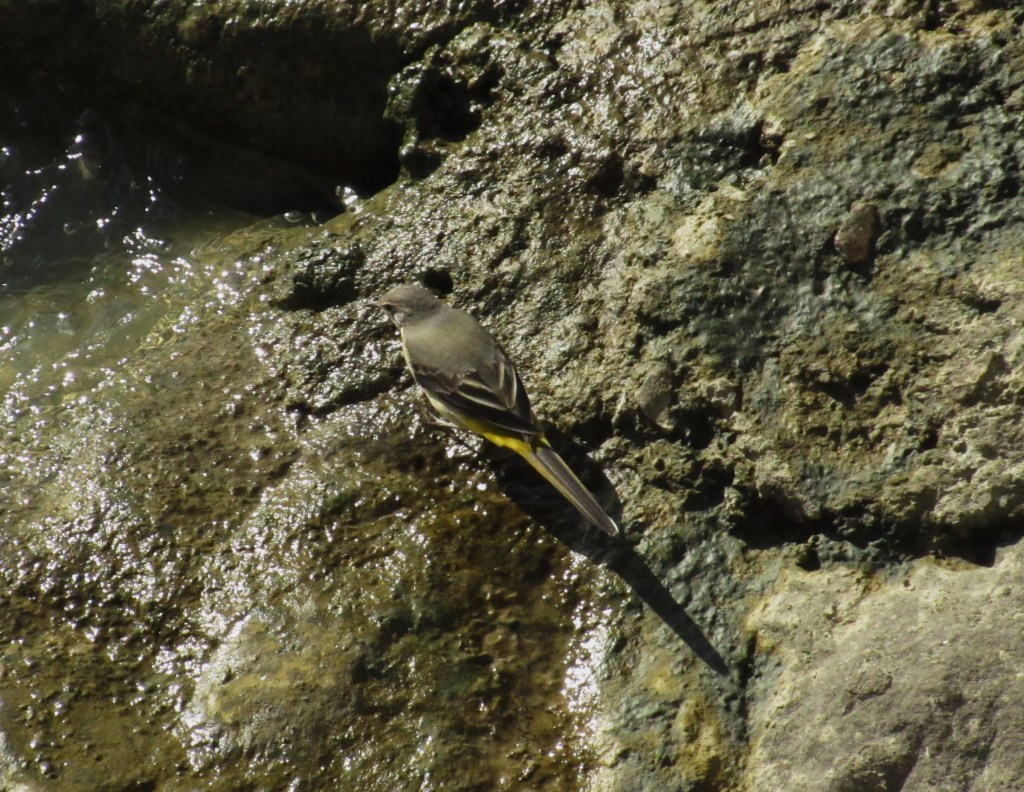


The Gray Wagtail (Motacilla cinerea) is a small, elegant bird recognized for its distinctive long tail, which it frequently wags, giving it its name. Found in Europe, Asia, and parts of North Africa, the Gray Wagtail is a bird of moving water, typically found near rivers, streams, and lakes.
Physical Characteristics
Gray Wagtails are slender birds, with a bright lemon-yellow undertail and a blue-gray back. They measure around 18–19 cm in length, with males and females being quite similar in appearance. During the breeding season, males develop a black throat patch, which is absent in females and juveniles.
Habitat and Diet
This bird prefers fast-flowing rivers and streams, often choosing habitats that include rocky areas where it can find insects and invertebrates, its primary diet. Gray Wagtails feed on a variety of insects, such as flies, midges, beetles, and even small aquatic invertebrates. Their fondness for water environments often helps in locating them, as they’re usually found along the banks, hopping around in search of food.
Migration Patterns
Gray Wagtails are partial migrants, with populations in northern Europe and parts of Asia migrating southward during the winter. Birds from regions with harsh winters, such as the UK and Scandinavia, migrate to southern Europe, North Africa, and parts of Asia. Gray Wagtails from warmer regions may stay in their breeding areas year-round. Their migratory movements generally take place from September to October, with return migration occurring between March and April.
Breeding and Nesting
Breeding season for Gray Wagtails typically begins in April and extends through August. They build their nests in well-hidden, sheltered spots close to water, often choosing crevices in banks or small caves. Nests are constructed from grass, moss, and leaves, lined with finer materials like hair and feathers. They usually lay 4–6 eggs per clutch, which hatch after about 11–14 days of incubation. Both parents contribute to feeding the chicks, which fledge in around 12–14 days.
Fun Facts About the Gray Wagtail
- Tail-Wagging Behavior: Gray Wagtails are well known for their unique habit of bobbing or wagging their tails, a characteristic shared with other wagtail species. This behavior likely serves as a signal to other birds and may also help flush out insects.
- Water Association: Unlike some wagtail species that can adapt to various environments, Gray Wagtails are highly tied to water bodies and are rarely found far from rivers or streams.
- Quick Reflexes: Known for their agility, Gray Wagtails can often be seen darting after insects mid-flight, showing impressive aerial acrobatics.
- Long-Distance Migrators: Though some populations are sedentary, certain individuals travel thousands of miles from their breeding to their wintering grounds. In fact, British Gray Wagtails have been known to travel as far as Morocco!
- Vocal Communication: Gray Wagtails have a sharp and distinctive “tsweep” call, often heard in flight. Their song, though not complex, includes trills and whistles and can often be heard during the breeding season.
- Distinctive Plumage: While other wagtails share their tail-wagging behavior, Gray Wagtails are unique in their lemon-yellow underside, which makes them relatively easy to identify among wagtails.
The Gray Wagtail’s elegant movements, striking coloration, and unique migration make it a fascinating species, especially for bird enthusiasts and ecologists.
 Wild Bird Journal
Leave a comment