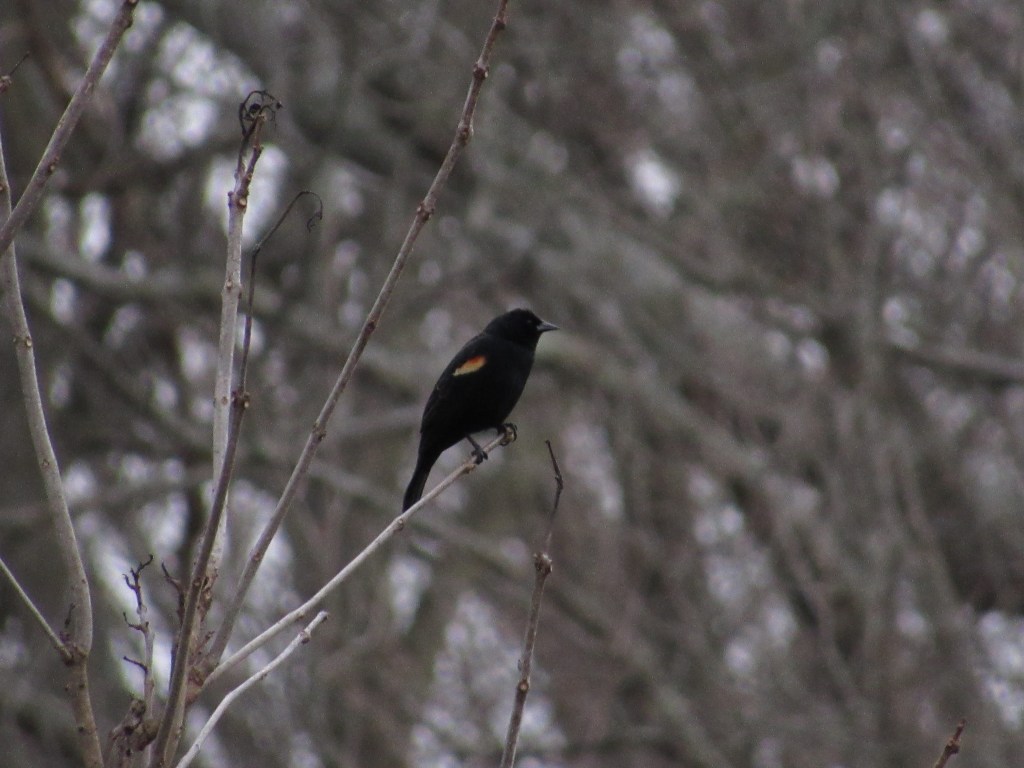


The Red-winged Blackbird (Agelaius phoeniceus) is a striking and widely distributed bird species native to North America, notable for its black plumage with distinctively vibrant red and yellow patches on the shoulders, or “epaulets.” This bird is often seen in wetlands, marshes, and fields, especially near bodies of water, though it can adapt to a wide range of habitats, including roadside ditches and farmland. It is one of the most abundant native bird species across the continent, thriving in open landscapes where it forages, nests, and raises its young.
Physical Characteristics
Male Red-winged Blackbirds are easy to identify, with their bold black coloration and vivid red epaulets, edged with a yellow or orange border. The females, in contrast, are heavily streaked with brown and white, resembling large sparrows more than their strikingly colored male counterparts. This difference in coloration plays a role in their reproductive strategies, as the males use their bright epaulets to establish dominance and attract mates, while the females benefit from camouflage while nesting.
Habitat and Distribution
Red-winged Blackbirds are found throughout North America, from Alaska and Canada to the southern United States and parts of Central America. They inhabit wetlands, marshes, grassy fields, and areas with dense reeds or cattails, which provide nesting materials and cover. During the breeding season, they are particularly drawn to marshes where they nest in clusters, with each male defending a small territory to attract multiple females. During the winter, large flocks often form and migrate southward, sometimes merging with other blackbird species.
Behavior and Diet
These birds are omnivorous, feeding on insects, seeds, and grains. During the breeding season, insects make up a substantial part of their diet, providing essential protein for the growing chicks, which are highly reliant on these nutrients to develop strong feathers and muscles necessary for flight. Outside the breeding season, they often switch to a diet of grains and seeds, foraging in fields and along roadsides, where they can be seen congregating in large numbers to take advantage of the abundant food sources. Red-winged Blackbirds are known for their noisy, gregarious behavior and distinctive calls, often described as a “conk-la-ree!” Their calls are easily recognizable and serve multiple functions; they are used to establish territory, warn off intruders, and communicate with other birds regarding potential threats or food sources. In addition to their vocalizations, these birds also exhibit elaborate courtship displays, fluttering and posturing to attract mates, which adds to the vibrant life in their habitat, creating a lively atmosphere in the wetlands and marshes they inhabit.
Reproduction and Nesting
The breeding season for Red-winged Blackbirds typically begins in early spring. Males arrive at the breeding sites before females and establish territories, where they will defend against rivals and court potential mates. Males may have multiple mates within their territory, as Red-winged Blackbirds are a polygynous species. Females build nests in low vegetation, often among dense reeds, cattails, or grasses. The nest is a cup-shaped structure made of grasses, reeds, and other plant materials, anchored firmly to the surrounding vegetation. The female lays three to five eggs, which she incubates alone. After hatching, both parents participate in feeding the chicks until they are ready to fledge.
Territorial Behavior and Displays
Red-winged Blackbirds are known for their aggressive territorial behavior, especially during the breeding season. Males are highly protective of their nesting sites and will chase away intruders, including larger animals and humans. Their territorial displays are a common sight in wetlands, with males fluffing their red epaulets, spreading their wings, and calling loudly to ward off potential rivals and predators. This behavior helps maintain clear boundaries among the birds and ensures that each male has access to enough resources to support his mates and offspring.
Migration Patterns
The migratory behavior of Red-winged Blackbirds varies depending on their location. In northern regions, they migrate south in large flocks during the fall, traveling as far as Mexico and the southern United States. They often join other blackbird species, forming mixed-species flocks that can number in the thousands. In contrast, populations in the southern parts of their range tend to be more sedentary and may remain in the same area year-round.
Ecological Significance
Red-winged Blackbirds play an essential role in their ecosystems. As insectivores, they help control insect populations, particularly during the breeding season. Additionally, by consuming seeds, they may contribute to the dispersal of plant species. They also serve as a food source for various predators, including hawks, snakes, and raccoons. Because of their adaptability and numbers, they are considered a species of “least concern” in terms of conservation status.
Cultural Significance
Red-winged Blackbirds hold a place in North American folklore and symbolism, often associated with spring due to their prominent and early appearance in breeding areas. Their distinctive calls are a familiar sound in marshes and fields, making them one of the most recognizable bird species in their habitat.
 Wild Bird Journal
Leave a comment