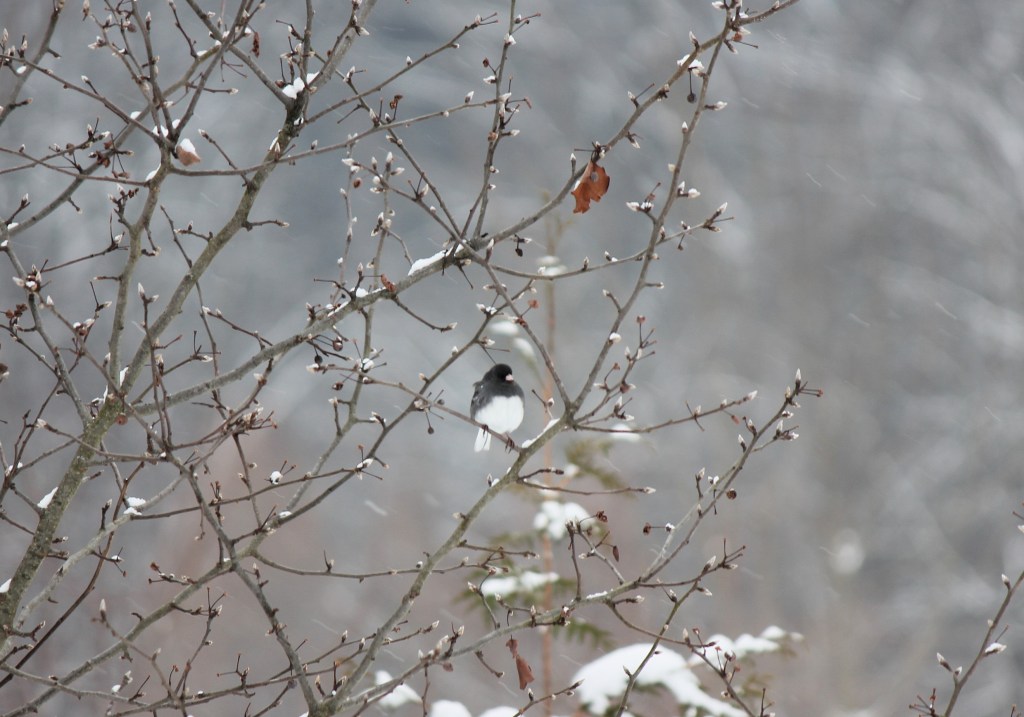
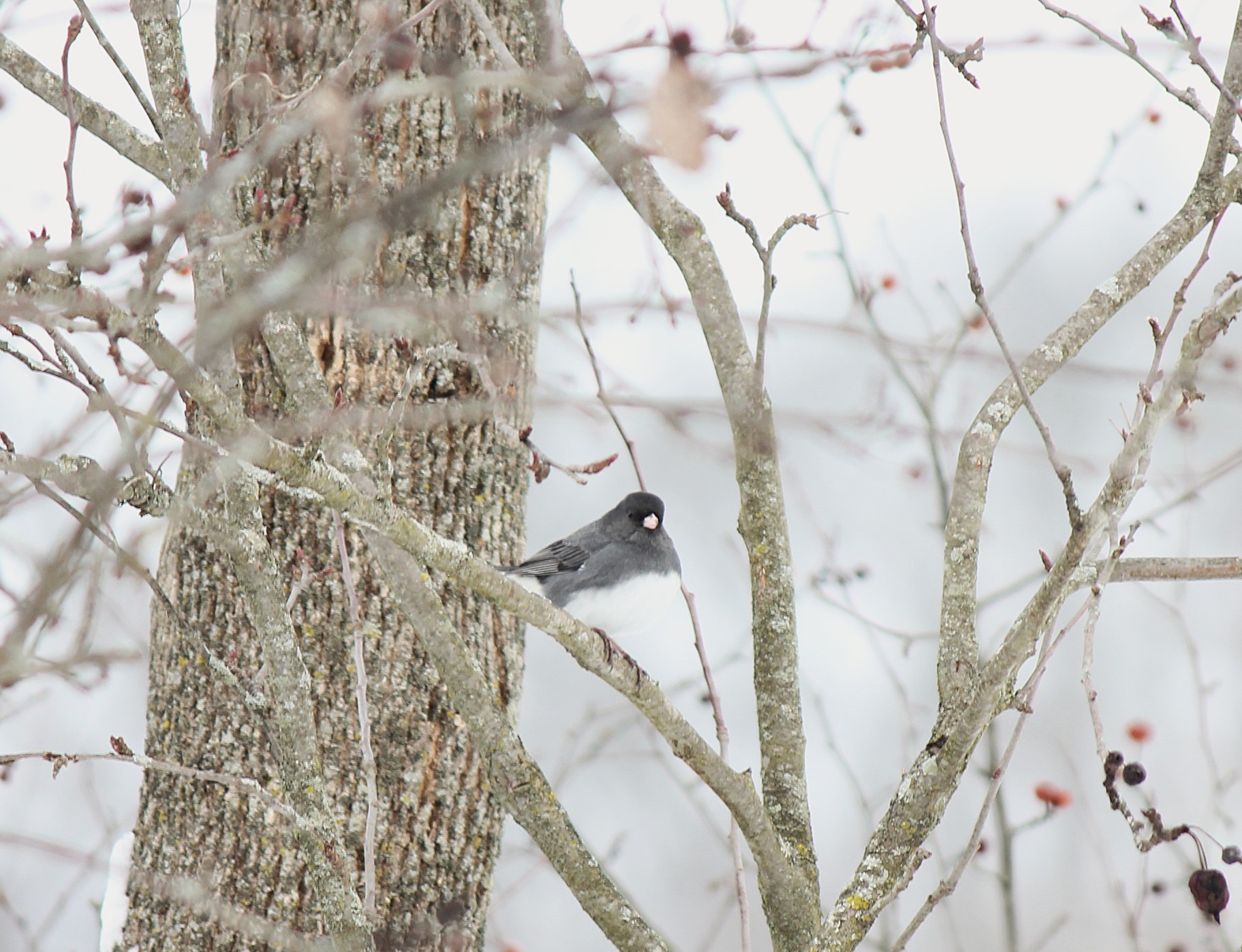
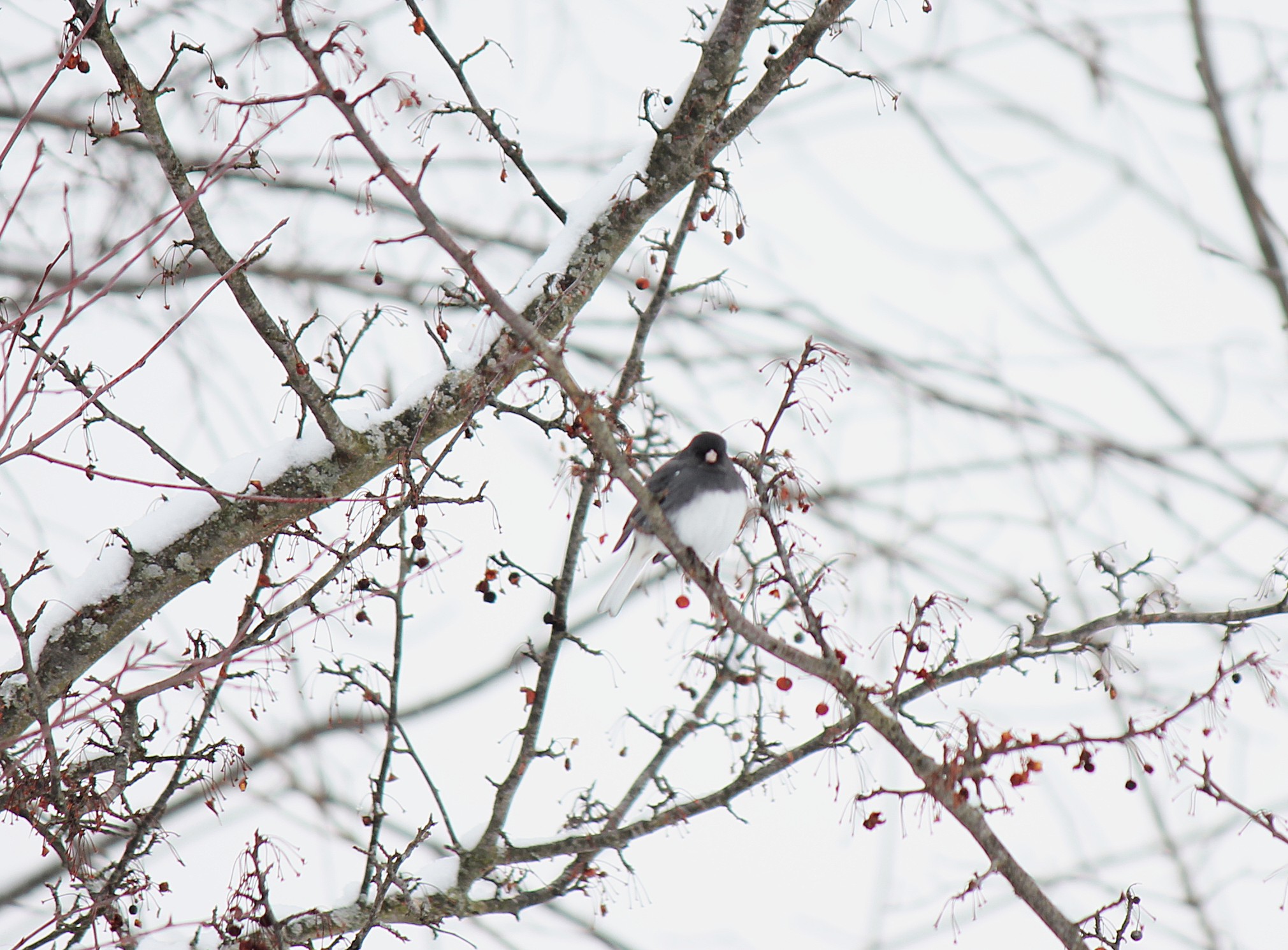
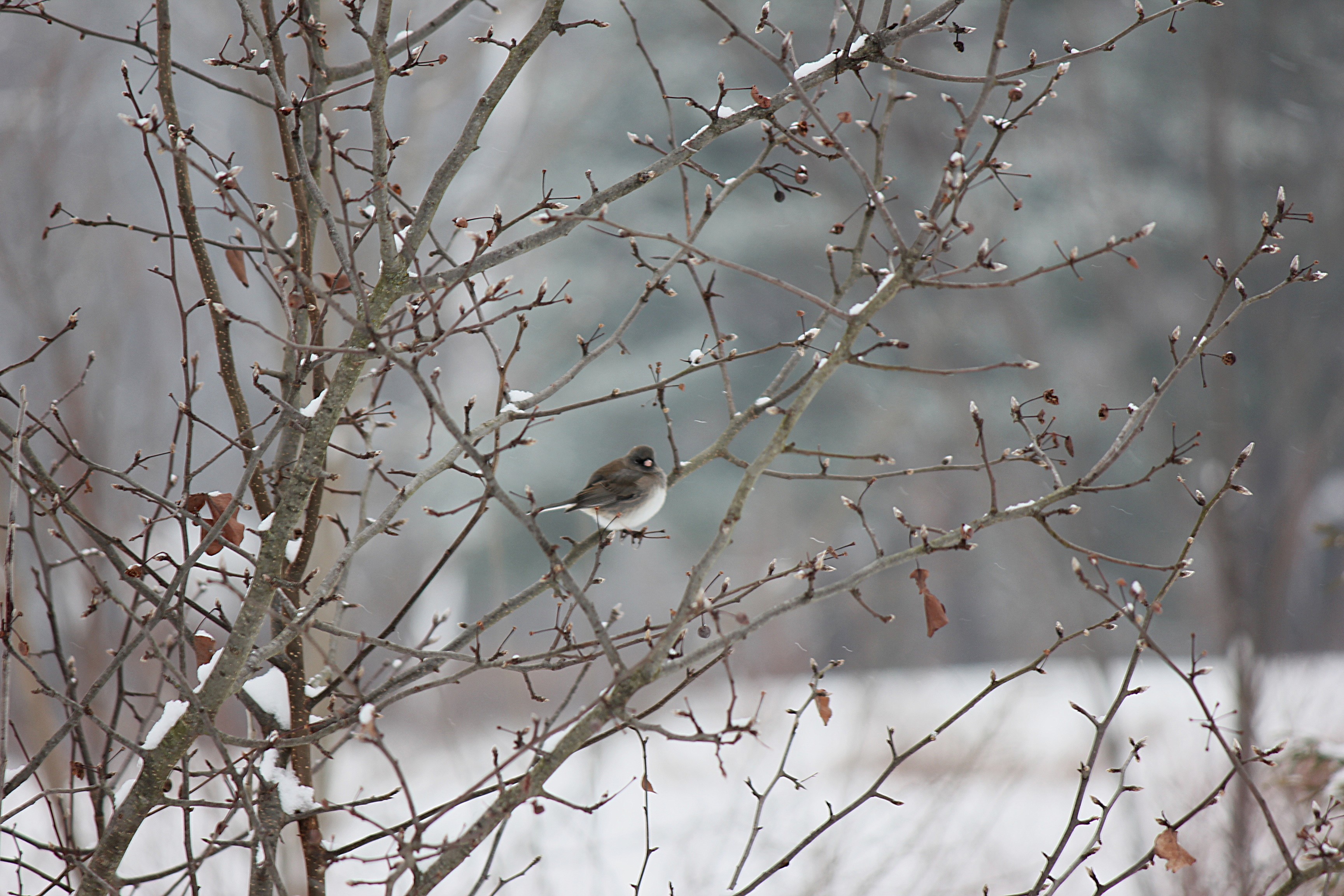
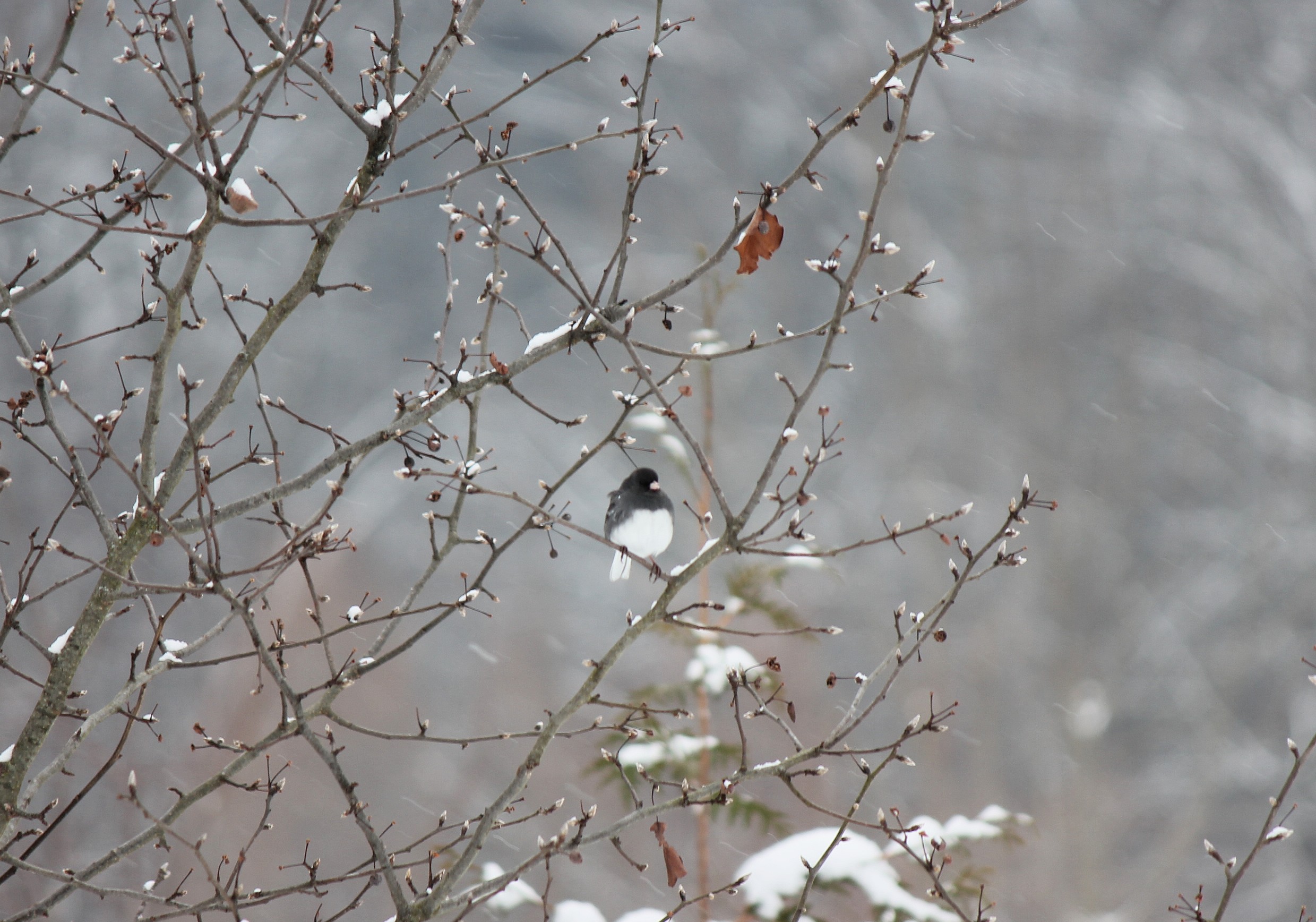

The dark-eyed junco (Junco hyemalis) is a species of small, sparrow-like songbird in the family Passerellidae. Known for its distinctive plumage and widespread range across North America, the dark-eyed junco is often considered a harbinger of winter due to its appearance in many regions during colder months. This bird is also sometimes called the “snowbird” because of its frequent presence in snowy environments.
Description
Size:
Length: 13–17 cm (5–6.7 inches)
Wingspan: 18–25 cm (7–10 inches)
Weight: 18–30 grams (0.6–1.1 ounces)
Plumage:
Dark-eyed juncos are named for their dark eyes and generally have a slate-gray or brown body depending on the region and subspecies. They have white outer tail feathers and a pale pinkish bill, which is a key identifying feature.
Males: Typically darker and more uniformly colored.
Females: Tend to be lighter and browner.Their plumage can vary significantly based on their geographic location, leading to the recognition of several regional color variations (subspecies).
Subspecies and Variations
Dark-eyed juncos exhibit a wide range of plumage variations across their distribution. The major subspecies groups include:
Slate-colored Junco (J. h. hyemalis):
-Found in eastern North America and the boreal forests of Canada.
-Uniform slate-gray body with a white belly.
Oregon Junco (J. h. oreganus):
-Found in western North America.
-Rich brown back, black head, and white belly.
Pink-sided Junco (J. h. mearnsi):
-Found in the northern Rockies.
-Pale gray head, brown back, and pinkish sides.
White-winged Junco (J. h. aikeni):
-Found in the Black Hills of South Dakota.
-Similar to slate-colored junco but with prominent white wing bars.
Gray-headed Junco (J. h. caniceps):
-Found in the southern Rockies.
-Gray head and body with a reddish-brown back
Habitat and Range
Dark-eyed juncos are highly adaptable and can be found in a variety of habitats, including:
Coniferous and mixed forests
Open woodlands
Fields, parks, and gardens
In the winter, they often migrate to lower elevations and more southern regions, where they are commonly seen in suburban backyards. Their range extends from Alaska and Canada in the north to Mexico in the south.
Diet
Dark-eyed juncos primarily feed on:
Seeds: Grass and weed seeds make up a large part of their diet, especially in winter.
Insects: During the breeding season, they consume insects and other invertebrates.
Berries: Occasionally, they feed on small fruits and berries.
They are frequent visitors to bird feeders, where they forage for millet, cracked corn, and sunflower seeds.
Behavior
Foraging: Dark-eyed juncos typically forage on the ground, hopping and scratching through leaf litter in search of food.
Social structure: They are gregarious in winter, forming loose flocks of up to 30 or more birds. In summer, they are more territorial, especially during the breeding season.
Vocalizations: Their song is a musical trill, similar to that of the chipping sparrow but more even in pitch. Their calls include a sharp “chip” or “tick” sound.
Breeding
Nesting sites: Nests are usually built on or near the ground, concealed by vegetation or rocks.
Nesting material: The female constructs the nest using grasses, leaves, and moss, lining it with finer materials like hair or feathers.
Clutch size: 3 to 6 eggs
Incubation period: 11 to 13 days, with the female solely responsible for incubating the eggs.
Fledging: The young leave the nest about 9 to 13 days after hatching.
Predators and Threats
Dark-eyed juncos face predation from a variety of animals, including:
Birds of prey: Hawks and owls
Mammals: Cats, foxes, and squirrels
Human activity, particularly habitat loss, can also pose a threat, though dark-eyed juncos are currently widespread and abundant.
Conservation Status
The dark-eyed junco is listed as a species of Least Concern by the IUCN. Its population is stable, and it remains one of the most common and widespread songbirds in North America.
Interesting Facts
Dark-eyed juncos are known for their impressive migratory behavior, with some populations traveling over 1,000 miles between their breeding and wintering grounds. They have been observed engaging in a behavior known as “foot-tapping,” where they tap their feet on the ground to startle insects hiding beneath leaves. Despite their common name, not all dark-eyed juncos have dark eyes—some individuals have lighter, reddish-brown eyes. The various subspecies were once considered separate species but are now classified as a single species due to interbreeding where their ranges overlap.


 Wild Bird Journal
Leave a comment