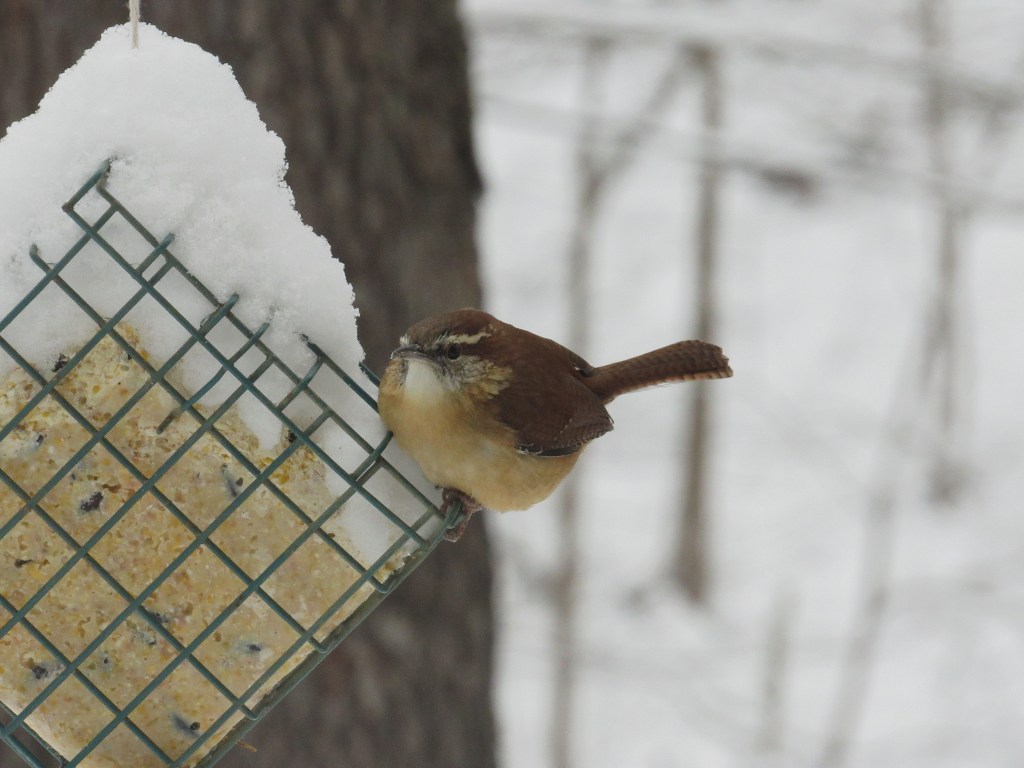
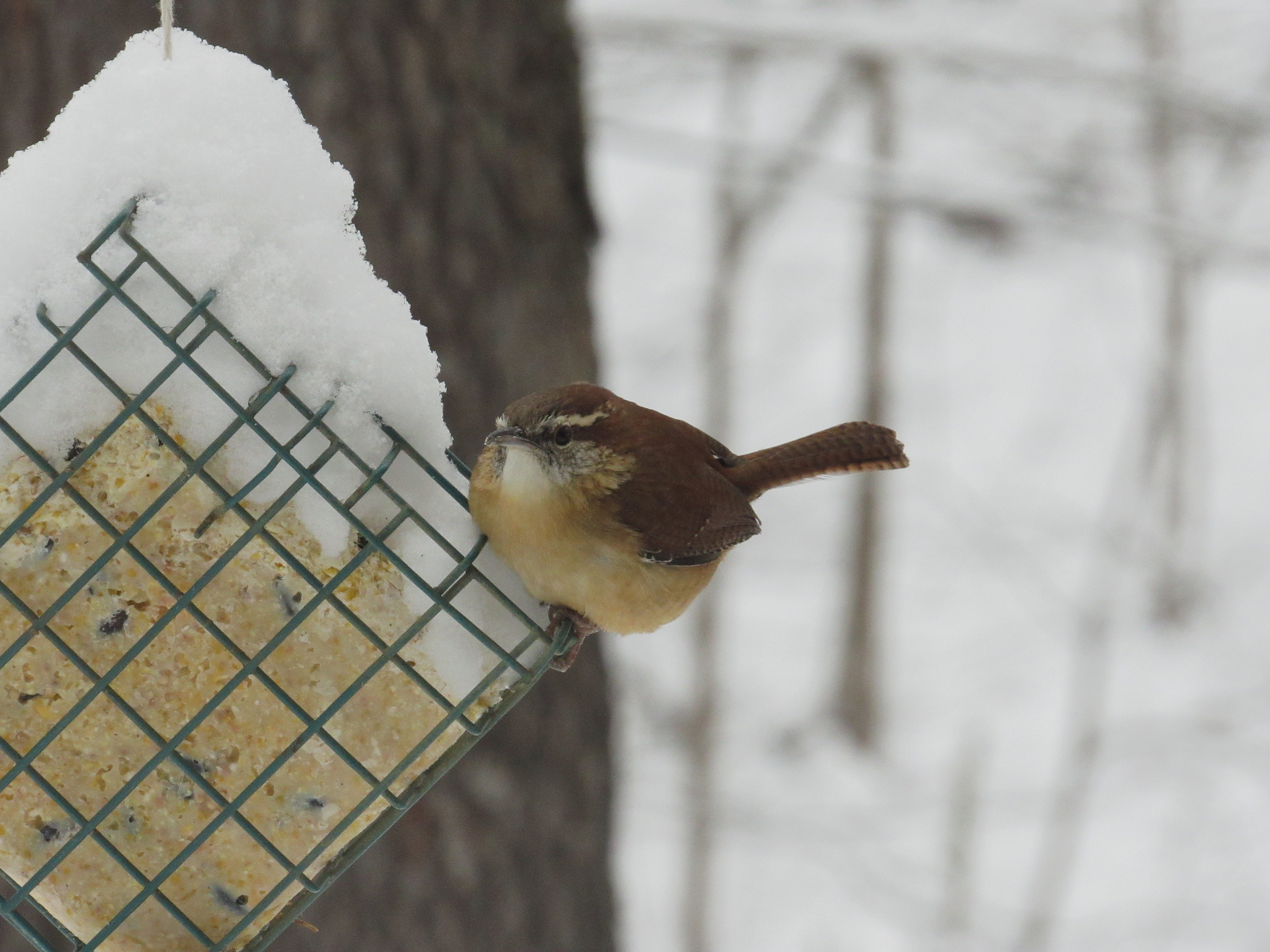

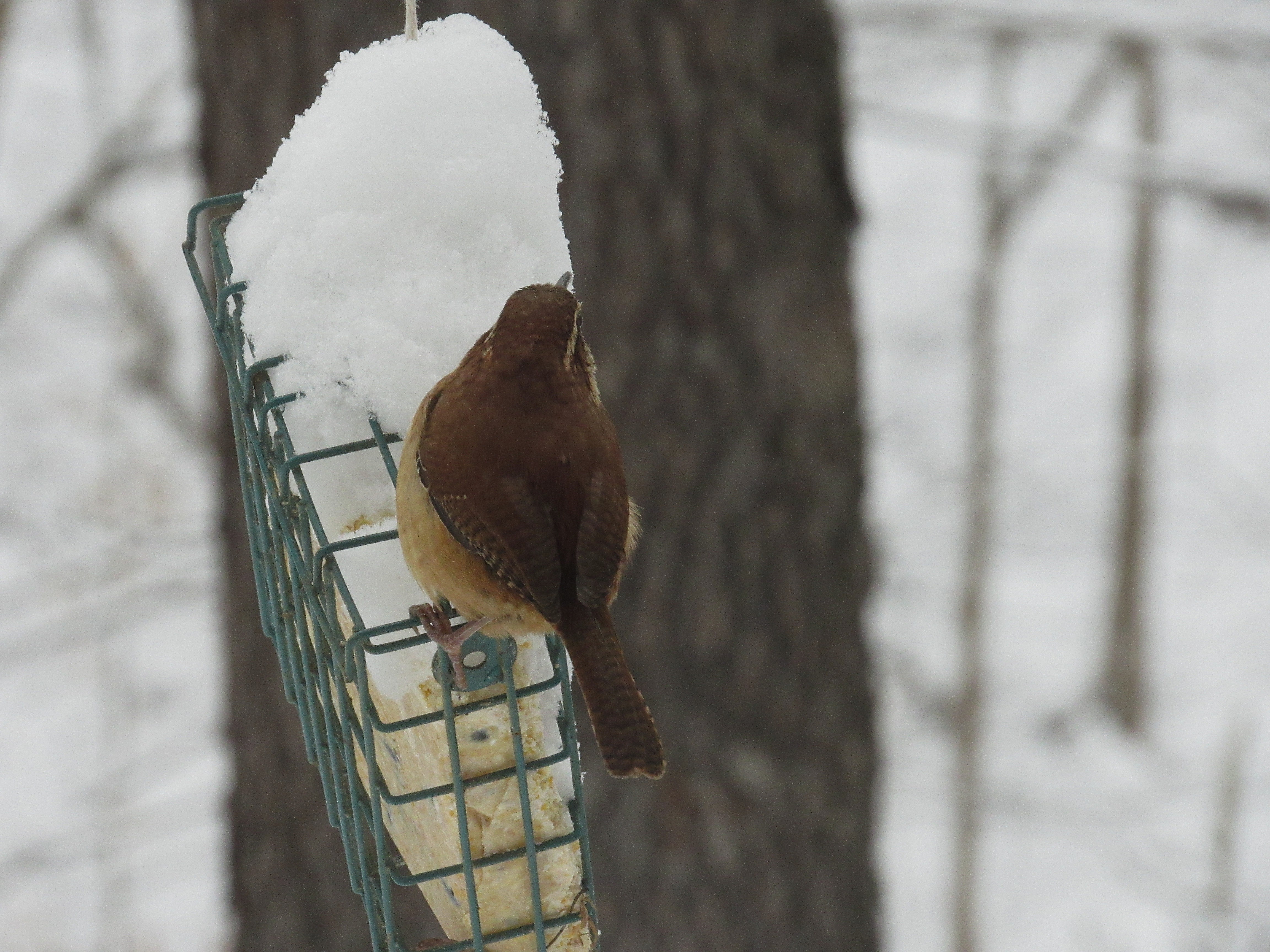
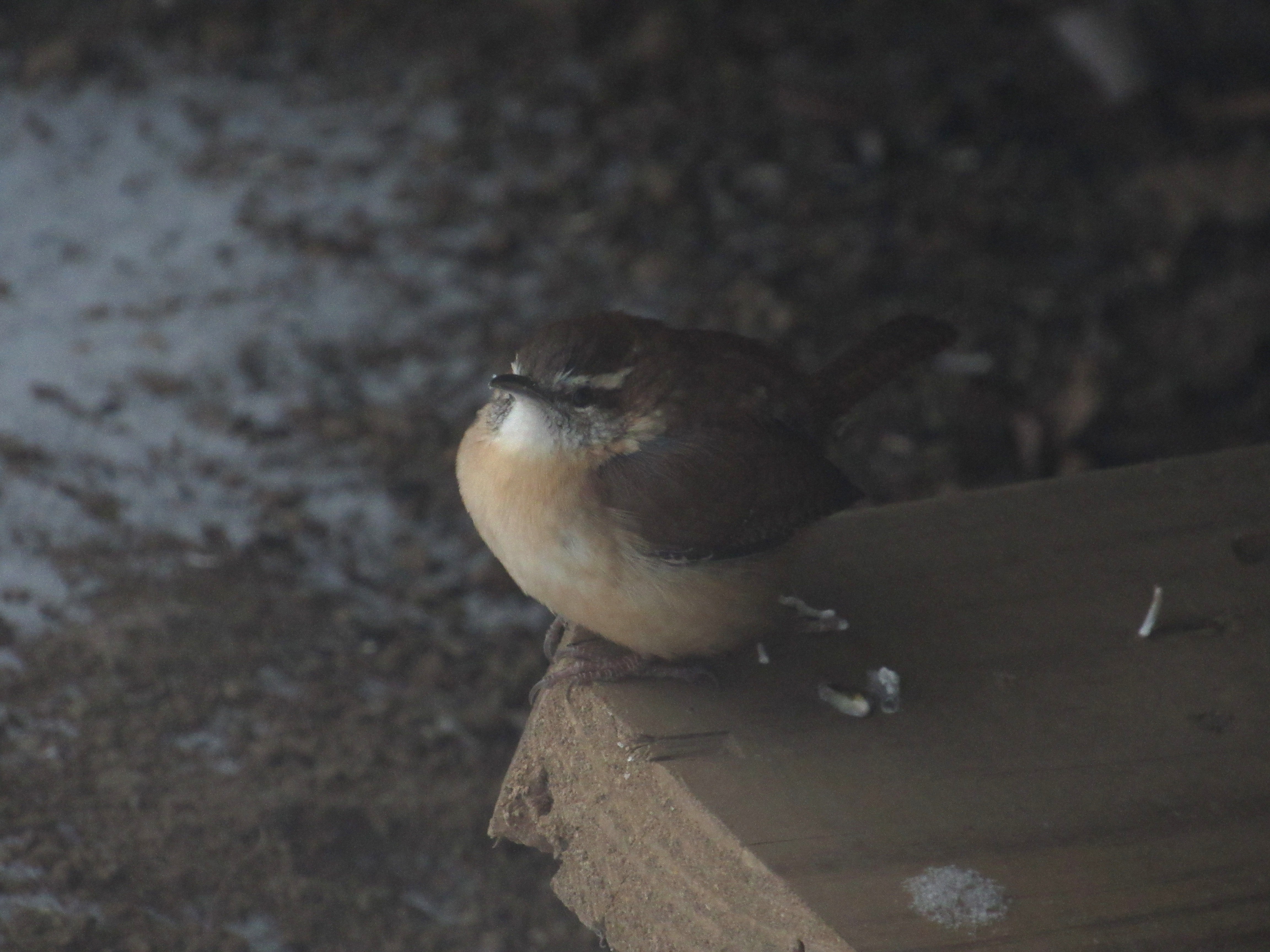
Carolina Wren (Thryothorus ludovicianus)
The Carolina wren is a small, energetic songbird known for its rich, loud song and distinctive appearance. It is native to the southeastern United States but has expanded its range northward due to climate change and the availability of food sources in suburban and urban areas.
Physical Description
Size: 12.5 to 14 cm (4.9 to 5.5 inches) in length, with a wingspan of 29 cm (11 inches).
Weight: 18 to 23 grams (0.6 to 0.8 ounces).
Plumage: Reddish-brown upperparts and buff underparts. They have a prominent white eyebrow stripe (supercilium), a slightly curved bill, and a rounded body.
Tail: Long and often held upright or flicked as they move.
Habitat
Found in a variety of habitats, including forests, swamps, gardens, and urban areas.
Prefers dense vegetation, such as thickets, underbrush, and shrubs, where it can forage and nest.
Adapts well to human environments, often seen near homes, sheds, and woodpiles.
Behavior
Foraging: The Carolina wren primarily forages on or near the ground. It feeds on insects, spiders, and occasionally seeds and berries. It uses its long, curved bill to probe bark crevices, leaf litter, and other hidden areas.
Social Behavior: Carolina wrens are monogamous and form long-term pair bonds. Pairs often remain together throughout the year and are territorial.
Song and Calls: Known for its loud, melodious song, often described as “teakettle-teakettle-teakettle.” Both males and females call, but only males sing. Their song is used to defend territory and attract mates.
Reproduction
Nesting: Nests are built by the male and female, often in sheltered, concealed spots, including tree cavities, hanging plants, and even man-made objects like mailboxes or boots.
Nest Structure: The nest is dome-shaped, made of twigs, leaves, moss, and lined with soft materials like feathers.
Clutch Size: 4 to 6 eggs, which are white or pinkish with brown spots.
Incubation: 12 to 16 days, mainly by the female.
Fledging: Young wrens leave the nest about two weeks after hatching but remain dependent on parents for food for several weeks.
Diet
Insects and invertebrates make up most of their diet. Common prey includes:
Beetles
Caterpillars
Spiders
Grasshoppers
Small snails
They supplement their diet with seeds and berries, especially in winter when insects are scarce.
Range and Distribution
Found across the southeastern United States, from Texas to Florida and up to New England and parts of the Midwest. Their range extends into Mexico and Central America.
They are non-migratory, meaning they stay in their territories year-round.
Conservation Status
IUCN Status: Least Concern.
Carolina wrens have stable and growing populations due to their adaptability to human-altered landscapes and increased bird feeder use in winter.
Interesting Facts
Carolina wrens are known for being curious and bold, often exploring human dwellings and vehicles.
They were designated the state bird of South Carolina in 1948.
Despite their small size, they have an impressively loud voice, capable of being heard from long distances.
Pairs sing duets, with the male and female sometimes producing alternating calls that sound like a single song.
Severe winters can decrease populations in northern parts of their range, but they tend to recover quickly in subsequent mild years.
 Wild Bird Journal
Leave a comment