
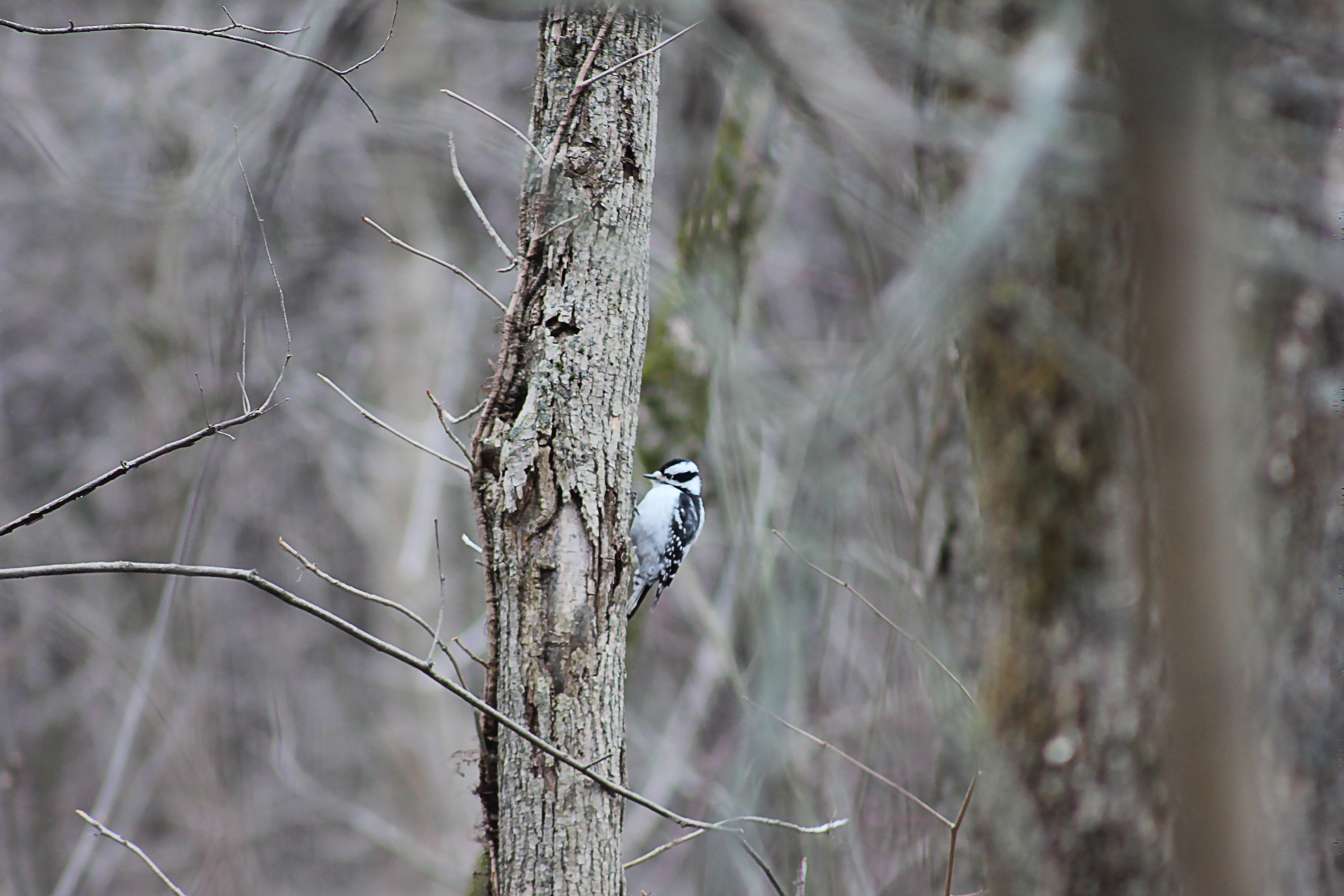

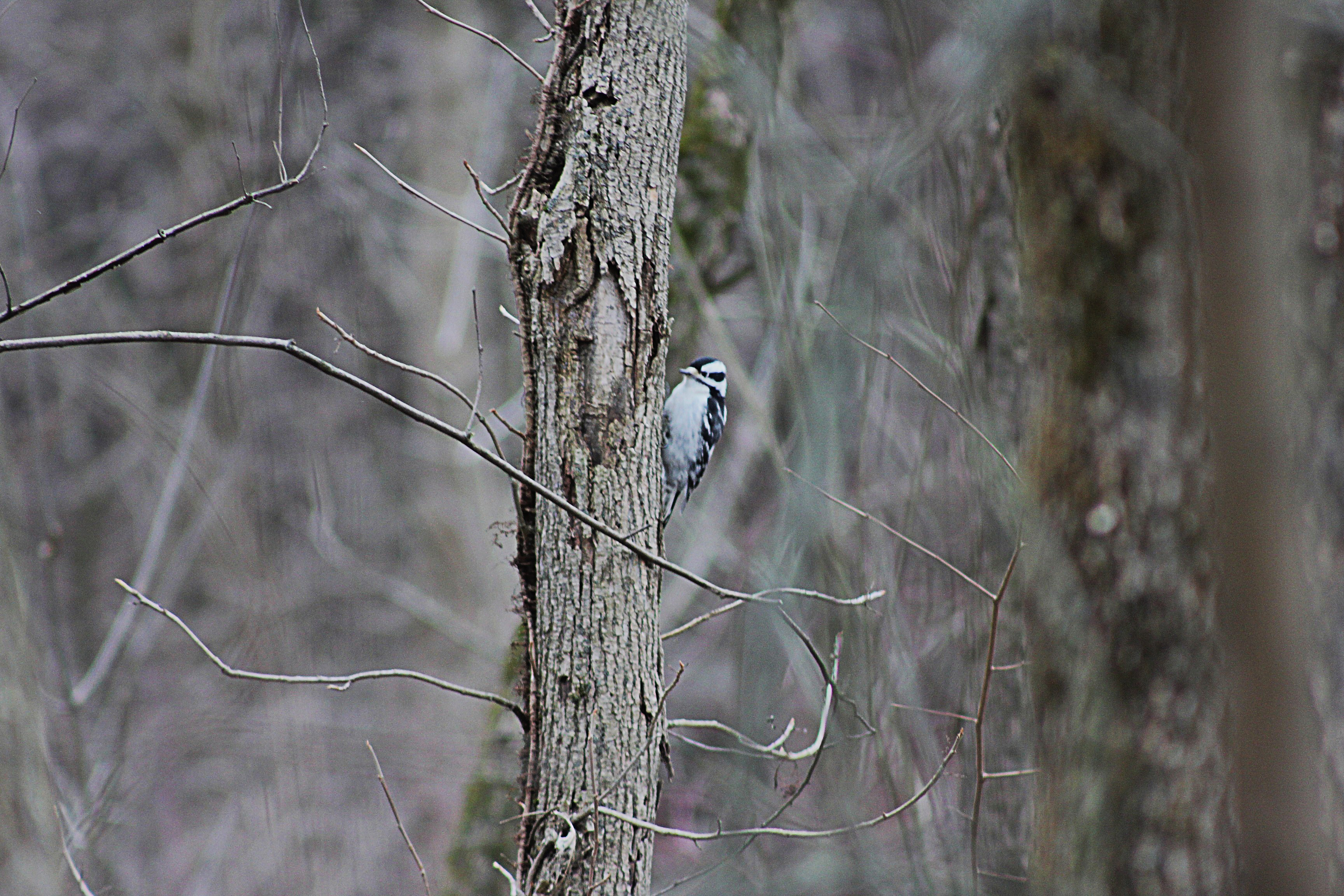

The hairy woodpecker (Dryobates villosus) is a medium-sized woodpecker native to North America. It is often mistaken for the smaller downy woodpecker due to their similar plumage, but the hairy woodpecker is larger and has a longer, more robust bill.
Physical Description
Size: About 7.1 to 10.2 inches (18-26 cm) in length
Wingspan: 13 to 16.1 inches (33-41 cm)
Weight: 1.4 to 3.4 ounces (40-95 g)
Plumage:
Black-and-white checkered wings. White underparts. A distinctive white stripe down the back. Males have a small red patch on the back of their heads, while females do not. Bill: Long, straight, chisel-like (much longer than the downy woodpecker’s). Tail Feathers: Stiff, used for bracing against tree trunks while pecking
Range & Habitat
Hairy woodpeckers are found throughout North America, from Alaska to Panama, in a variety of forested environments. They prefer:
Deciduous and coniferous forests
Suburban areas and orchards
Parks and backyards (if mature trees are present)
Burned forests (where they feed on insects in dead wood)
Diet & Foraging Behavior
The hairy woodpecker is an insectivore, but it also eats plant material. Its diet includes:
Insects (beetle larvae, ants, caterpillars, termites, and bark beetles)
Tree sap
Berries and nuts
Seeds and suet (from backyard feeders)
It uses its strong bill to hammer into tree bark, extracting insects with its barbed tongue. Unlike some woodpeckers, it does not drill as deeply into trees but focuses on flaking bark and probing crevices.
Behavior & Sounds
Drumming: Loud, rapid drumming on tree trunks to communicate and establish territory.
Vocalizations: A sharp, high-pitched “peek!” call and a rattling whinny.
Flight: A characteristic undulating (up-and-down) flight pattern.
Breeding & Nesting
Breeding Season: Spring (March to May, depending on location)
Nesting Site: Cavities in dead or decaying trees, excavated by both the male and female
Clutch Size: Typically 3 to 6 eggs
Incubation: About 11-12 days, mostly by the male at night
Fledging: Young leave the nest after 28-30 days but stay with parents briefly for feeding
Predators & Threats
Predators: Hawks, owls, snakes, and mammals like raccoons and squirrels may prey on eggs, nestlings, or adults.
Threats: Habitat loss (deforestation), climate change, and competition with invasive bird species (e.g., European starlings) for nesting sites.
Interesting Facts
The hairy woodpecker helps control insect populations, making it valuable for forest health.
It sometimes follows pileated woodpeckers to feed on insects exposed by the larger bird’s excavations.
The hairy woodpecker’s stiff tail feathers act like a tripod to support its vertical position on trees.
Though it looks almost identical to the downy woodpecker, the hairy woodpecker has a much longer bill (about the same length as its head).
Comparison: Hairy vs. Downy Woodpecker
| Feature | Hairy Woodpecker | Downy Woodpecker |
|---|---|---|
| Size | 7.1 – 10.2 inches | 5.5 – 6.7 inches |
| Wingspan | 13 – 16.1 inches | 9.8 – 12.2 inches |
| Bill | Long, thick, chisel-like | Shorter, dainty |
| Call | Sharp “peek” | Softer, squeaky |
| Tail Feathers | Stiff with distinct black bars | Softer, fluffier |
| Habitat Preference | Larger, older trees | More adaptable, found in small wooded areas |
Conservation Status
The hairy woodpecker is classified as Least Concern (LC) by the IUCN due to its widespread range and stable population. However, habitat destruction and competition for nesting sites pose local threats.
 Wild Bird Journal
Leave a comment