


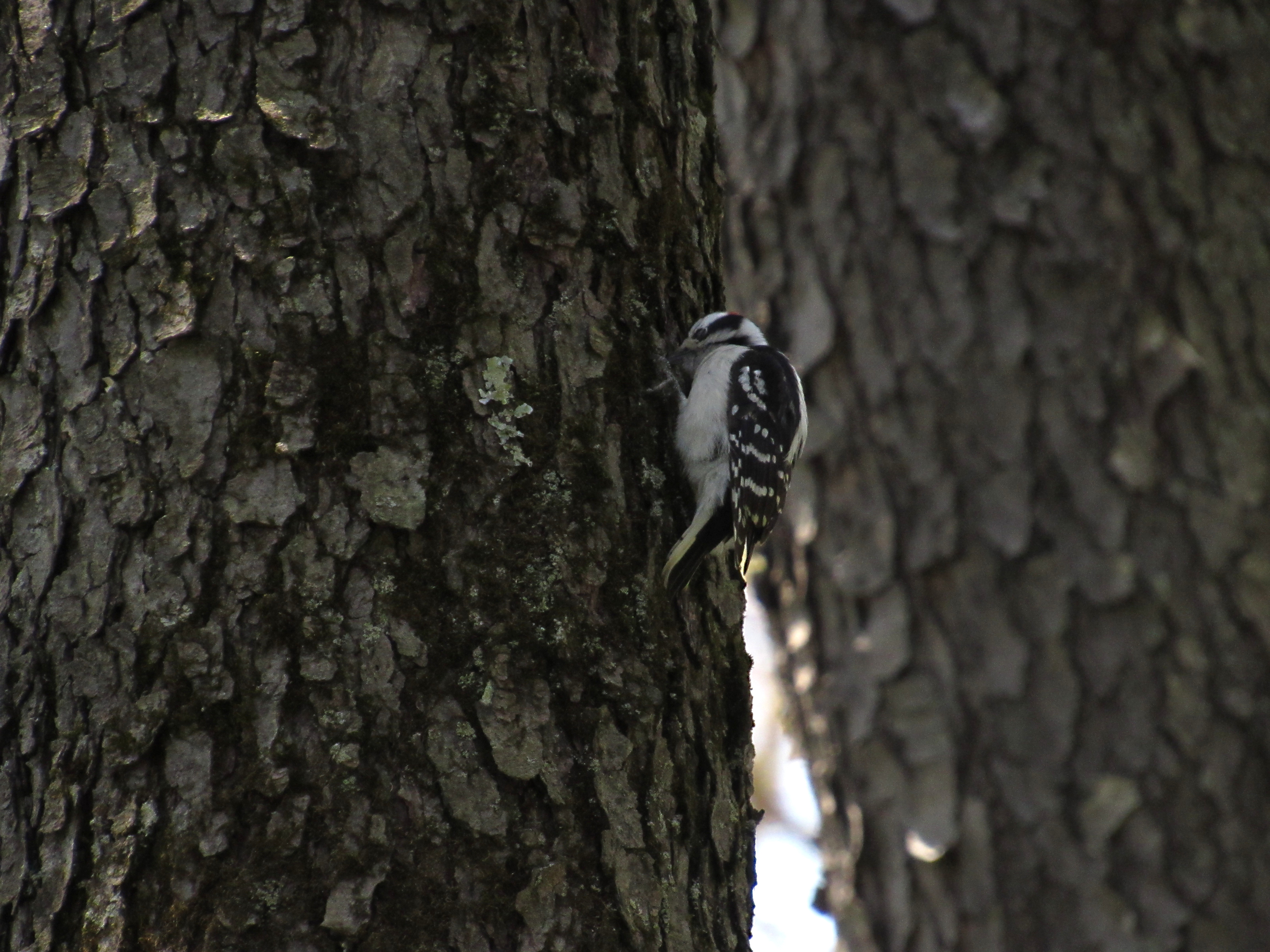
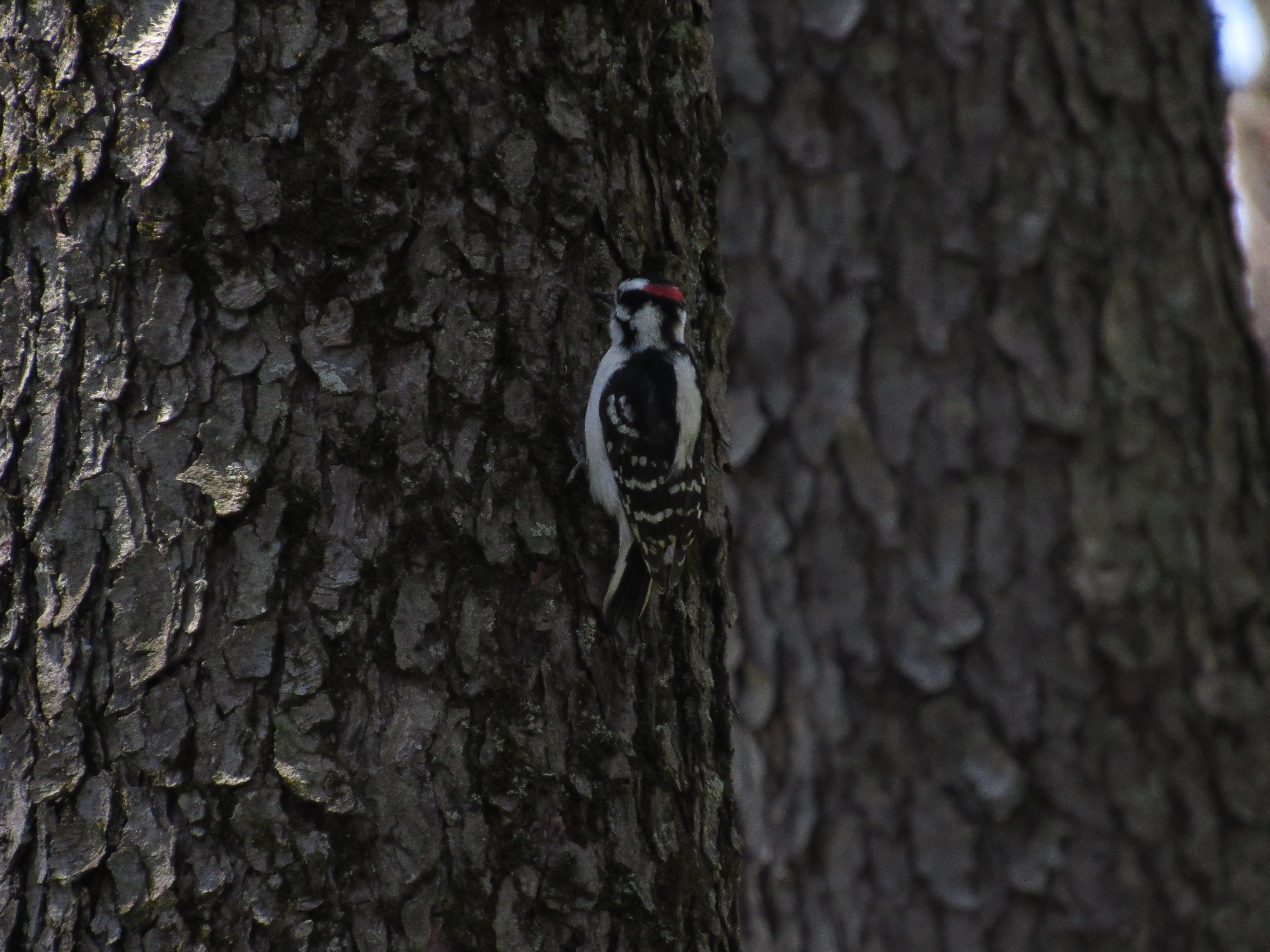

The Downy Woodpecker (Dryobates pubescens) is the smallest woodpecker species in North America. It is known for its striking black-and-white plumage, acrobatic foraging behavior, and distinctive drumming sounds. This species is commonly found in forests, woodlands, parks, and suburban areas across the United States and Canada.
Physical Characteristics
Size: 5.5 to 7 inches (14–18 cm) in length
Wingspan: 9.8 to 12.2 inches (25–31 cm)
Weight: 0.7 to 1.0 oz (21–28 g)
Coloration: Black and white checkered pattern on the wings. White underside. Black and white striped head. Males have a small red patch on the back of the head, while females do not. Short, chisel-like bill
Habitat & Range
Found throughout North America, from Alaska and Canada to the southern United States. Prefers deciduous forests, mixed woodlands, and suburban gardens with trees. Frequently visits backyard bird feeders
Behavior
Foraging: Feeds primarily on insects, larvae, and spiders by pecking tree bark. Also eats berries, seeds, and sap in winter. Often seen clinging to tree trunks, branches, and even plant stems
Drumming & Communication: Males and females drum on trees to establish territory and attract mates. Produces a high-pitched “pik” call
Flight: Undulating flight pattern, alternating between rapid wingbeats and gliding
Diet
Mostly insectivorous, consuming: Beetles, ants, caterpillars, and other larvae
Supplements diet with: Seeds, berries, nuts, and suet from feeders. Occasionally drinks sap from holes made by sapsuckers
Reproduction
Breeding Season: April to July
Nesting: Both males and females excavate nest cavities in dead trees or branches. Line the cavity with wood chips instead of soft materials
Eggs: Lay 3 to 8 white eggs. Incubation lasts 12 days, shared by both parents
Chicks: Hatch helpless and remain in the nest for 18 to 21 days. Fed by both parents
Predators & Threats
Predators: Hawks, owls, snakes, raccoons, and cats prey on adults and nestlings
Threats: Habitat loss due to deforestation. Collisions with windows. Competition for nesting sites with invasive species like European Starlings
Adaptations
Specialized skull & brain: Thick skull and shock-absorbing tissues protect the brain from impact when pecking
Zygodactyl feet: Two toes point forward, two backward for better grip on tree bark
Stiff tail feathers: Provide support while climbing trees
Conservation Status
Least Concern (IUCN Red List)
Stable population due to adaptability to suburban and urban areas
Interesting Facts
Can drum up to 16 times per second. Sometimes follows larger woodpeckers to scavenge food from their pecked trees. Helps control insect populations, making them beneficial to trees
 Wild Bird Journal
Leave a comment