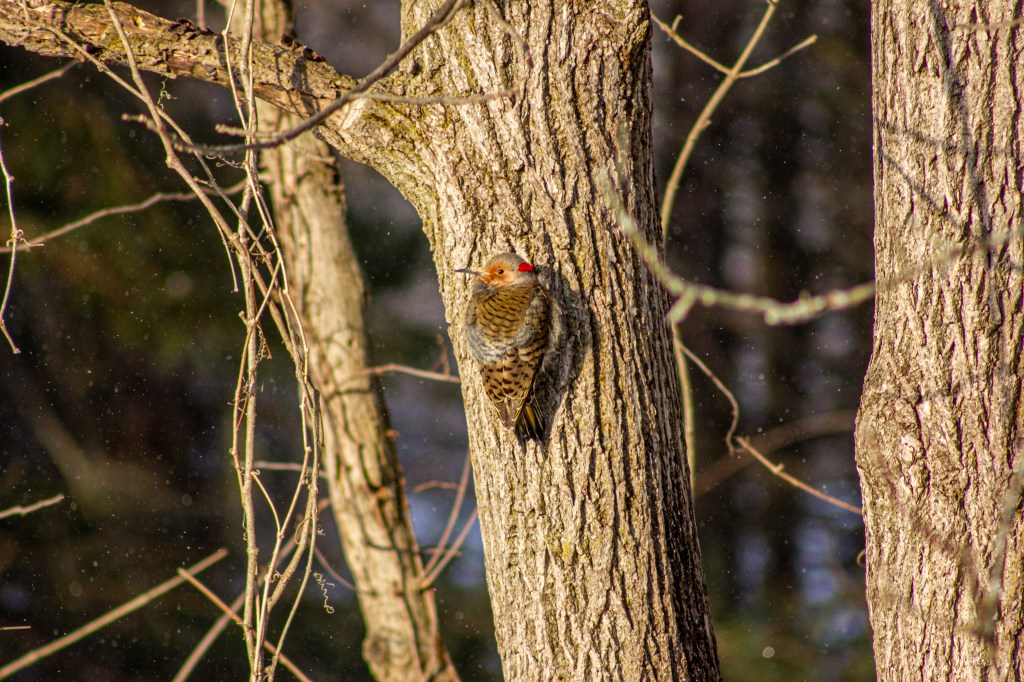
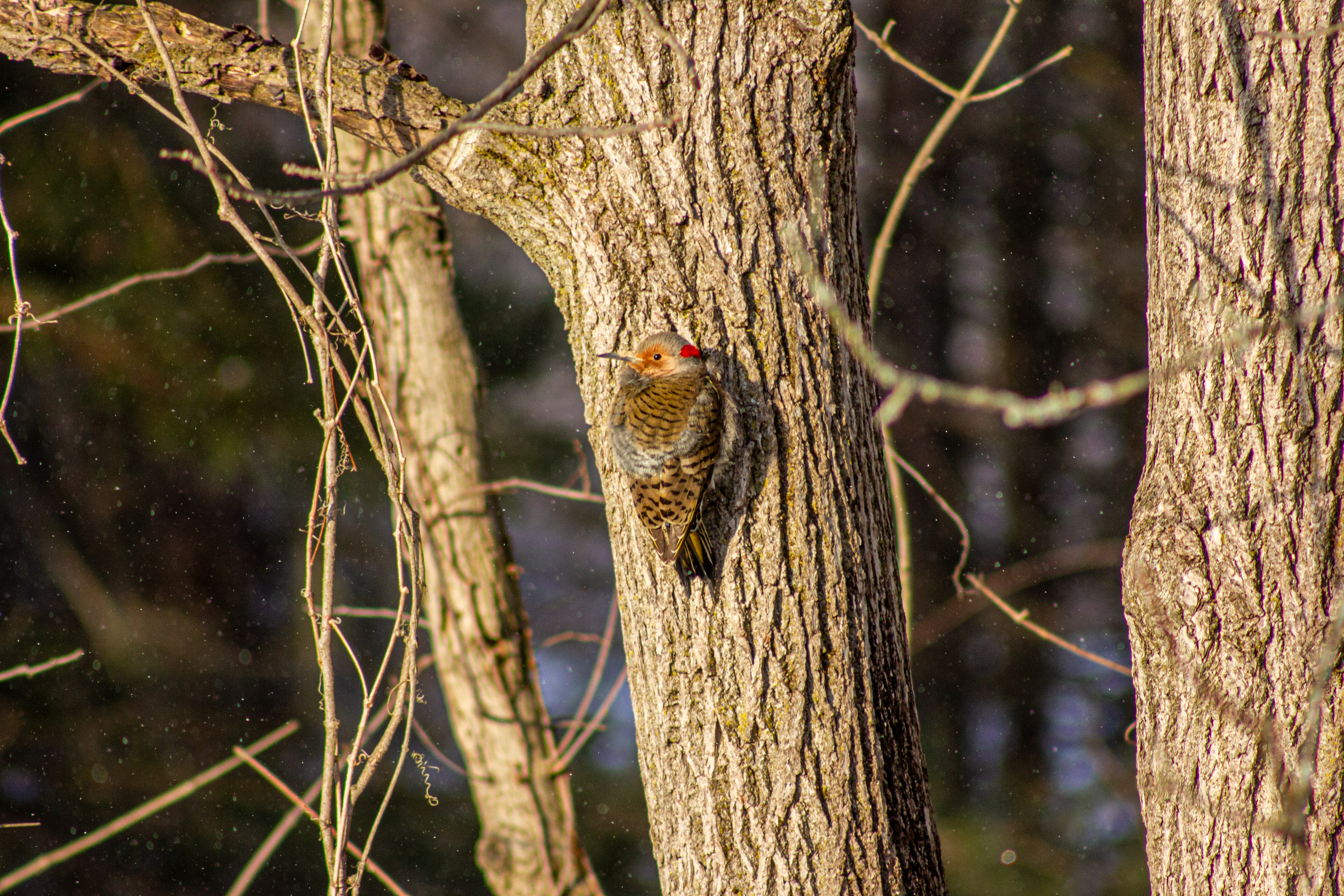


The Northern Flicker is a striking and highly adaptable species of woodpecker found across North America. Unlike most woodpeckers, which primarily drill into trees, the Northern Flicker often feeds on the ground, making it unique among its relatives. This bird is known for its distinctive plumage, loud calls, and strong migratory patterns.
Physical Description
Size: Medium-sized woodpecker, 11-14 inches (28-36 cm) in length with a 17-21 inch (42-54 cm) wingspan.
Weight: 3-5.9 ounces (85-167 grams).
Coloration: Brownish overall with black barring on the back and spotted underparts. A black crescent-shaped bib on the chest. Males have a mustache-like stripe on the face, absent in females. White rump patch, visible in flight. Distinct Variations: Yellow-Shafted Flicker: Found in the eastern and northern U.S. and Canada, has yellow flight feathers and a red nape. Red-Shafted Flicker: Found in the western U.S., has red flight feathers and lacks the red nape.
Habitat and Range
The Northern Flicker is highly adaptable and found in a variety of habitats, including: Forests (deciduous and mixed), open woodlands, parks and suburbs, grasslands with scattered trees, and desert edges
They have a large range, spanning Canada, the U.S., Mexico, and parts of Central America. Some populations migrate southward in winter, especially those in northern regions.
Diet and Foraging Behavior
Unlike most woodpeckers, Northern Flickers spend a lot of time on the ground searching for food.
Primary food: Ants and beetles, which they extract from the soil with their long, barbed tongue.
Other food sources: Fruits (berries, wild grapes, dogwood, sumac), Seeds and nuts, Caterpillars, termites, and spiders, Occasionally suet from bird feeders
They use their long, curved bill to probe the soil, much like a shorebird rather than a typical woodpecker.
Behavior and Communication
Call: A loud, ringing “wick-a-wick-a-wick” or “kleeyer” sound. Drumming: Flickers drum on trees, metal poles, and even houses to establish territory. Territoriality: Males will engage in “fencing duels” where they face off, bob their heads, and display their wings.
Reproduction and Nesting
Monogamous pairs, often returning to the same site each year. Breeding season: April to July. Nest: Excavated in dead trees, utility poles, or nest boxes. Eggs: 5-8 white eggs, incubated for 11-14 days. Fledging: Young leave the nest after 3-4 weeks but rely on parents for a few more weeks.
Migration and Movement
Partially migratory; northern populations migrate south in winter, while southern populations remain year-round. Migratory distances vary from a few hundred to over a thousand miles.
Predators and Threats
Natural Predators: Hawks and falcons, Raccoons and snakes (nest predators), Domestic cats
Human-Related Threats
Deforestation reduces nesting sites. Window collisions are a significant cause of mortality. Pesticides reduce insect prey populations.
Despite these threats, Northern Flickers remain widespread and stable, classified as Least Concern by conservation groups.
Cultural Significance and Interesting Facts
State Bird: The Northern Flicker is the state bird of Alabama. Unique Feeding Style: Unlike most woodpeckers, it digs for food on the ground rather than pecking trees. Anting Behavior: Flickers sometimes allow ants to crawl on them, possibly to help control parasites. Long-distance Migrants: Some flickers migrate over 2,000 miles to reach wintering grounds.
 Wild Bird Journal
Leave a comment