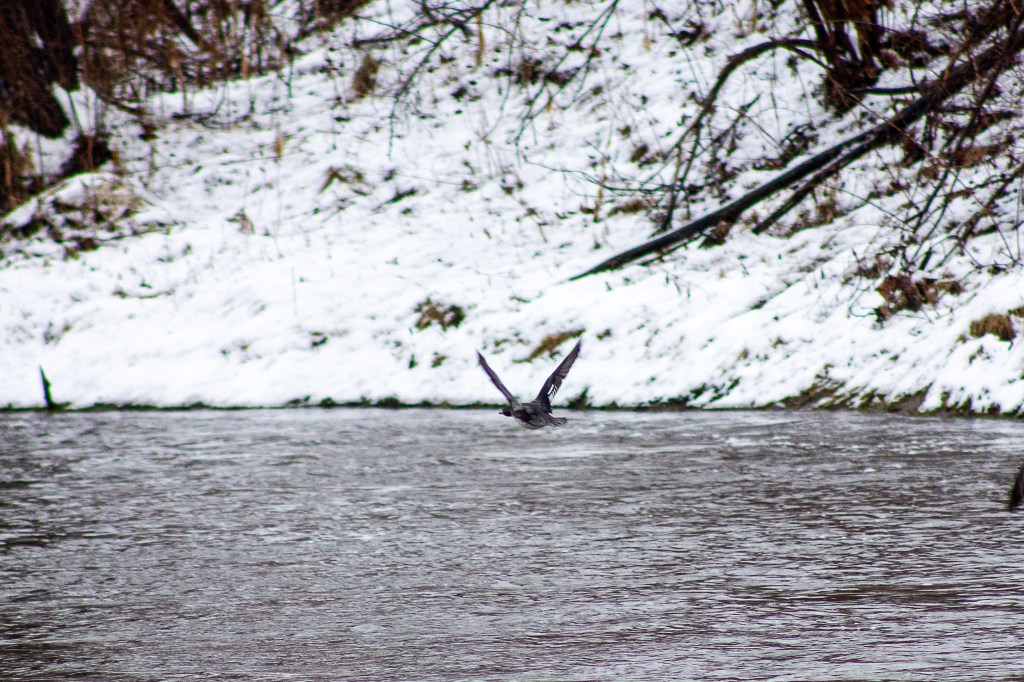
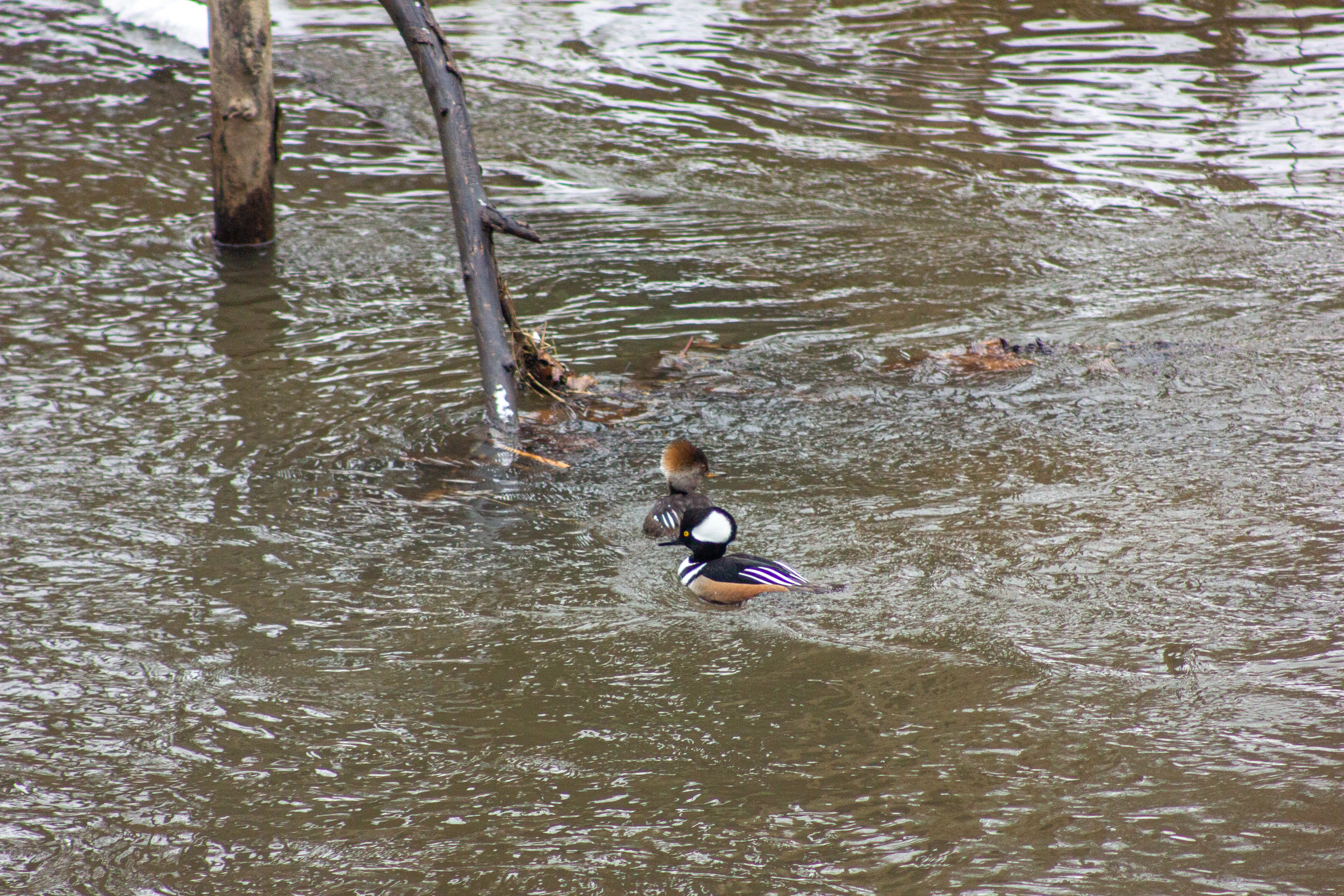
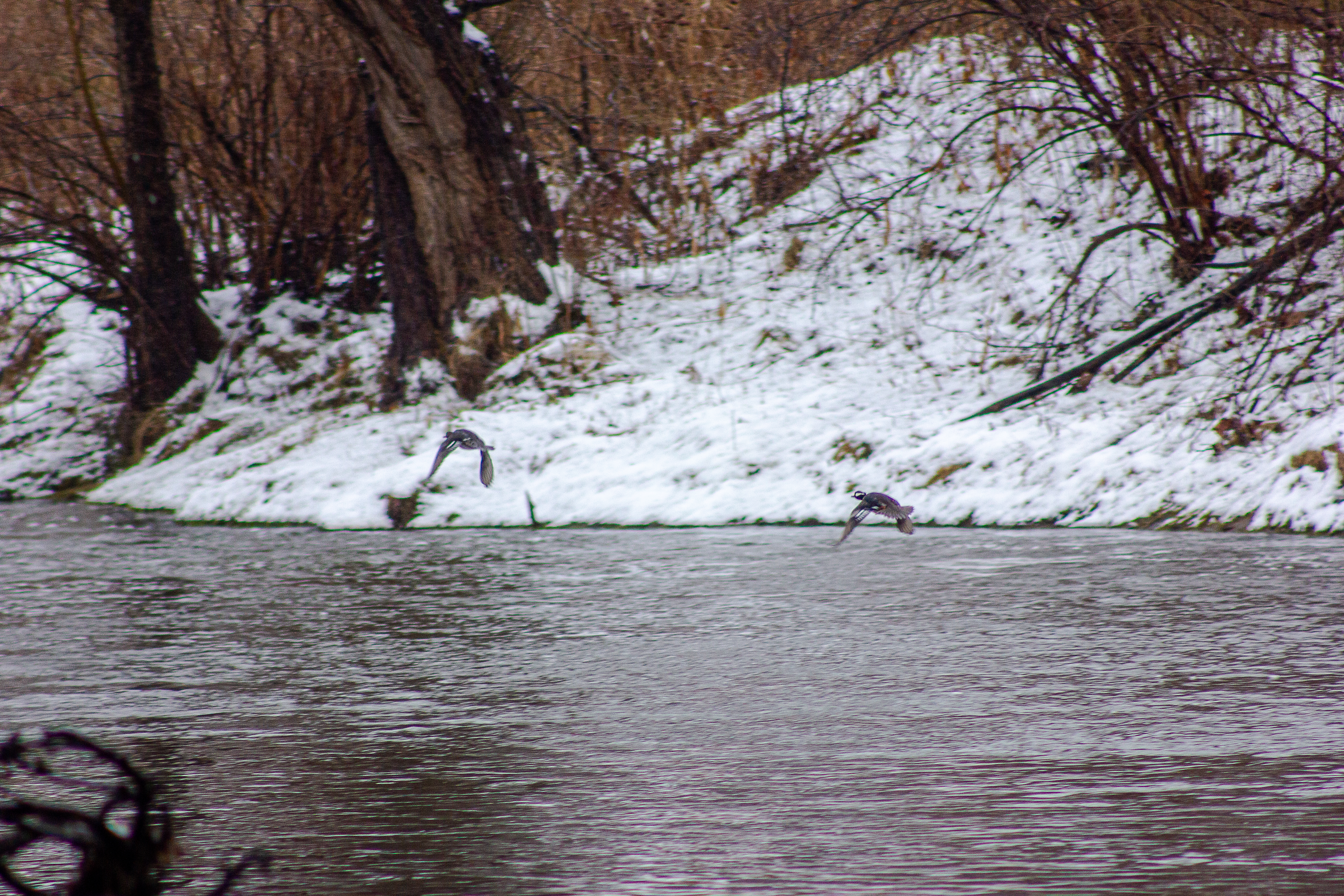

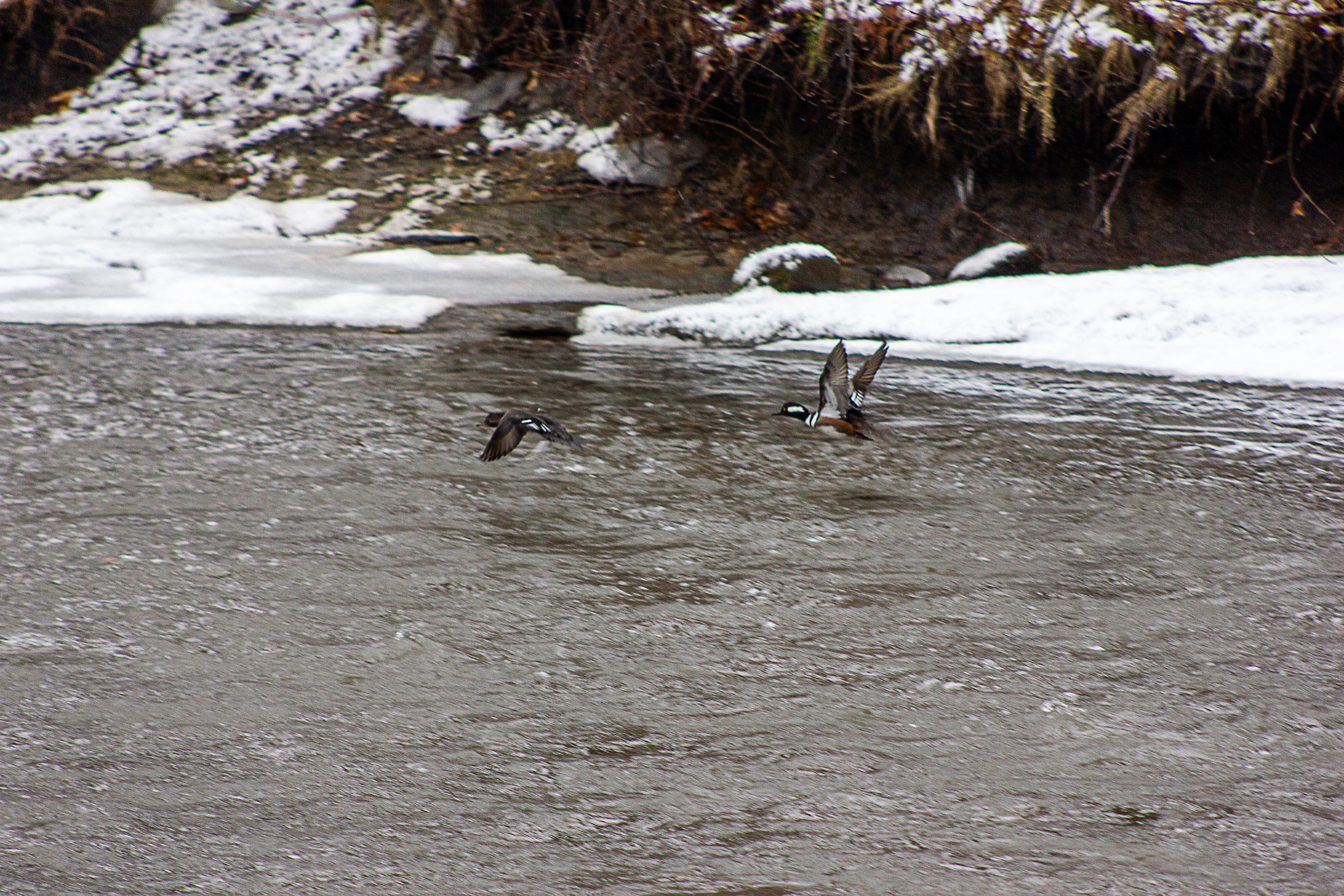
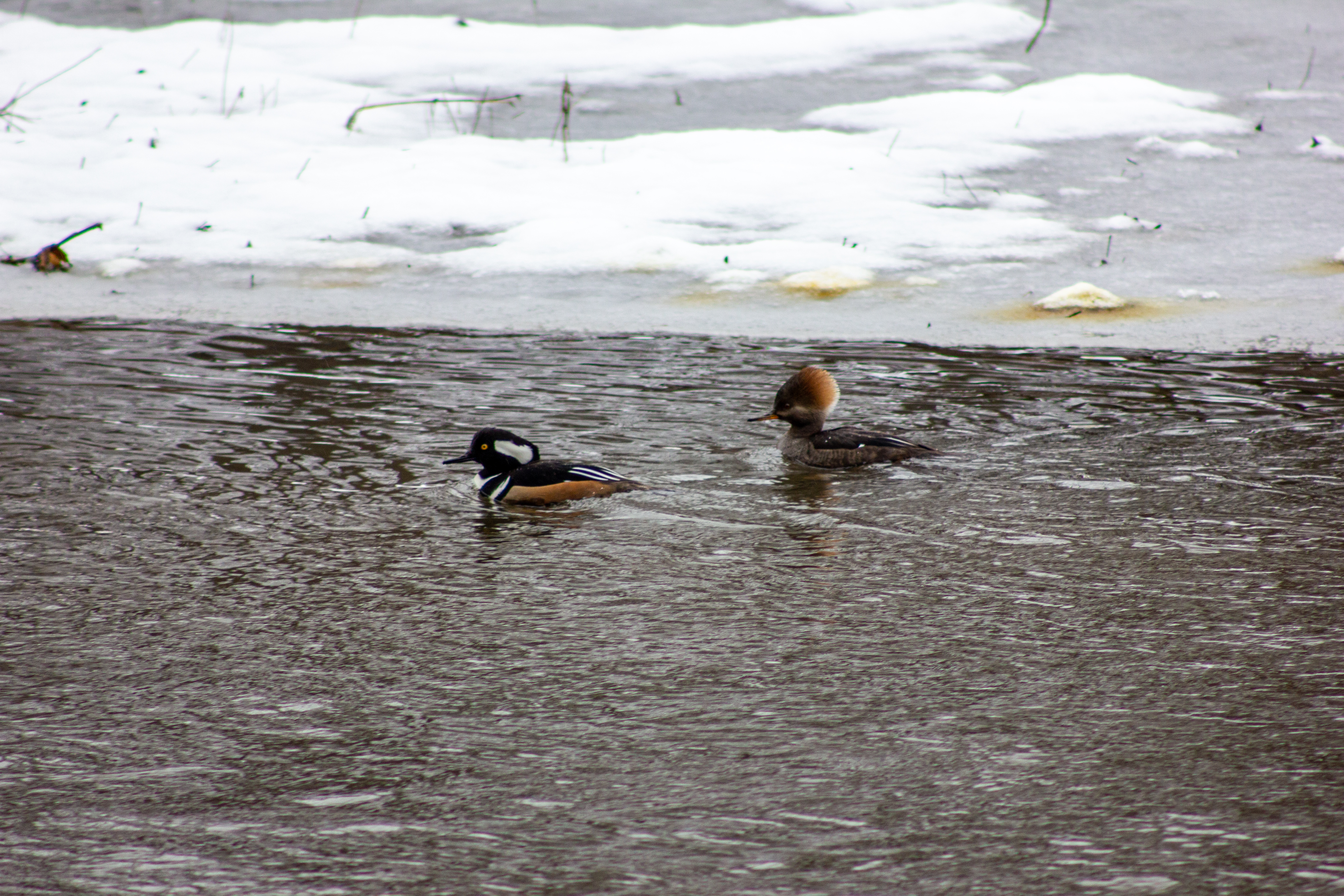
The hooded merganser (Lophodytes cucullatus) is a small, striking duck native to North America, known for its distinctive crest and agile diving abilities. Here are key facts and descriptions about this fascinating bird:
Physical Characteristics
Size: 16–19 inches (41–48 cm) in length, with a wingspan of 24–26 inches (61–66 cm). Weight: Around 1.3–1.6 lbs (600–725 g). Crest: Males have a large, fan-like black-and-white crest that can be raised or lowered, while females have a smaller, brownish crest.
Plumage: Males: Black head with a white fan-shaped patch, golden-yellow eyes, and chestnut-colored sides. Females: Warm brown overall with a rusty-brown crest and duller yellowish eyes. Bill: Narrow, serrated, and slightly hooked, ideal for catching slippery prey.
Habitat and Range
Found in freshwater ponds, lakes, rivers, and wooded swamps across North America. Prefers habitats with dense tree cover near water. Breeds in the eastern and northwestern U.S. and southern Canada. Migrates to southern U.S. and Mexico in winter.
Diet and Feeding Behavior
Carnivorous, mainly eating small fish, crustaceans (like crayfish), aquatic insects, and amphibians. Dives underwater to catch prey, using its sharp vision and strong webbed feet for propulsion. Often hunts in shallow, slow-moving waters.
Reproduction and Nesting
Nest in tree cavities, often using abandoned woodpecker holes near water. Occasionally use nest boxes provided by conservationists. Females lay 6–15 eggs and incubate them for about 30 days. Ducklings leave the nest within 24 hours of hatching, jumping from heights of up to 50 feet without injury. Chicks are independent soon after hatching but stay near their mother for protection.
Behavior and Adaptations
Excellent divers, using their feet for propulsion while hunting underwater. Strong fliers, capable of rapid takeoffs from water. Males perform elaborate courtship displays, including head-bobbing and crest-raising, to attract females. Secretive and shy, often retreating to dense vegetation if disturbed.
Sounds and Communication
Males make a low, frog-like croaking sound during courtship. Females produce a soft grunting or clucking call when communicating with ducklings.
Conservation Status
Listed as Least Concern by the IUCN, but populations depend on healthy wetland habitats. Threats include habitat destruction, pollution, and competition for nesting sites with invasive species like starlings.
Interesting Facts
They are the only species in the genus Lophodytes. Their eyes can adjust underwater, giving them sharp vision while diving. Unlike many ducks, they form monogamous pairs during the breeding season.

 Wild Bird Journal
Leave a comment