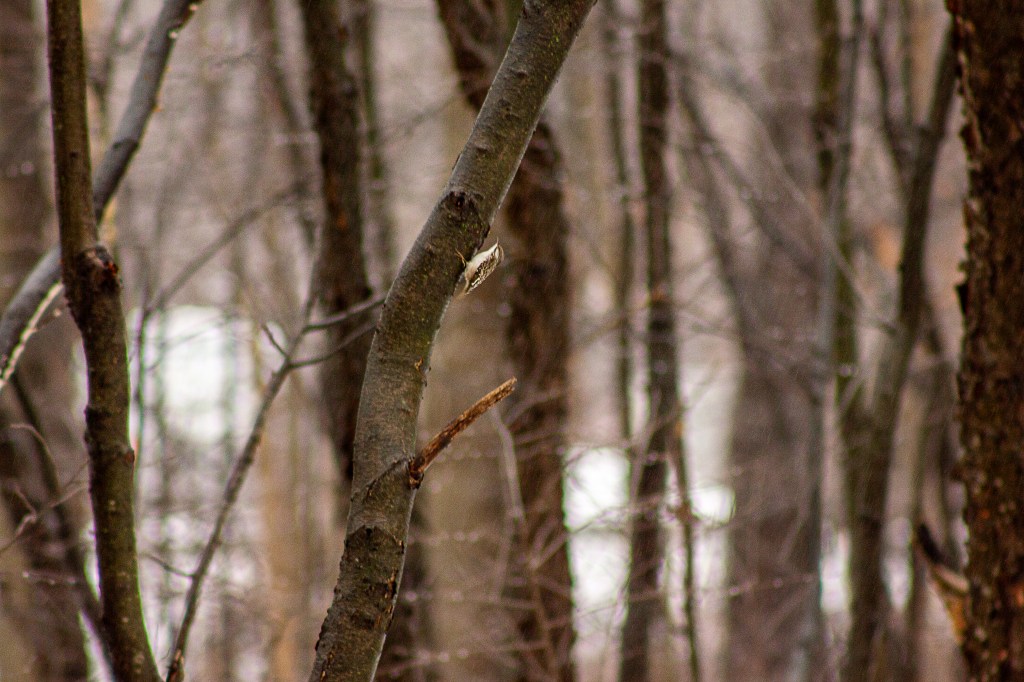

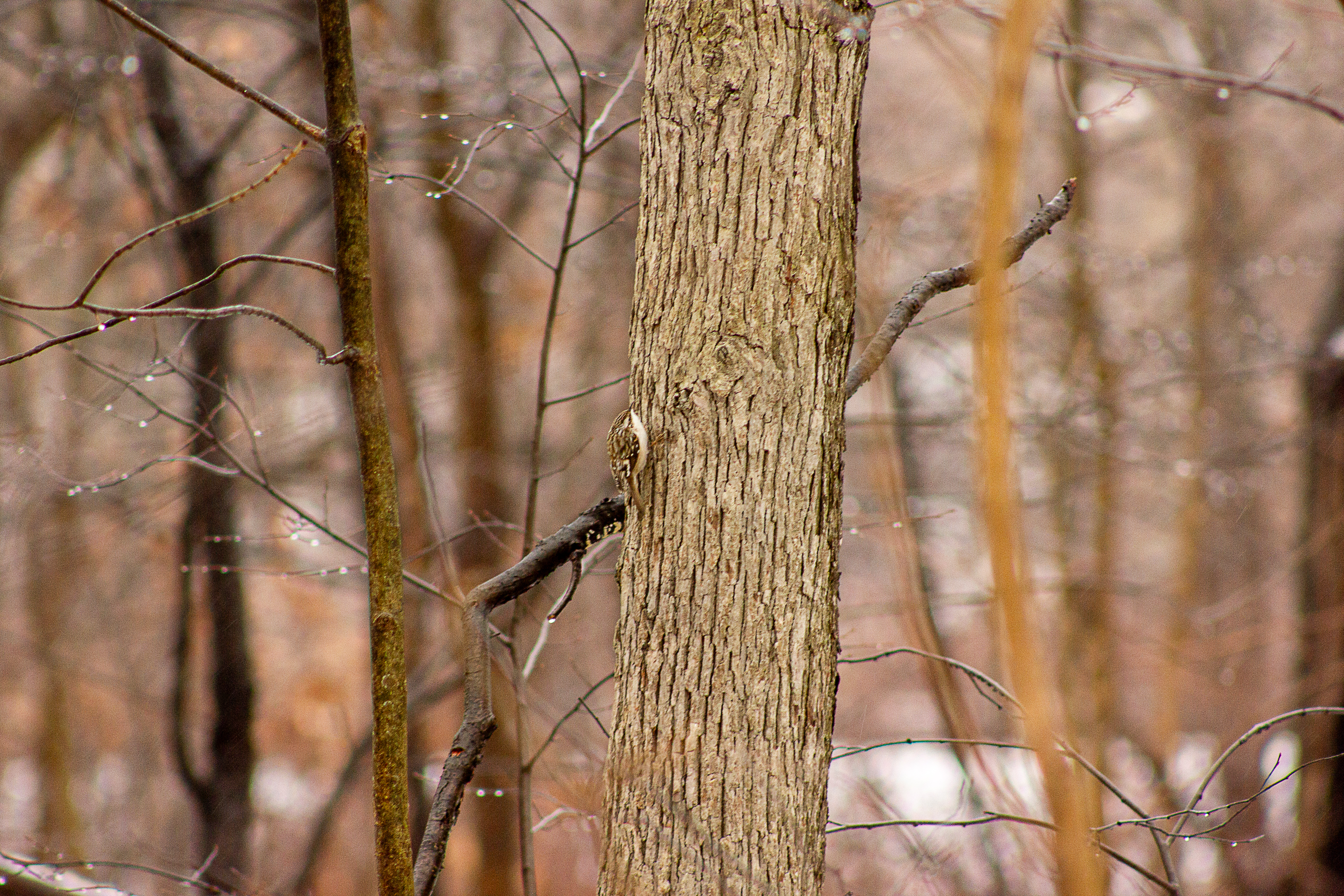

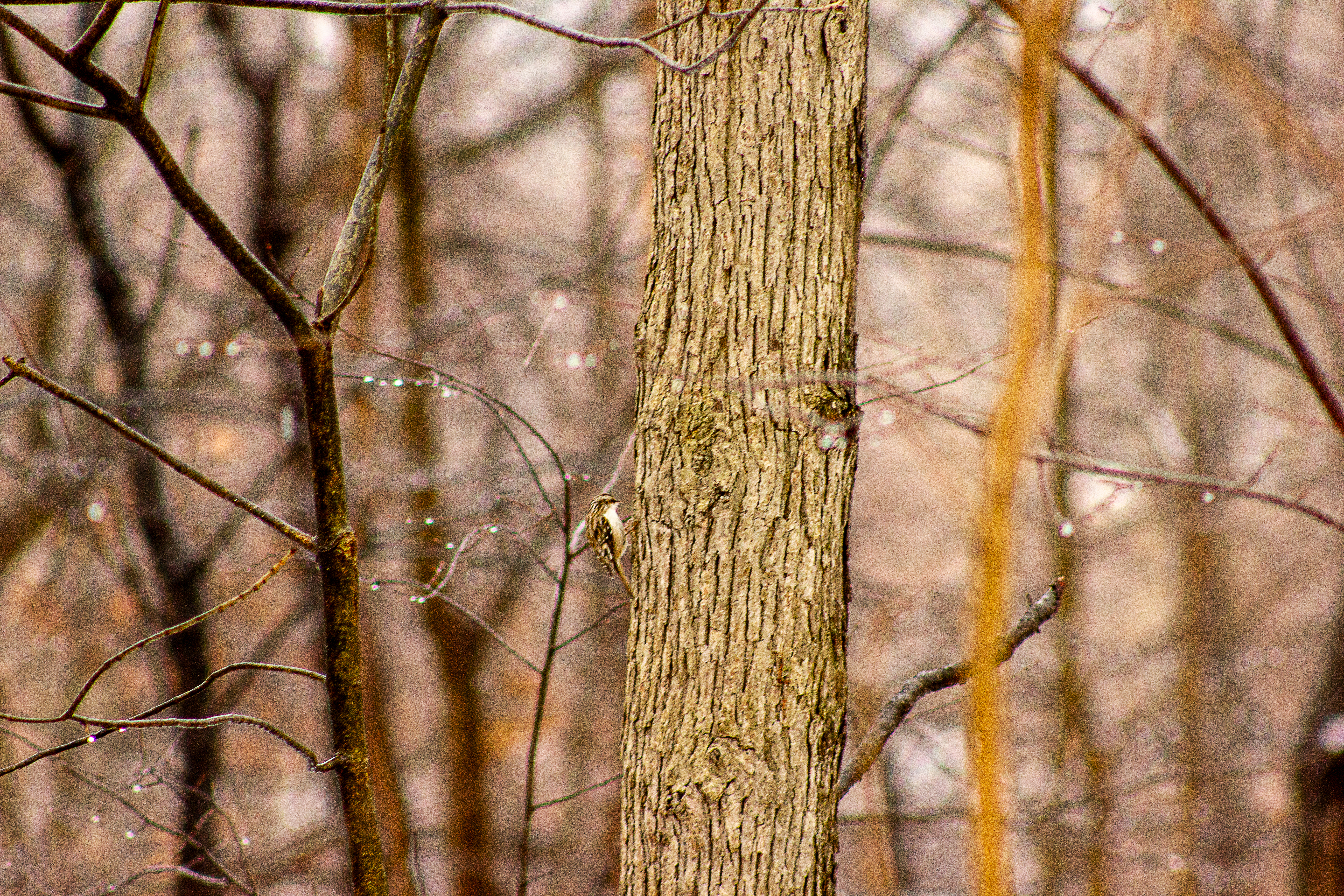
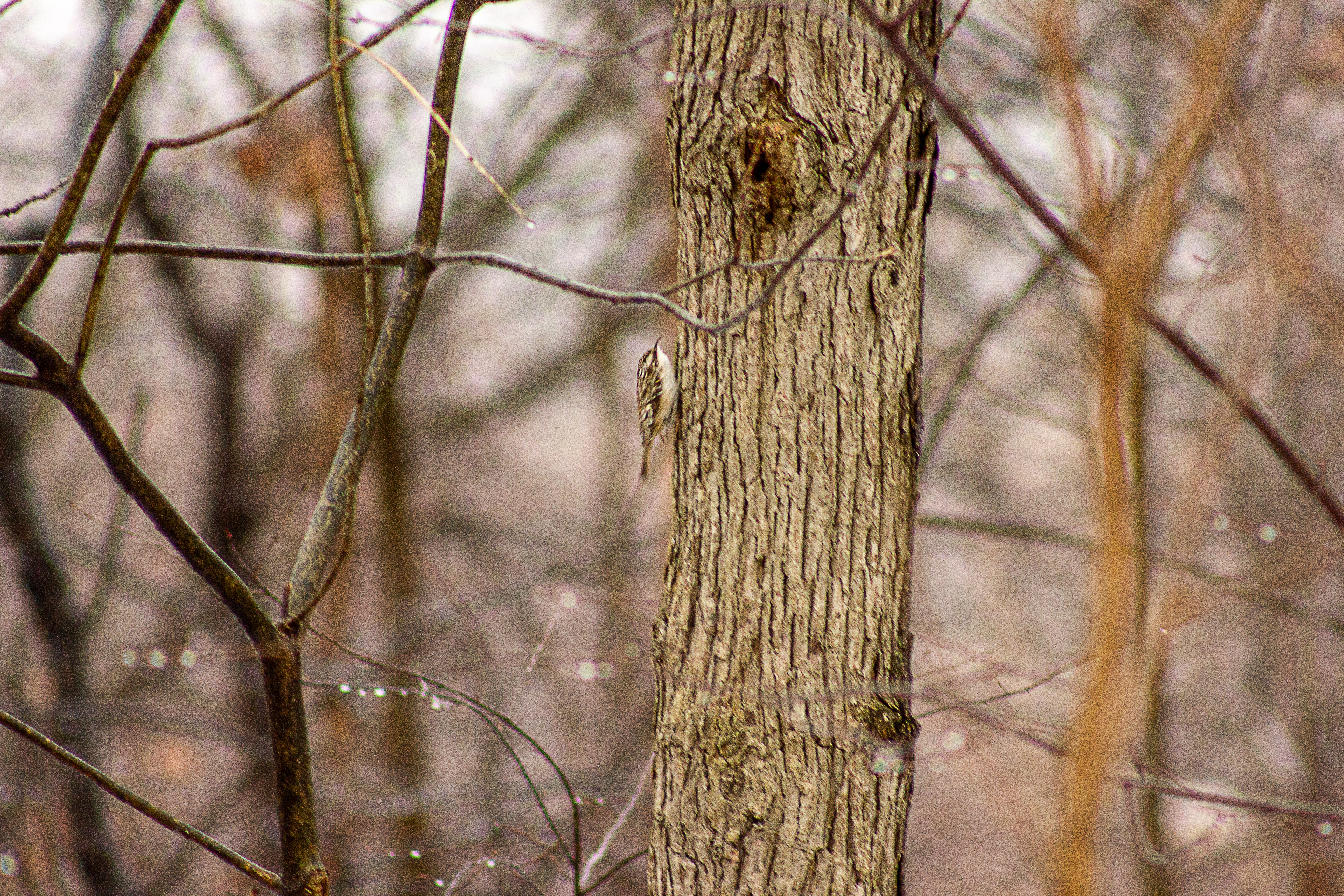
The brown creeper (Certhia americana) is a small, cryptic songbird native to North America, known for its distinctive foraging behavior of spiraling up tree trunks in search of insects. This species belongs to the Certhiidae family, which includes other creeper species found across Eurasia. Brown creepers are most commonly found in mature forests, particularly those with large trees, where they use their camouflaged plumage to blend seamlessly into the bark.
Physical Description
Brown creepers are small birds, measuring about 4.7–5.5 inches (12–14 cm) in length, with a wingspan of 6.7–7.9 inches (17–20 cm). They weigh 5–10 grams (0.18–0.35 ounces). Their plumage is mottled brown and white, resembling tree bark, which helps them remain inconspicuous. They have a slender, downcurved bill, which is well-adapted for extracting insects from bark crevices. Their long, stiff tail feathers provide support as they climb tree trunks in a manner similar to woodpeckers.
Behavior and Foraging
Brown creepers are arboreal insectivores, meaning they primarily feed on insects found in tree bark. They start at the base of a tree and spiral upward, probing crevices with their slender bill to extract insects, spiders, and larvae. Once they reach the top, they fly down to the base of another tree and repeat the process. Their foraging style is unique among North American birds, differing from woodpeckers, which move vertically and may excavate deeper into the wood.
While insects make up the majority of their diet, they also consume seeds, especially during winter when insect availability declines. They are often seen in mixed-species foraging flocks during colder months, joining birds like chickadees, nuthatches, and kinglets.
Habitat and Range
Brown creepers inhabit a variety of forest types across North America, including coniferous, mixed, and deciduous forests. They prefer mature forests with large, rough-barked trees, which offer an abundance of food and nesting sites. Their range extends from southern Canada and Alaska through most of the United States, excluding much of the Great Plains and the hottest southern regions. Some northern populations migrate southward in winter, while others remain in their home range year-round.
Nesting and Reproduction
During breeding season, which occurs from April to July, brown creepers build hidden nests behind loose bark on dead or dying trees. The female constructs the nest using twigs, moss, and feathers, creating a soft inner lining. Unlike many songbirds that build nests in open branches, the brown creeper’s nest placement provides excellent protection from predators and harsh weather.
A female lays 3–7 eggs, which she incubates for about 14–17 days. The young are altricial, meaning they hatch blind and helpless, relying entirely on parental care. Both parents feed the chicks, which fledge after about 14–16 days but remain dependent on their parents for another few weeks before becoming fully independent.
Vocalizations and Communication
Brown creepers have a high-pitched, delicate song consisting of thin, descending whistles, often described as “see-tee-tee-tee.” Their call notes are similarly high-pitched and are sometimes difficult for humans to detect. Their cryptic coloration and soft vocalizations make them hard to spot, even when present in an area.
Conservation Status
The brown creeper is classified as a species of Least Concern by the IUCN, meaning it is not currently at risk of extinction. However, habitat loss due to deforestation and urban development poses a threat, especially in areas where old-growth forests are being cleared. Conservation efforts aimed at preserving mature forests benefit brown creeper populations, along with other species that depend on large trees for survival.
Interesting Facts About the Brown Creeper
Brown creepers are the only species of treecreeper found in North America. Their camouflage is so effective that they can be difficult to spot, even when climbing right in front of an observer. Unlike nuthatches, which move headfirst down trees, brown creepers only move upward in a spiraling motion. They often roost in tree bark crevices during cold nights, huddling together for warmth. Brown creepers have an extra-long hind toe with a sharp claw, which helps them cling to rough bark.
Conclusion
The brown creeper is a fascinating, elusive bird with unique adaptations for tree-climbing and insect foraging. Its cryptic appearance, spiraling movement, and reliance on mature forests make it an interesting species for birdwatchers and ecologists alike. While not currently endangered, habitat preservation is essential to ensure their continued survival in North American forests.
 Wild Bird Journal
Leave a comment