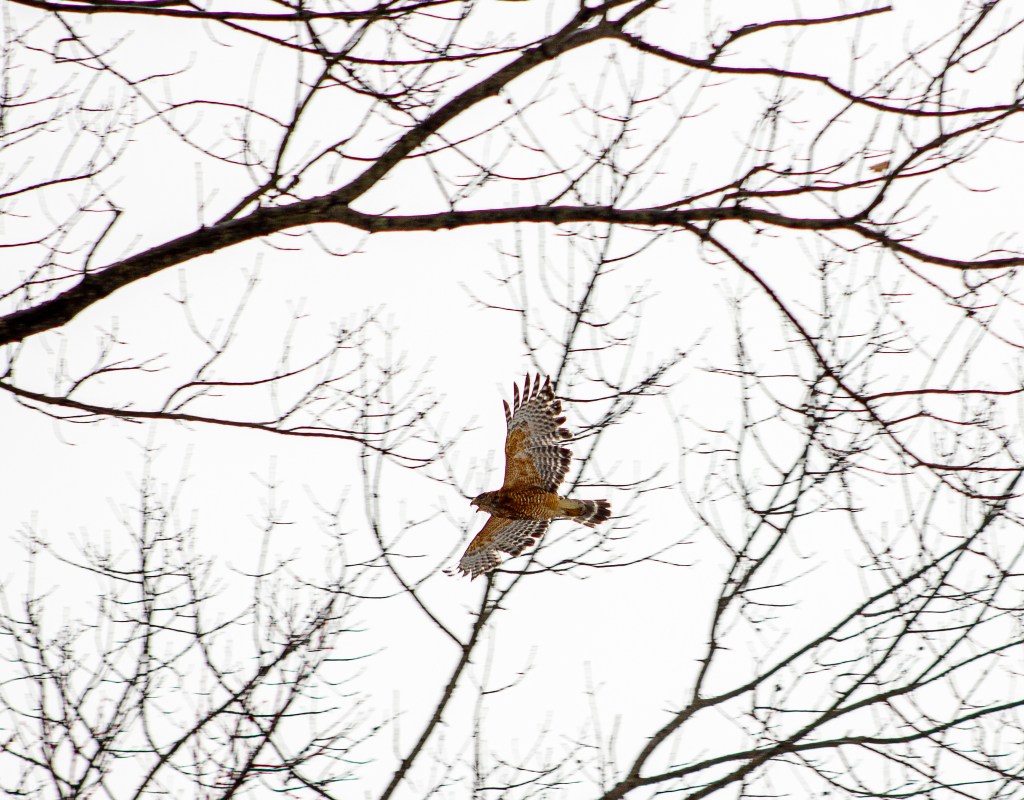
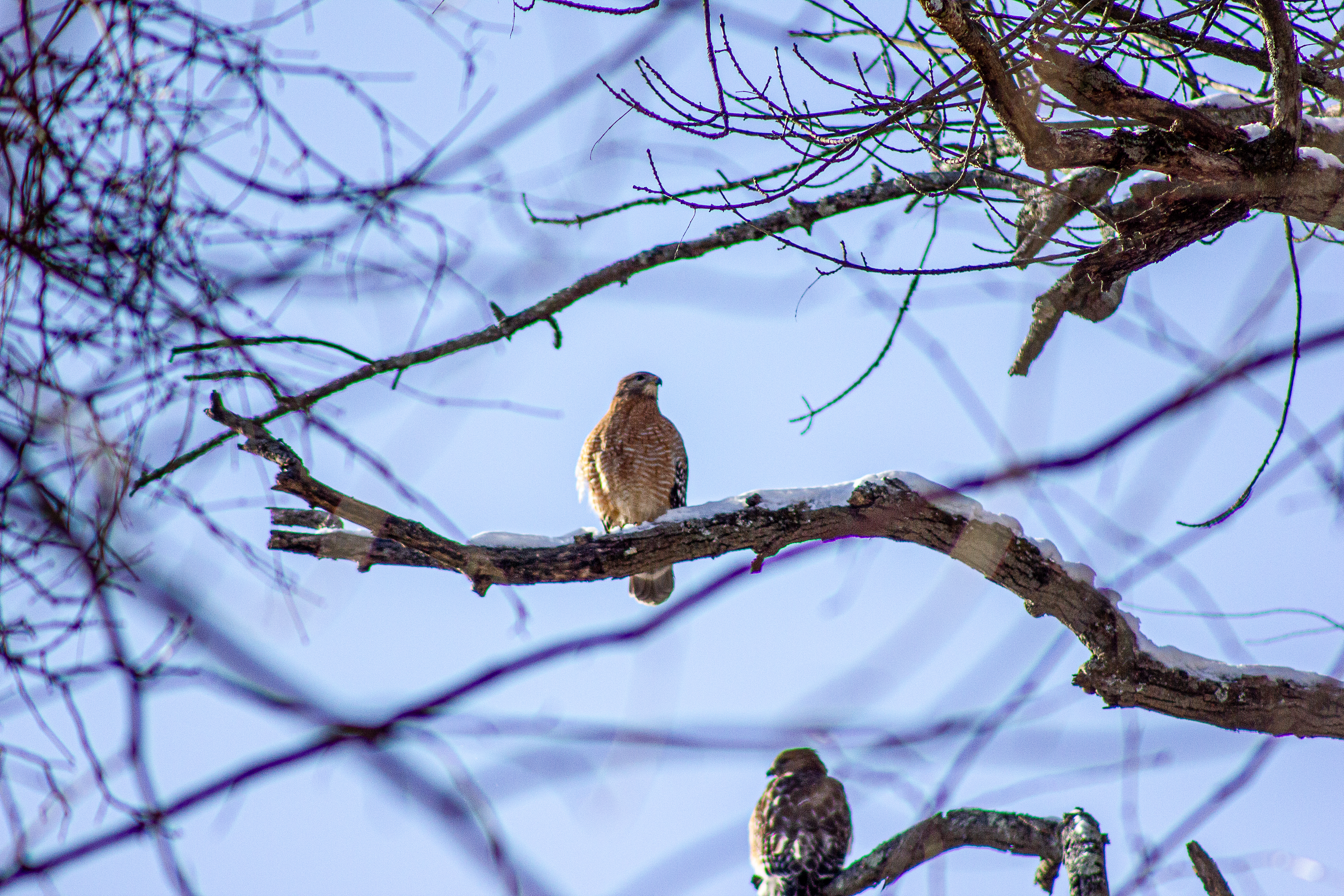
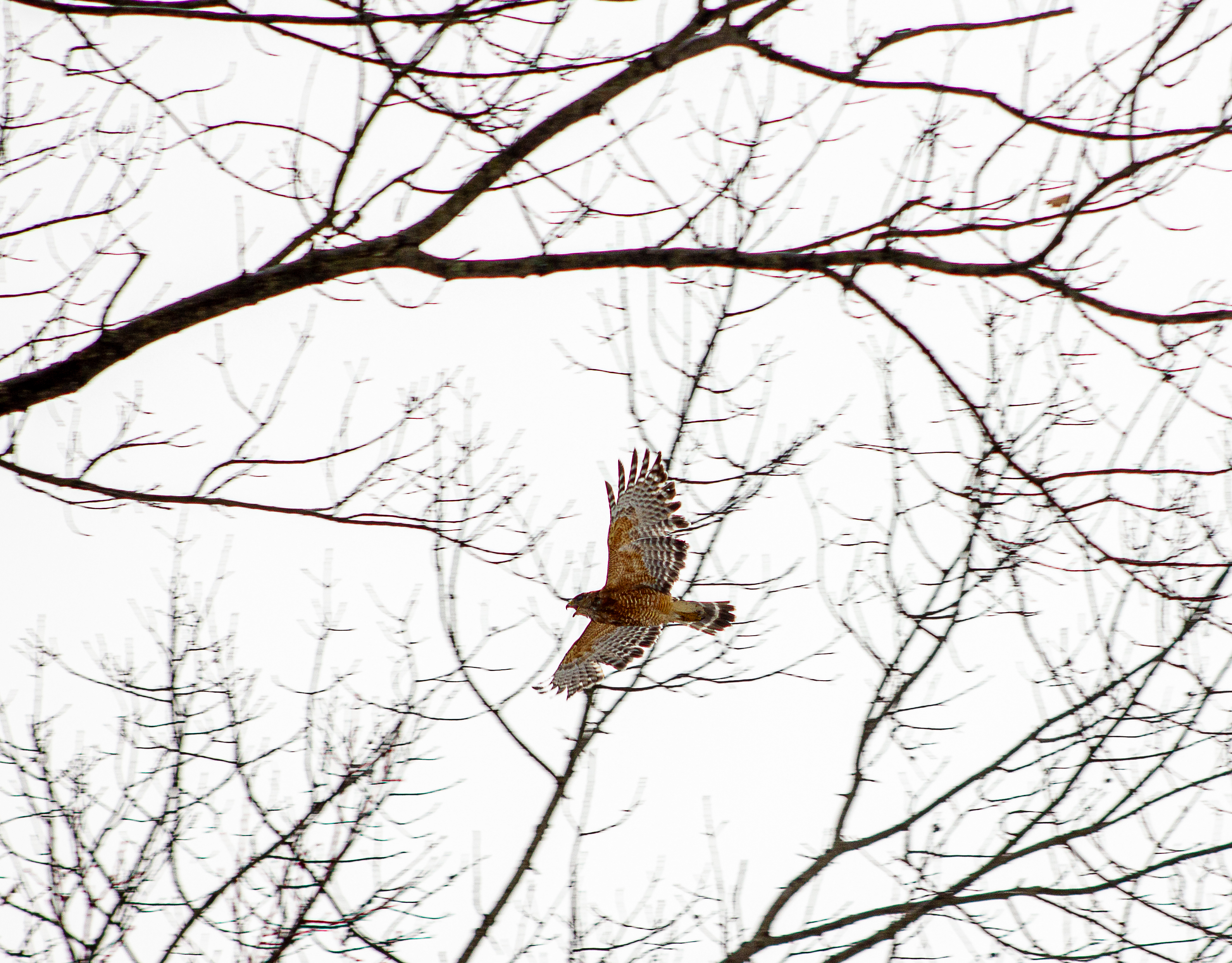

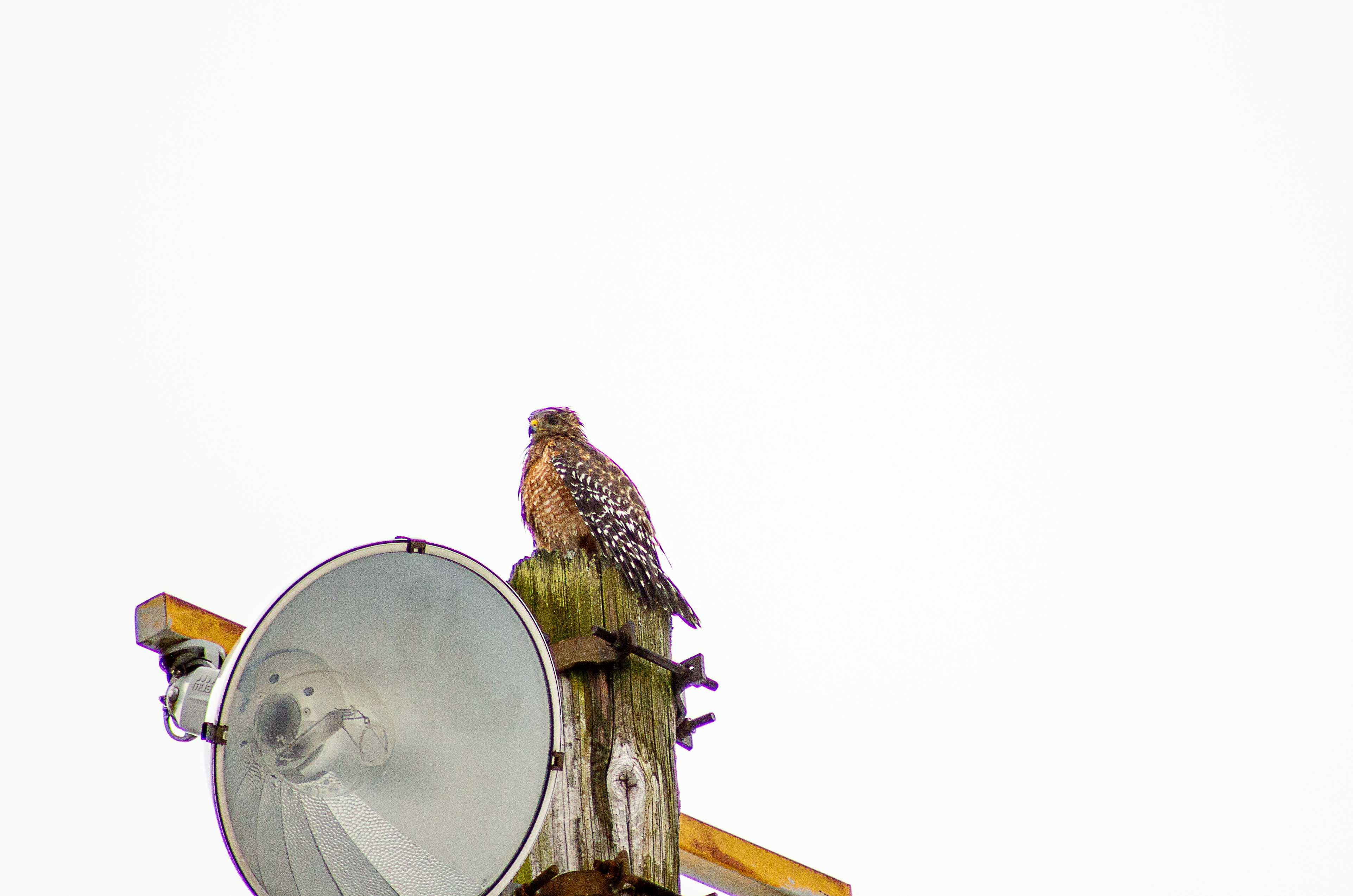
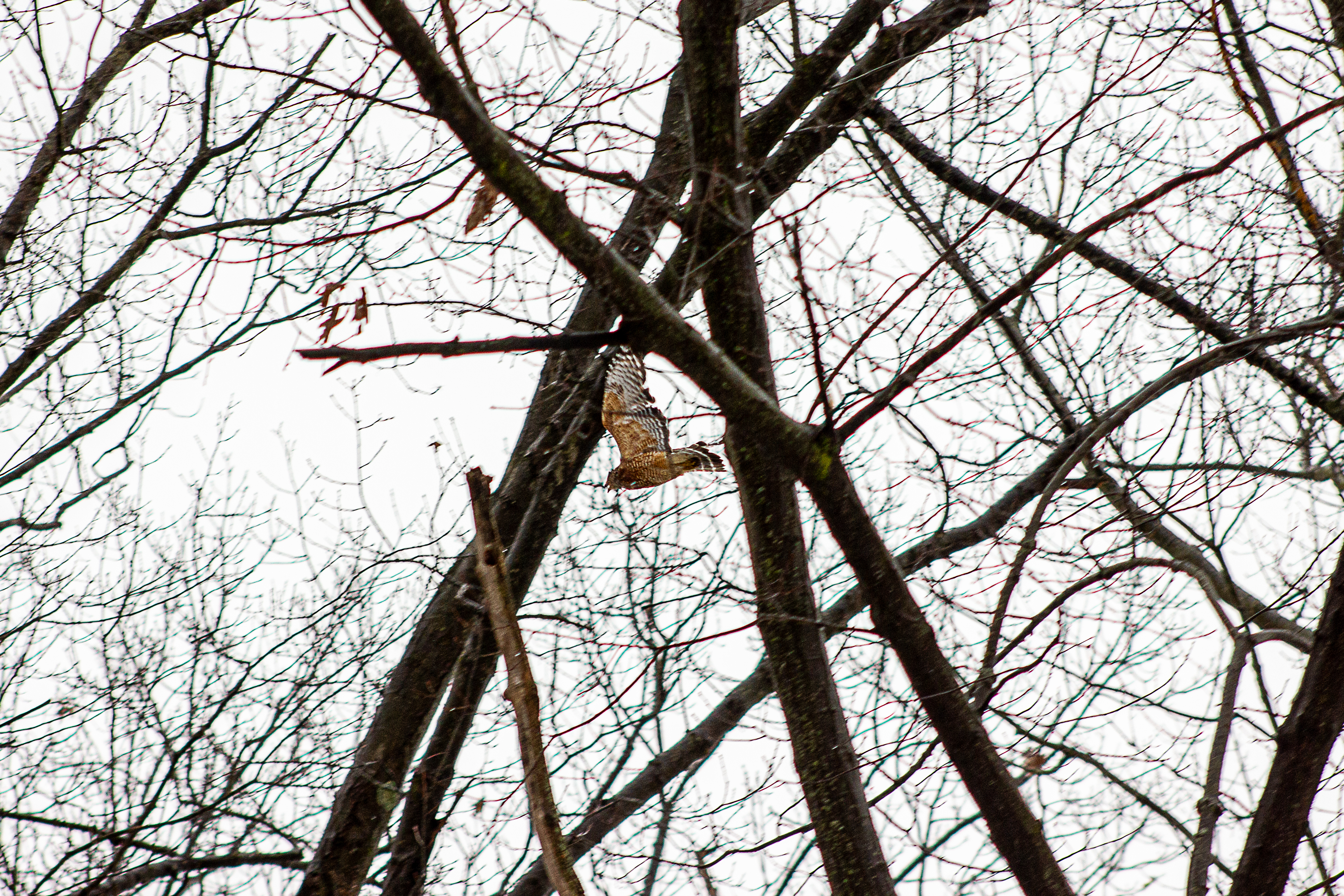
The red-shouldered hawk (Buteo lineatus) is a medium-sized bird of prey native to North America. It belongs to the Buteo genus, which includes broad-winged hawks characterized by rounded wings and relatively short tails. This hawk is known for its striking plumage, distinctive call, and preference for wooded habitats.
Identification and Physical Description
Size & Shape:Medium-sized raptor, typically 16–24 inches (40–61 cm) in length. Wingspan ranges from 37–43 inches (94–110 cm). Weight varies between 17–27 ounces (486–774 grams), with females generally larger than males.
Plumage: Rusty red-colored shoulders, which give the bird its name. Bold black-and-white checkered pattern on the wings. Rich reddish-brown chest with horizontal barring. Tail features black bands alternating with white bands. Pale underparts with some streaking.
Distinctive Features: Broad wings adapted for soaring through forests. Sharp talons and a hooked beak for capturing prey. Yellow legs and cere (the fleshy area at the base of the beak).
Sexual Dimorphism: Females are larger than males but have similar coloration.
Range and Habitat
Geographic Range: Found across the eastern United States, parts of the Midwest, and along the Pacific coast. Some populations migrate southward during winter, especially in the northern parts of their range.
Preferred Habitat: Deciduous and mixed forests near rivers, swamps, and wetlands. Prefers mature woodlands with open understories. Common in suburban areas with tree cover.
Behavior and Ecology
Diet: Opportunistic carnivores. Main prey includes small mammals (mice, voles, squirrels), amphibians (frogs), reptiles (snakes), birds, and large insects. Occasionally scavenges for food.
Hunting Techniques: Perches on tree branches and swoops down to catch prey. Sometimes hunts from a slow, soaring flight. Uses sharp talons to grasp and kill prey.
Vocalizations: Distinctive, high-pitched kee-aah or keer-keer-keer call. Often mistaken for the call of a blue jay, which sometimes mimics it.
Flight Patterns: Strong, graceful flyers with characteristic flapping followed by gliding. Soars on thermals when traveling long distances.
Breeding and Reproduction
Mating and Nesting: Monogamous, with pairs often remaining together for life. Breeding season starts in early spring (February–April). Builds nests in tall trees, typically 20–60 feet (6–18 meters) above the ground. Nests are made from sticks and lined with leaves, moss, or bark.
Eggs and Incubation
Clutch size: 2–5 eggs, usually white or pale blue with brown spots. Incubation period lasts about 28–33 days, primarily by the female. Chicks hatch altricial (helpless) and rely on parents for food and warmth.
Parental Care and Fledging
Both parents provide food. Chicks fledge (leave the nest) around 5–6 weeks after hatching. Juveniles remain near the parents for several weeks before becoming independent.
Lifespan and Predators
Lifespan: In the wild: Typically 10–15 years. In captivity: Can live over 20 years.
Predators and Threats
Eggs and nestlings are vulnerable to raccoons, crows, and great horned owls. Adults face threats from larger raptors, habitat loss, vehicle collisions, and poisoning from pesticides.
Conservation Status
Classified as Least Concern by the IUCN due to stable populations. Habitat destruction and deforestation pose potential long-term threats. Protected under the U.S. Migratory Bird Treaty Act.
Fun Facts
Red-shouldered hawks are known to coexist with crows, sometimes working together to drive away common enemies like great horned owls. Their keen eyesight allows them to detect prey from great distances. Blue jays frequently mimic their calls as a defense strategy.
 Wild Bird Journal
Leave a comment