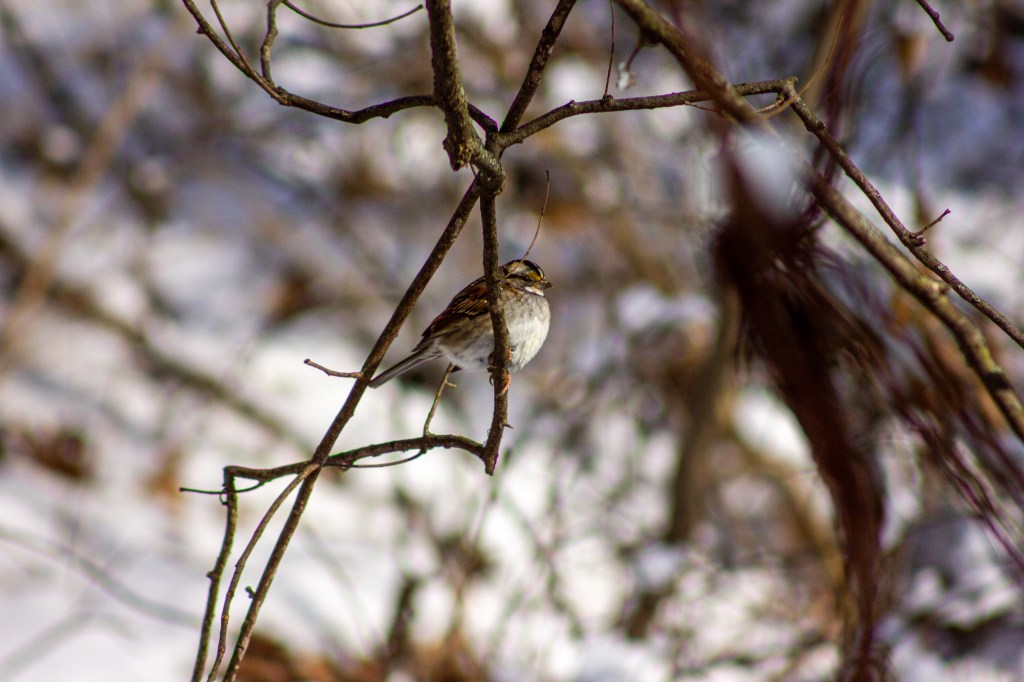
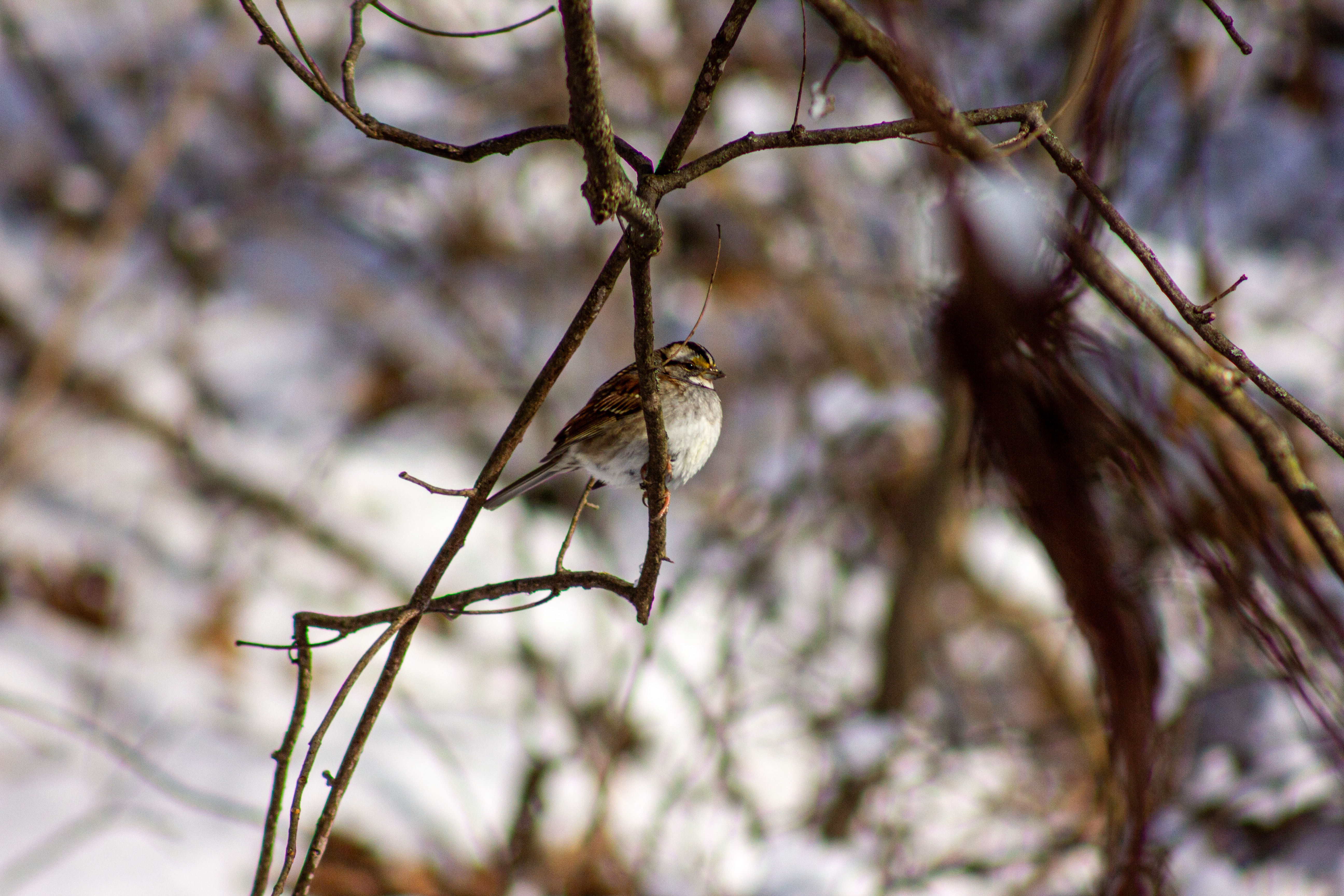

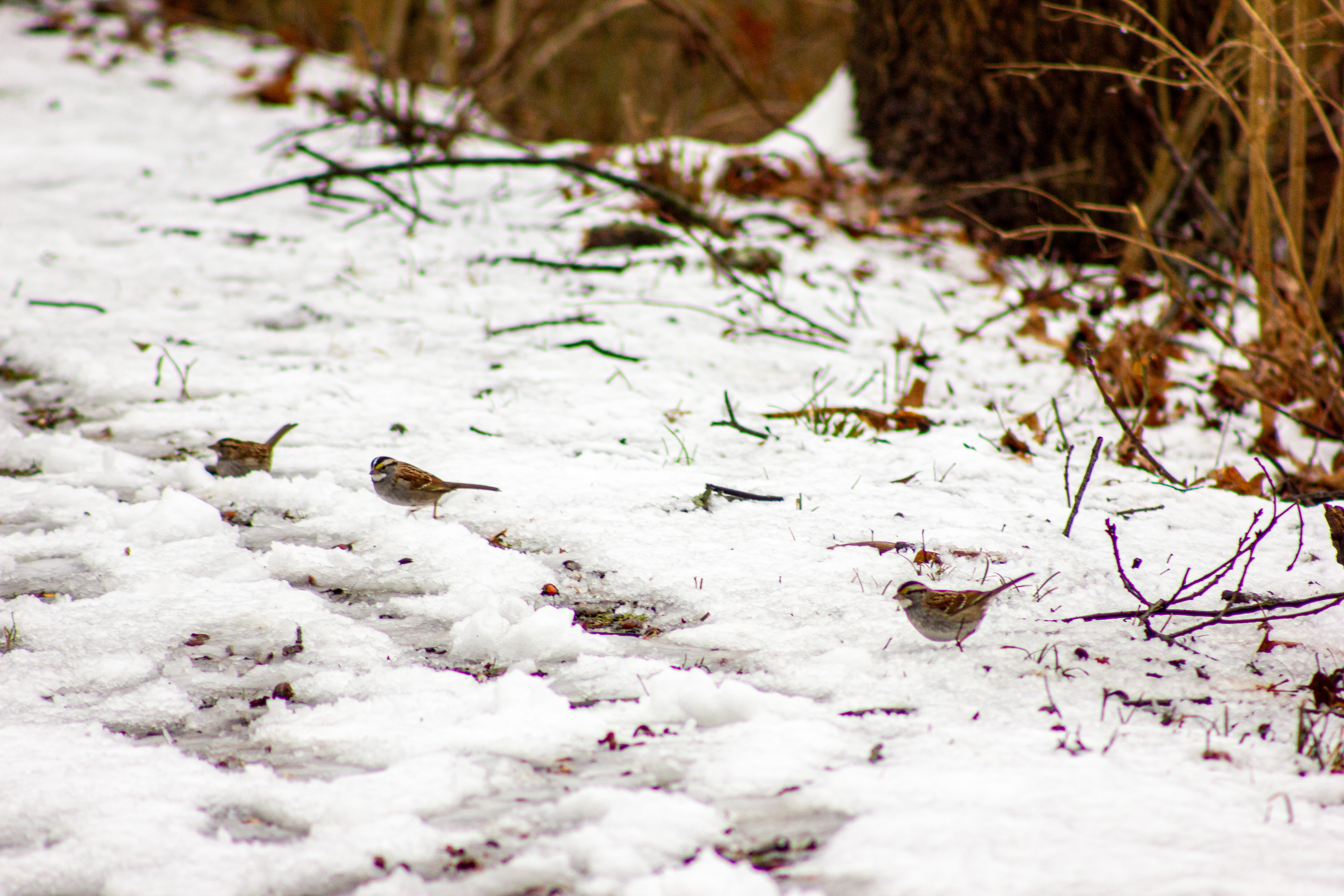
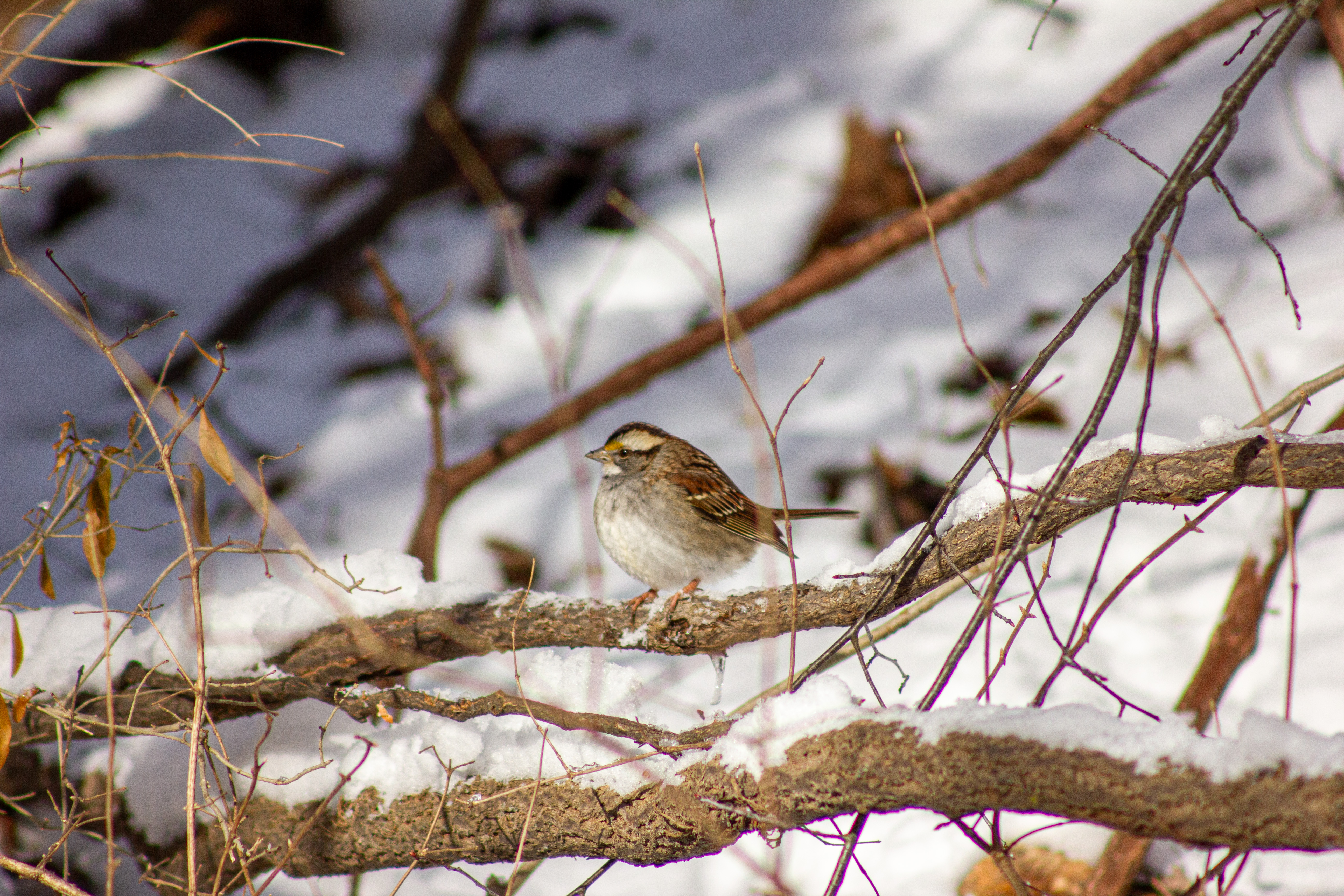
The white-throated sparrow (Zonotrichia albicollis) is a small, striking songbird native to North America. It is well known for its distinctive markings, melodious song, and fascinating genetic polymorphism.
Physical Description
Size: About 15-17 cm (5.9-6.7 in) in length.
Wingspan: 23 cm (9 in).
Weight: 20-30 grams (0.7-1.1 oz).
Plumage: Grayish-brown back with dark streaks. White throat patch (its namesake feature). Black and white or black and tan striped head. Bright yellow patches near the eyes (lores). Pale gray underparts
Color Morphs and Genetics
White-throated sparrows come in two distinct color morphs, controlled by a single genetic variation:
1. White-striped Morph – Has bold black and white stripes on the head. 2.Tan-striped Morph – Has softer brown and tan head stripes.
Interestingly, these two morphs tend to mate with the opposite type: white-striped birds prefer tan-striped mates and vice versa. This ensures a balance of genetic diversity.
Song and Calls
Song: A clear, whistled “Oh sweet Canada, Canada, Canada” or “Poor Sam Peabody, Peabody, Peabody,” depending on regional interpretation.
Call Notes: Include a sharp “tsip” and various chipping sounds.
Duet Behavior: Males and females sometimes sing together in coordinated calls.
Habitat and Distribution
Breeding Range: Primarily in Canada and the northeastern United States, favoring forests with dense undergrowth.
Wintering Range: Migrates south to the eastern and southern U.S., including the southeastern states, Texas, and parts of Mexico.
Habitat: Found in a variety of habitats, including: Boreal forests. Mixed woodlands. Shrubby edges. Suburban parks and gardens in winter
Diet and Foraging Behavior
Diet: In summer: primarily insects, spiders, and other small invertebrates. In winter: switches to seeds, fruits, and buds.
Foraging Style: Often forages on the ground, kicking leaf litter with both feet to uncover food. Visits bird feeders in winter, especially for millet and sunflower seeds.
Breeding and Nesting
Breeding Season: Late spring to early summer (May-July)
Nest Location: Usually built on or near the ground, hidden in dense vegetation.Occasionally found in low shrubs.
Nest Construction: Made of grass, twigs, and moss, lined with softer materials.
Eggs: Clutch size: 3-6 eggs Egg color: Pale greenish or bluish with brown speckles Incubation: ~11-14 days
Parental Care: Both parents help feed the nestlings. Young leave the nest within 8-10 days but are cared for several more weeks.
Migration Patterns
Migratory Behavior: Long-distance migrator, moving south in fall and returning north in spring. Migration occurs mostly at night.
Timing: Southward migration: September-November. Northward migration: March-May
Behavior and Social Structure
Territoriality: Males are highly territorial during the breeding season, defending nesting areas with song.
Flocking: Outside of breeding season, they form mixed flocks with other sparrows, juncos, and finches.
Predators and Threats
Natural Predators: Birds of prey (hawks, owls), Snakes, Mammals (squirrels, weasels, cats)
Threats: Habitat loss due to deforestation, Window collisions, Predation by domestic cats
Conservation Status
IUCN Status: Least Concern (population stable)
Conservation Efforts: Protected under the Migratory Bird Treaty Act. Benefits from habitat conservation efforts
Interesting Facts
Genetic Quirk: White-throated sparrows are one of the only known vertebrates where behavior is linked to a simple genetic system (mating preferences based on color morphs).
Famous Song: Their tune is one of the most recognizable bird calls in North America. Bird
Feeder Favorite: They often visit feeders, especially in winter, making them popular among birdwatchers.
The white-throated sparrow is a fascinating and unique bird, both biologically and behaviorally. Whether you’re a casual birdwatcher or a serious ornithologist, this species is one worth paying attention to!
Feel Free to subscribe! All it does is let you know when I next post!
 Wild Bird Journal
Leave a comment