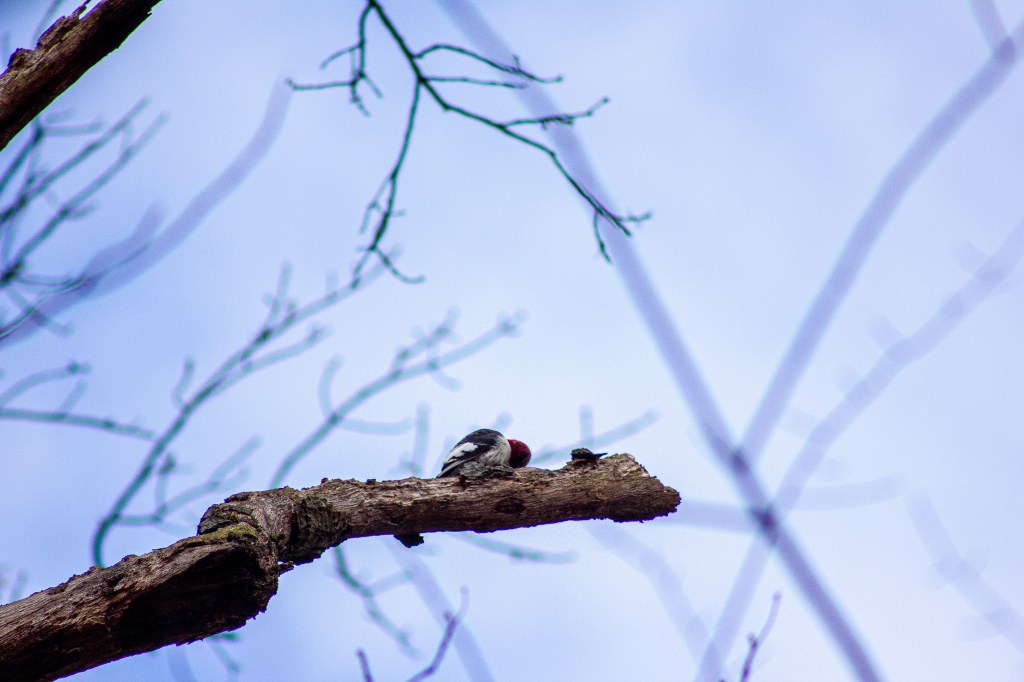
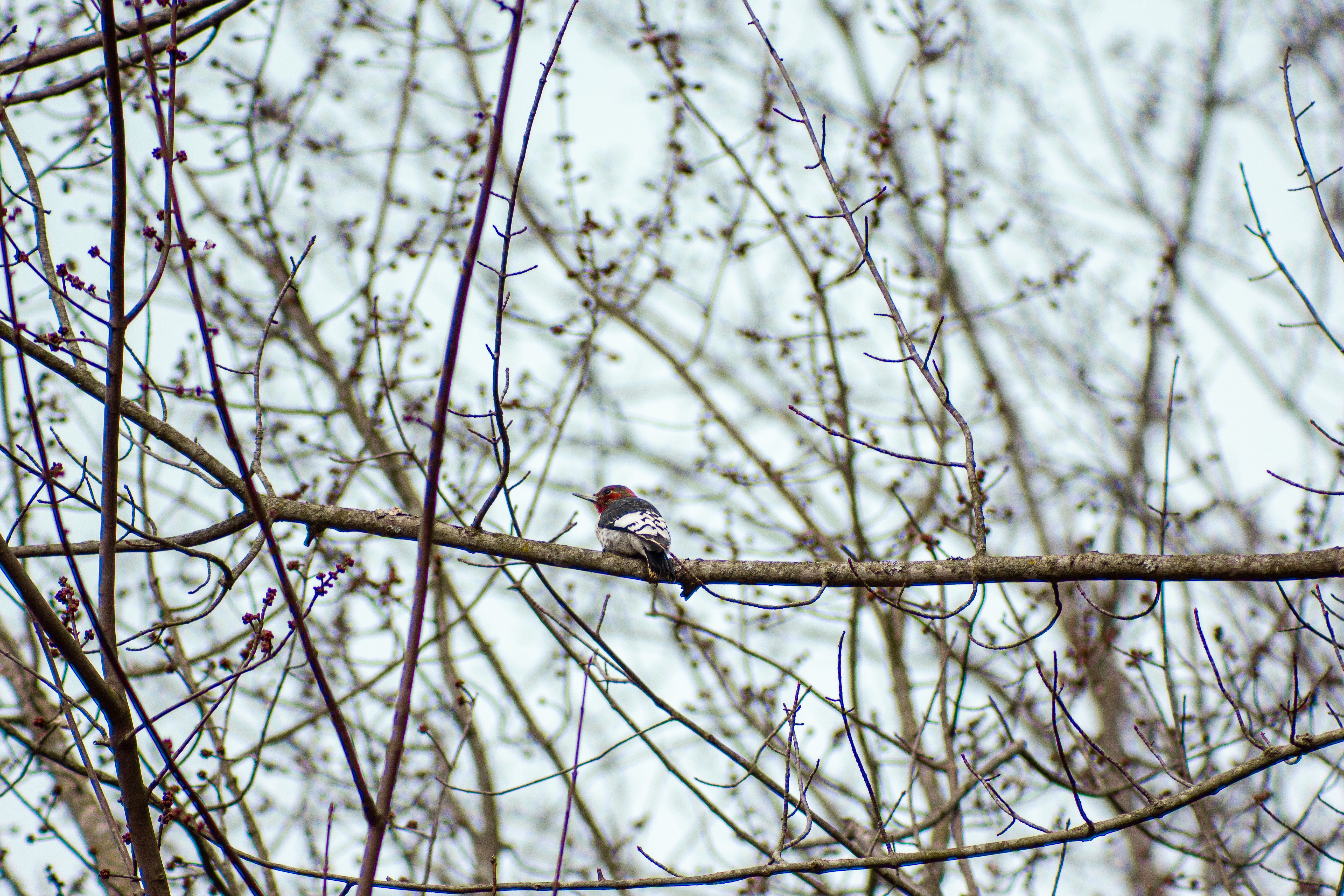

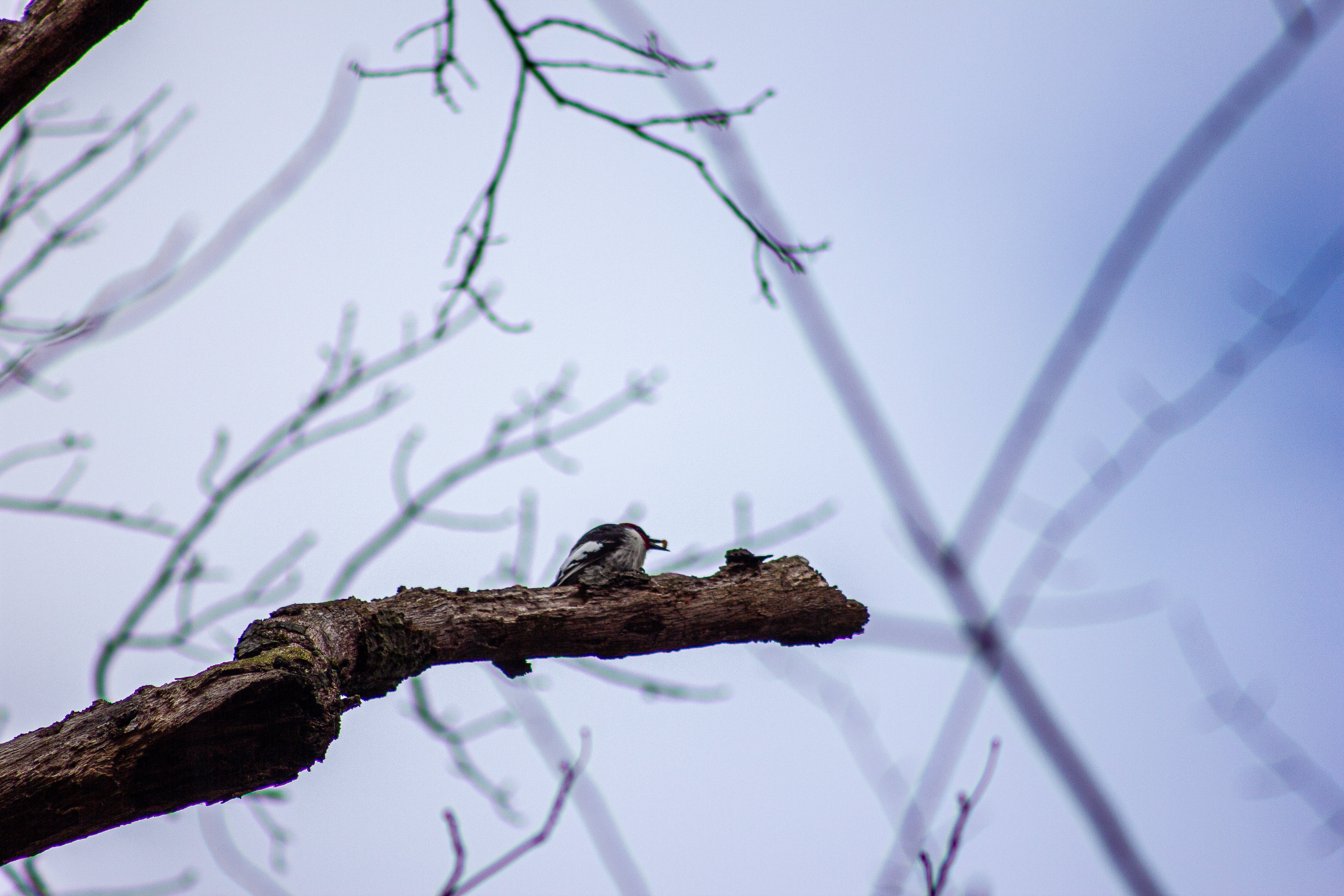
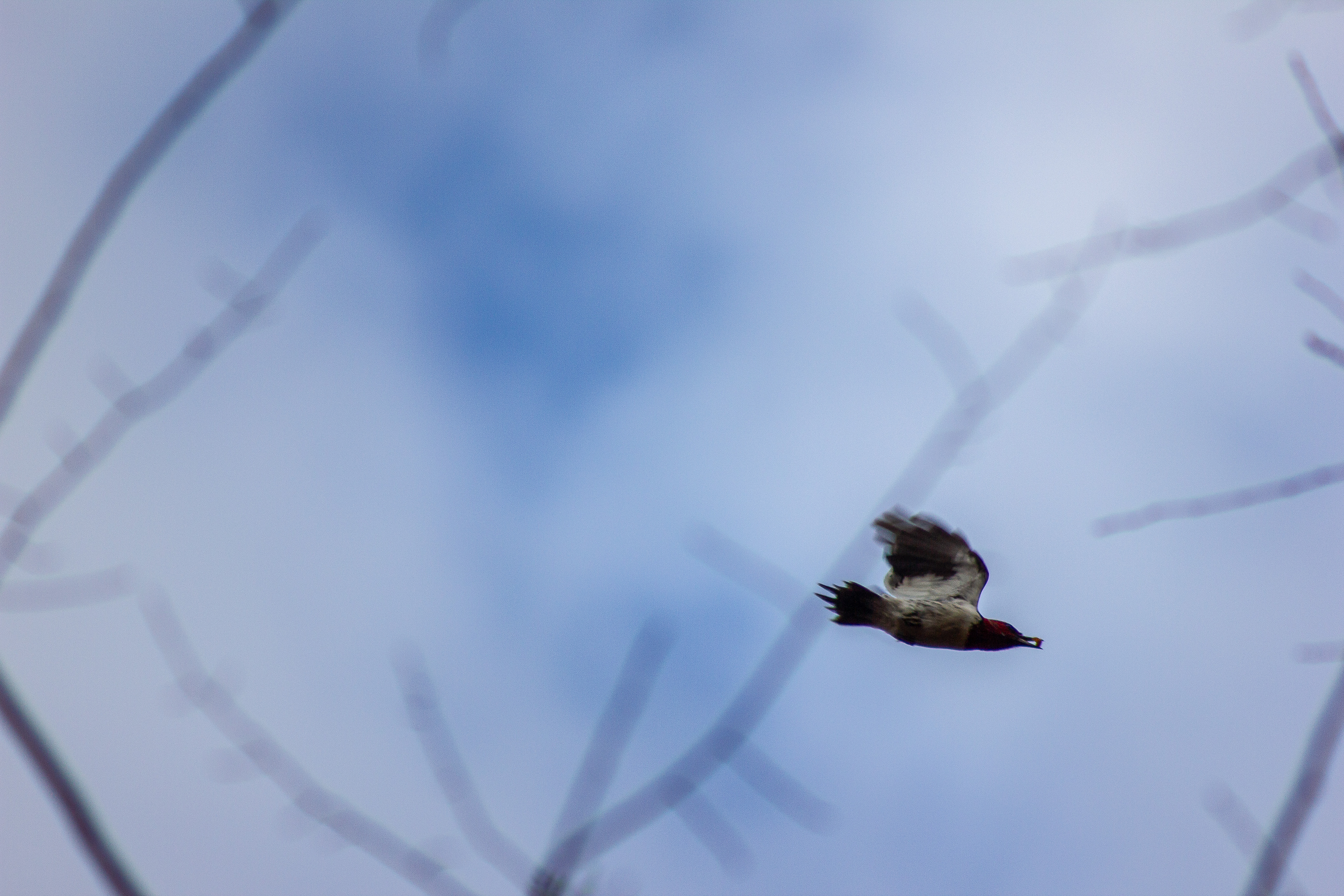
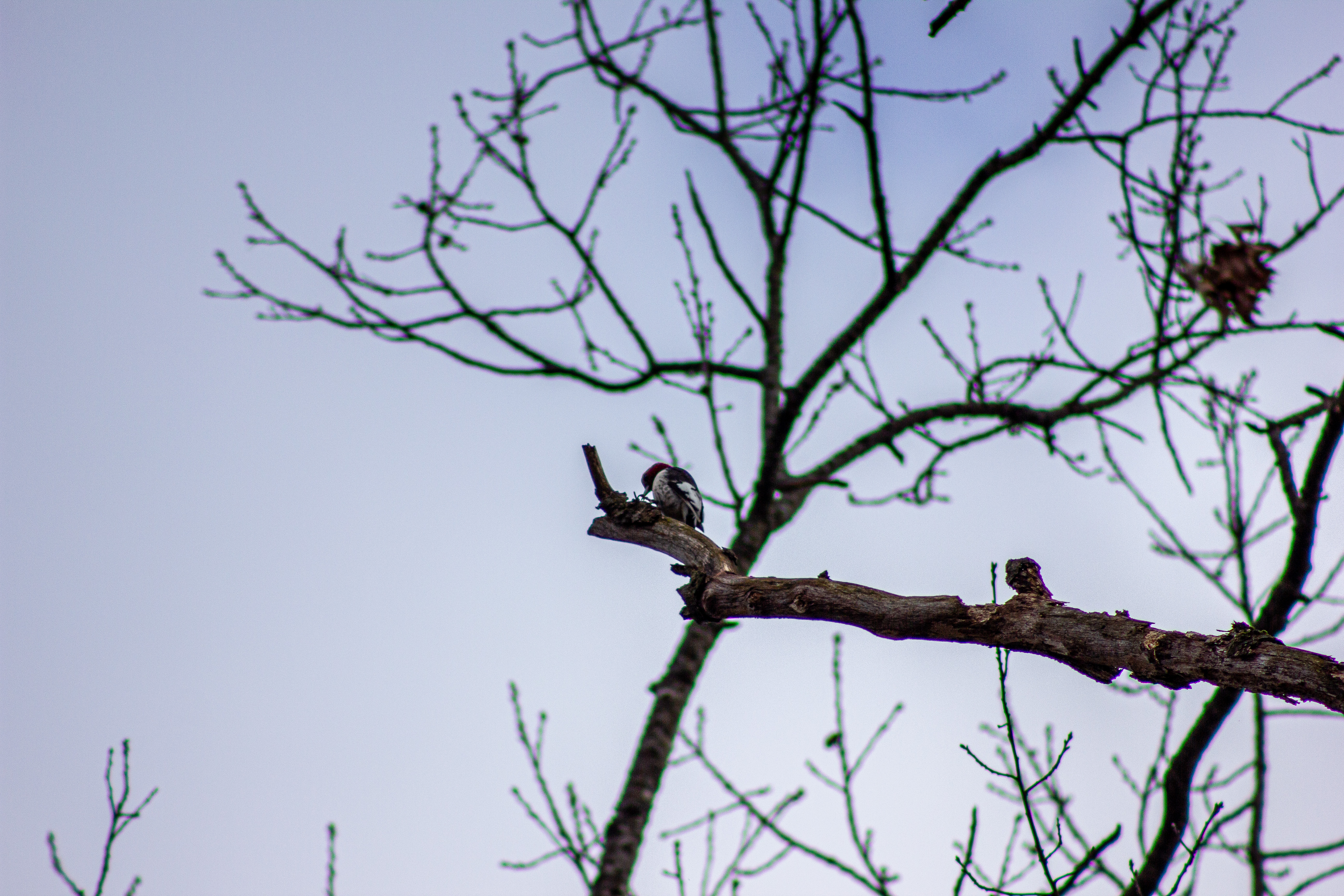
The Red-headed Woodpecker (Melanerpes erythrocephalus) is a strikingly colored medium-sized woodpecker native to North America. Known for its brilliant red head, stark black and white body, and bold behavior, this species is unique among woodpeckers due to its strong territorial instincts and unusual feeding habits.
Physical Description
Size: Approximately 7.5 to 9 inches (19–23 cm) in length.
Wingspan: Around 16 inches (40 cm). Weight: Between 2.0 to 3.2 ounces (56–91 g).
Plumage: Adults have a bright red head, neck, and throat, contrasted by a black back, wings, and tail. A white belly and large white wing patches are visible both at rest and in flight. Juveniles lack the red head, which instead appears as a dull brownish-gray before maturing.
Range & Habitat
Geographic Range: Found throughout the eastern and central United States, from southern Canada to Florida and westward to Texas and the Great Plains. Some populations migrate south during winter.
Preferred Habitats: Open woodlands, especially those with dead trees (snags), which provide nesting and foraging sites.
Orchards, farmland, grasslands, and savannas with scattered trees. Adaptable to suburban areas and parks with sufficient tree coverage.
Diet & Foraging Behavior
Unlike many woodpeckers that primarily feed by drilling into trees, the Red-headed Woodpecker exhibits a highly versatile diet and hunting strategy: Insects (beetles, ants, grasshoppers, caterpillars) make up a large portion of their summer diet.
Fruits and berries (acorns, cherries, grapes, mulberries) are heavily consumed in fall and winter. Nuts and seeds are often stored for later consumption.
Eggs and small birds are occasionally eaten, making them one of the few woodpecker species that engage in opportunistic predation. Catches flying insects mid-air (aerial hawking), a behavior uncommon in other woodpeckers.
Unique Behaviors
Caching: One of the few woodpeckers known to store food for later use. They wedge nuts, seeds, and even live insects into tree bark.
Territorial & Aggressive: Fiercely defends nesting and feeding areas against other birds, including fellow woodpeckers.
Drumming: Uses rapid pecking sounds on tree trunks or man-made structures to establish territory and attract mates.
Reproduction & Nesting
Breeding Season: From April to July, with peak activity in May and June.
Nest Location: Prefers dead trees or dead branches on living trees. Occasionally nests in fence posts or utility poles.
Nest Structure: A hole excavated in a tree trunk, usually 6–20 feet above the ground. Lined with wood chips but otherwise left mostly bare.
Clutch Size: Typically 4–7 white eggs. Incubation Period: 12–14 days, shared by both parents.
Fledging: Chicks leave the nest after about 24–31 days but remain dependent on parents for several weeks.
Migration Patterns
Partially migratory: Northern populations migrate south in winter, while southern populations may remain year-round. Migration depends on food availability—in years with abundant acorns, fewer individuals migrate.
Conservation Status & Threats
Conservation Status: Near Threatened (IUCN), declining populations.
Threats: Habitat loss due to deforestation and removal of dead trees. Competition for nesting sites with invasive species like the European Starling. Collisions with vehicles and human structures. Climate change affecting food availability and nesting conditions.
Conservation Efforts: Protection of dead trees and snags to provide nesting sites. Nesting box programs to support population recovery. Preserving oak savannas and open woodlands.
Cultural Significance
Symbolism: The Red-headed Woodpecker is often associated with determination, resilience, and intelligence.
Folklore & Mythology: In some Native American traditions, woodpeckers are seen as messengers or protectors of the forest.
Pop Culture: Served as the inspiration for the famous cartoon character Woody Woodpecker.
Fun Facts
One of the few woodpeckers that frequently catches food in flight! Stores live grasshoppers in tree crevices, sometimes removing their legs to prevent escape. Unlike most woodpeckers, it doesn’t always rely on pecking for food, often foraging like a crow.
Feel Free to subscribe! All it does is let you know when I next post!
 Wild Bird Journal
Leave a comment