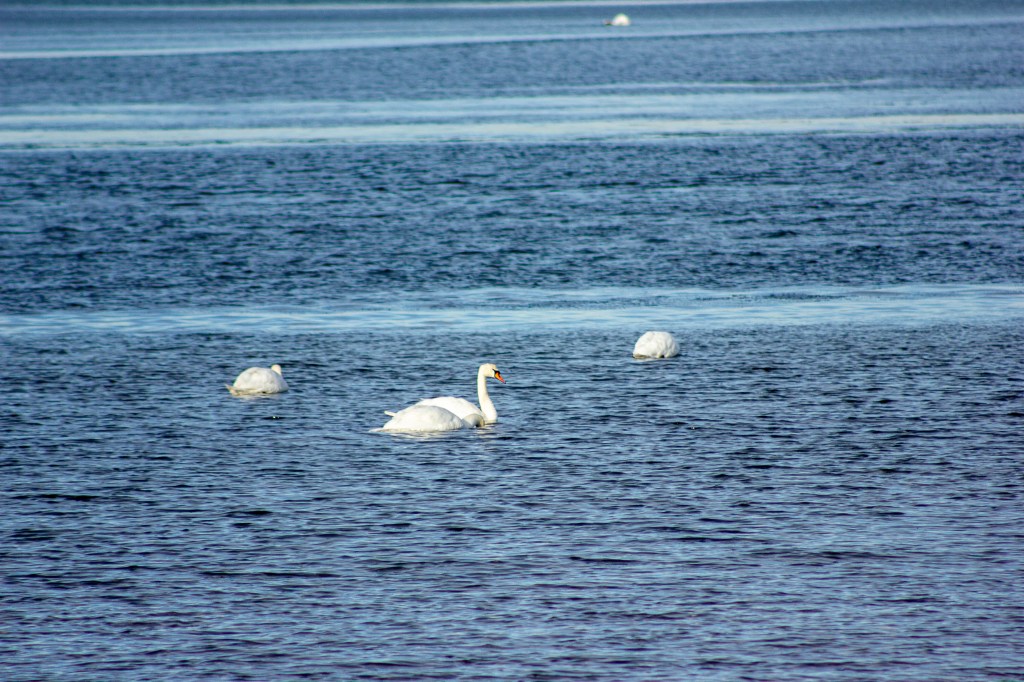
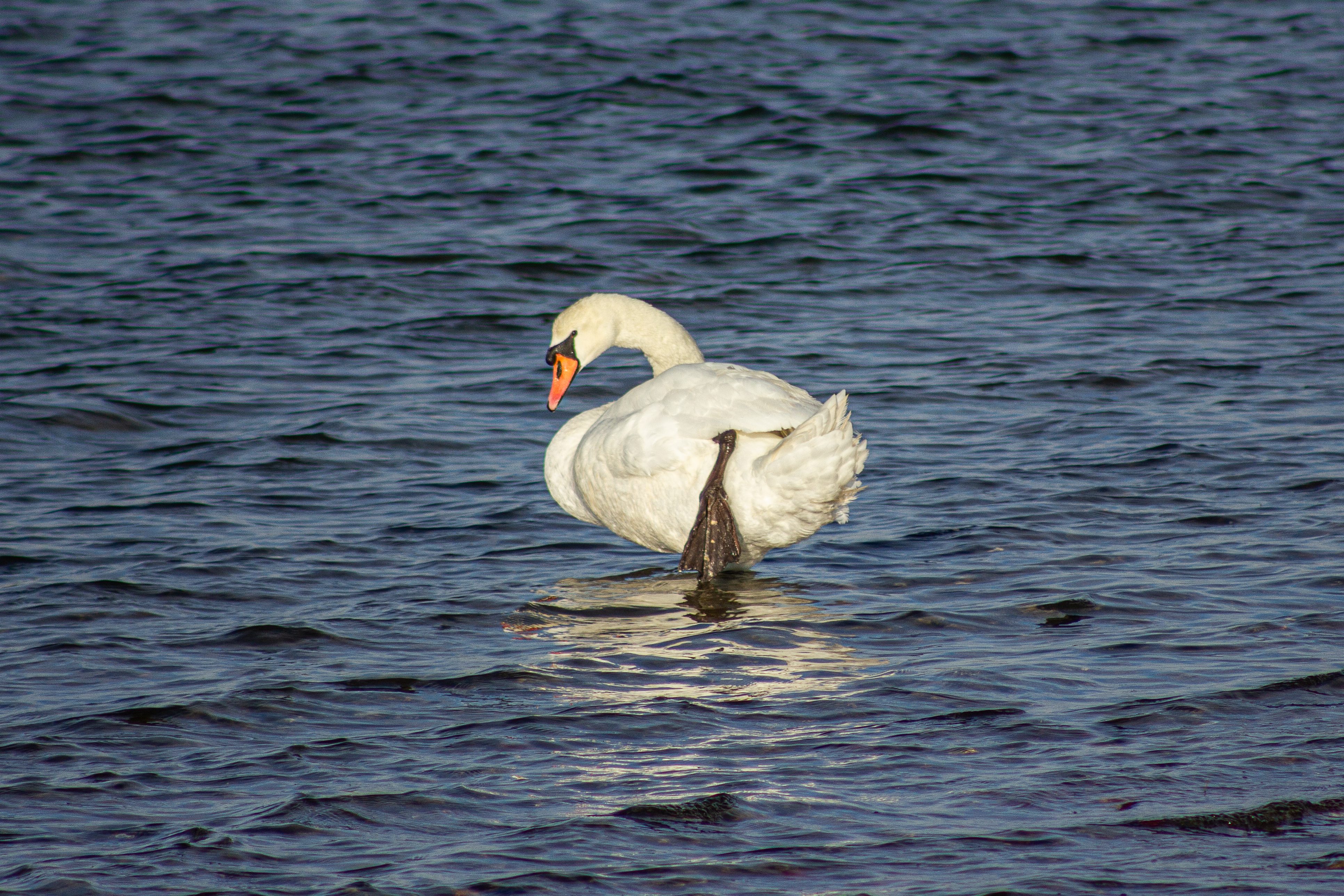
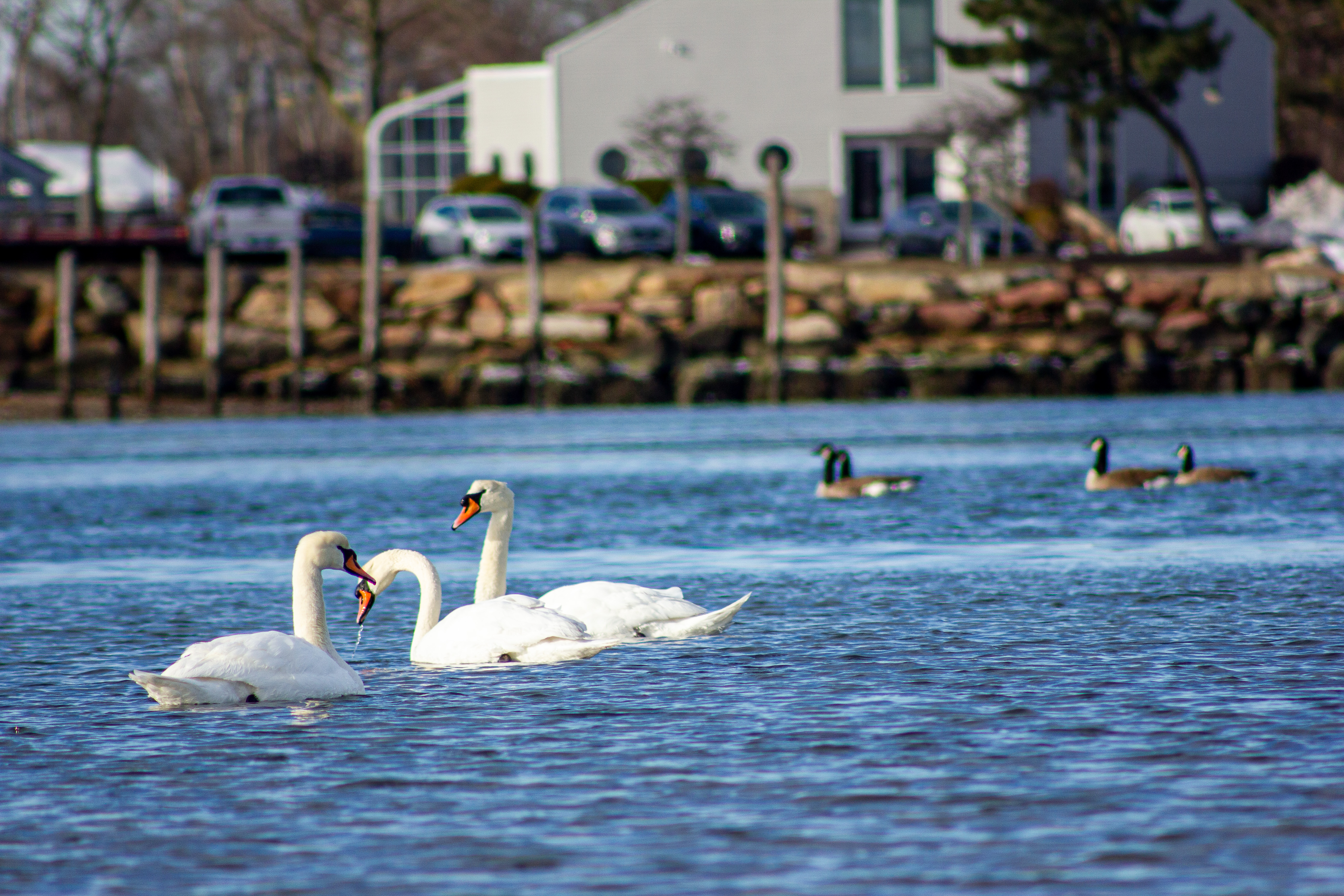
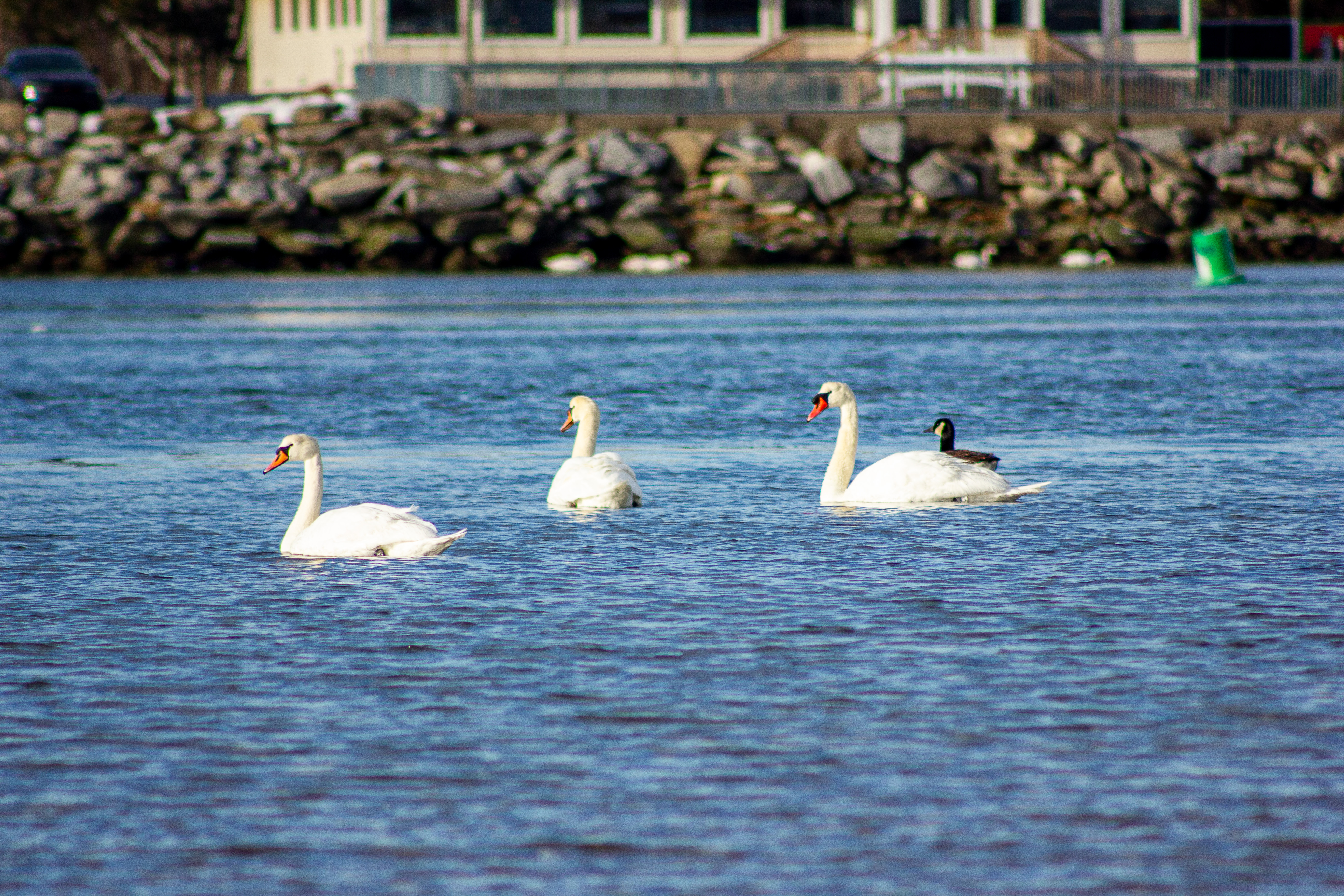

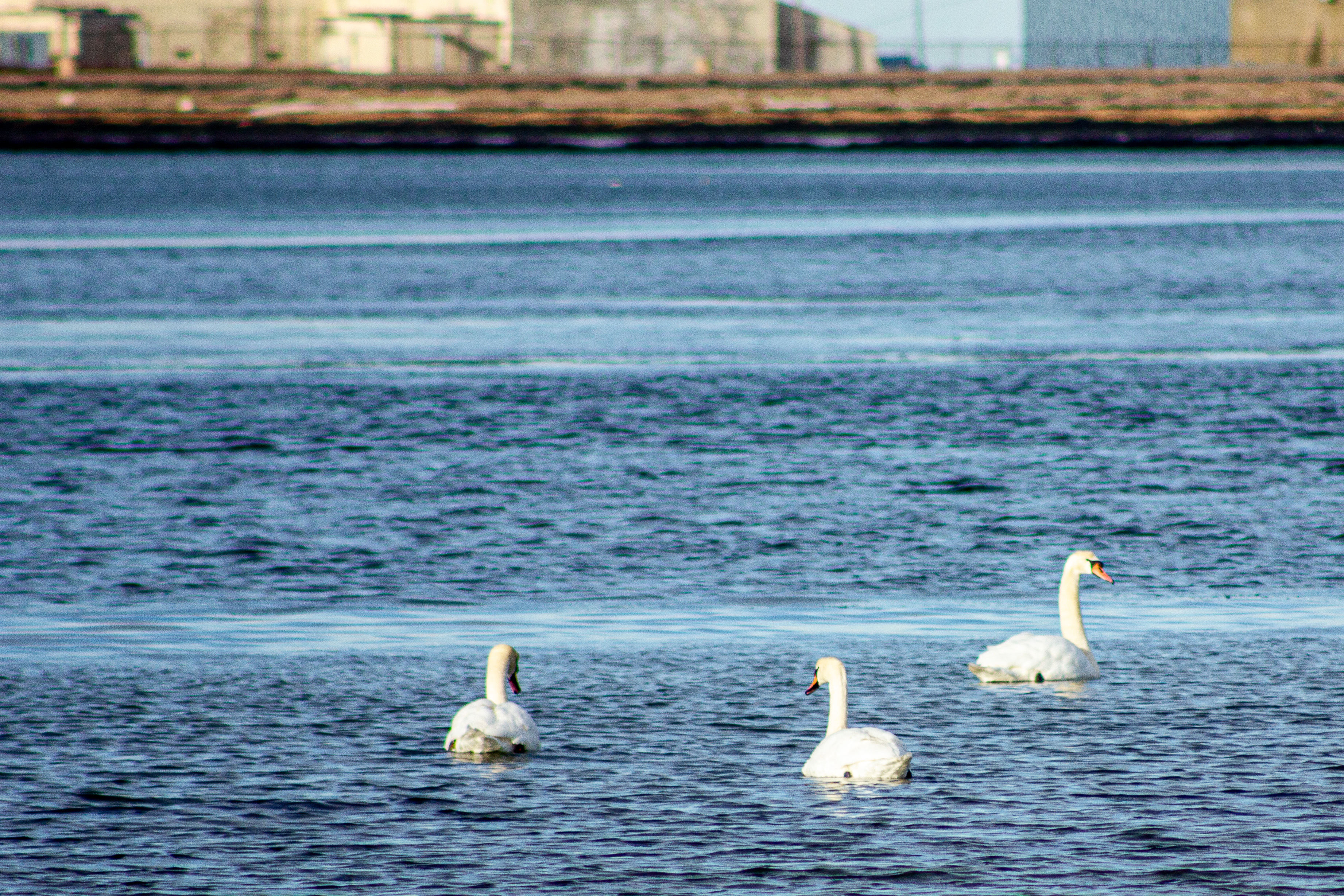
The mute swan (Cygnus olor) is a large, elegant waterbird native to Europe and Asia but introduced to North America, Australia, and other regions. Despite its name, the mute swan is not entirely silent but is less vocal than other swan species, such as the trumpeter swan. It is known for its striking white plumage, graceful movements, and aggressive territorial behavior.
Physical Characteristics
Size: Length: 125–170 cm (4.1–5.6 ft) Wingspan: 200–240 cm (6.6–7.9 ft) Weight: 8–15 kg (18–33 lbs), with males (cobs) generally larger than females (pens).
Plumage: Completely white in adults. Cygnets (young swans) are grayish or brownish and gradually turn white as they mature.
Beak: Orange with a black base. Males have a pronounced black knob at the top of the beak, which becomes more prominent during the breeding season.
Neck: Long and elegantly curved, often forming an S-shape when at rest.
Behavior & Ecology
Diet: Primarily herbivorous, feeding on aquatic vegetation, algae, and submerged plants. Occasionally consumes small aquatic animals and insects.
Movement: Strong flyers, despite their large size. Can take off from water with powerful wingbeats. Often seen gliding gracefully on water.
Vocalization: Though named “mute,” they produce hissing, grunting, and snorting sounds. Their wings create a distinctive humming or whistling sound in flight.
Territoriality: Highly aggressive, especially during breeding season. Will chase away other waterfowl and even humans who come too close to their nesting area.
Breeding & Lifecycle
Mating: Mute swans form monogamous pairs, often staying together for life. Courtship includes synchronized swimming and head-dipping displays.
Nesting: Nests are built near water using reeds and grasses. The female lays 4–7 pale greenish eggs.
Incubation & Rearing: The female incubates the eggs for about 36 days while the male guards the nest. Cygnets hatch covered in down and are precocial, meaning they can swim and feed soon after birth.
Lifespan: .In the wild: 10–20 years. In captivity: Up to 30 years
Habitat & Distribution
Native Range: Europe, Asia, and parts of North Africa.
Introduced Populations: North America: Considered invasive in some areas, particularly in the Great Lakes region and the northeastern U.S. Australia and New Zealand: Established in some regions.
Preferred Habitat: Lakes, rivers, wetlands, and coastal lagoons. Prefers shallow, slow-moving waters with abundant vegetation.
Human Interaction & Conservation
Cultural Significance: Associated with beauty, elegance, and romance in European folklore and mythology. Featured in literature, music, and ballet (e.g., Swan Lake). Symbol of loyalty and love due to their lifelong pair bonds.
Conservation Status: Least Concern (LC) according to the IUCN Red List. Population stable, but introduced populations can be problematic. Impact as an Invasive Species In North America, mute swans compete with native waterfowl and can damage aquatic ecosystems. Some regions manage populations through egg addling (shaking or oiling eggs to prevent hatching) and culling.
Threats: Habitat destruction. Lead poisoning from ingesting lead fishing weights. Collisions with power lines.
Interesting Facts
Unlike most birds, mute swans can remember human faces and recognize familiar people. Their courtship displays, where pairs intertwine their necks, have inspired many artistic depictions of love. Mute swans can be very aggressive, even attacking boats and large animals that approach their nests. They have been protected in the U.K. for centuries, with all unmarked mute swans traditionally considered the property of the British monarchy.
 Wild Bird Journal
Leave a comment