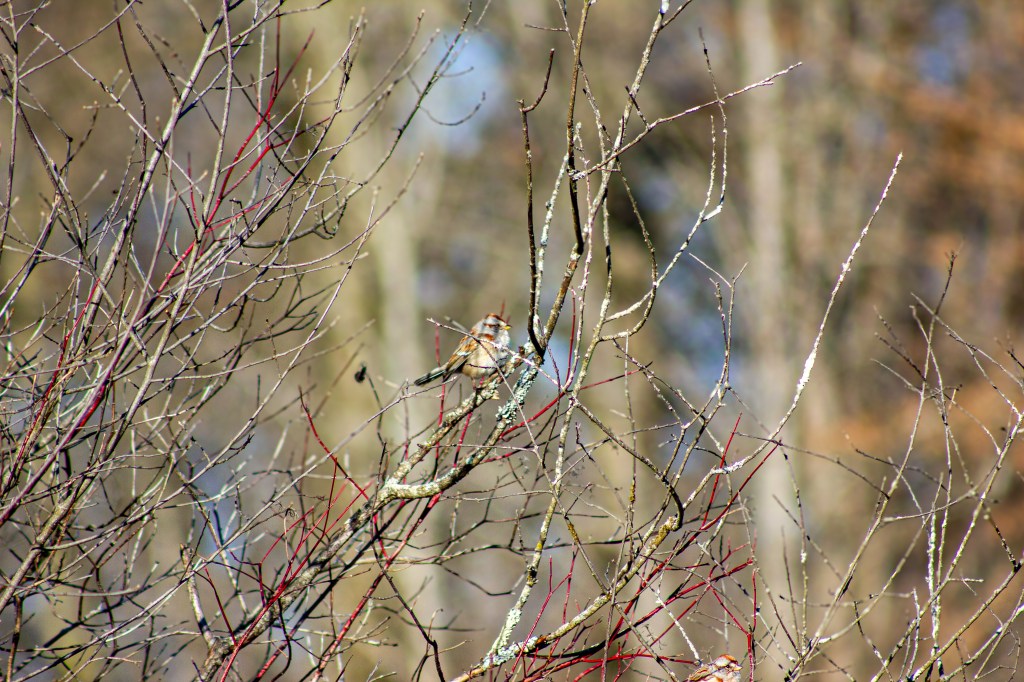

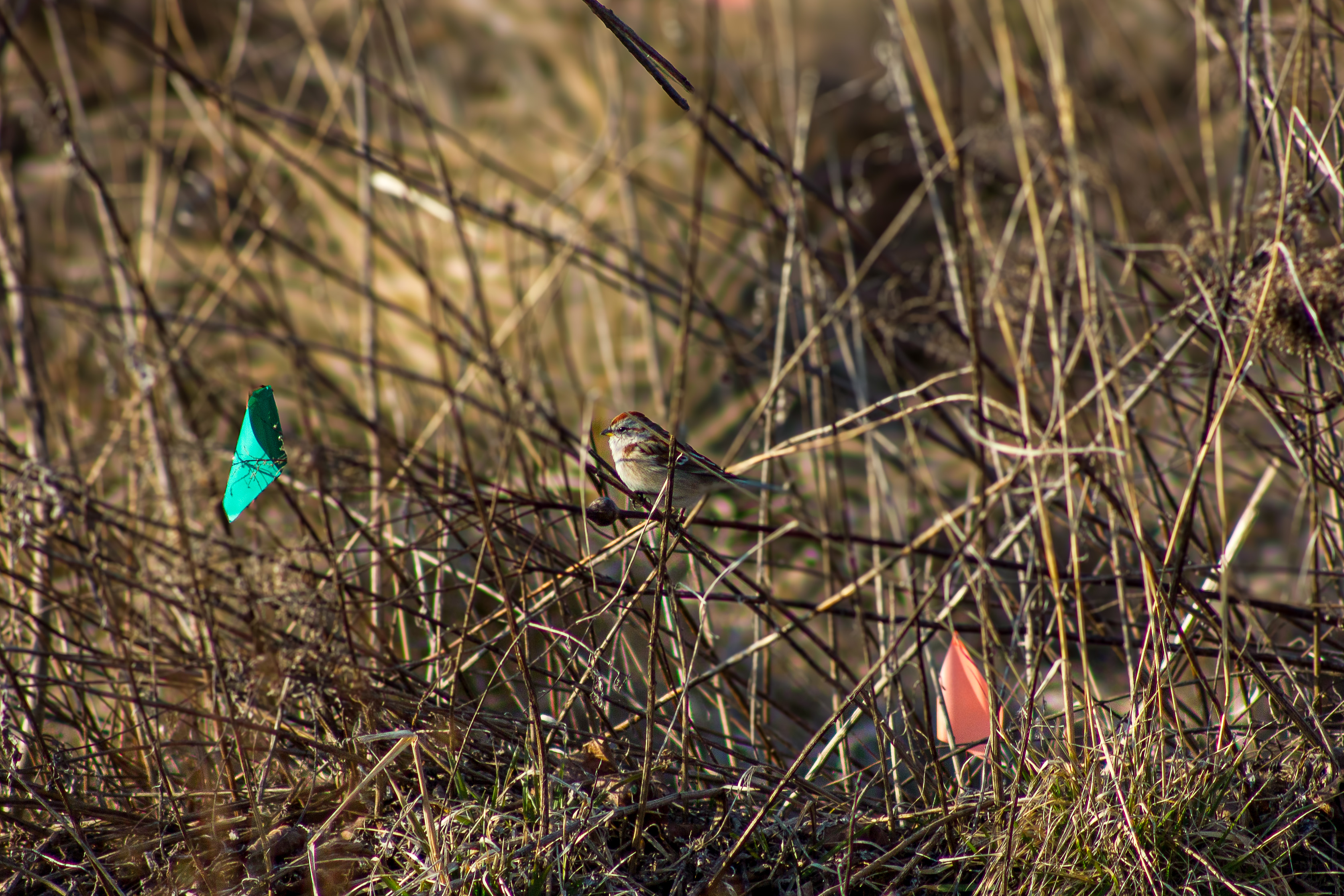
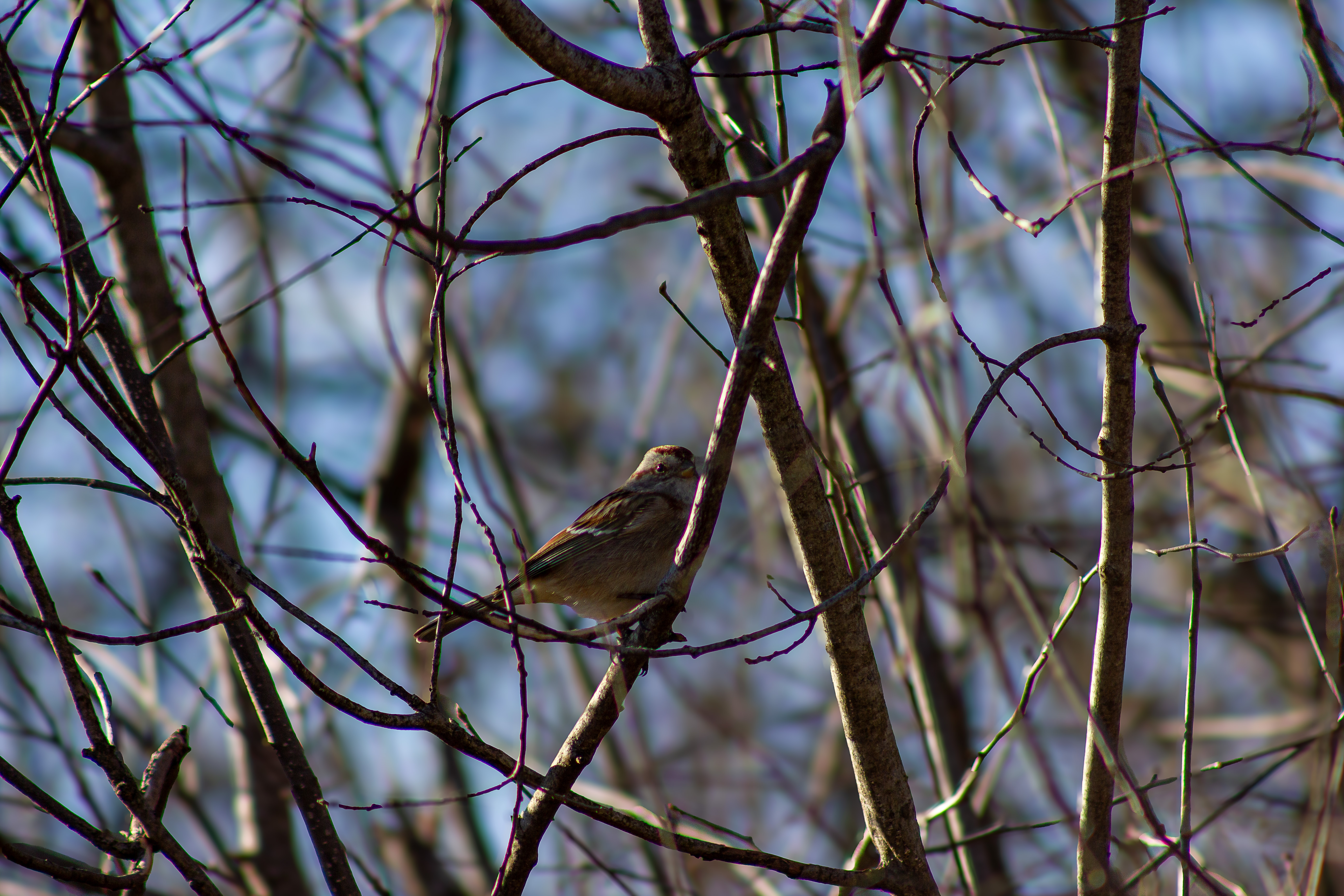
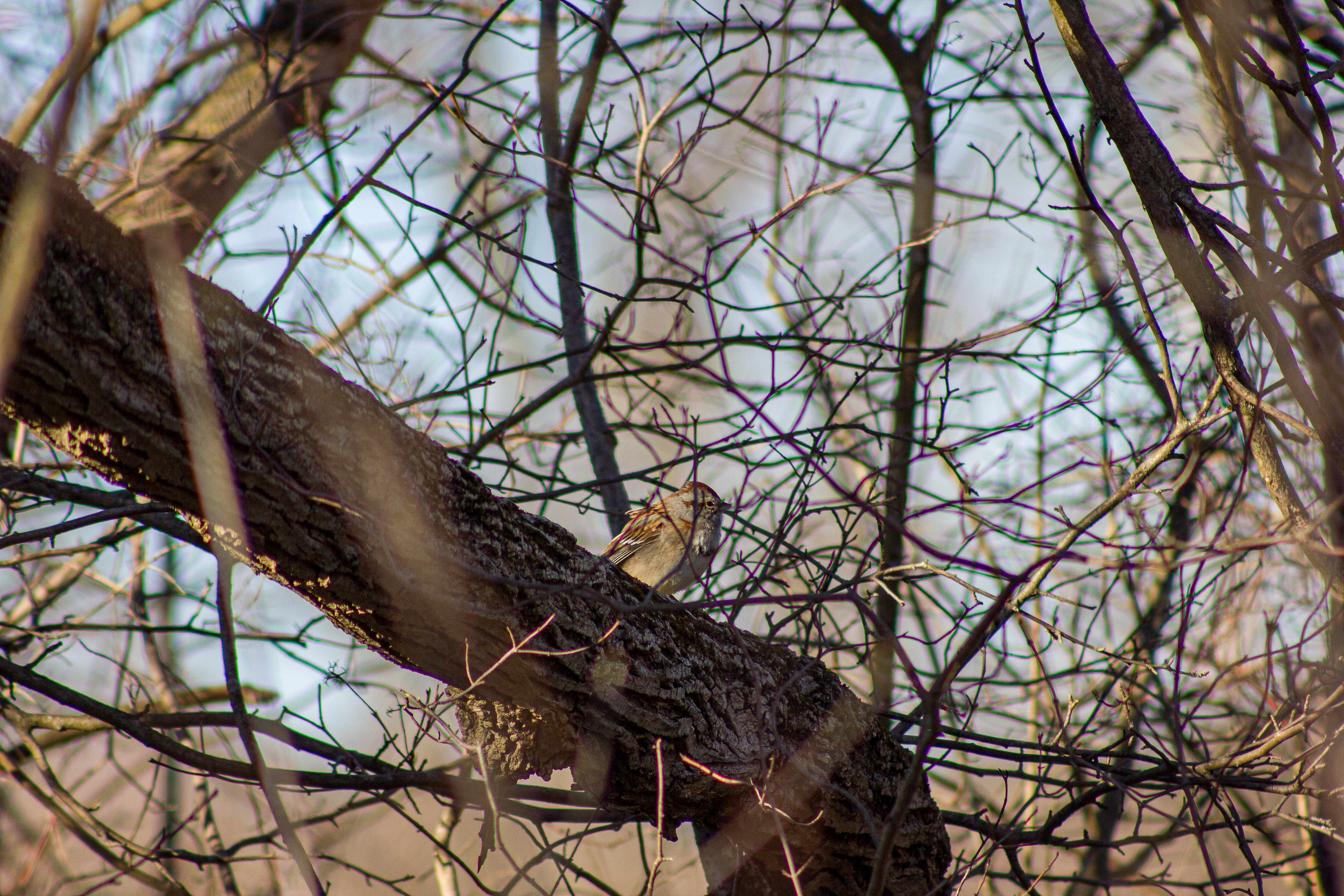


The American Tree Sparrow (Spizelloides arborea) is a small, migratory songbird found in North America. Despite its name, it prefers open landscapes rather than trees and is commonly seen in fields, meadows, and shrublands during the winter months.
Physical Description
Size: 5.5 inches (14 cm) long with a wingspan of 8.7 inches (22 cm).
Weight: 0.5–1.0 oz (13–28 g).
Plumage: Brown back with black streaks. Grayish breast with a distinctive dark central spot. Rusty-red cap and eye stripe. White wing bars.
Bill: Short and bicolored—black on top, yellow on the bottom.
Tail: Long and notched.
Range and Habitat
Breeding Range (Summer)
Northern Canada and Alaska, in tundra and boreal forest edges. Prefers scrubby areas, thickets, and brushy fields rather than dense forests.
Wintering Range
Found across the United States, especially in the Midwest and Northeast. Prefers open fields, farmlands, hedgerows, and suburban areas.
American Tree Sparrows migrate south in the fall and return north in the spring.
Diet and Feeding Behavior
Winter Diet (Primarily Seeds and Berries)
Grass and weed seeds, Small fruits and berries, Tree buds
Summer Diet (More Protein-Rich Foods)
Insects (caterpillars, beetles, flies, spiders). Occasionally, small invertebrates
Foraging Behavior:
Feeds mostly on the ground, hopping and scratching at the soil. Often seen in small flocks during winter. Sometimes visits backyard bird feeders, especially for millet and sunflower seeds.
Behavior and Social Structure
Non-Territorial in Winter: Forms flocks with other sparrows and finches.
More Solitary in Breeding Season: Defends nesting sites. Active and Alert: Constantly moving while foraging.
Curious Nature: Often perches on low shrubs and fences to observe surroundings.
Breeding and Nesting
Breeding Season: Late May to early August.
Mating Behavior: Males sing to attract females and defend their nesting area.
Nesting Location: On or near the ground, hidden in dense vegetation. Occasionally in low shrubs.
Nest Construction: Made of grasses, twigs, moss, and lined with feathers (often from ptarmigans).
Eggs: Clutch size: 3–6 eggs. Pale blue with brown speckles. Incubation: 11–14 days.
Fledging: Chicks leave the nest after 7–12 days but rely on parents for food for a few more weeks.
Vocalizations and Sounds
Song: A sweet, musical trill, similar to the Chipping Sparrow but more melodic. Calls: Soft “tseet” notes. High-pitched twittering when in flocks.
Predators and Threats
Natural Predators
Hawks (Sharp-shinned Hawk, Cooper’s Hawk), Owls (Northern Saw-whet Owl), Foxes, weasels, and snakes prey on eggs and chicks.
Human-Related Threats
Habitat loss from deforestation and agriculture. Climate change affecting their Arctic breeding grounds. Window collisions in urban areas.
Despite these threats, the species remains relatively stable.
Ecological Importance
Seed Dispersal: Helps control plant growth by eating and spreading seeds.
Insect Population Control: Reduces pest numbers during breeding season.
Prey Species: Supports the food chain by serving as a food source for raptors and mammals.
Fun Facts
Unlike true tree sparrows in Europe, the American Tree Sparrow rarely perches in trees.
Its bicolored bill is a key feature that distinguishes it from similar sparrows. They fluff up their feathers to trap heat in winter, making them appear rounder.
Some individuals migrate over 2,500 miles between breeding and wintering grounds. A group of sparrows is called a “host,” “quarrel,” or “flutter.”
Conservation Status
IUCN Status: Least Concern.
Population Trends: Declining due to habitat loss and climate change. Still widespread but less common than in past decades.
 Wild Bird Journal
Leave a comment