
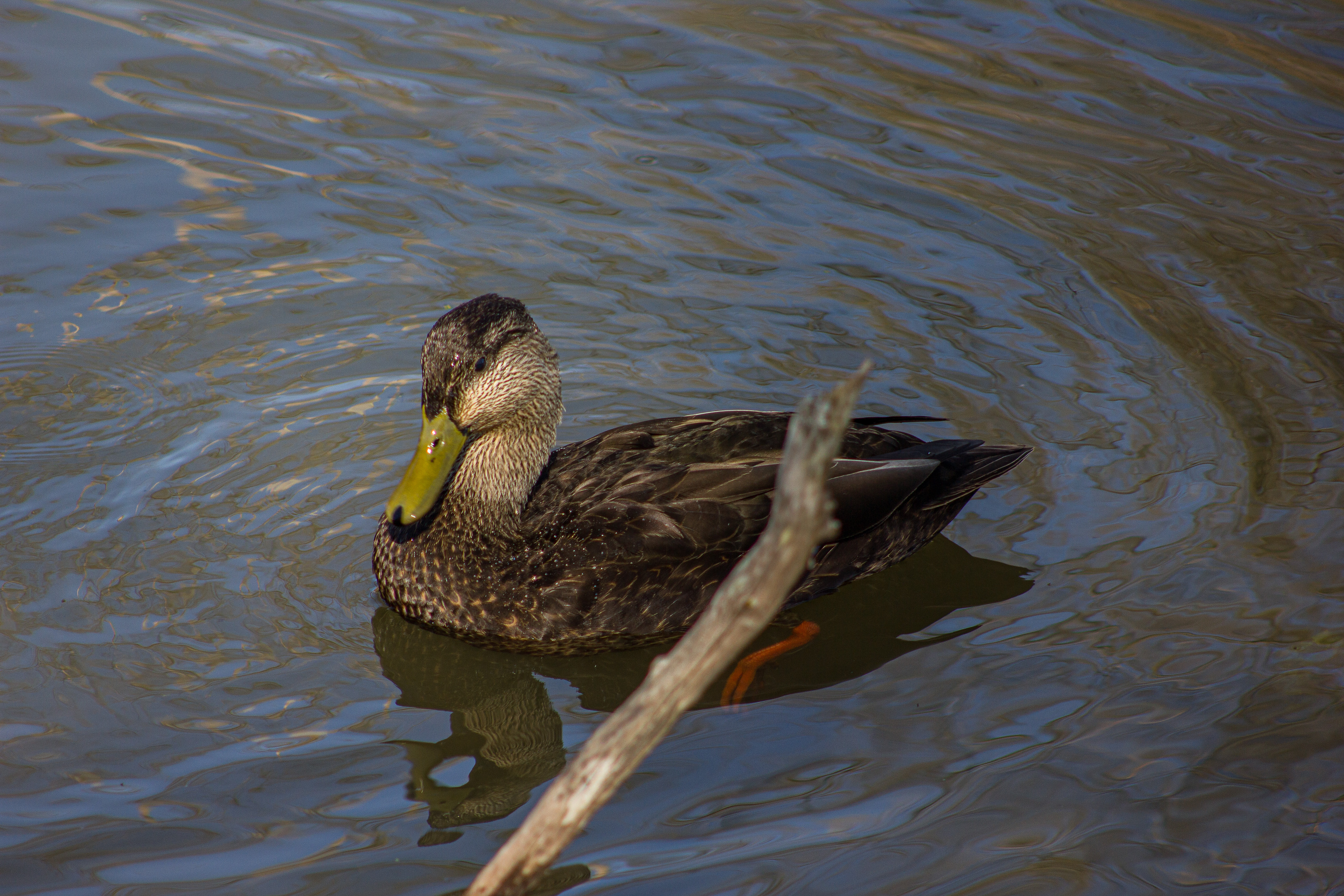
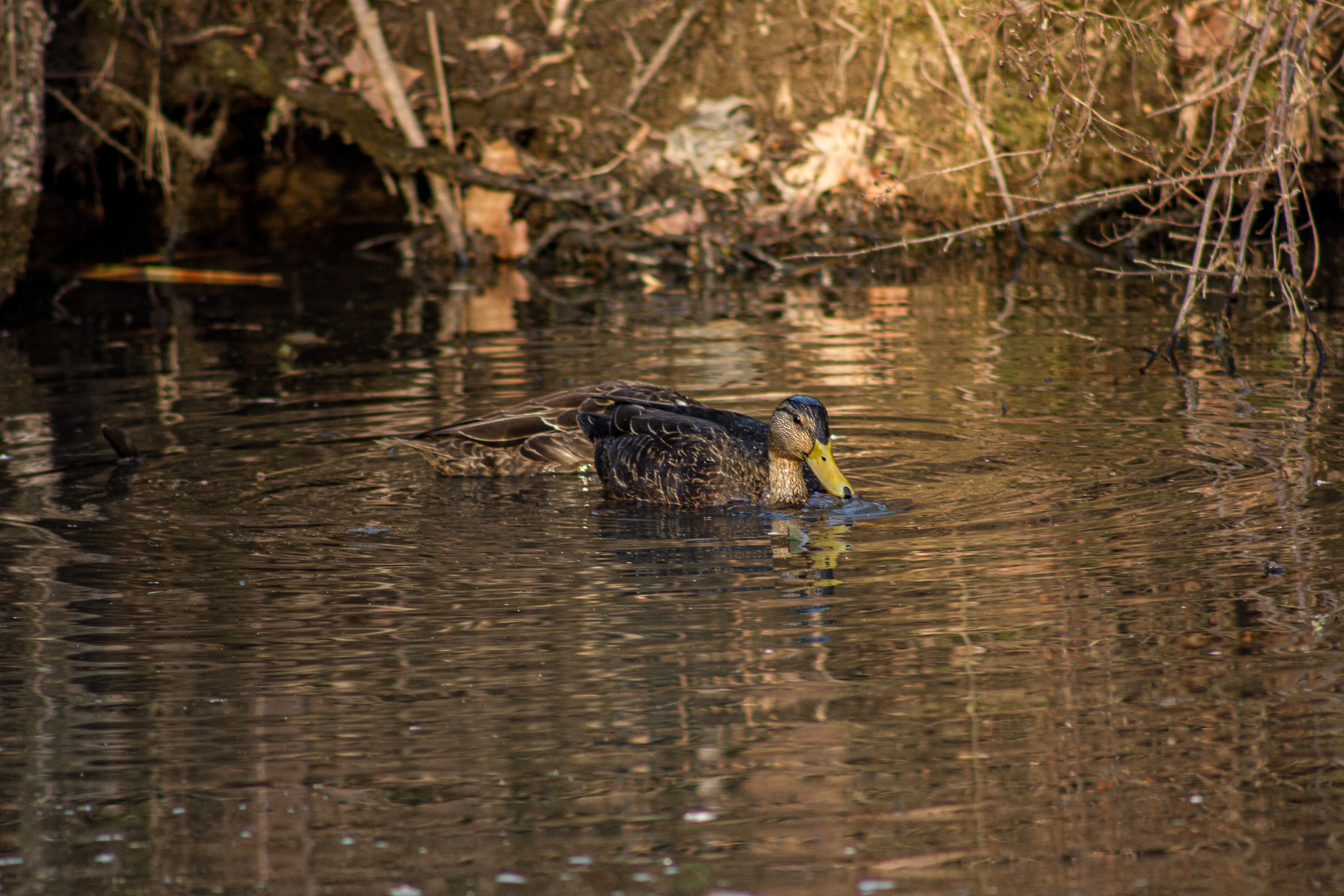
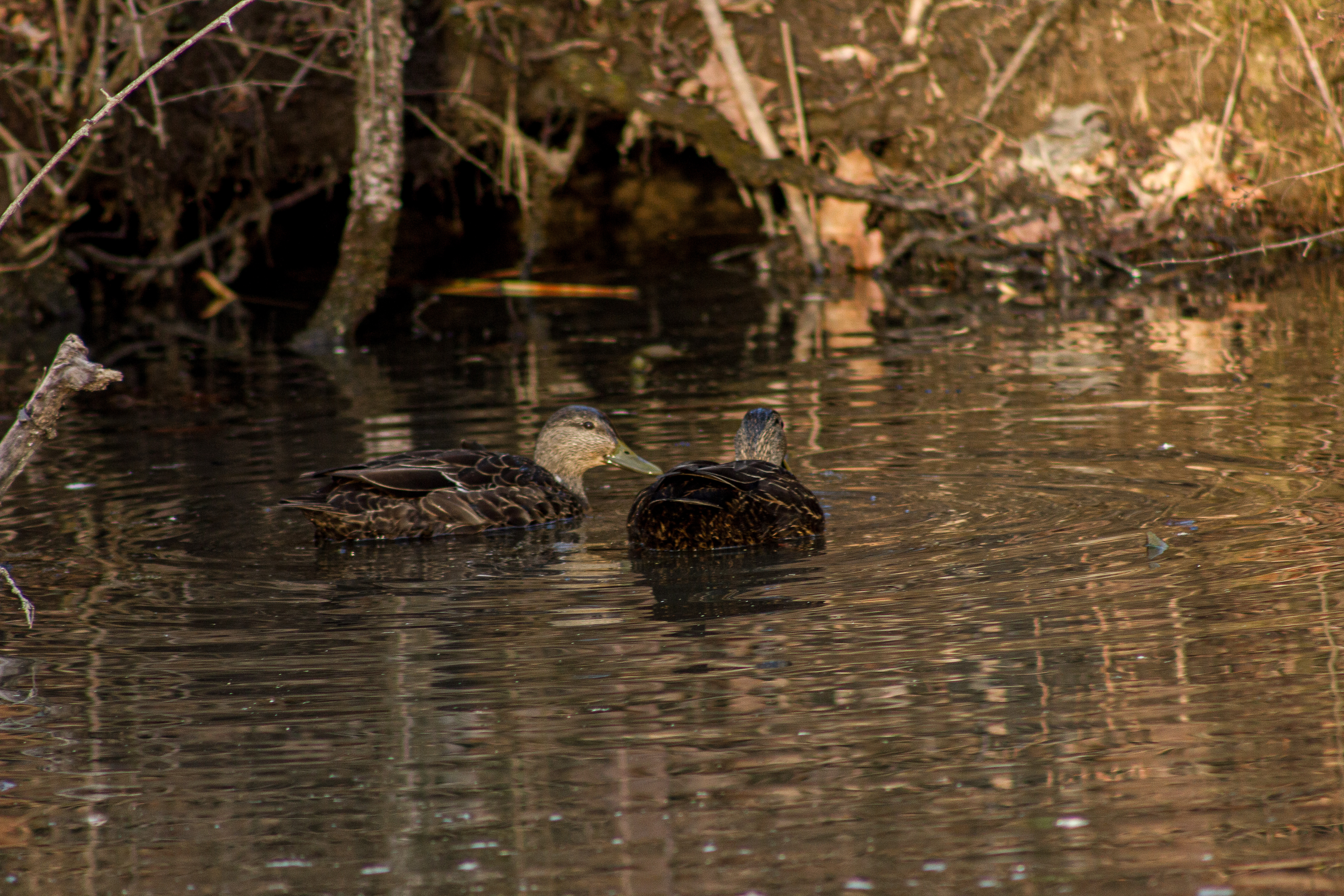
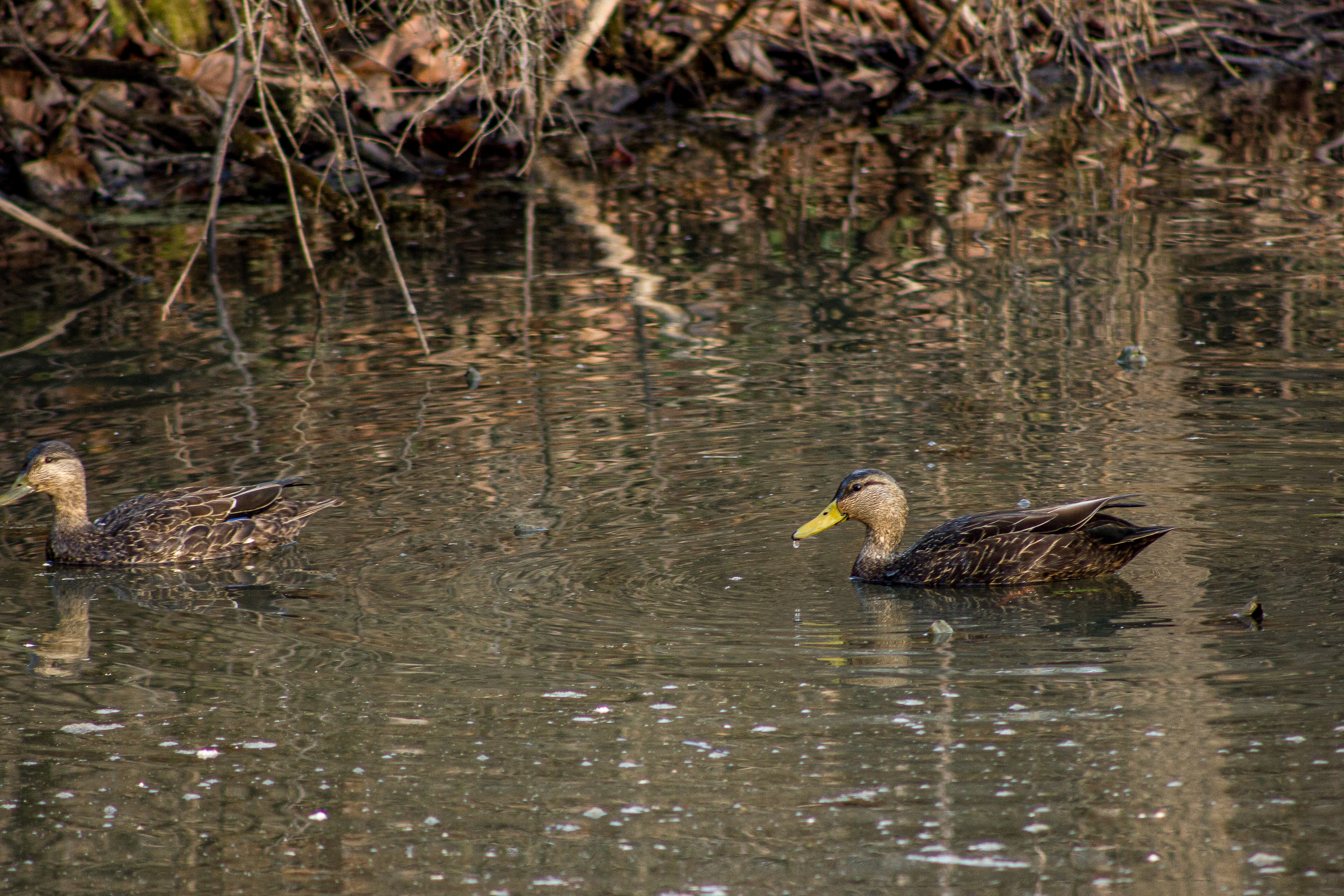
The American Black Duck (Anas rubripes) is a species of dabbling duck native to North America. It closely resembles the mallard but has darker plumage and is more elusive. Here’s everything you need to know about this fascinating waterfowl:
Taxonomy & Classification
Scientific Name: Anas rubripes.
Family: Anatidae (includes ducks, geese, and swans).
Order: Anseriformes
Physical Description
Size: Medium to large duck, about 21-23 inches (53-58 cm) in length.
Weight: Between 1.6-3.6 lbs (720-1640 g). Wingspan: 34-37 inches (86-94 cm).
Coloration: Males & Females: Both sexes look similar, with dark brown bodies and a slightly lighter brown head and neck.
Wings: A distinctive purplish-blue speculum (wing patch) bordered by black, lacking the white bars seen in mallards.
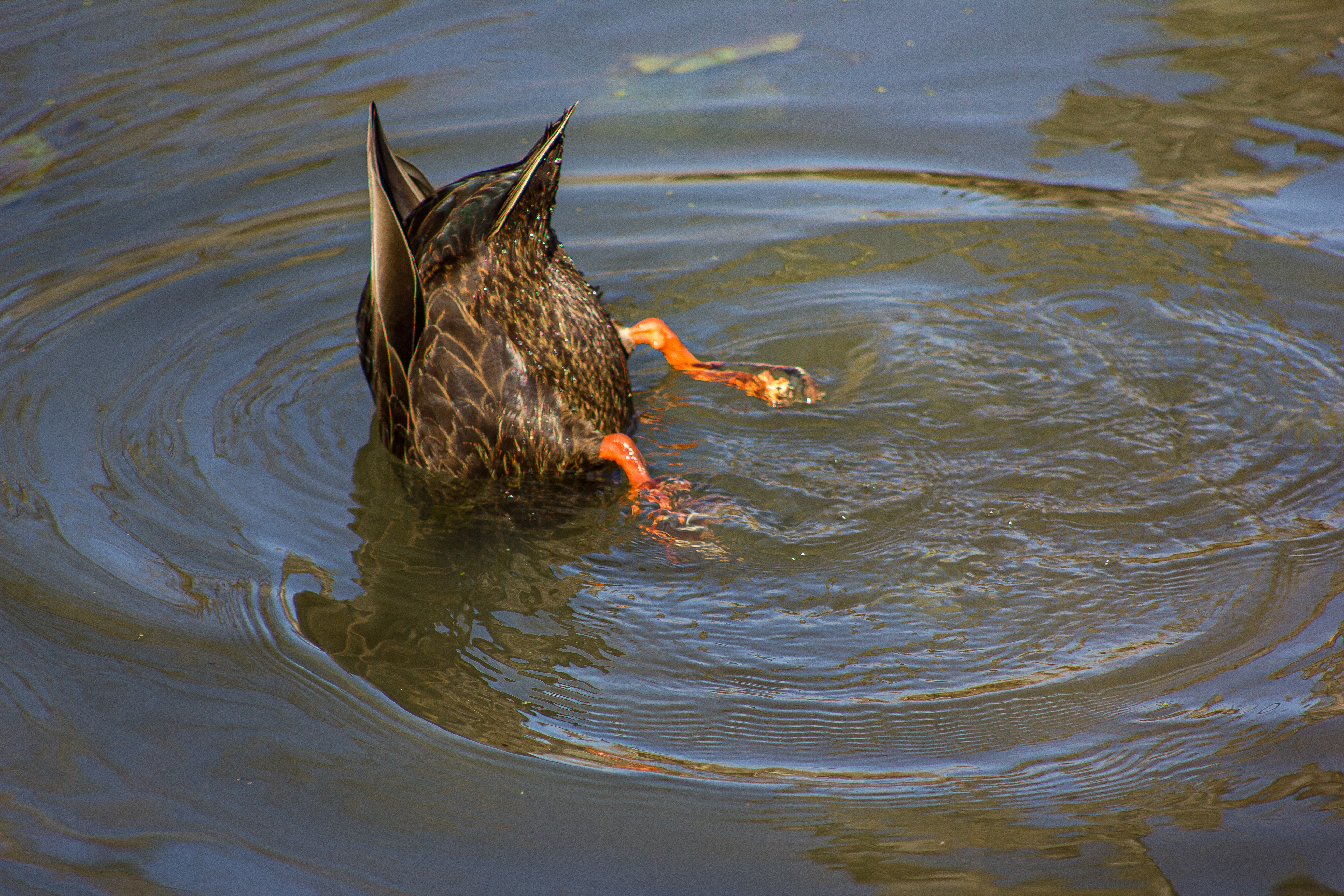
Bill: Males: Yellow Females: Dull greenish or olive Legs & Feet: Orange to reddish.
Range & Habitat
Breeding Range: Eastern North America, primarily in Canada and the northeastern U.S. (New England, Great Lakes, and Atlantic coast).
Wintering Range: Along the U.S. East Coast, extending south to the Gulf of Mexico. Preferred
Habitat: Freshwater and saltwater marshes, Beaver ponds, Swamps, Lakes, Coastal estuaries, Forested wetlands
Behavior & Ecology
Feeding Habits
Diet: Omnivorous; primarily eats: Aquatic vegetation (seeds, roots, stems of pondweeds, wild rice, sedges).
Insects and small invertebrates (snails, mollusks, aquatic insects) Occasionally, small fish and amphibians In agricultural areas, they may feed on corn and grains.
Feeding Method: Dabbling—tips forward in the water to feed rather than diving.
Migration
Migratory: Moves south in the winter but does not travel as far as some other duck species. Major Flyways: Uses the Atlantic and Mississippi Flyways.
Reproduction
Mating Season: Late winter to early spring.
Nesting: Built in dense vegetation near water. Made of grass, leaves, and down feathers. Clutch size: 6-12 eggs (creamy white to pale green).
Incubation: 26-30 days, with the female handling incubation alone.
Ducklings: Precocial (born with down and able to feed themselves). Fledge in about 60 days.
Conservation Status
IUCN Status: Least Concern, but populations are declining.
Threats: Habitat Loss: Wetland drainage and deforestation. Hybridization with Mallards: Mallard genes are reducing the purity of the species.
Hunting Pressure: Once heavily hunted, now regulated to protect populations. Climate Change: Alters wetland habitats and migration patterns.
Conservation Efforts: Wetland protection (e.g., Ducks Unlimited, National Wildlife Refuges). Hunting regulations to limit take. Monitoring hybridization with mallards.
Interesting Facts
Often called the “Black Mallard” due to its resemblance to the mallard. More secretive than mallards, preferring remote wetlands. Can form mixed flocks with mallards in winter. Known for strong, fast flight—making it a prized game bird.


 Wild Bird Journal
Leave a comment