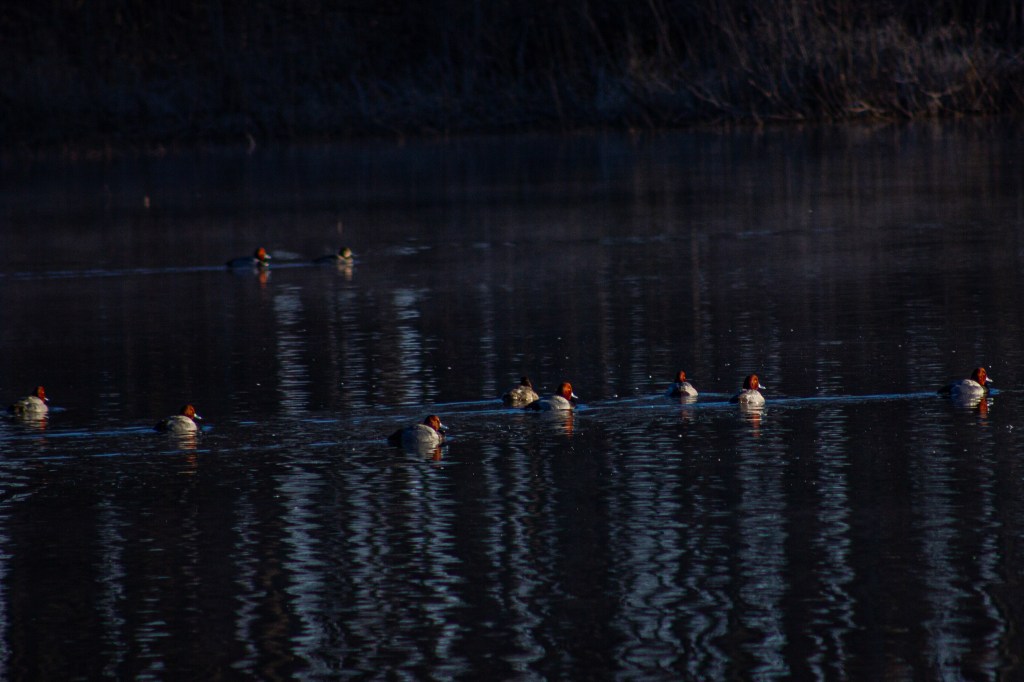
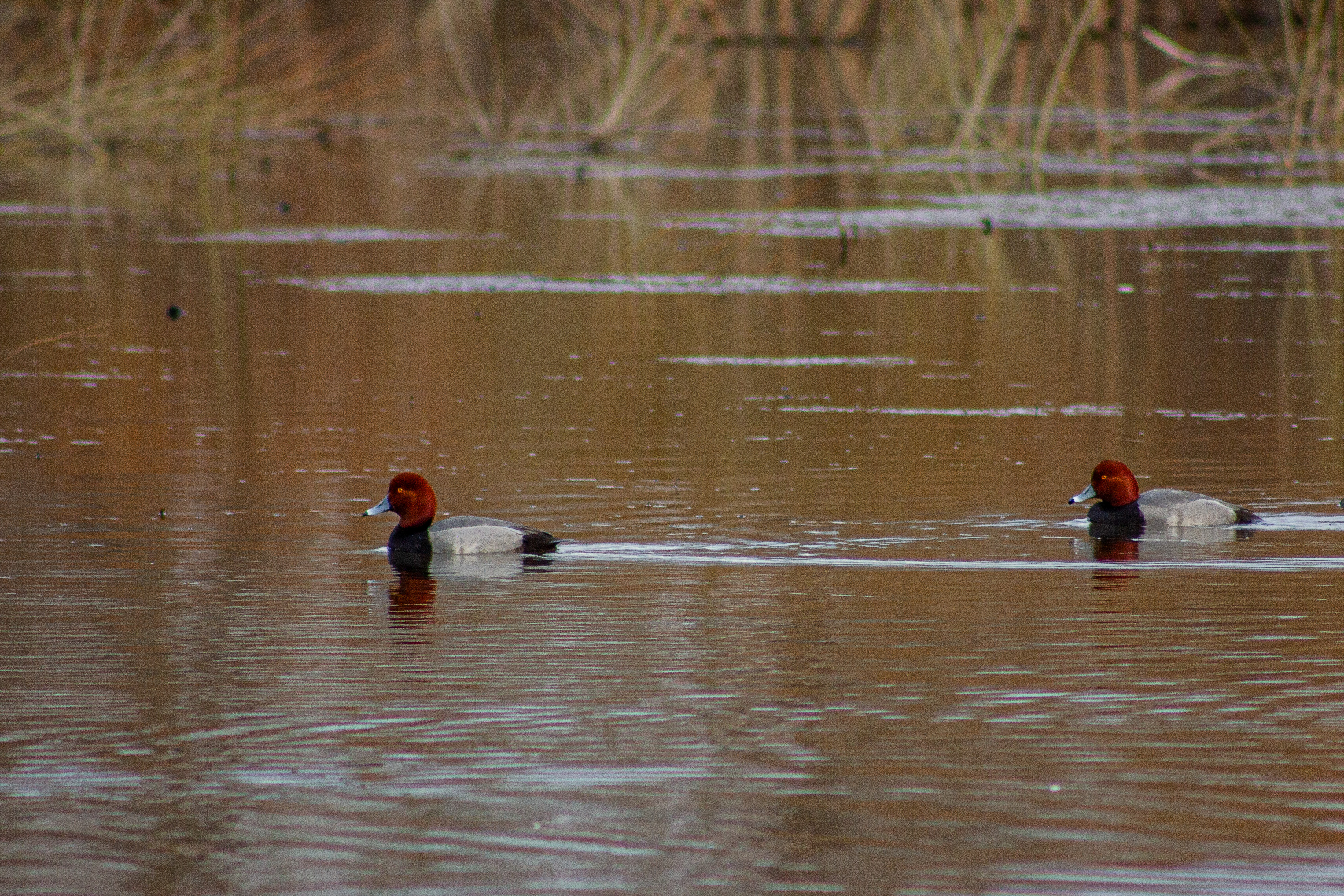
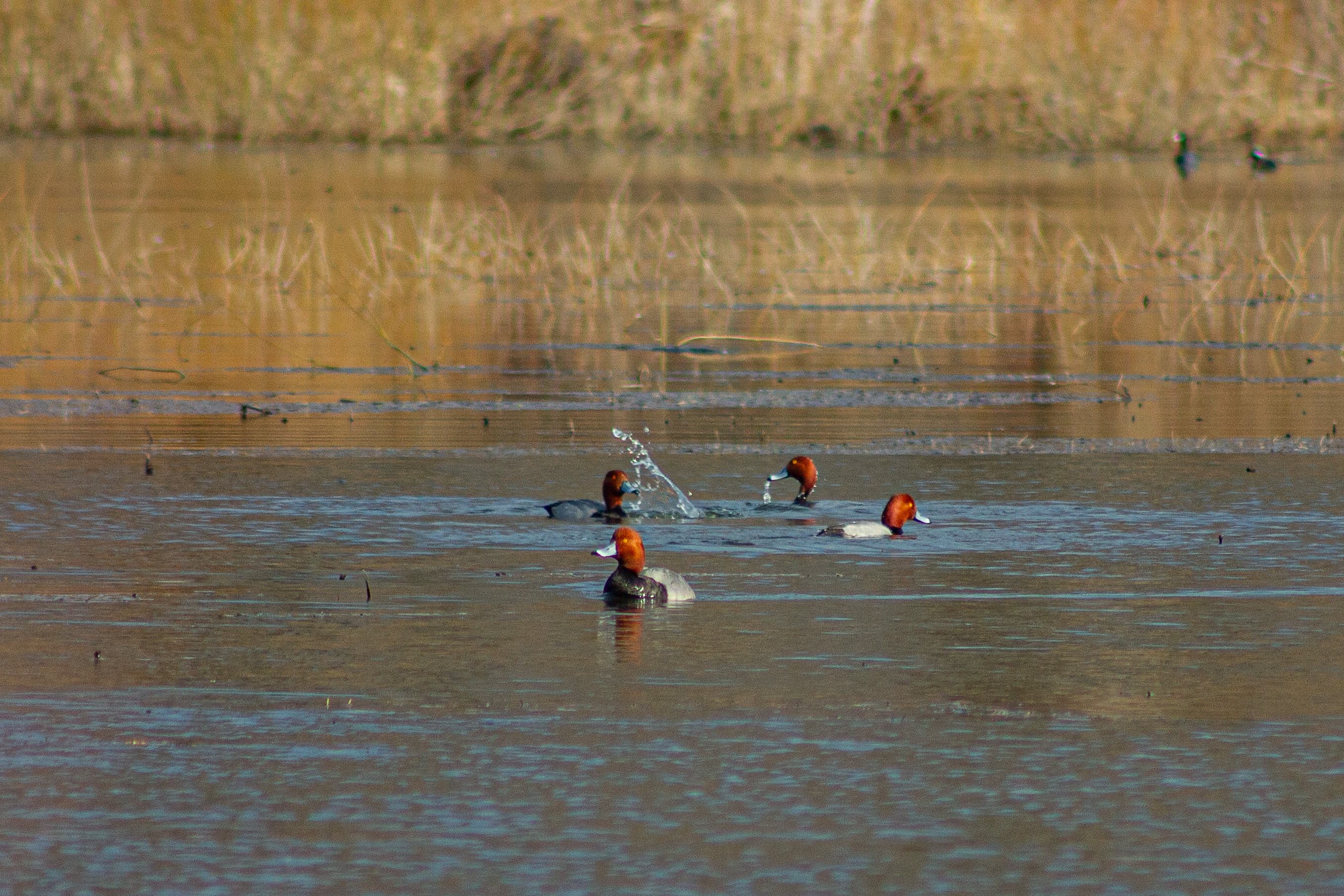
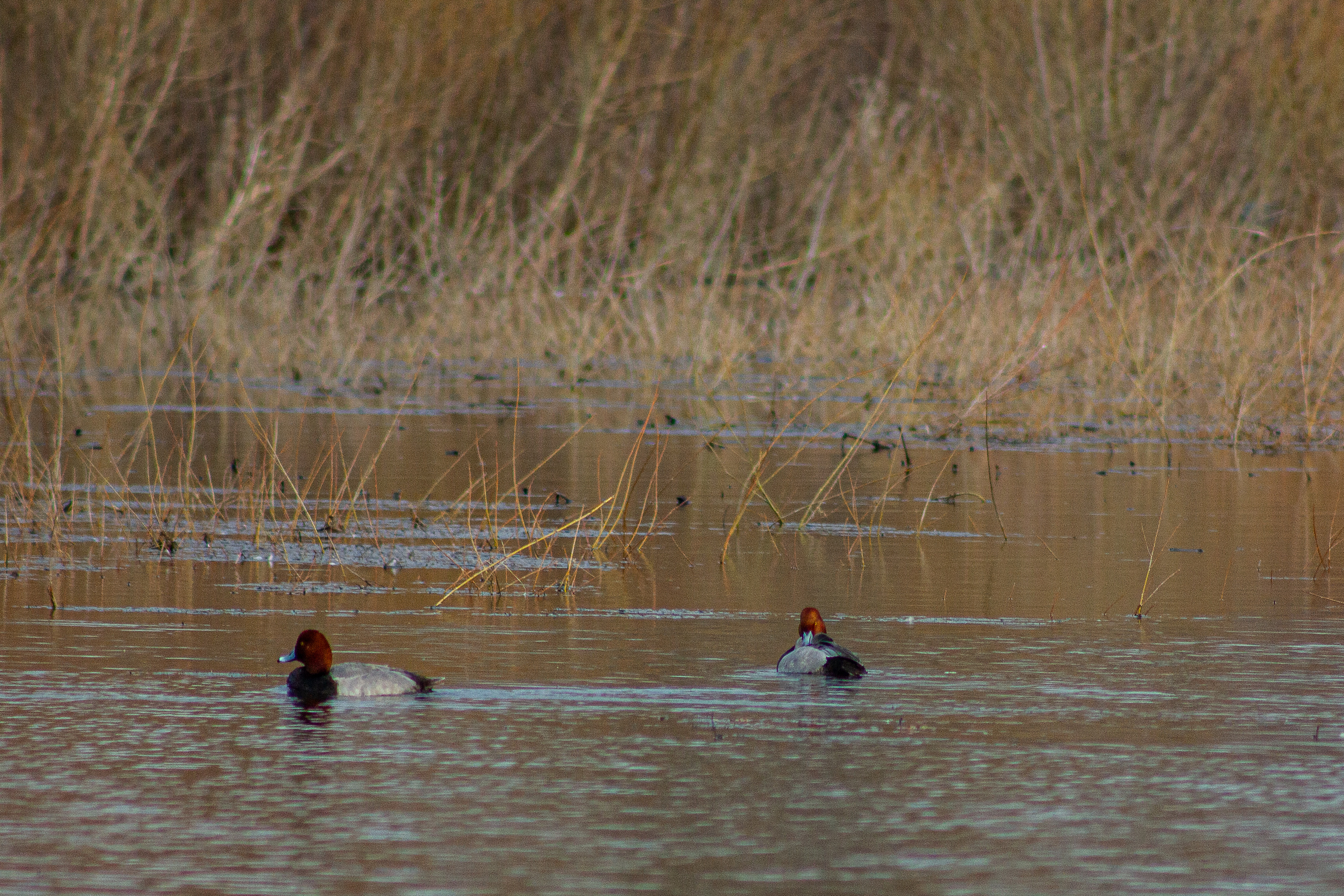
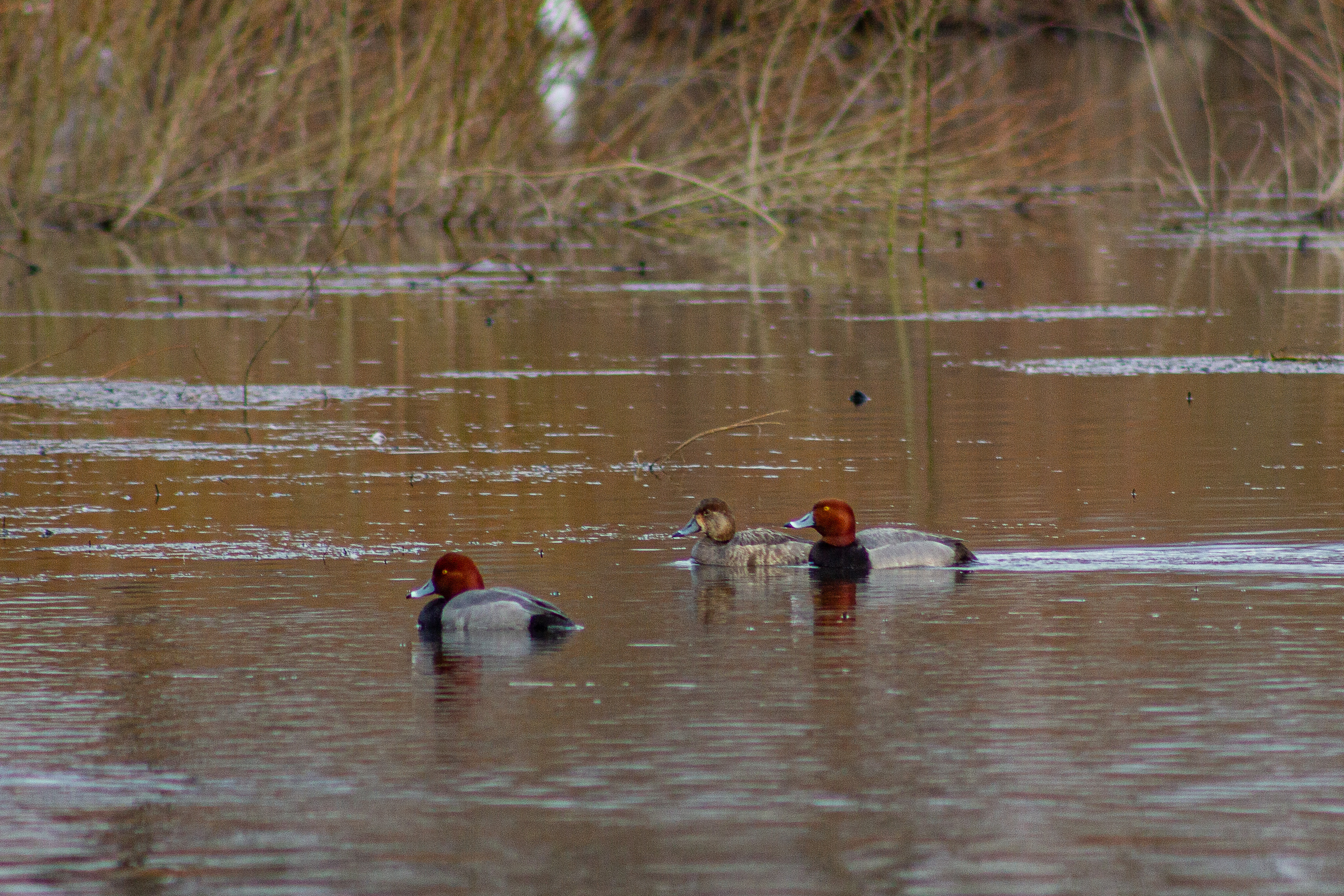
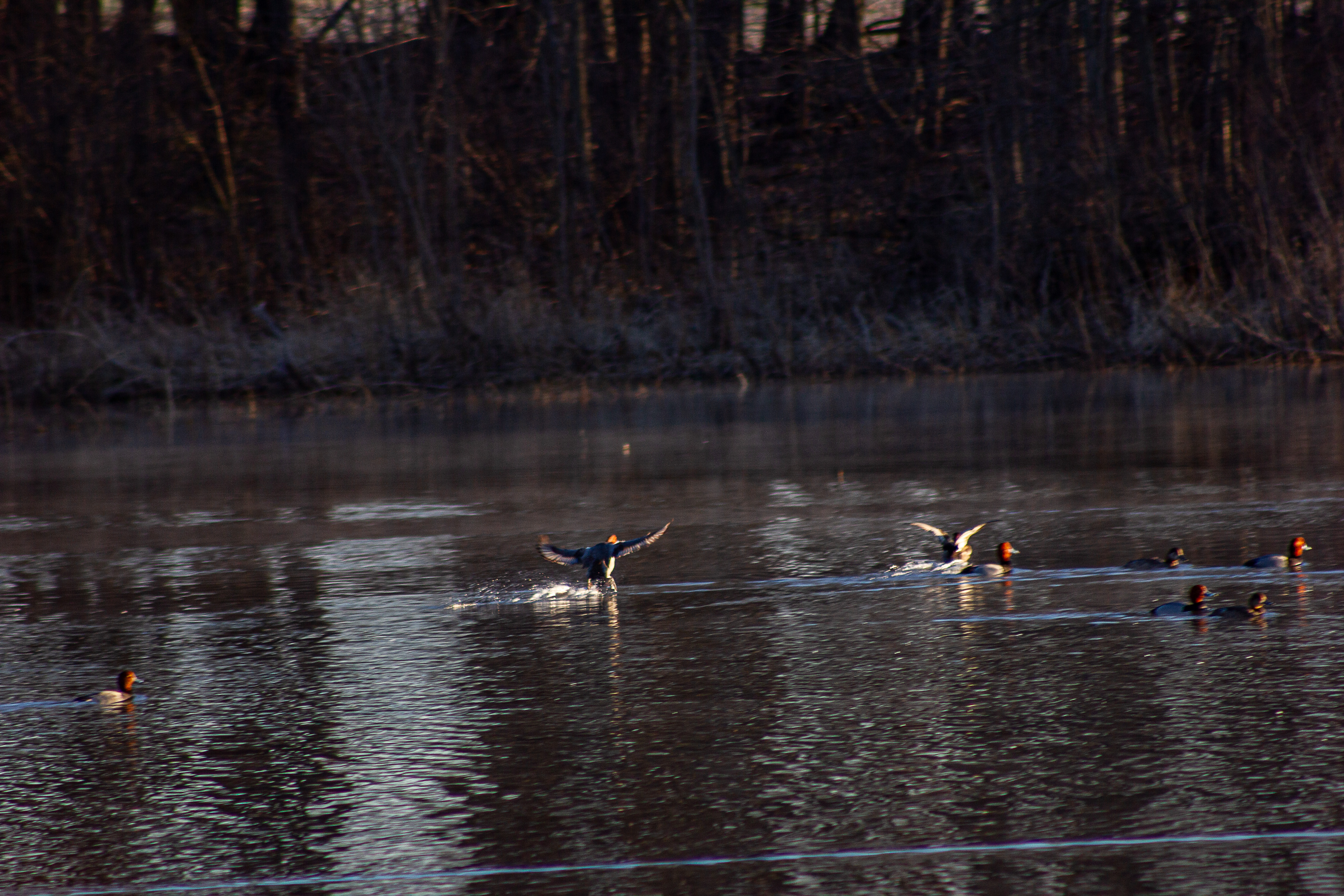
The Redhead (Aythya americana) is a medium-sized diving duck native to North America. It is known for its distinctive appearance, habitat preferences, and unique behaviors.
Physical Description
Males: The breeding male has a striking appearance with a red head, bright yellow eyes, a black-tipped blue-gray bill, a black breast, and a gray body.
Females: The female is more subdued in color, with a brown head and body, a darker crown, and a grayish bill with a black tip. Size: They measure 18–22 inches (46–56 cm) in length, with a wingspan of about 29–33 inches (74–84 cm).
Weight: Typically between 2 and 3 pounds (900–1400 grams).
Habitat and Range
Breeding Grounds: Found primarily in prairie potholes in the northern United States (e.g., North Dakota, South Dakota, Montana) and southern Canada.
Wintering Areas: Migrates to the southern United States, Mexico, and Central America, especially in coastal areas like the Gulf of Mexico, Florida, and California.
Preferred Habitat: Shallow freshwater marshes, ponds, and lakes with abundant vegetation.
Diet and Feeding Behavior
Omnivorous: Eats a mix of plant material (seeds, stems, roots of aquatic plants) and small aquatic animals (mollusks, insects, crustaceans).
Feeding Style: Primarily a diving duck, but can also dabble in shallow water.
Common Food Sources: Pondweed, wild celery, sedges, snails, and small fish.
Behavior and Reproduction
Mating System: Seasonal monogamy, but females often lay eggs in other ducks’ nests (a behavior called brood parasitism).
They commonly target Canvasbacks, Lesser Scaups, and other Redheads. Nesting: Nests are built in dense marsh vegetation near water.The female lays 7–14 eggs, incubating them for about 24–28 days.
Ducklings: Hatchlings are precocial (able to leave the nest and feed soon after hatching). They fledge in 60–70 days.
Flocking Behavior: Outside of breeding season, they form large flocks, sometimes mixing with Canvasbacks, Scaups, and other diving ducks.
Predators and Threats
Predators: Include foxes, raccoons, skunks, hawks, eagles, and snapping turtles.
Human-Related Threats: Habitat loss due to wetland drainage, agriculture, and urbanization.
Hunting: Historically hunted for food, but conservation efforts regulate hunting.
Conservation Status
IUCN Status: Least Concern, but populations fluctuate due to habitat changes.
Conservation Efforts: Protected under the Migratory Bird Treaty Act.
Wetland conservation programs (e.g., Ducks Unlimited) support habitat preservation.
Interesting Facts
Brood Parasitism Champion: Redhead females lay eggs in other ducks’ nests, sometimes even in coots’ nests.
Fast Fliers: They can reach speeds of up to 50 mph (80 km/h).
Hybridization: Occasionally breeds with Canvasbacks and Lesser Scaups, creating hybrid offspring.
Popular Among Hunters: Due to their flight patterns and numbers, they are a sought-after species in waterfowl hunting.
 Wild Bird Journal
Leave a comment