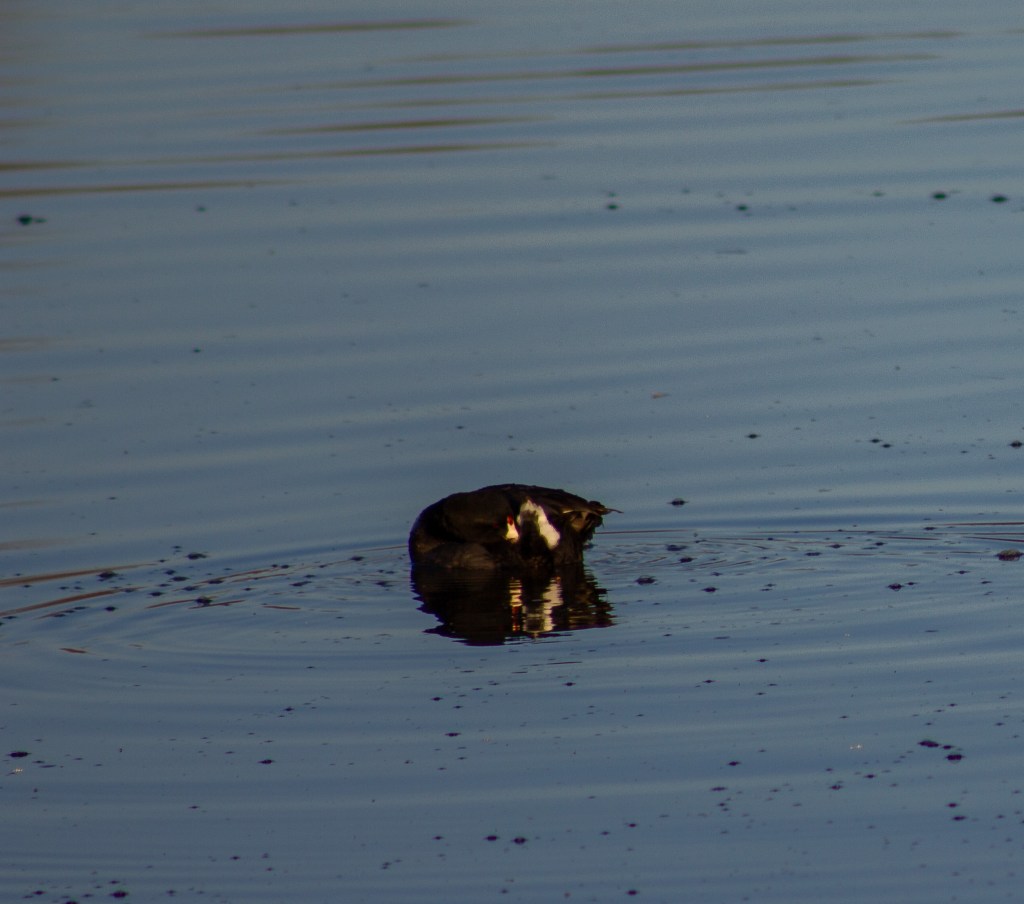
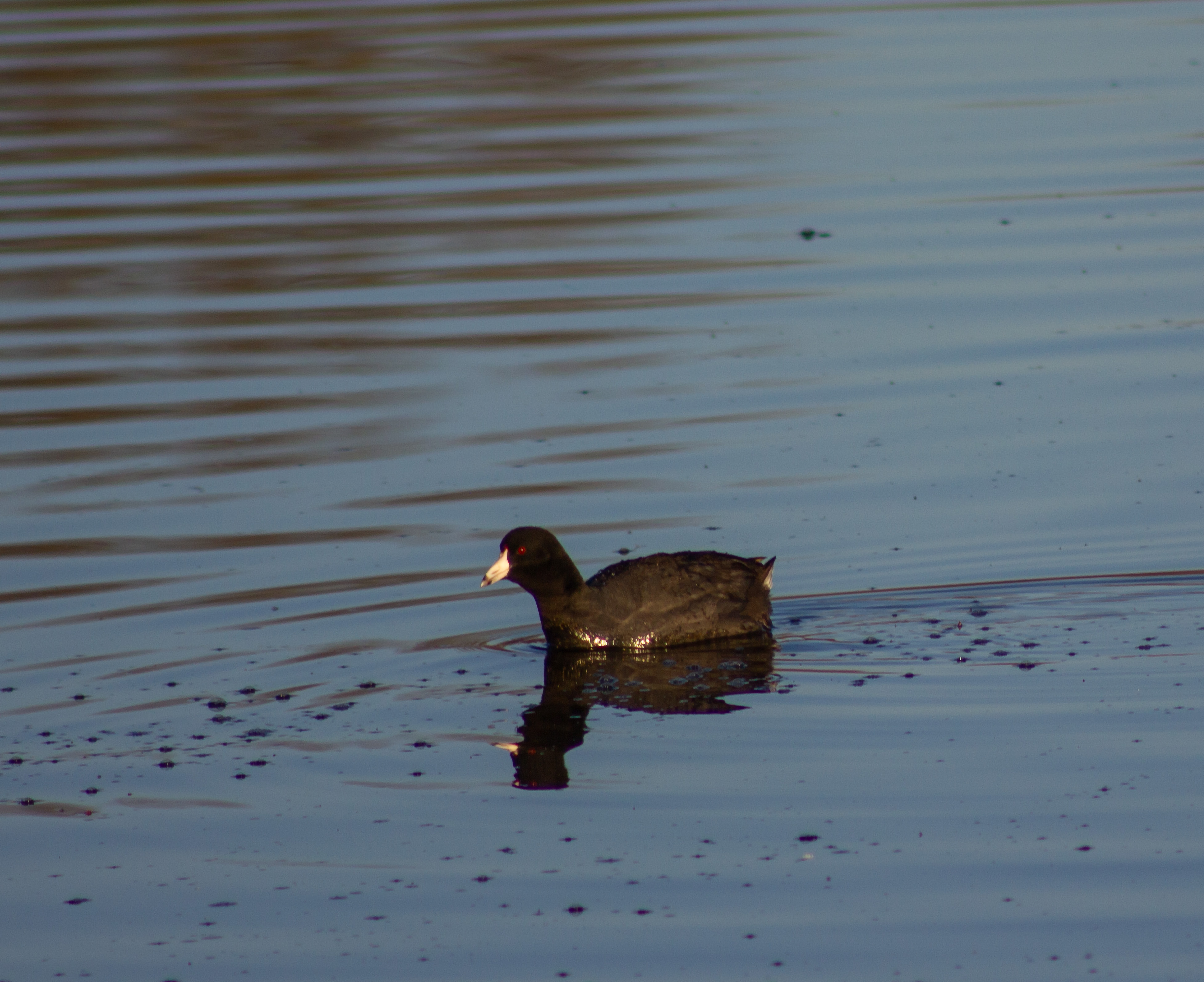


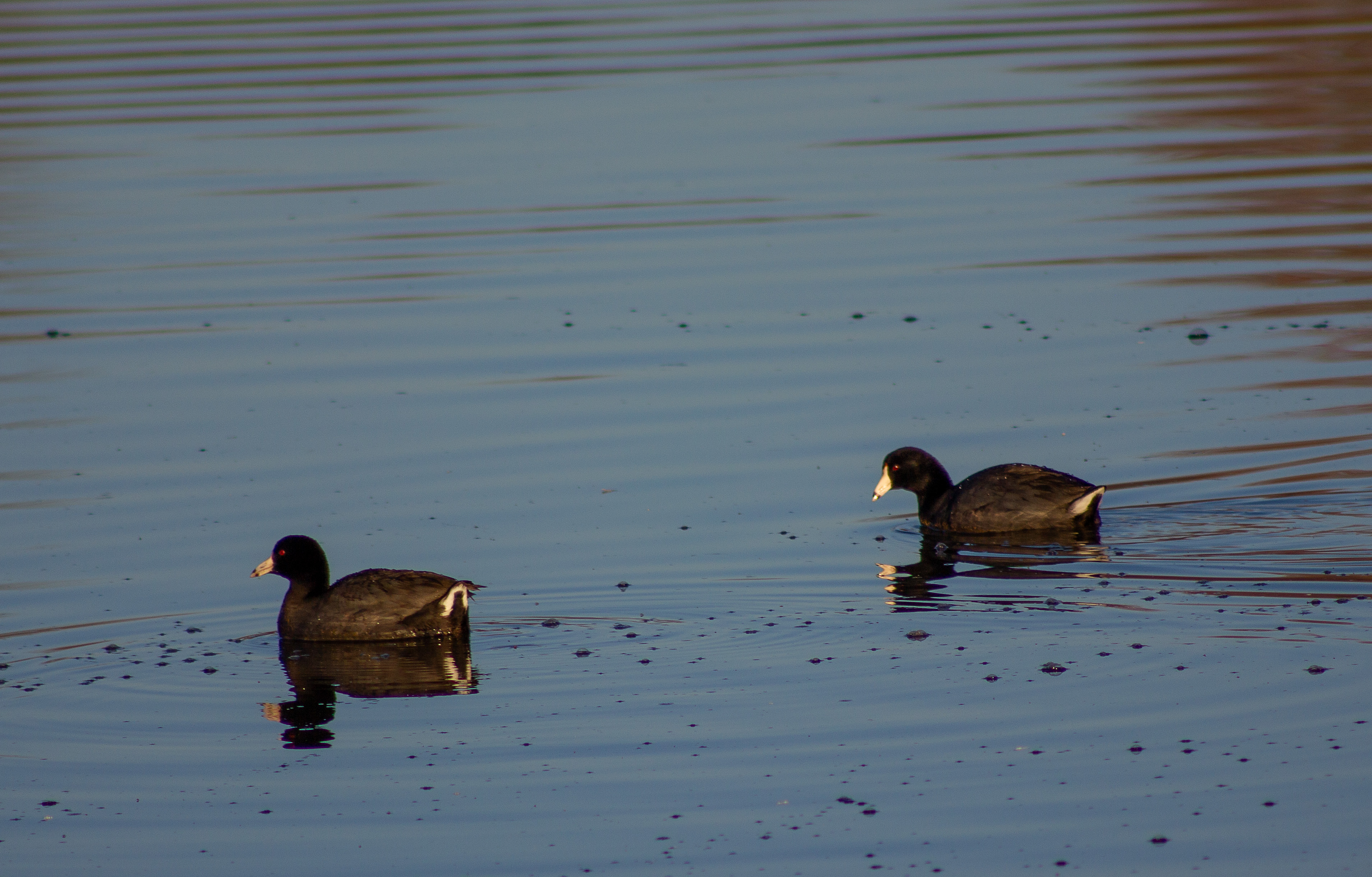
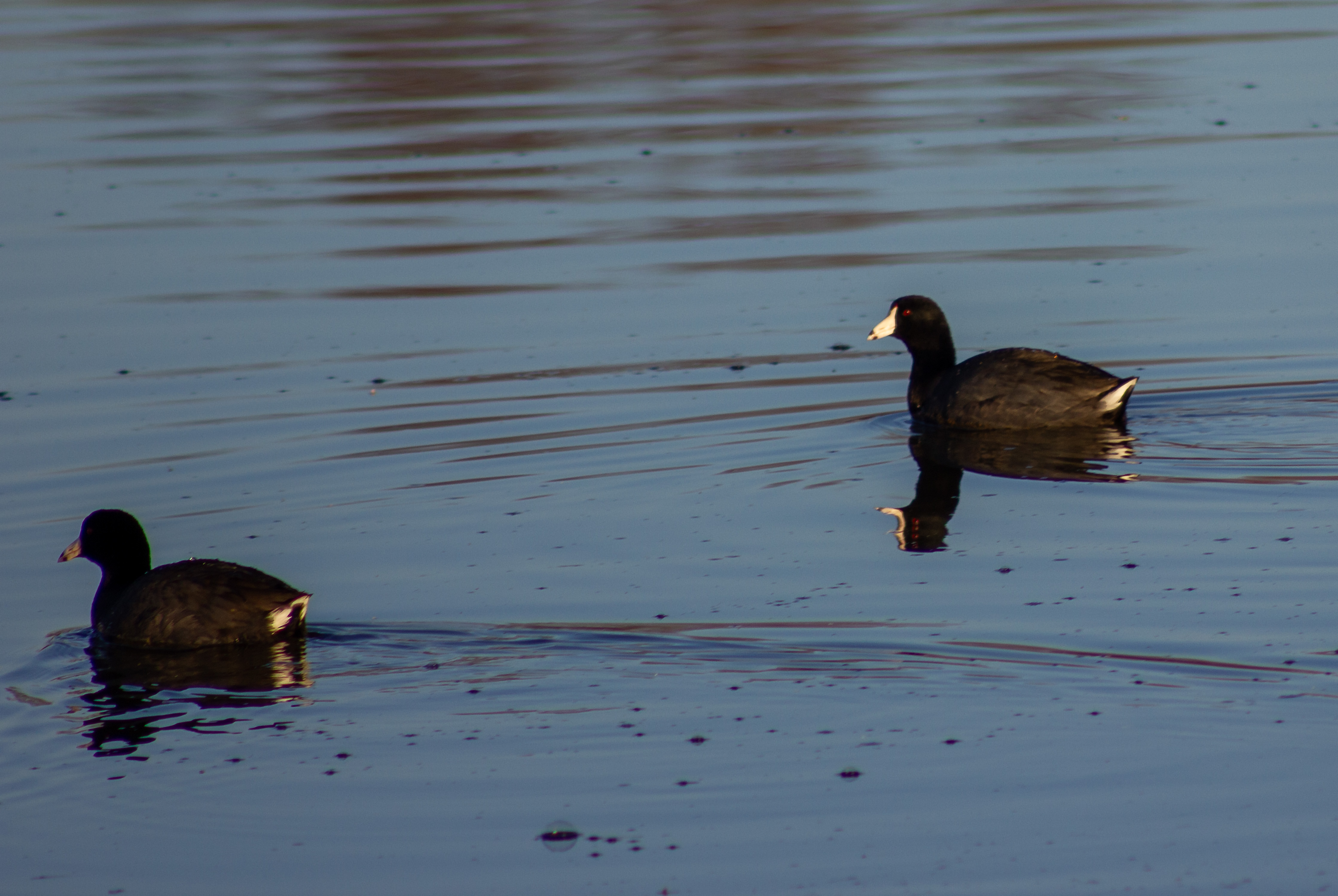
The American Coot (Fulica americana) is a fascinating and highly adaptable waterbird commonly found in wetlands, lakes, and ponds across North America. Though it may resemble a duck, it is actually a member of the rail family (Rallidae). Below is a detailed breakdown of the American Coot’s characteristics, behavior, habitat, and more.
Physical Characteristics
Size: Medium-sized waterbird, measuring 13–17 inches (33–43 cm) in length, with a wingspan of 23–28 inches (58–71 cm). Weight: Around 1.3–1.5 lbs (590–690 g).
Appearance: Plumage: Dark gray to black body with a slightly paler underside. Head: Black, with a distinct white frontal shield above the bill. Bill: Short, thick, and white with a dark band near the tip.
Legs and Feet: Greenish-yellow legs with lobed toes instead of webbed feet, which help it navigate both water and land.
Eyes: Bright red.
Habitat and Distribution
Range: Found throughout North America, from Canada to Central America. They migrate south in the winter, reaching as far as Panama.
Preferred Habitat: Freshwater wetlands, lakes, ponds, marshes, and reservoirs. Often found near vegetation-rich shallow waters where they can forage for food. Adaptable to urban and suburban environments, including golf courses and city parks.
Behavior and Ecology
Diet: Omnivorous: Eats aquatic plants, algae, seeds, insects, small fish, snails, and crustaceans. Often seen dipping their heads underwater or diving to forage. Occasionally steals food from ducks or other waterbirds.
Swimming & Movement: Unlike ducks, which have webbed feet, coots have lobed toes that help them swim efficiently. Can also walk well on land, unlike many other waterbirds.
Flight: Poor fliers compared to ducks; requires a long running start across the water to take off. Migrates at night in flocks.
Social Behavior: Highly social, often seen in large groups. Can be aggressive, especially during breeding season. Will chase and peck at intruders, even members of their own species.
Reproduction and Lifecycle
Breeding Season: Spring and early summer.
Nesting: Builds floating nests made of vegetation in dense marshes or near reeds. Both parents help construct the nest.
Eggs & Incubation: Lays 6–12 eggs per clutch. Eggs are speckled and pale-colored. Both parents incubate the eggs for about 21–25 days
. Chicks: Hatch with bright orange-red feathers on their heads, which fade as they mature. Parents feed and protect the young for several weeks. Chicks can swim shortly after hatching.
Predators and Threats
Predators: Include hawks, eagles, foxes, raccoons, snapping turtles, and large fish.
Threats: Habitat loss due to wetland destruction. Pollution, particularly from pesticides and fertilizers. Hunting in some regions, though not a major target.
Interesting Facts
Not a Duck! Despite looking like one, it is more closely related to rails and gallinules.
Aggressive Parents: Coots sometimes abandon weaker chicks, favoring stronger ones.
Tough to Catch: Their muscular legs and strong swimming skills make them hard for predators to catch.
Can Walk on Lily Pads: Their lobed feet distribute their weight, allowing them to move across floating vegetation.
Unique Voice: Has a variety of squawks, grunts, and croaks, often sounding more like a chicken than a duck.
Conservation Status
Least Concern (IUCN Red List).
Stable populations across most of their range.
Protected under the Migratory Bird Treaty Act in the U.S.
 Wild Bird Journal
Leave a comment