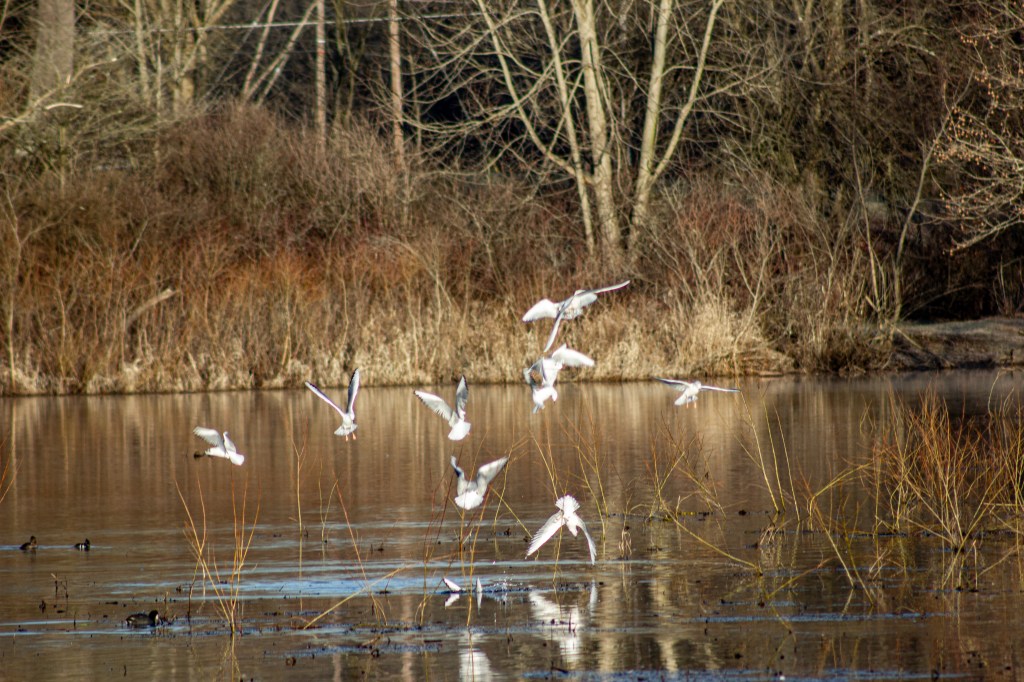
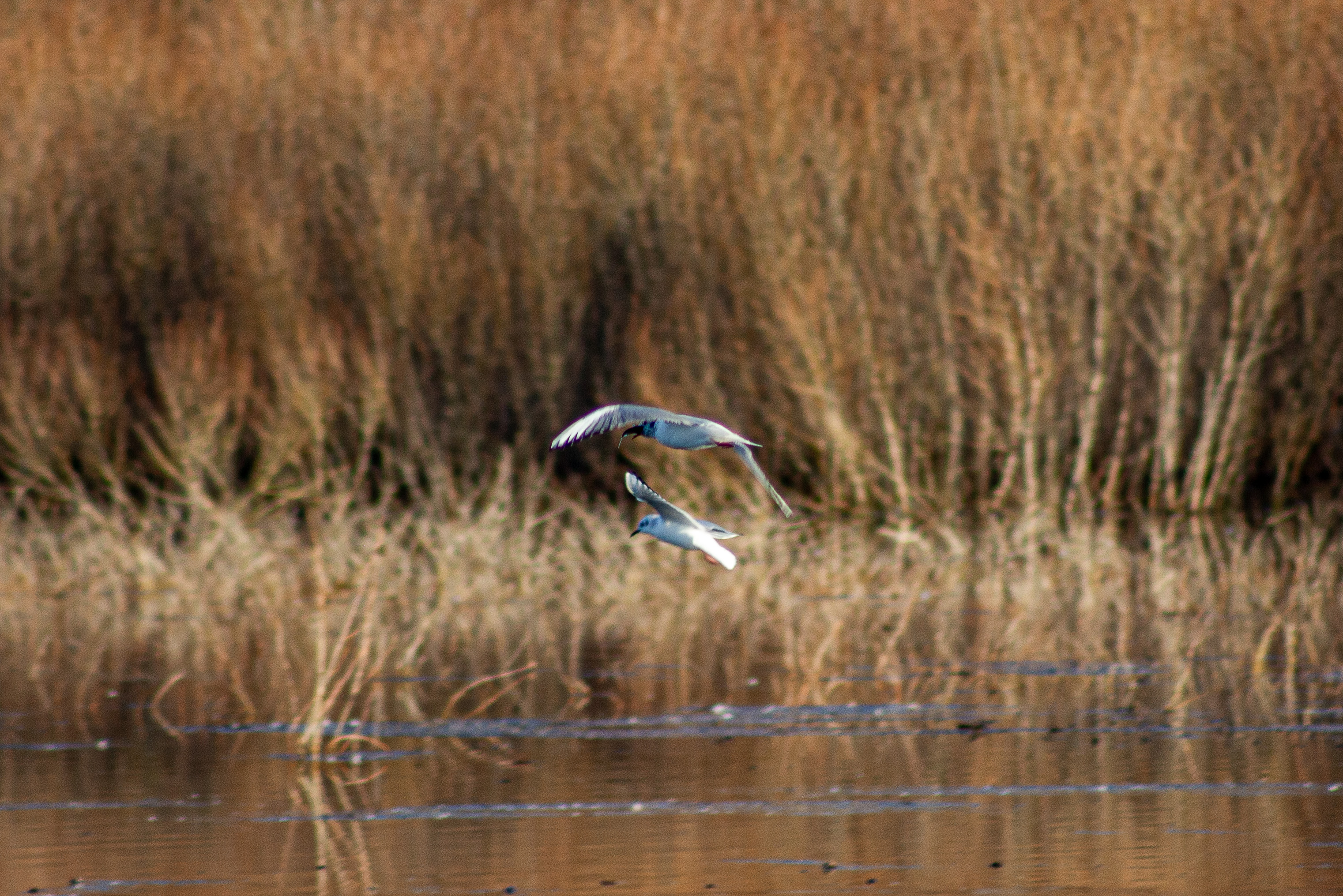
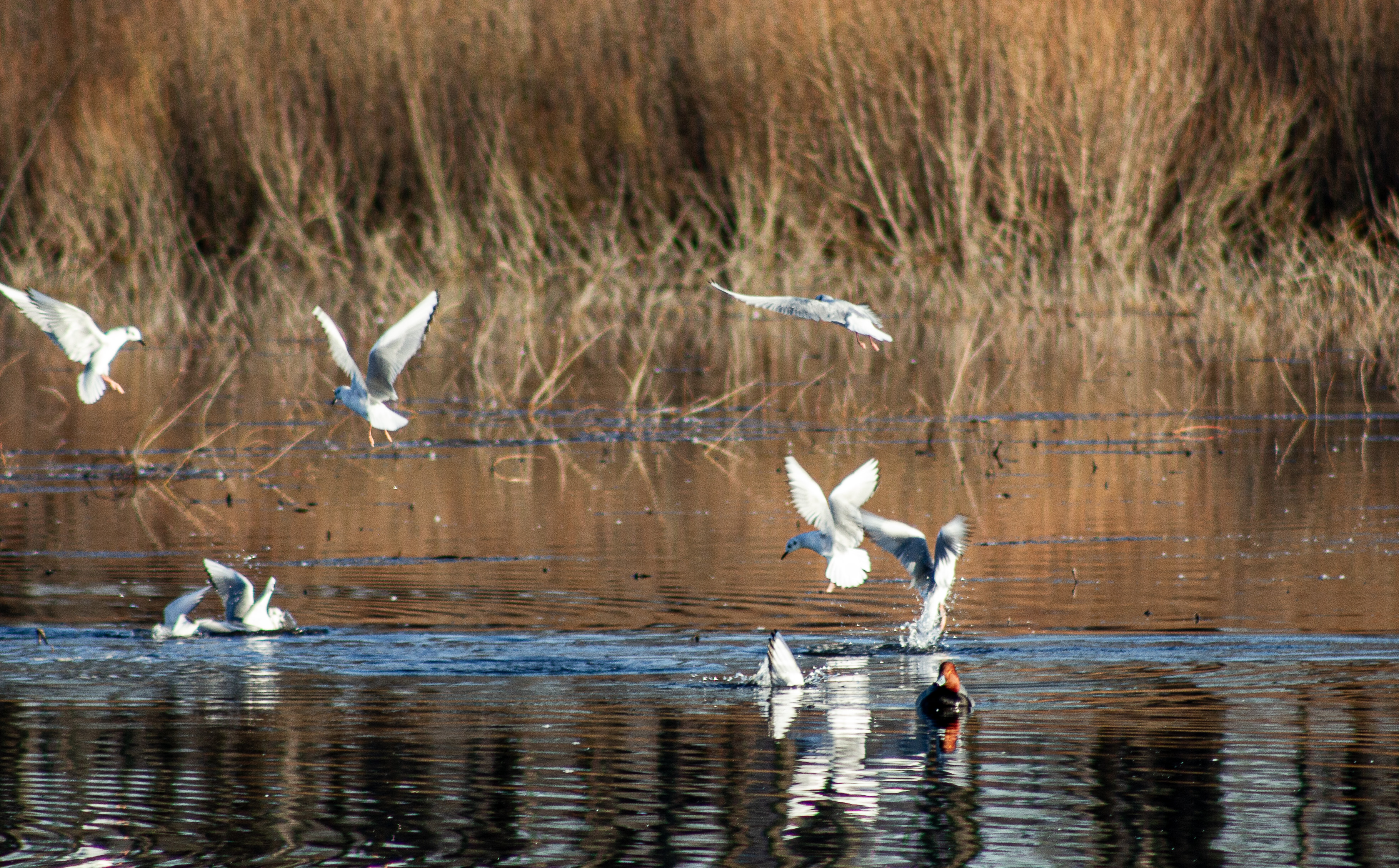

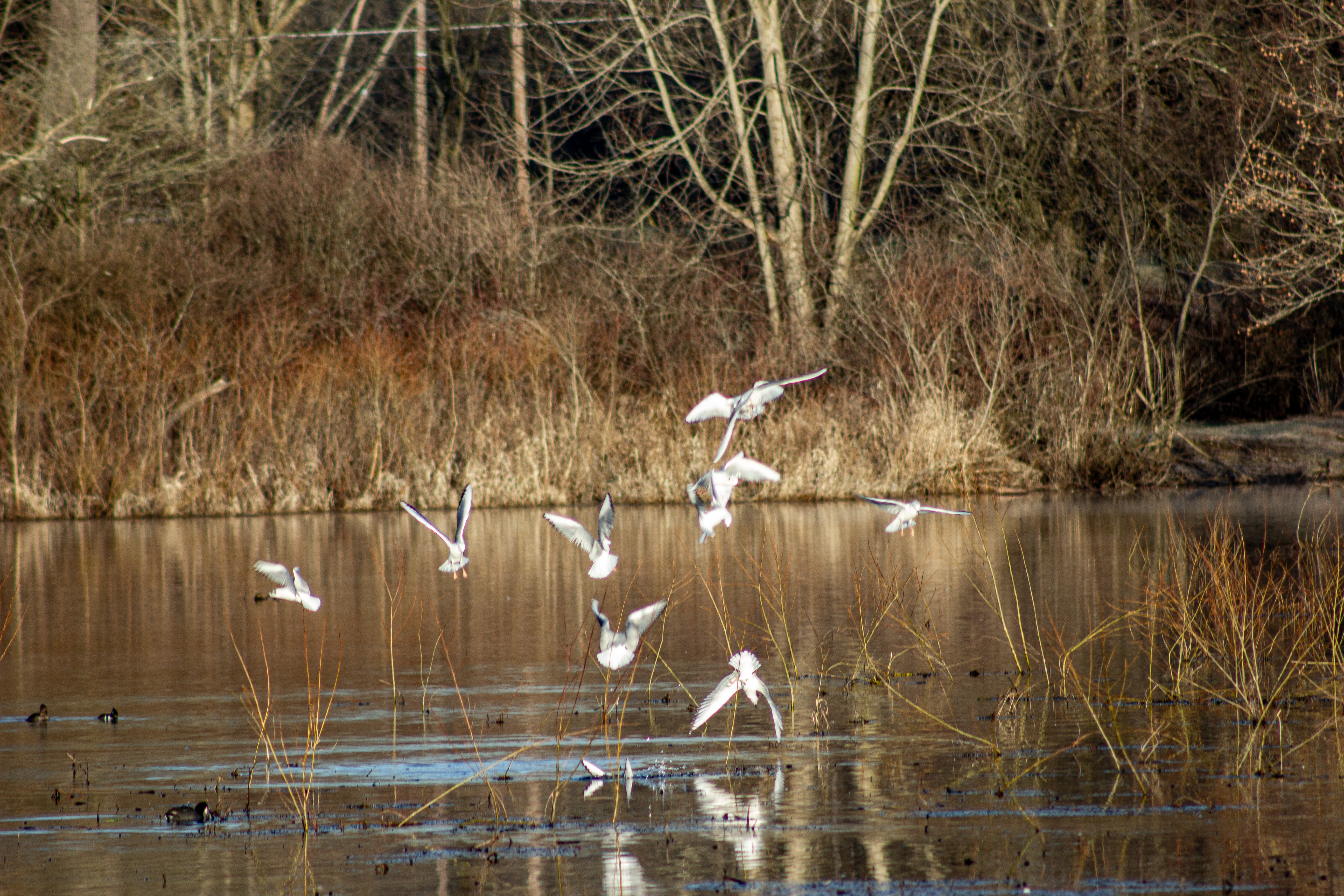
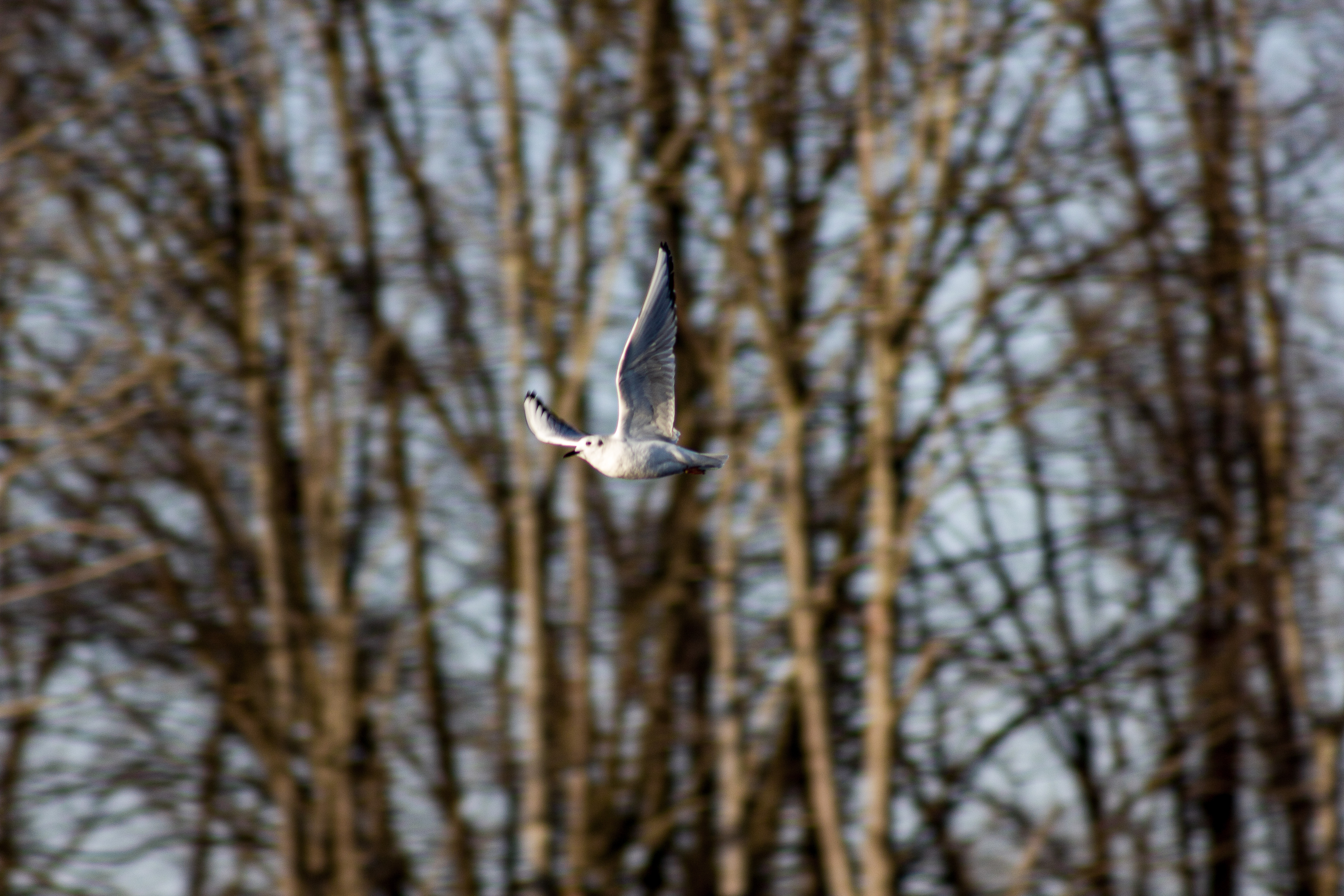
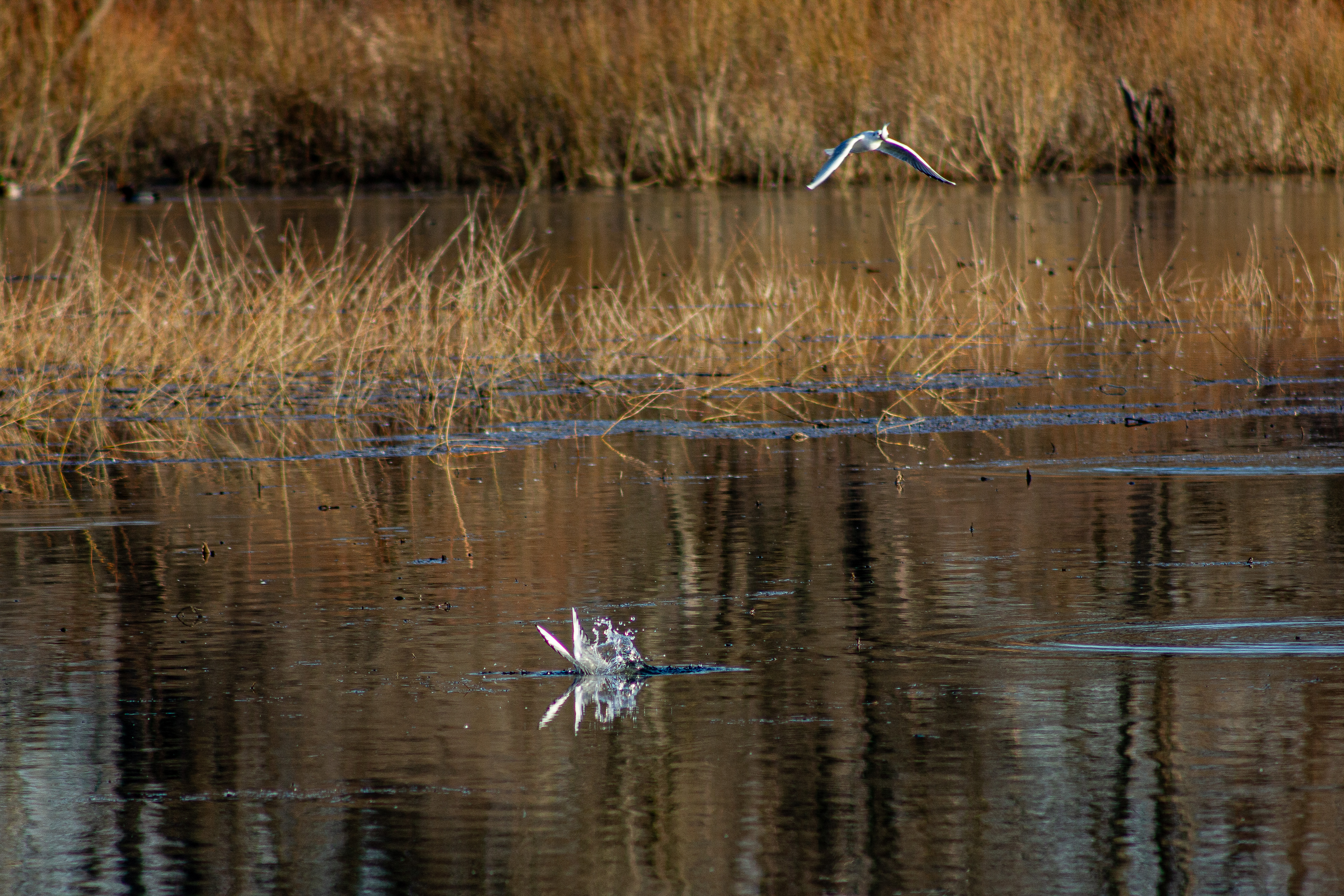
Bonaparte’s Gull (Chroicocephalus philadelphia) is a small and elegant species of gull native to North America. It’s distinctive among gulls for its size, graceful behavior, and unique nesting habits. Here’s a comprehensive overview covering its identification, behavior, habitat, migration, and more:
Identification
Size: One of the smallest gulls in North America.
Length: ~11.5–13.5 inches (29–34 cm)
Wingspan: ~30–33 inches (76–84 cm)
Weight: ~180–225 grams
Plumage: Breeding plumage: Striking black hood, white eye crescents, pale gray back, white underparts, and black-tipped wings. Non-breeding plumage: White head with a dark ear spot; the black hood is lost.
Bill: Thin, black, and relatively short.
Legs: Reddish or orange during the breeding season.
Behavior
Flight: Agile and tern-like, often flitting over water with quick wingbeats.
Feeding: Catches insects mid-air or picks them off the surface of the water. Also eats small fish, crustaceans, and other aquatic invertebrates. Forages singly or in small flocks; occasionally associates with larger gulls or terns.
Vocalization: High-pitched and nasal calls, less raucous than larger gulls.
Habitat
Breeding: Prefers boreal forests near freshwater lakes, ponds, or bogs—especially in Canada and Alaska.
Unique among gulls: Nests in trees, usually conifers, often on a horizontal branch over water.
Non-breeding / Wintering: Found along both Atlantic and Pacific coasts, Great Lakes, and inland reservoirs and rivers. Often seen in estuaries, bays, lakeshores, and even urban water bodies.
Migration
Highly migratory: Travels between boreal breeding grounds and wintering areas across the southern U.S. and Mexico.
Timing: Spring migration: March to May Fall migration: August to November
Routes: Migrates through interior North America using major river systems and lake chains.
Breeding
Season: Late May to July.
Nests: Built in trees (rare for gulls), often in colonies; made of twigs, moss, and vegetation. Clutch: Typically 2–4 eggs.
Incubation: ~24 days by both parents.
Chick care: Parents feed chicks for several weeks until they fledge.
Range
Breeding range: Northern Canada, southern Alaska.
Wintering range: Coastal U.S. (especially the Gulf Coast), Baja California, and parts of Central America.
Conservation Status
IUCN Red List: Least Concern
Population trend: Generally stable, although local threats like habitat loss or pollution may impact some areas.
Protection: Covered under the Migratory Bird Treaty Act in the U.S.
Fun Facts
Named after Charles Lucien Bonaparte, a French ornithologist and nephew of Napoleon Bonaparte. Rare among gulls for its arboreal nesting behavior. During migration, it may appear inland in large numbers, especially after storms.
 Wild Bird Journal
Leave a comment