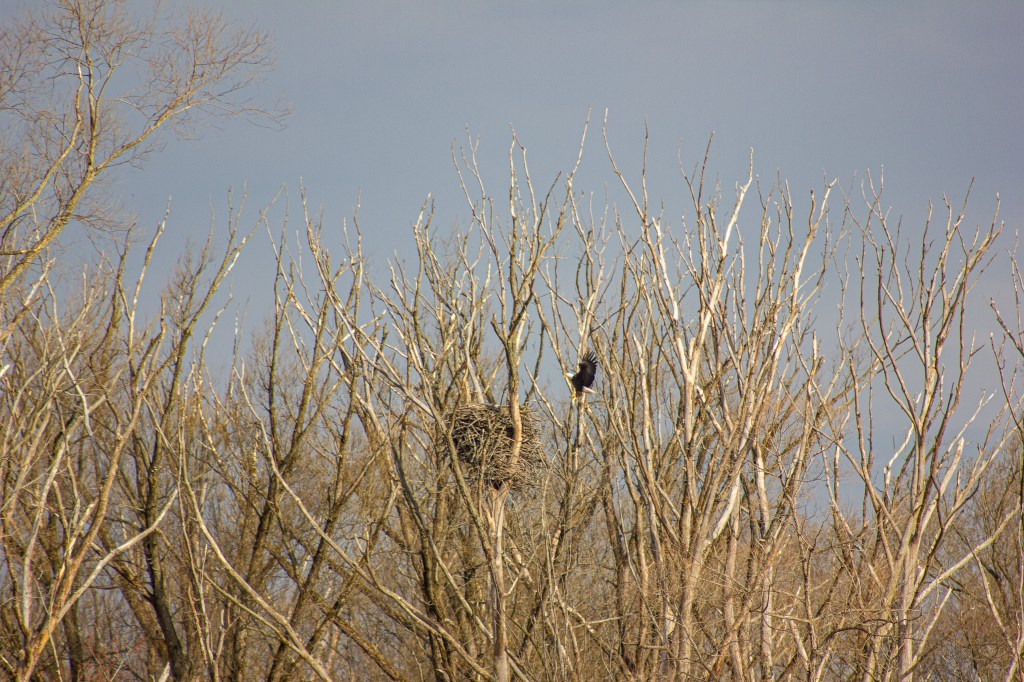

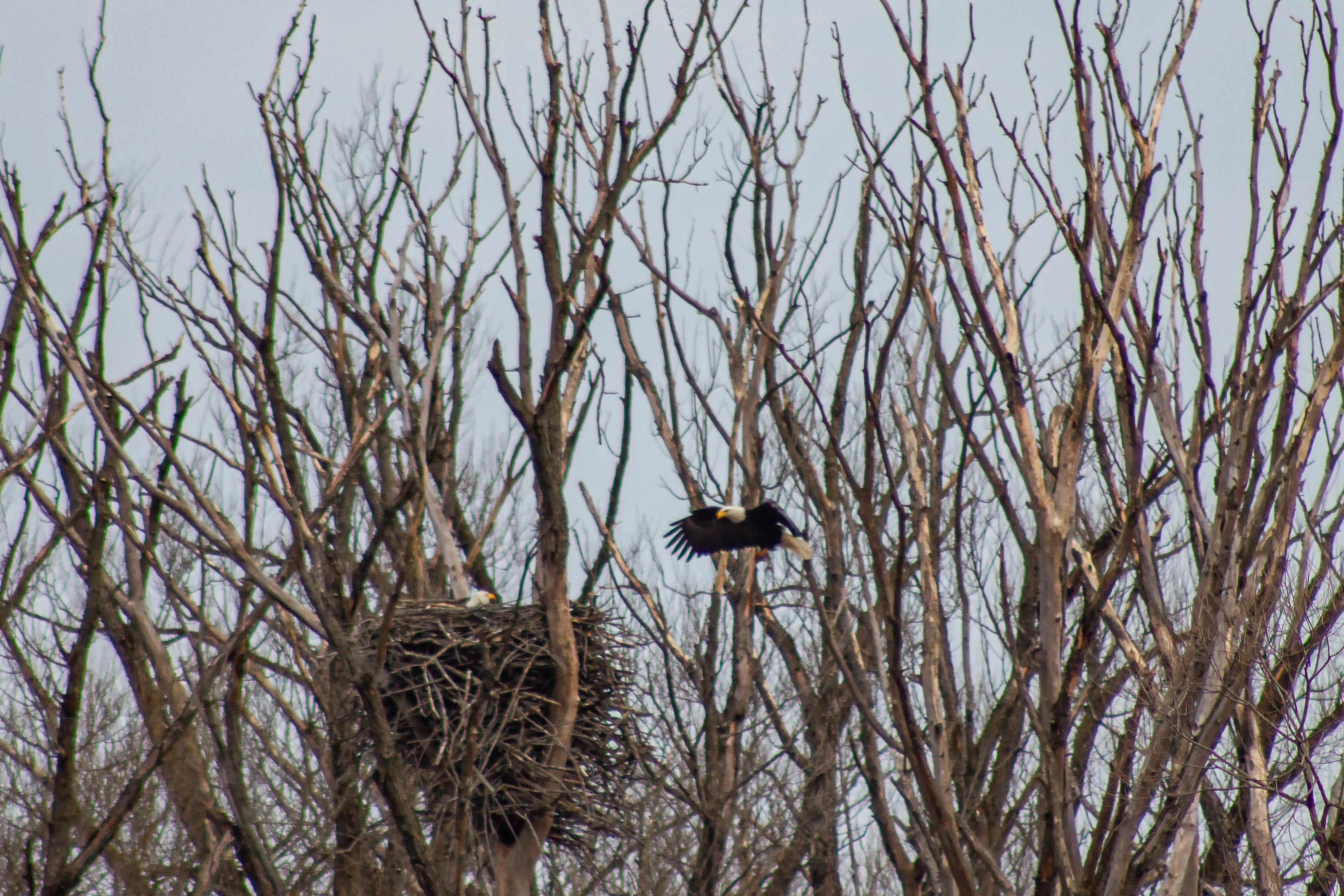
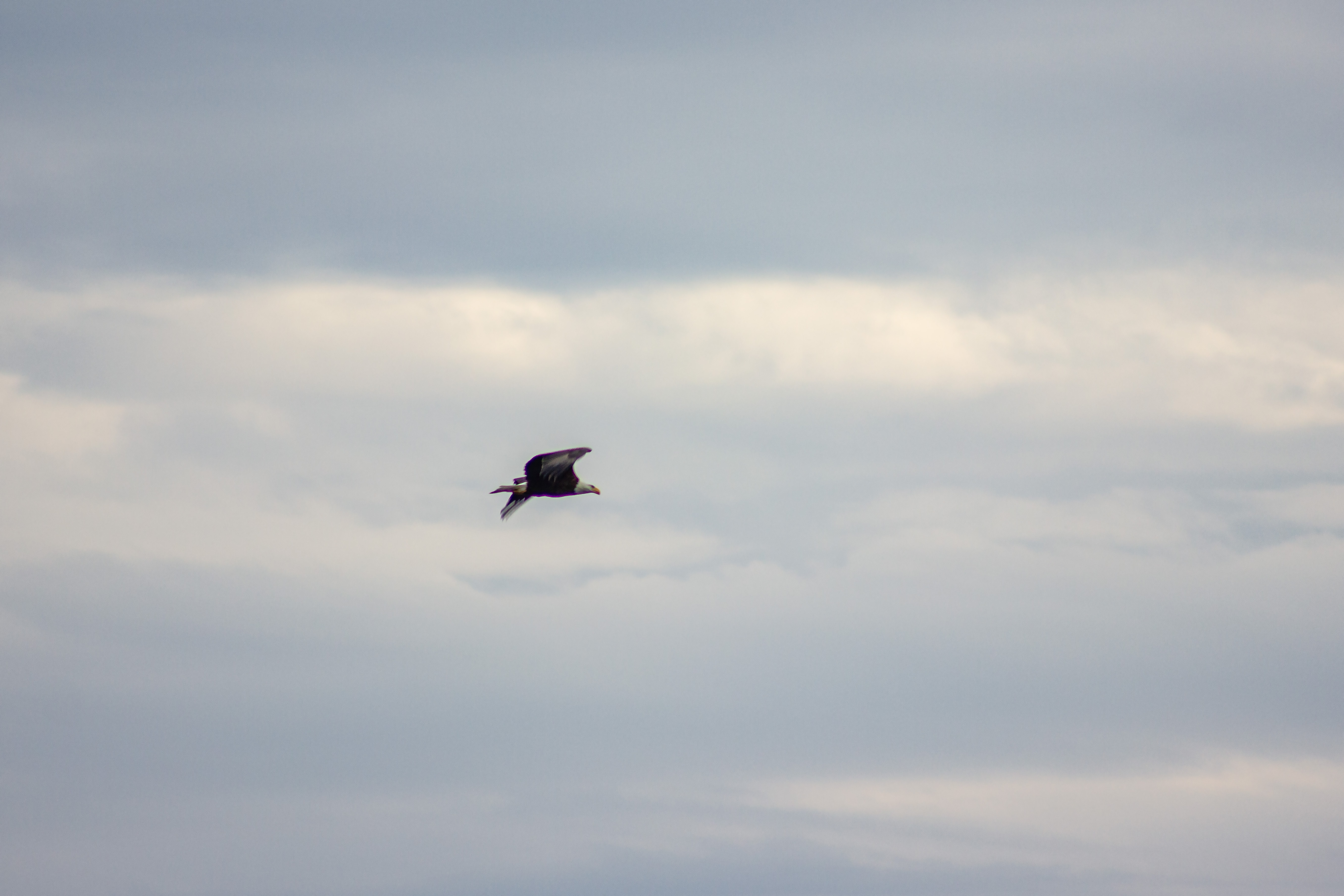
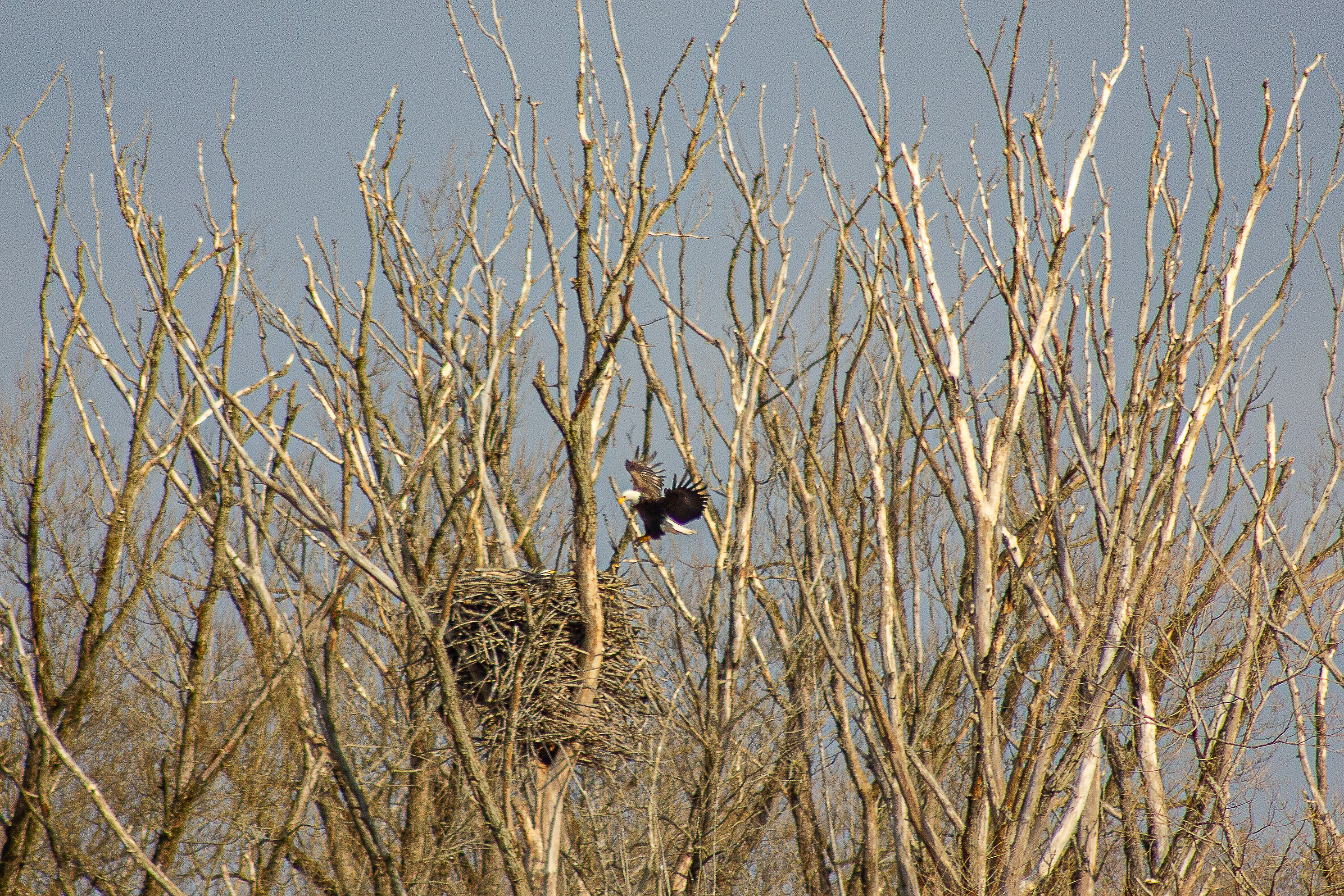

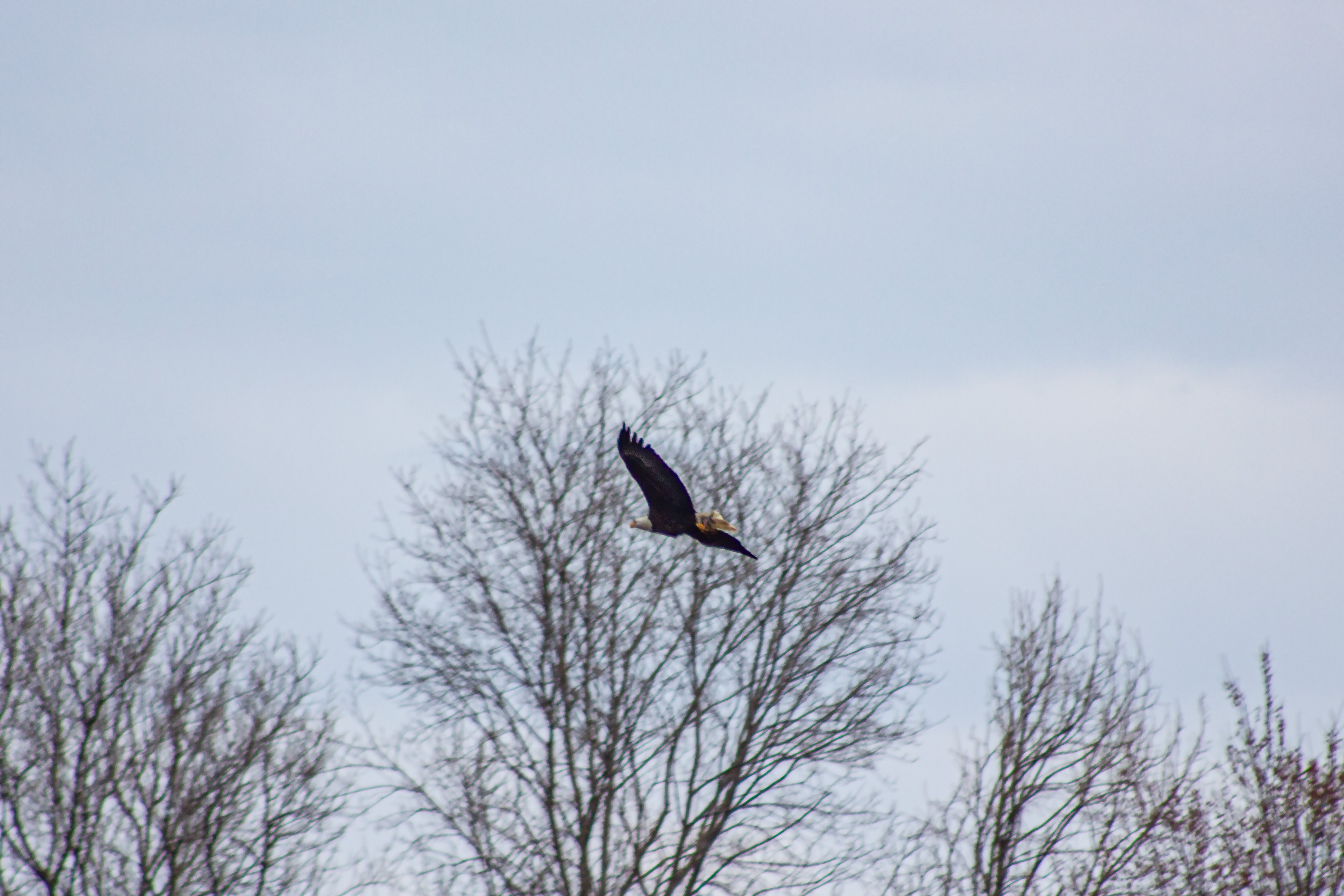
The Bald Eagle is a bird of prey found only in North America. It is most known for being the national bird and symbol of the United States, representing freedom, power, and resilience. Contrary to its name, the Bald Eagle is not actually bald. The term “bald” comes from an old English word, “balde”, meaning white-headed.
Physical Description
Size: Body length: 28–40 inches (70–102 cm)
Wingspan: 6–7.5 feet (1.8–2.3 meters)
Weight: 6.5–14 pounds (3–6.3 kg) Females are larger than males.
Appearance: Adults have a distinctive white head and tail, with a dark brown body and wings. Their beak, eyes, and feet are yellow. Juveniles are mottled brown and white, taking about 4-5 years to develop full adult plumage.
Habitat
Typically found near large bodies of open water: lakes, rivers, reservoirs, coastal marshes.
Prefers habitats with abundant food supply and tall trees or cliffs for nesting.
Common in Canada, Alaska, and the continental U.S. (especially near the Great Lakes, Pacific Northwest, and Florida).
Diet
Primarily fish (they are expert fishers).
Also eat waterfowl, small mammals, and carrion (dead animals).
Opportunistic hunters: they may steal prey from other birds like ospreys. Known to scavenge during winter months.
Nesting and Reproduction
Mate for life, often returning to the same nest each year. Nests are called eyries, built high in tall trees or on cliffs.
Nests are huge—up to 13 feet deep, 8 feet wide, and over 1 ton in weight! Typically lay 1–3 eggs, with both parents sharing incubation duties (about 35 days).
Eaglets fledge (learn to fly) at around 10–12 weeks, but still rely on parents for food after.
Behavior
Excellent fliers, able to soar for hours using thermal currents.
Known for dramatic courtship flights, including cartwheeling mid-air while locked talons. Highly territorial, especially during the breeding season.
Usually silent, but when vocal, they give high-pitched whistles and chirps (not the fierce scream often used in movies—that’s usually a red-tailed hawk sound).
Conservation Status
Once endangered due to habitat loss, hunting, and especially DDT pesticide use which caused egg shells to thin and break.
Protected under laws like the Bald and Golden Eagle Protection Act and Migratory Bird Treaty Act.
Thanks to legal protection and environmental recovery, it was removed from the U.S. Endangered Species List in 2007. Current status: Least Concern, but still protected and monitored.
Cultural and Symbolic Importance
Official national emblem of the United States since 1782. Represents freedom, courage, and immortality.
Seen on currency, flags, military insignia, and government seals. Revered in many Native American cultures as a sacred spiritual symbol, often associated with visions, strength, and honor.
Fun Facts
Bald Eagles can fly at 35–43 mph, and dive at speeds over 75 mph!
They have incredible eyesight, about 4–8 times stronger than humans. Lifespan in the wild is 20–30 years, and even longer in captivity. Known to migrate, especially northern populations that move south during winter.

 Wild Bird Journal
Leave a comment