
The Common Merganser (Mergus merganser) is a striking and versatile waterfowl found in North America, Europe, and parts of Asia. It is a member of the Anatidae family, which includes ducks, swans, and geese. Here is a detailed look at this species:
Description
Size: Common Mergansers are relatively large birds, with males being slightly larger than females. Males typically measure around 27–30 inches (69–76 cm) in length, while females are a bit smaller, around 24–27 inches (61–69 cm).
Weight: Males weigh about 2.5–3.5 kg (5.5–7.7 lbs), and females weigh slightly less, around 1.9–2.9 kg (4.2–6.4 lbs).
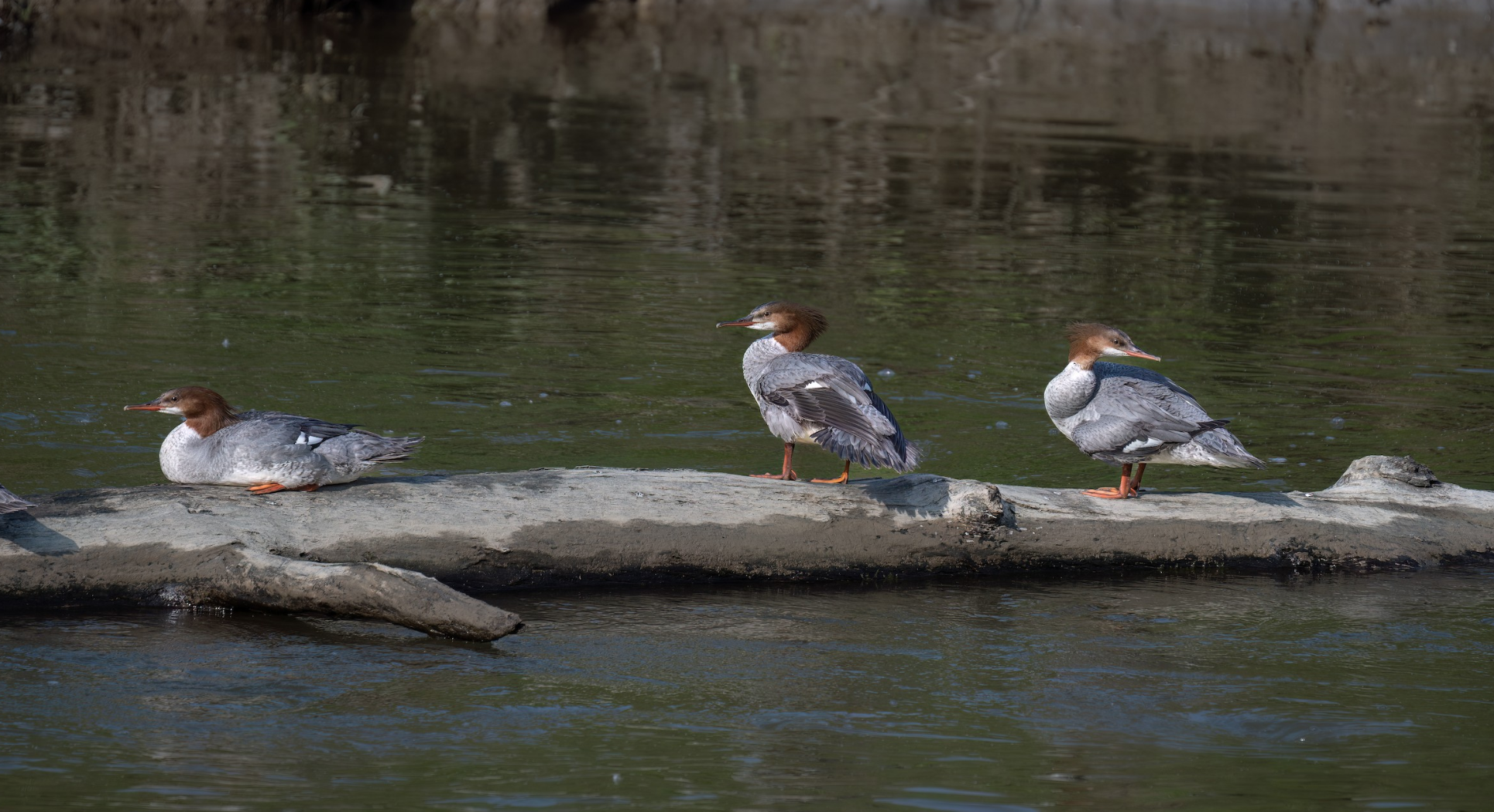
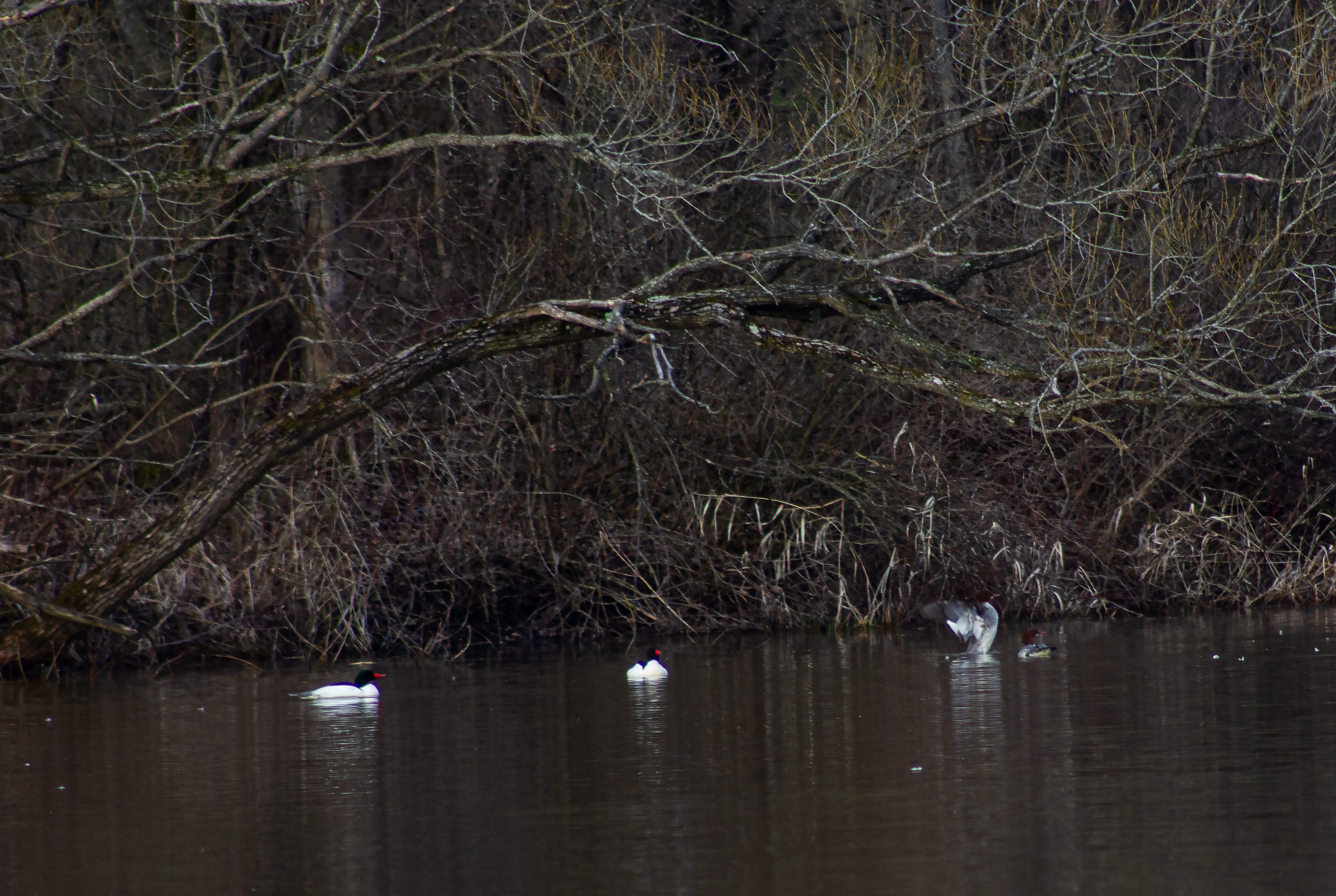
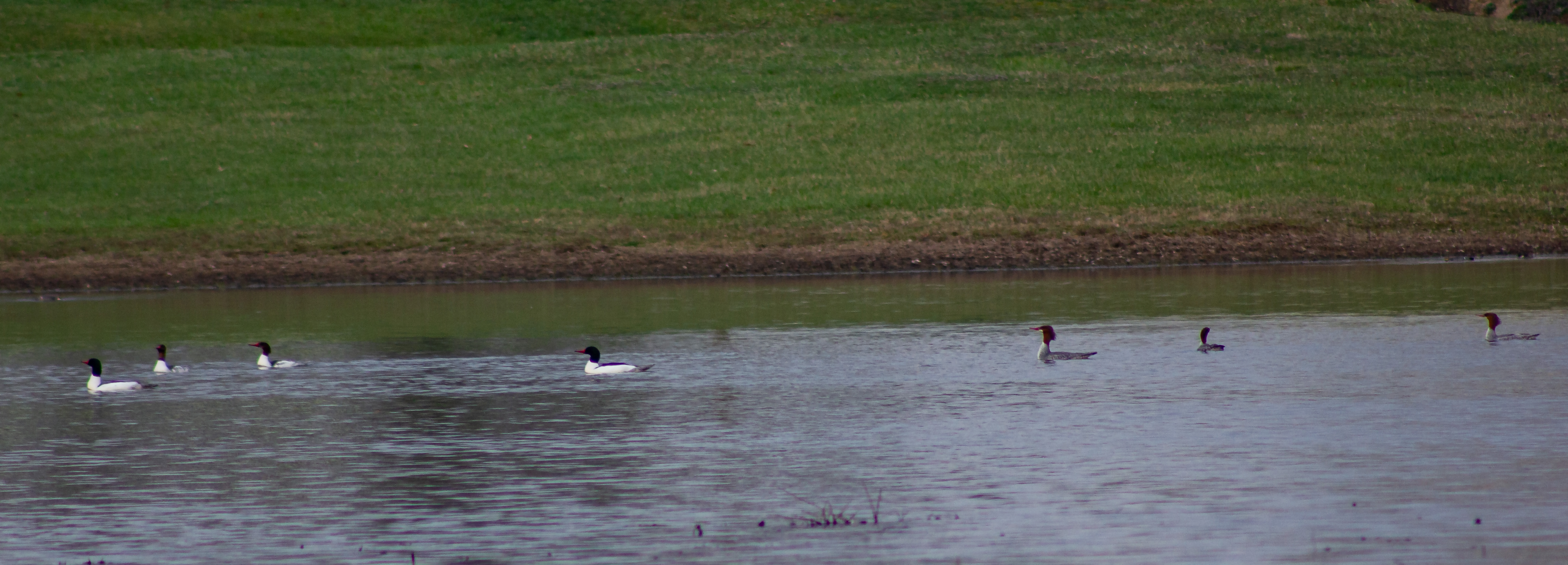
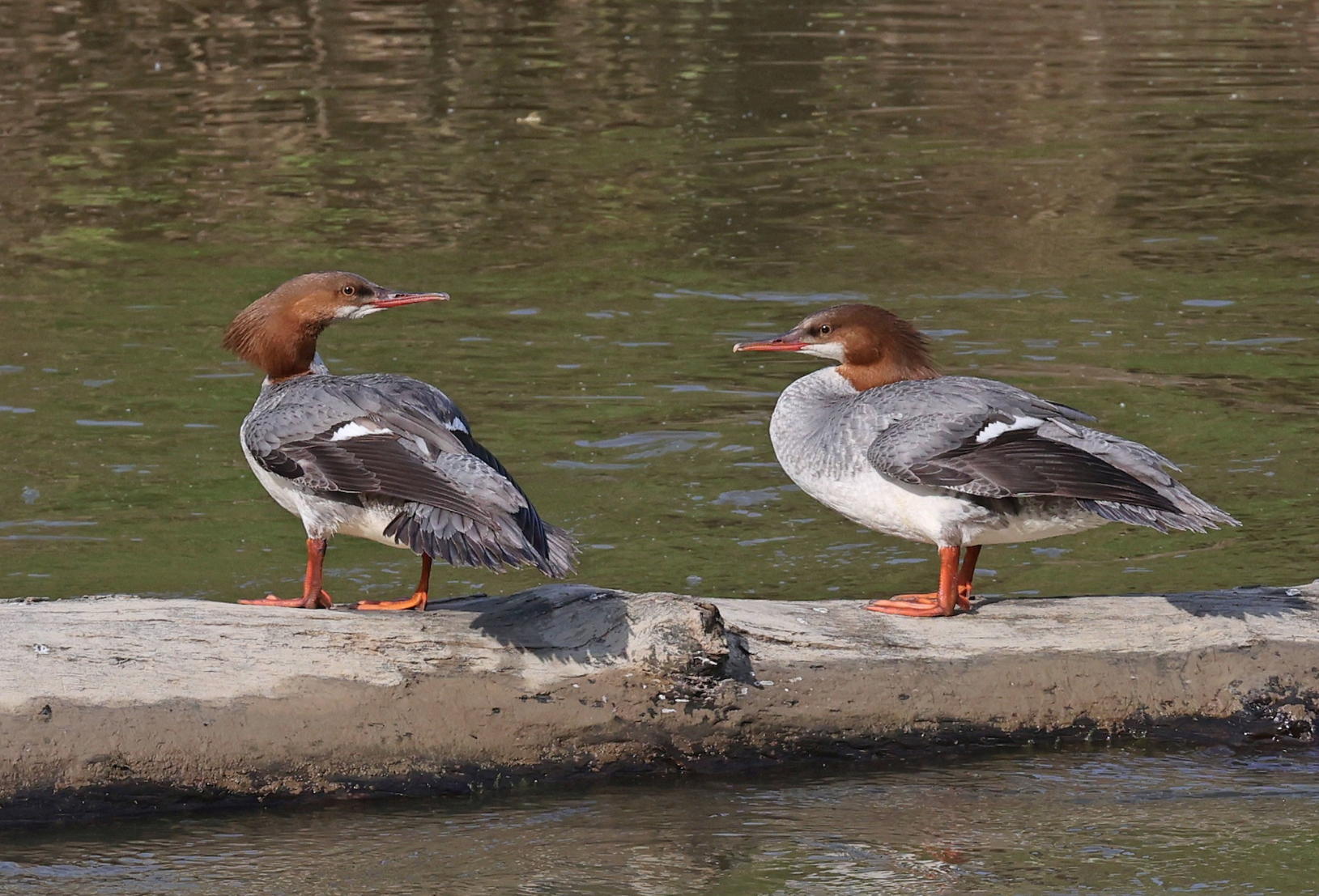
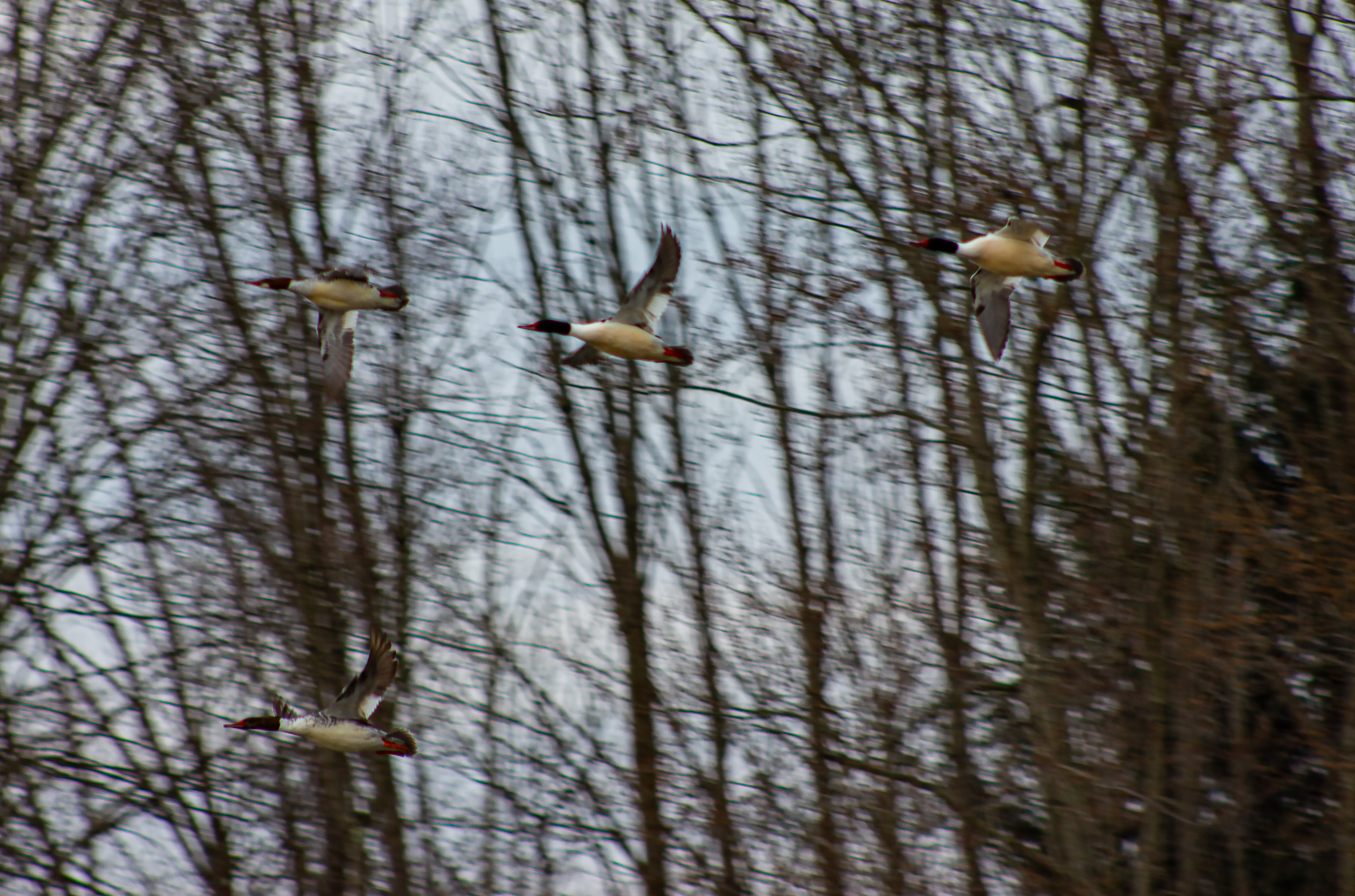
Plumage: Males have distinctive breeding plumage with a striking dark green head, a white body, and black wings. They have a white chest with black markings. Females and non-breeding males have a more subdued appearance, with a grayish body and a characteristic reddish-brown head and neck.
Bill: One of the most distinguishing features of the Common Merganser is its slender, serrated bill. This adaptation helps them catch and hold slippery fish, their primary food source.
Eyes: They have bright red eyes, which is another characteristic trait of this species.
Habitat
Range: Common Mergansers are primarily found in freshwater lakes, rivers, and coastal habitats, particularly in northern parts of North America, Europe, and Asia. They migrate to more temperate zones in the winter.
Breeding: They prefer areas with clear, fast-moving water for breeding, such as lakes, rivers, and reservoirs. During the breeding season, they are often found in forests near water bodies.
Behavior
Diet: Common Mergansers are primarily piscivores, meaning their diet consists mainly of fish. They hunt by diving underwater, where they chase fish, using their serrated bills to catch and hold them. They also occasionally eat invertebrates, like crustaceans and insects.
Feeding: Unlike many other ducks, Common Mergansers are diving ducks and are skilled swimmers. They dive to considerable depths in search of food and can remain submerged for up to 30 seconds.
Social Behavior: They are social birds and often form large groups, especially during migration or in wintering areas. In the breeding season, they may form small groups or pairs.
Reproduction
Nesting: Common Mergansers are cavity nesters, which means they typically nest in tree cavities, abandoned woodpecker holes, or nest boxes. They may also use cliffs, buildings, or other structures near water.
Eggs: Females lay between 8 to 12 eggs, and incubation usually lasts around 30 days. The mother takes the lead in incubating the eggs while the male may stay nearby to guard the territory.
Chicks: Once hatched, the chicks are precocial (able to walk and swim almost immediately) and follow the mother to water. They are fed a diet of small fish, invertebrates, and aquatic insects. After a few weeks, the chicks are independent and capable of swimming and diving for food on their own.
Migration
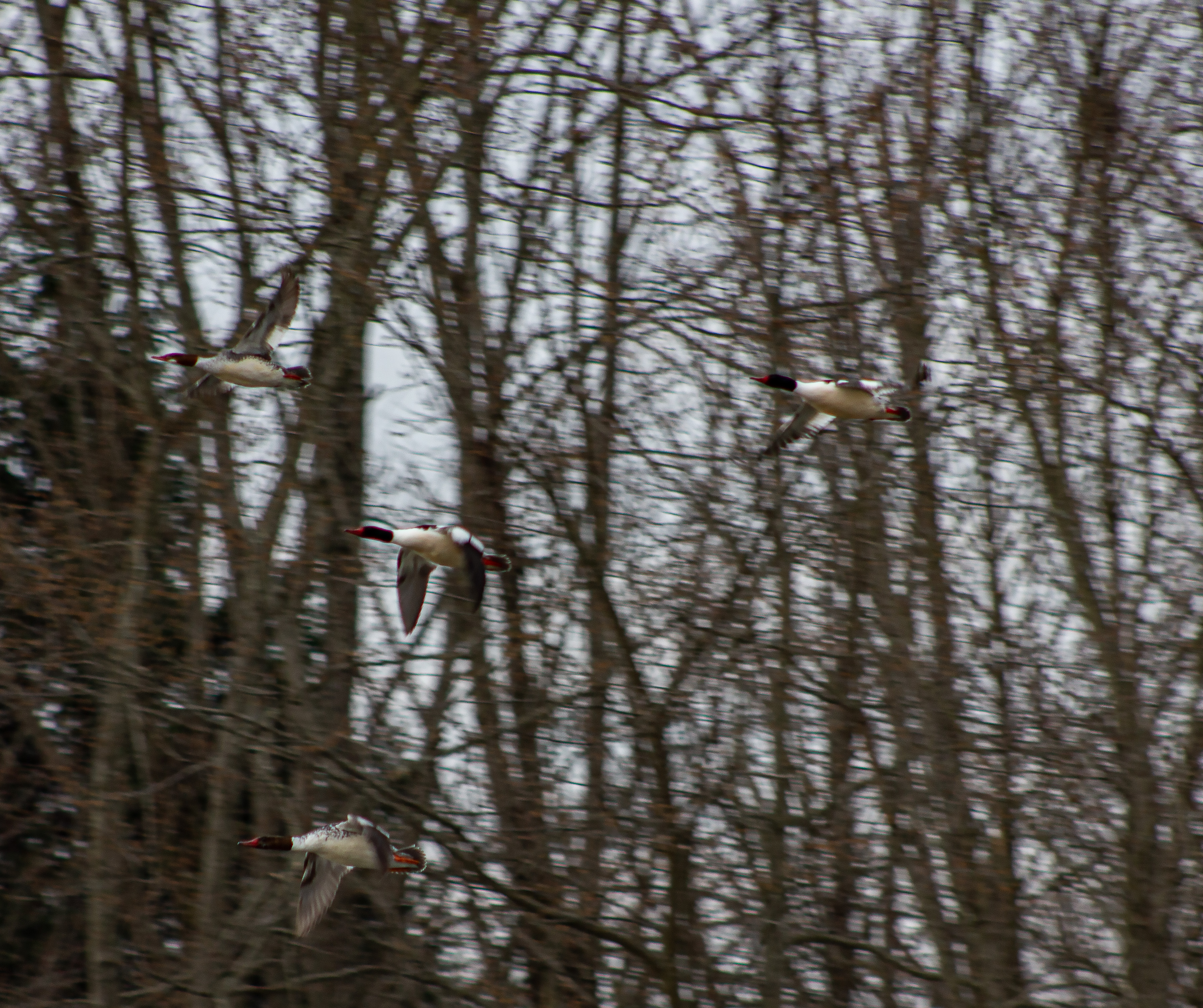
Migratory Patterns: Common Mergansers are migratory birds, moving from northern breeding grounds in summer to more southern areas during the winter. They tend to migrate in flocks, sometimes forming large, dense groups that make for dramatic sights in flight.
Conservation Status
IUCN Status: The Common Merganser is currently listed as “Least Concern” by the International Union for Conservation of Nature (IUCN). They have a stable population in most of their range, though they face threats from habitat loss, water pollution, and disturbances from human activity.
Threats: As with many waterfowl species, Common Mergansers are vulnerable to changes in their freshwater habitats, such as damming of rivers or pollution, which can affect their food sources.
Interesting Facts
Serrated Bill: The serrations on the bill of a Common Merganser are specialized to help it grasp slippery fish more effectively. This feature is especially important for diving ducks that feed on fast-moving prey.
Communication: Common Mergansers are relatively quiet birds but will occasionally emit a soft quacking sound. They also make soft whistling or trilling calls, especially in flight. Long
Lifespan: In the wild, Common Mergansers can live up to 15 years, although the average lifespan is shorter due to predation and other factors.
 Wild Bird Journal
Leave a comment