
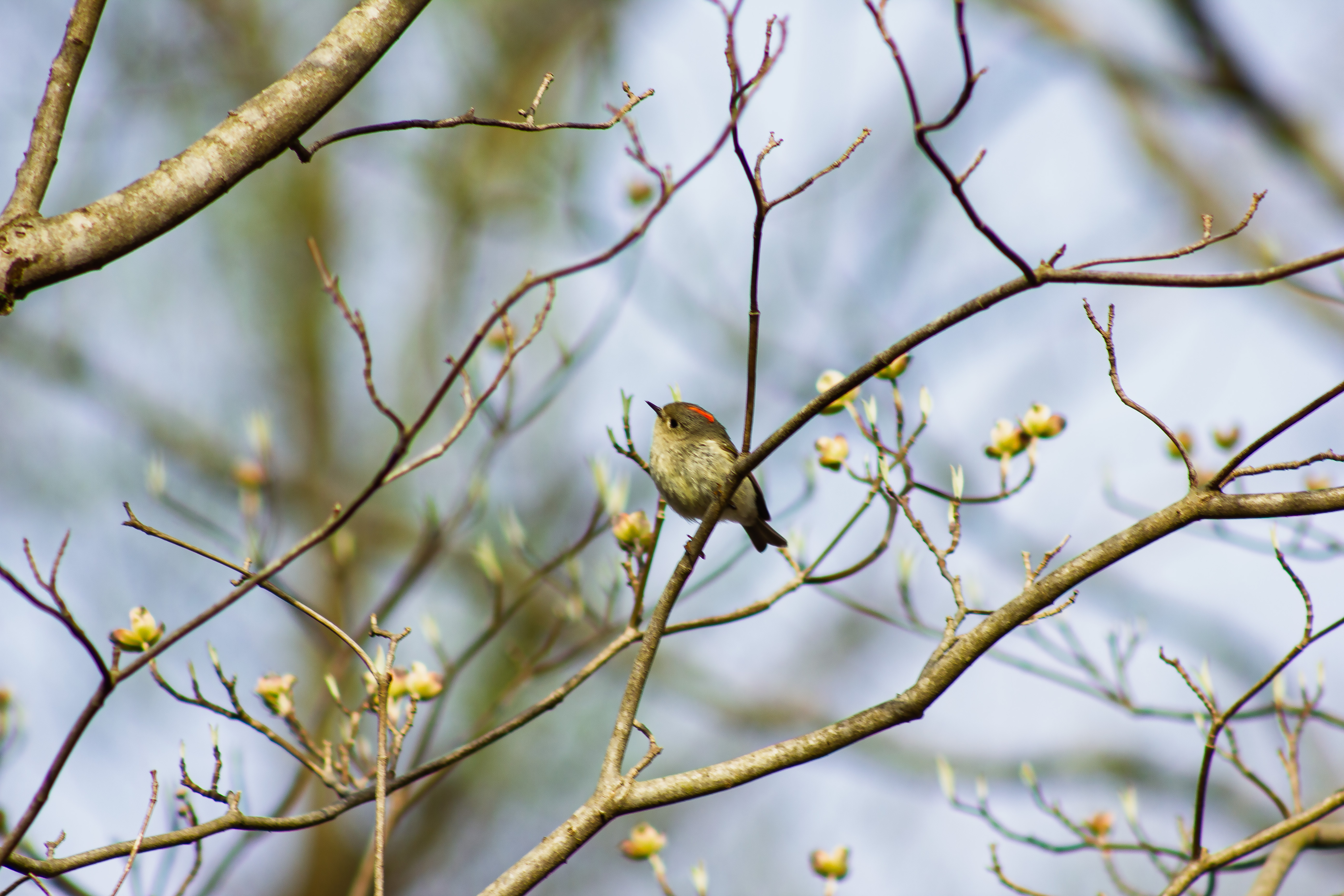

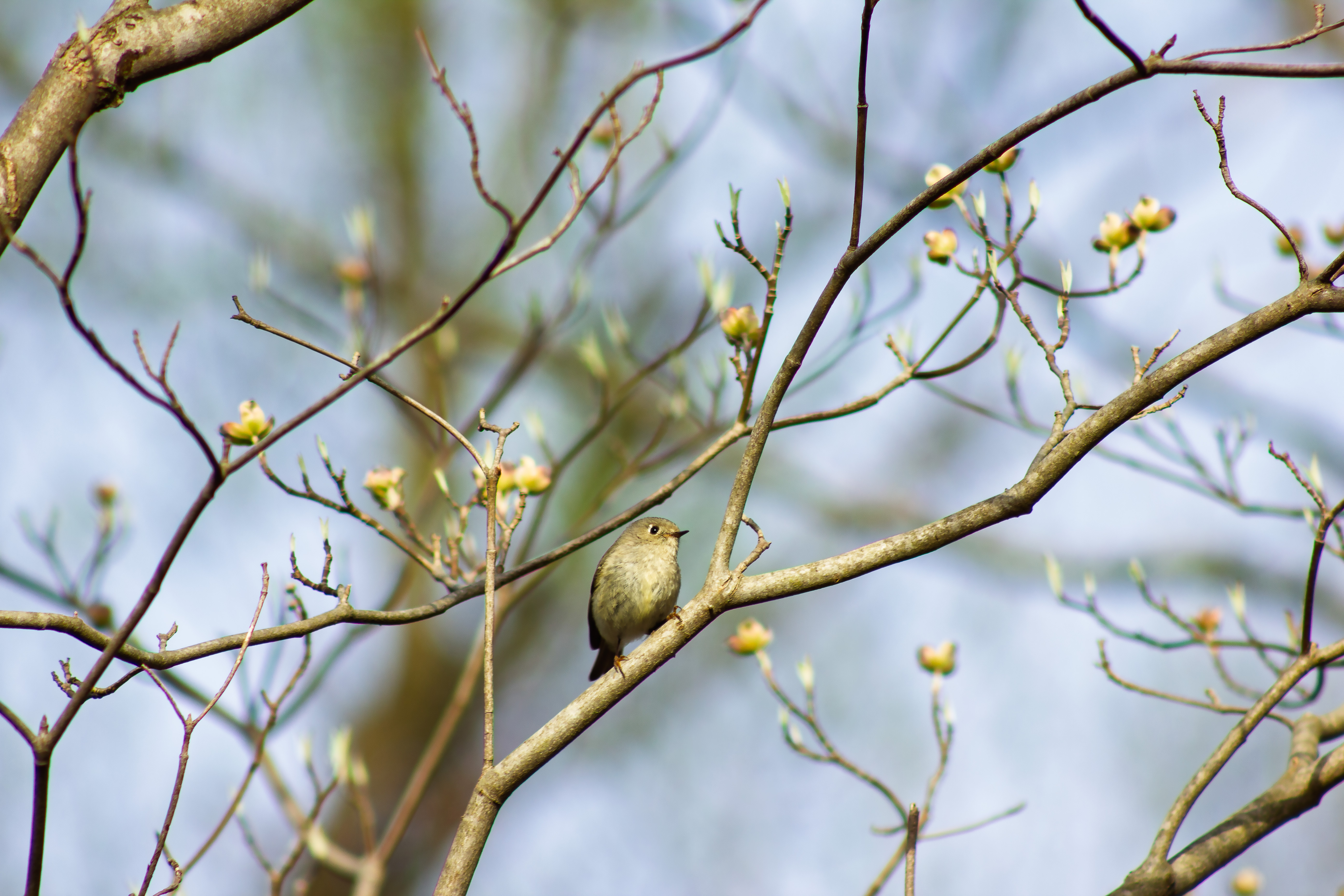


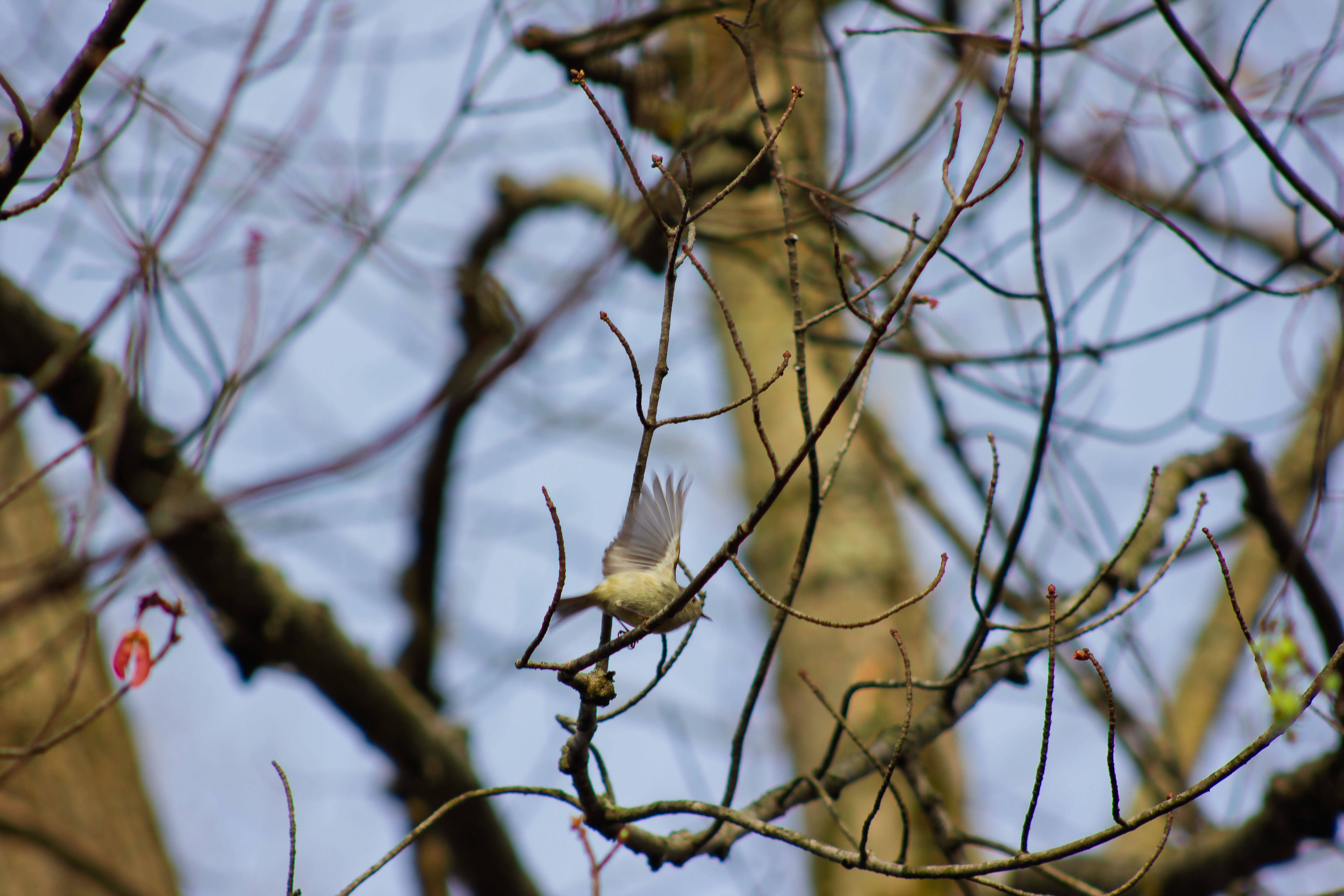
The Ruby-crowned Kinglet (Regulus calendula) is a fascinating and tiny songbird with a ton of personality packed into its small frame.
Identification & Physical Features
Size: Tiny, about 3.5 to 4.3 inches (9-11 cm) in length.Weight: Only 5-10 grams (lighter than a U.S. nickel!). Wingspan: Around 6.3 to 7.1 inches (16-18 cm).
Coloration: Olive-green upperparts.Pale underparts with a slight yellowish tinge. Distinctive white eye ring, often broken in a “spectacled” look.
Males have a concealed ruby-red crown patch (hence the name), which they usually keep hidden unless agitated or excited.
Females and juveniles lack the red crown.
Range & Habitat
Breeding Range: Boreal forests of Canada and the western U.S., especially coniferous forests with spruce, fir, and pine.
Wintering Range: Southern U.S., Mexico, and even parts of Central America. In winter, they move to more varied habitats. mixed woods, thickets, parks, and even suburban gardens.
Migration: Long-distance migrants; migrate twice a year between breeding and wintering grounds.
Diet
Primarily Insectivorous: Eats tiny insects, spiders, and eggs of other invertebrates.
Also Consumes: Small fruits and berries, especially in the non-breeding season. Forages actively, often flitting through branches and hovering like a hummingbird to grab prey.
Vocalizations
Song: Exceptionally loud and complex for such a small bird — a series of high-pitched notes that accelerate into a quick, chattering trill.
Call: A sharp “tsee” or “jidit” note.
Males sing frequently during breeding season and even while foraging in winter.
Breeding & Nesting
Breeding Season: Spring and early summer.
Nesting Sites: High in conifer trees, often at the tips of branches.
Nest: A deep, hanging cup made of moss, lichens, spider silk, feathers, and plant down. It can stretch as the young grow!
Clutch Size: Typically 5–12 eggs — one of the largest clutches relative to body size among North American songbirds.
Incubation: 12–14 days, done solely by the female.
Fledging: Young leave the nest around 14–16 days after hatching.
Behavior
Extremely active and constantly on the move.
Often flicks its wings rapidly — a great ID clue in the field. Solitary or in small flocks; joins mixed-species flocks in winter.
Very bold for its size, will even display its crown to larger birds or predators.
Migration
Ruby-crowned Kinglets are short to medium-distance migrants.
Migrants travel at night.
Their migration is remarkably energy-intensive for such small birds, but they’re efficient fliers!
Conservation Status
IUCN Red List: Least Concern.
Population Trend: Generally stable or increasing slightly.
Threats: Habitat loss (especially from logging of coniferous forests), climate change affecting breeding ranges, and window collisions during migration.
Taxonomy
Order: Passeriformes (perching birds).
Family: Regulidae (kinglets).
Genus: Regulus.
Species: Regulus calendula.
Despite the name and some similarities, they are not true warblers. They belong to a small family, the Regulidae, distinct from most other North American songbirds.
Fun Facts
The ruby crown is rarely visible, but when it flares up, it’s usually during aggression, courtship, or when startled.
Kinglets can survive in incredibly cold environments, even during snowstorms, thanks to their ability to fluff up and huddle in sheltered spots.
Despite their small size, they can raise large broods and have impressive parental investment. Sometimes mistaken for the Hutton’s Vireo or Golden-crowned Kinglet, but the ruby crown and wing flicking are strong giveaways.
 Wild Bird Journal
Leave a comment