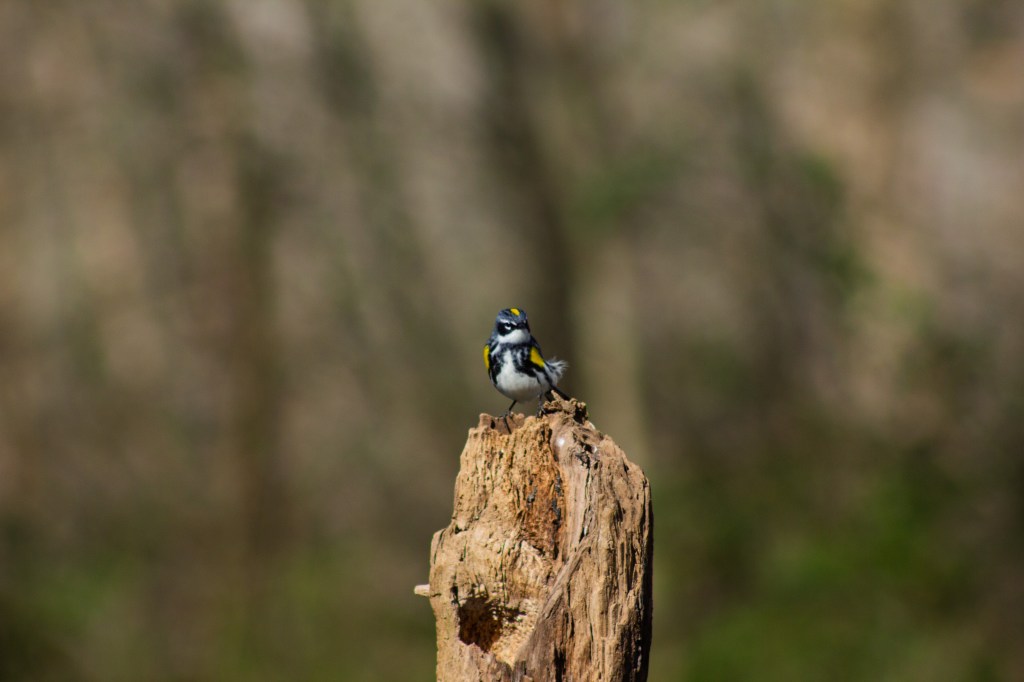
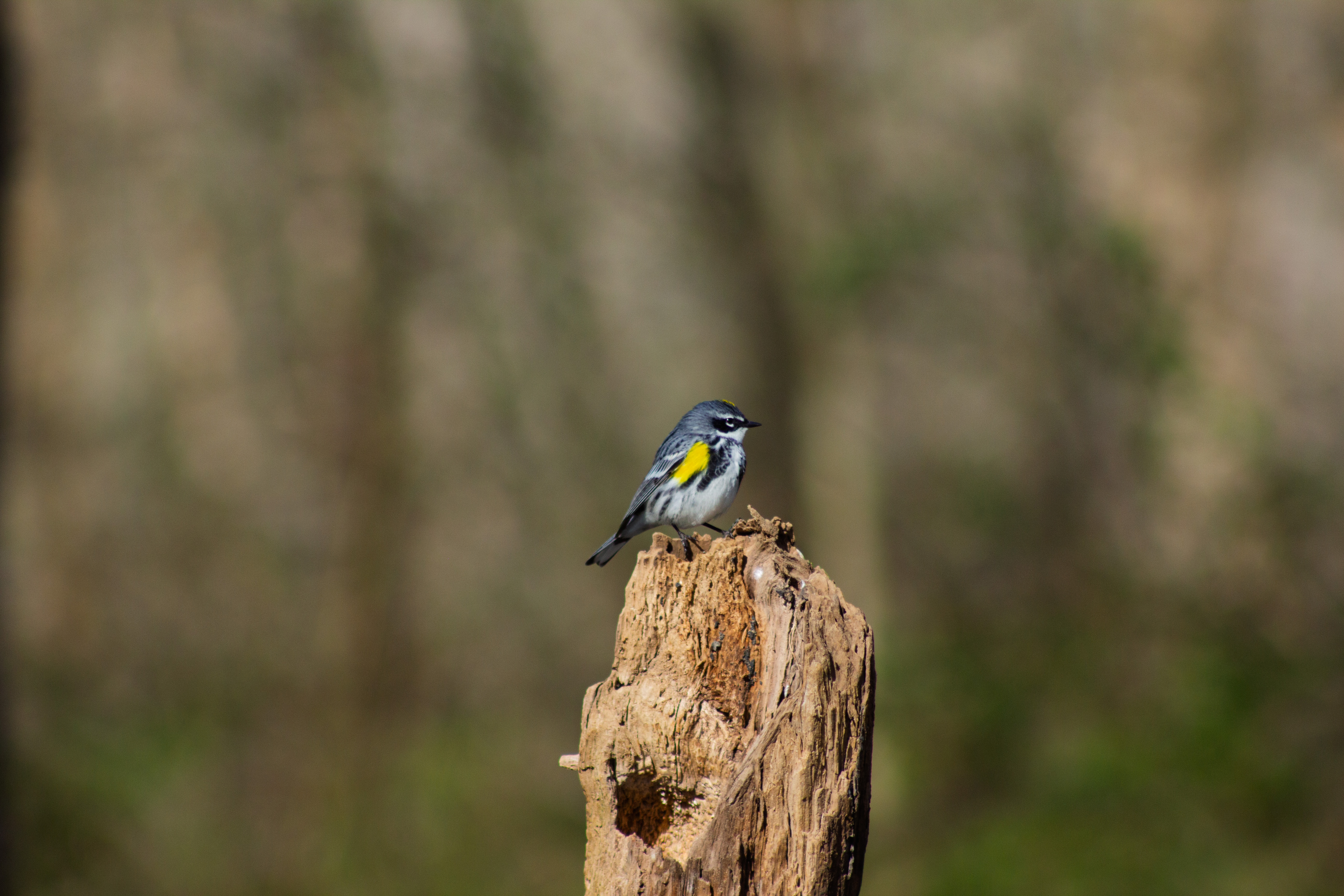


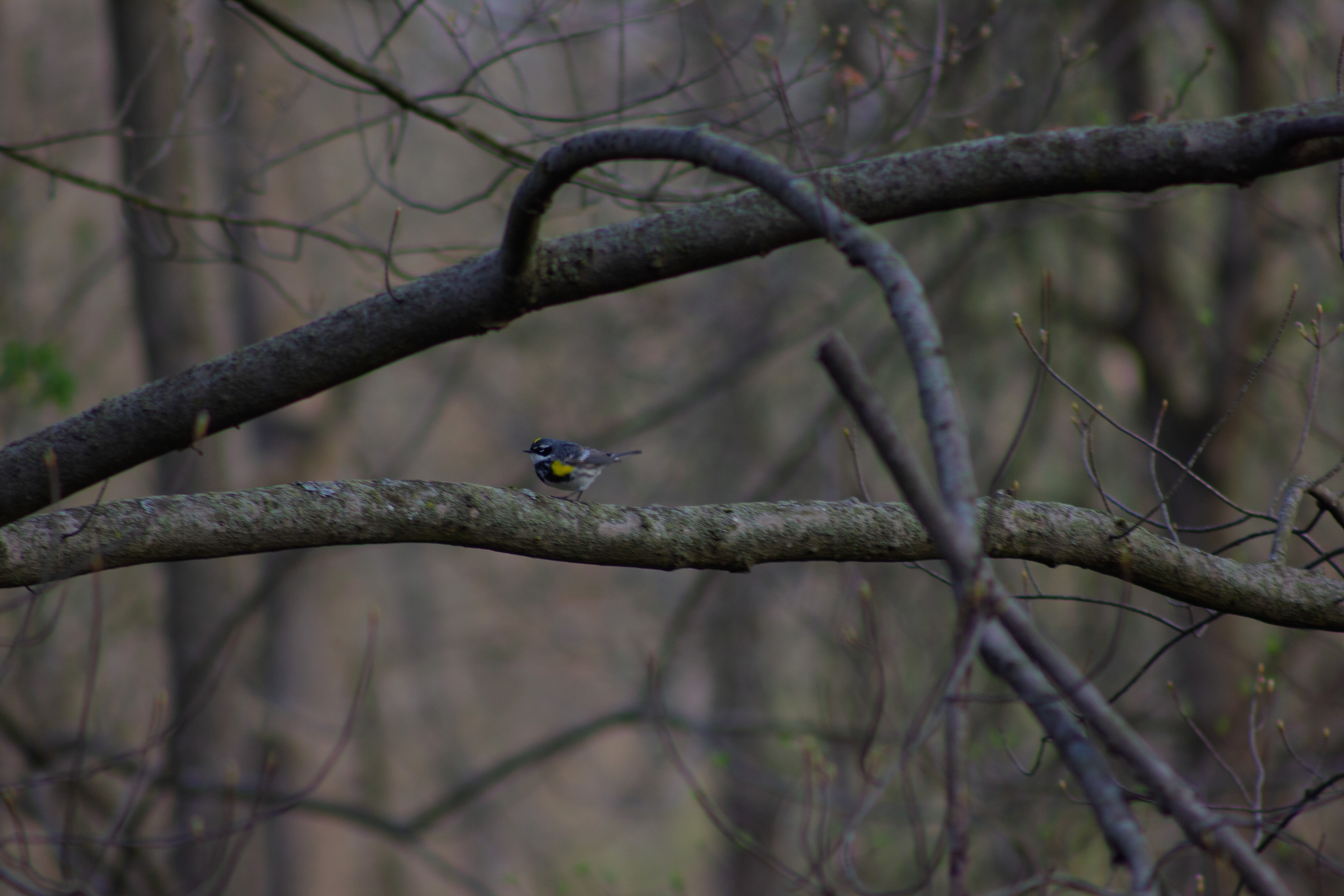
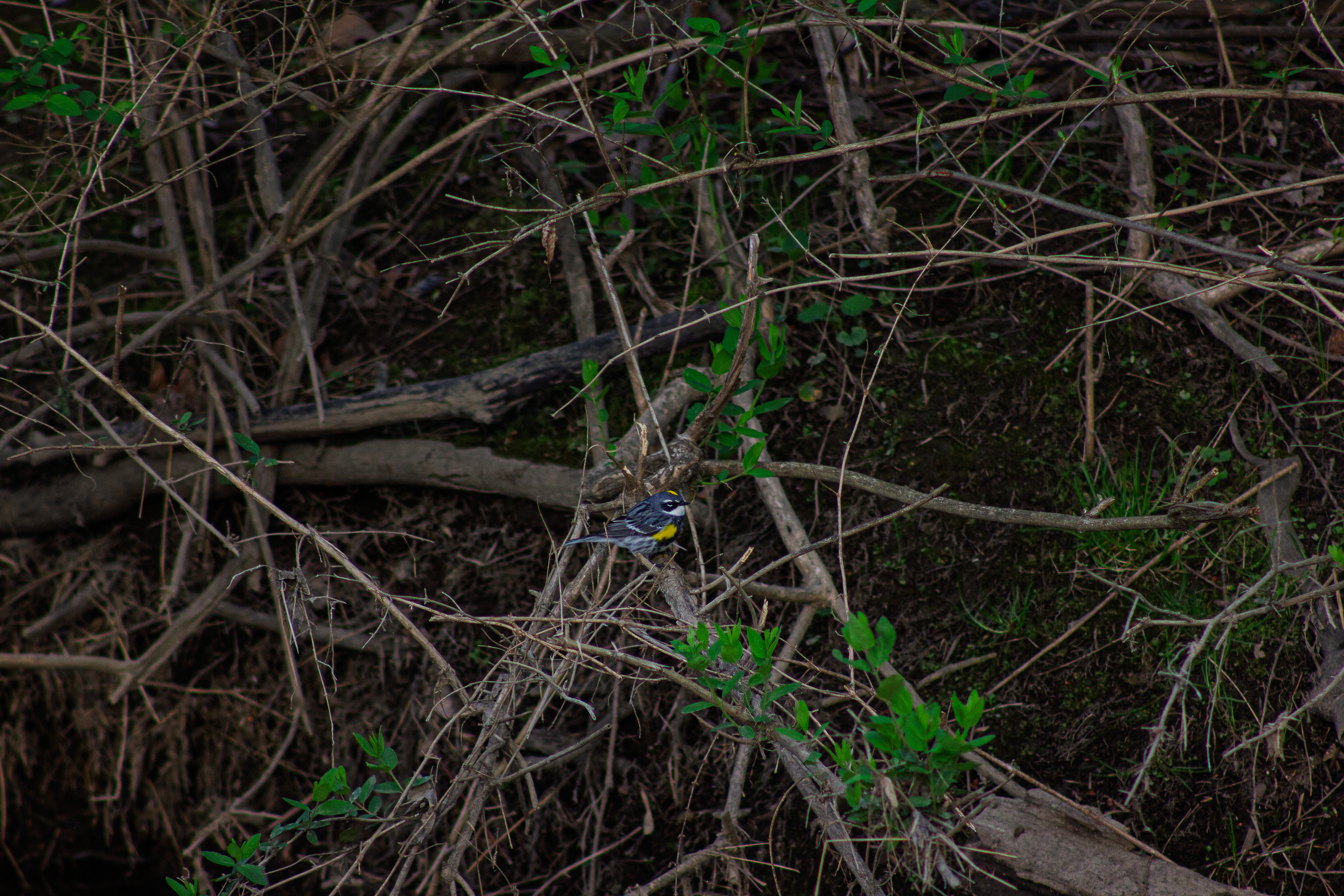
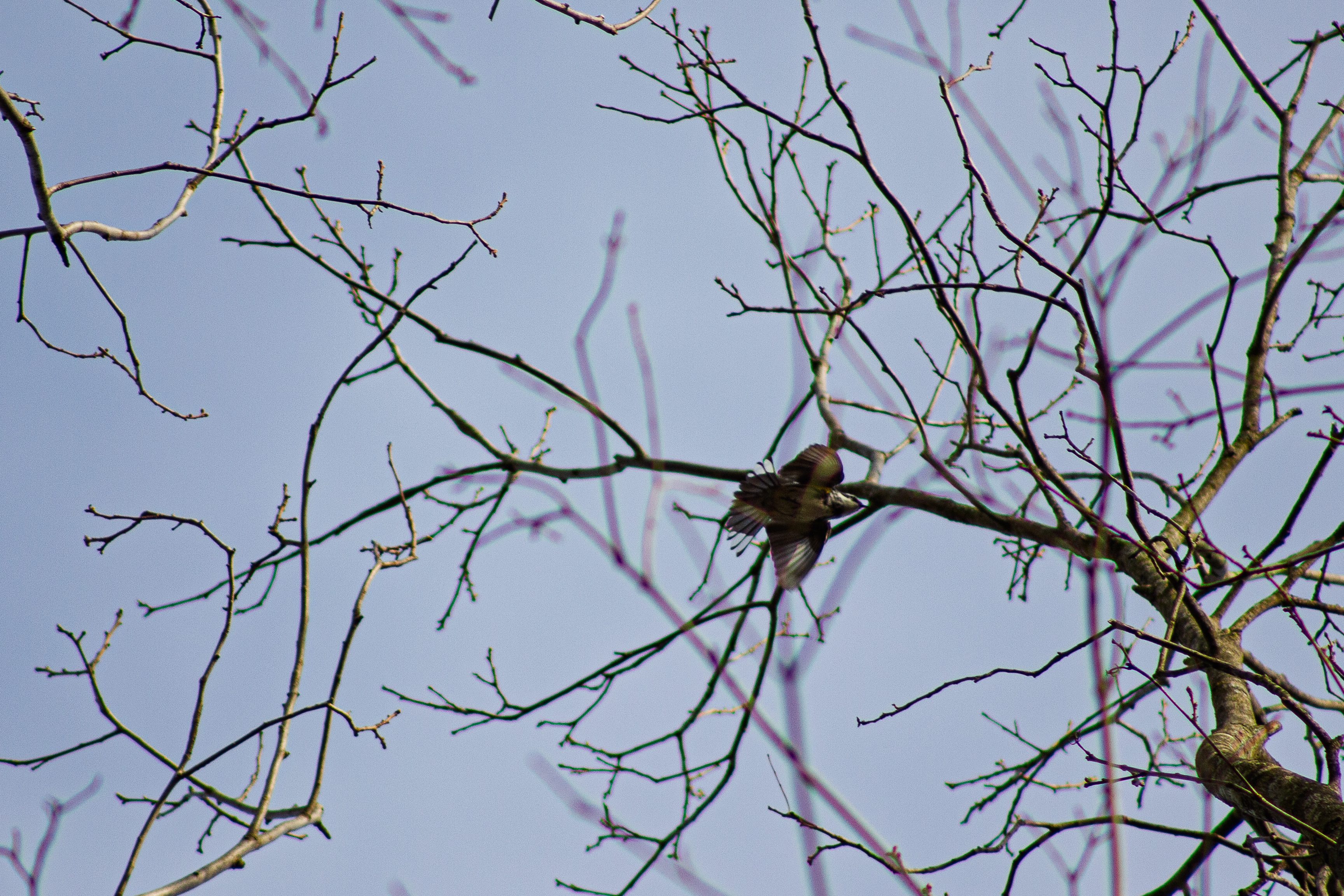
The Yellow-rumped Warbler (YRWA) is one of the most widespread and abundant warblers in North America. It’s known for its versatility in habitat, diet, and migration, and is one of the few warblers that remain in much of the U.S. during winter.
Identification
Size: Small songbird; 4.7–5.5 inches (12–14 cm) in length
Wingspan: 7.5–9.1 inches (19–23 cm)
Weight: 11–14 grams
Shape: Typical warbler—slim with a short, thin bill and a relatively long tail
Plumage
Breeding Male: Gray with black streaks Bright yellow patches on the rump, sides, and crown Black mask and throat (especially in the Myrtle form) White wing bars
Female: Duller than males; still show yellow rump and some yellow on the sides
Nonbreeding Plumage: Brownish overall but still has the signature yellow rump—nicknamed “butterbutt”
Juveniles: Mottled brown, resembling winter adults
Range & Habitat
Breeding Habitat: Coniferous and mixed forests Boreal forests (Myrtle) Montane forests (Audubon’s)
Winter Habitat: Open woods, brushy areas, parks, and gardens One of the few warblers found regularly in the U.S. during winter
Migration: Highly migratory Winters in the southern U.S., Mexico, Central America, and the Caribbean
Diet
Primarily insectivorous during breeding season: caterpillars, beetles, ants, and other small insects
In winter, they switch to fruit and waxy berries, such as: Bayberry Wax myrtle Juniper Poison ivy berries.
Their unique ability to digest waxy berries allows them to winter farther north than most warblers.
Behavior
Feeding: Active foragers, often flitting through tree branches or sallying out to catch insects midair
Social: Can be seen in mixed-species flocks during migration and winter
Vocalizations: Song: A soft, sweet trill or warble Call: A sharp “check” or “chip”
Breeding
Nesting: Nest is a cup-shaped structure made of grass, twigs, moss, and lined with feathers
Placed on horizontal branches of coniferous trees, often high up Clutch Size: 4–5 eggs
Incubation: 12–13 days, mostly by the female
Fledging: Young leave the nest about 10–14 days after hatching
Conservation Status
IUCN Red List: Least Concern Populations are stable or slightly declining
Benefited from reforestation and suburban plantings of berry-producing shrubs
Commonly seen during migration due to wide range and numbers
Fun Facts
The nickname “butterbutt” comes from the conspicuous yellow patch on their rump.
They are often among the earliest warblers to return in spring and the latest to leave in fall. They’re one of the few warbler species that can survive cold snaps by eating berries.
 Wild Bird Journal
Leave a comment