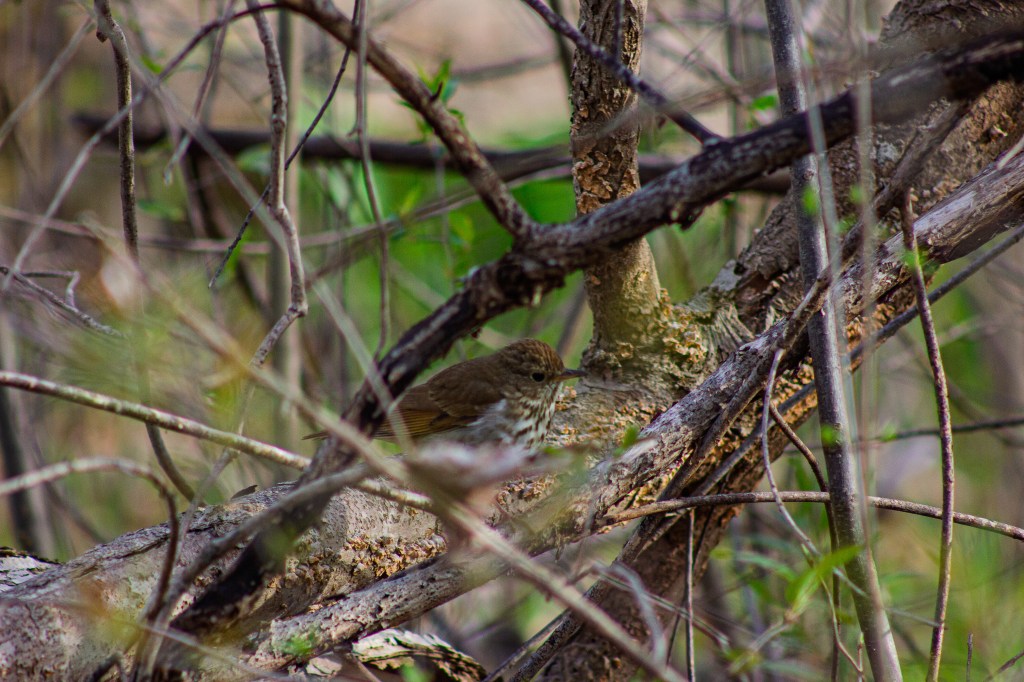

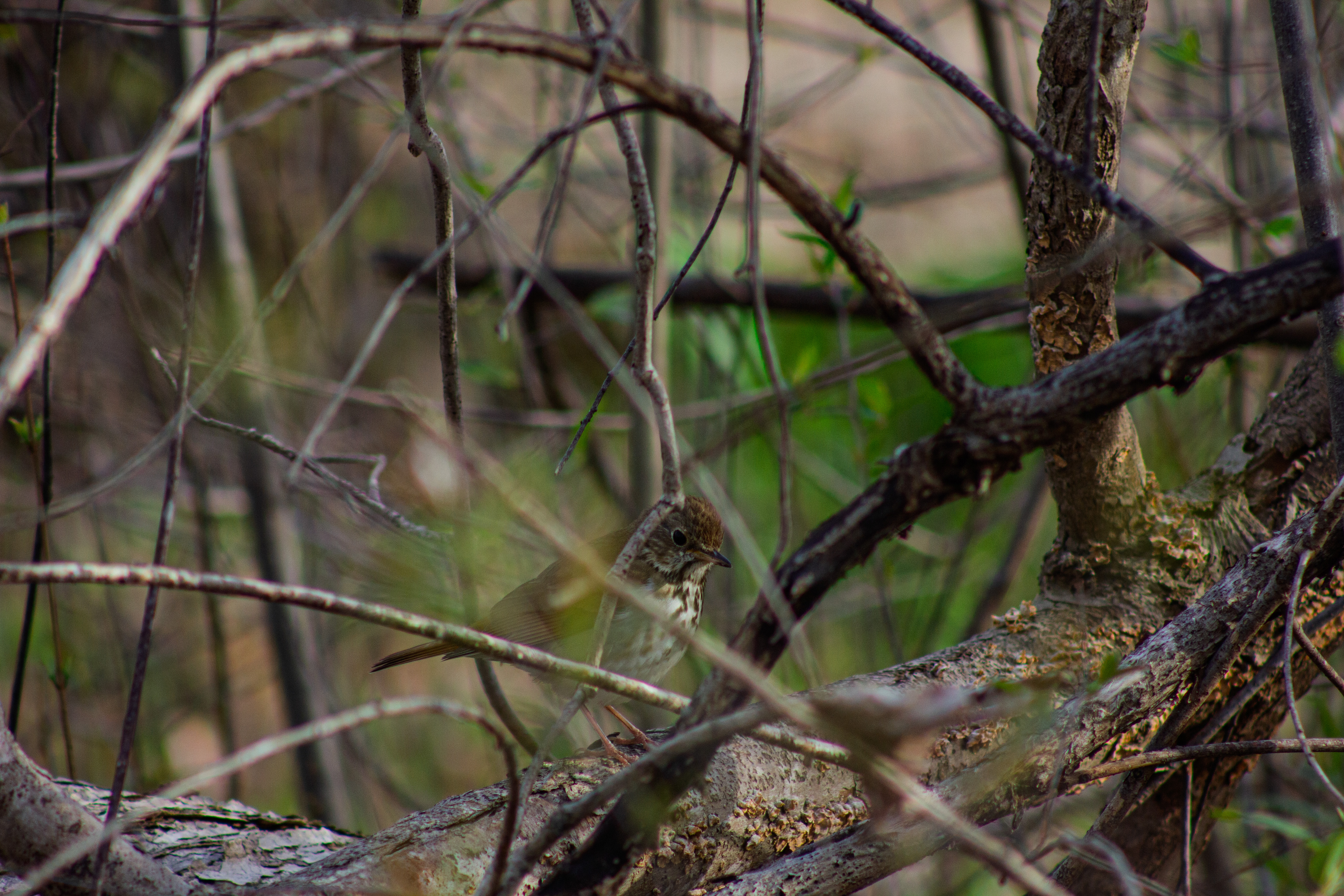
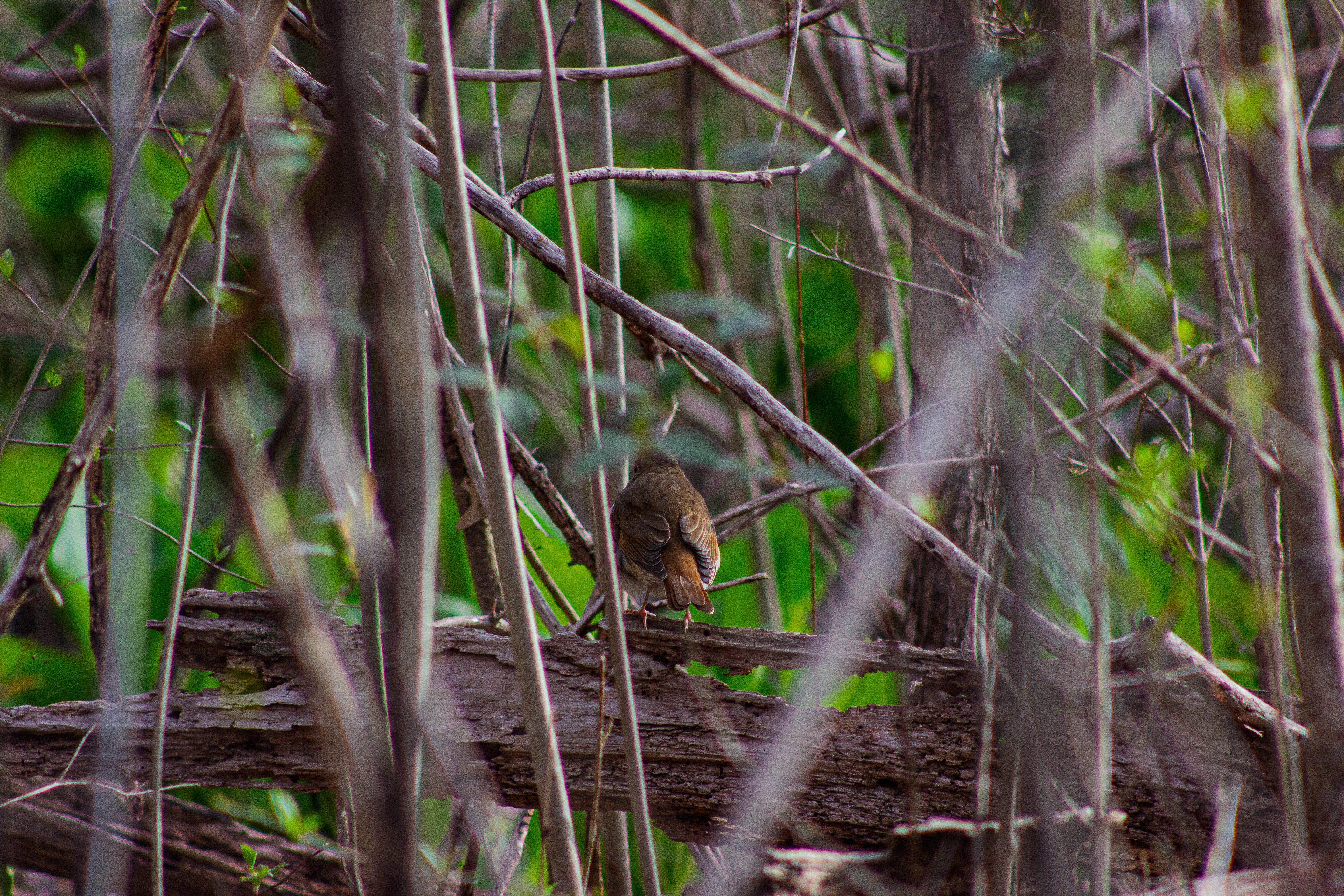
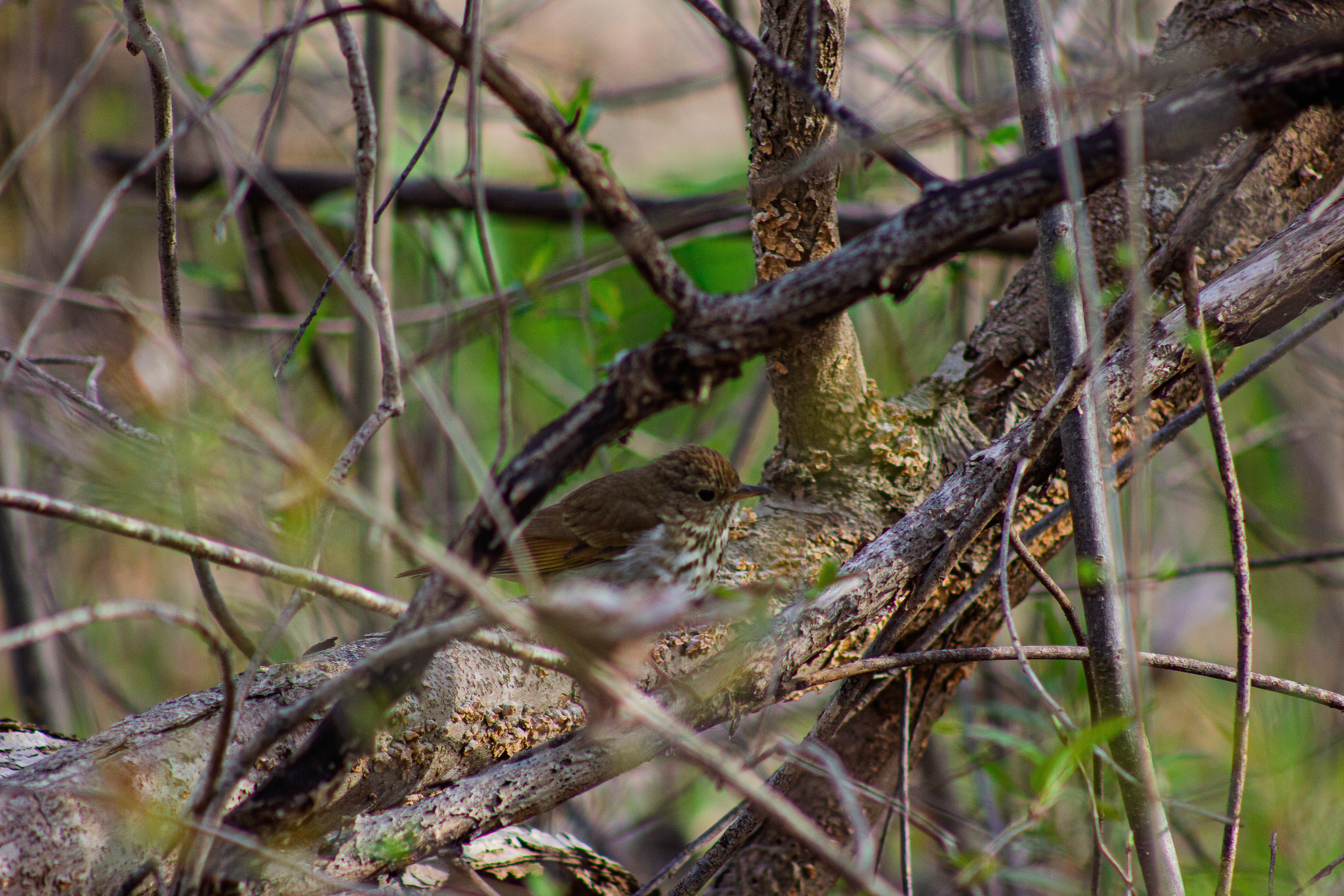
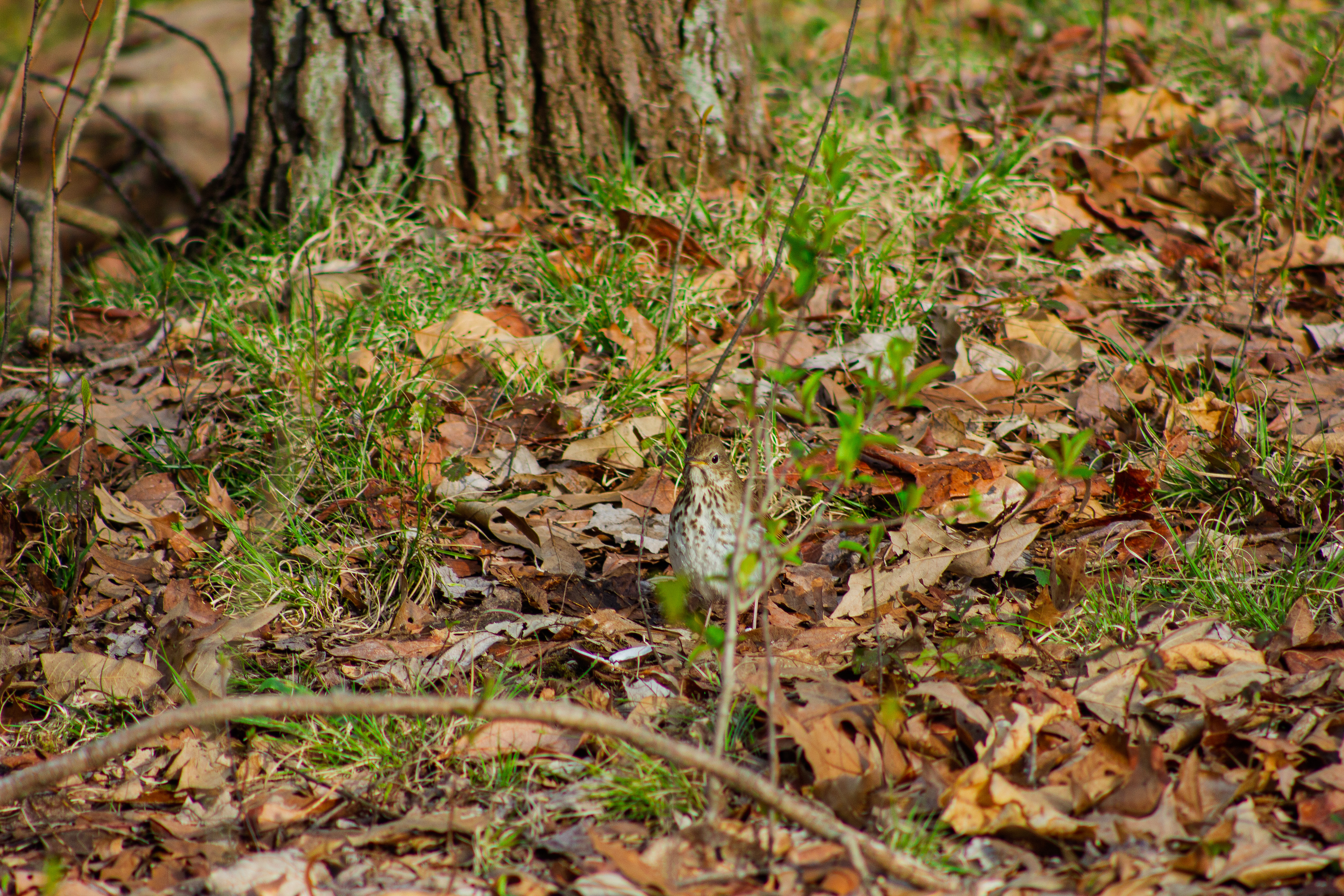
If you’ve ever wandered through a quiet North American forest and heard a haunting, flute-like melody echoing through the trees, chances are you’ve met the Hermit Thrush—or at least heard its unforgettable voice. This unassuming bird might be small and brown, but its song has captured the hearts of hikers, poets, and biologists alike.
Basic Identification
Scientific Name: Catharus guttatus
Family: Turdidae (Thrush family)
Size: About 6.7 inches (17 cm) long
Weight: 0.8–1.3 oz (23–37 g)
Wingspan: 11.4 inches (29 cm)
Range & Migration
Breeding Range: Northern U.S., Canada (especially boreal forests), and higher elevations of the Rockies and Appalachians.
Winter Range: Southern U.S., Mexico, Central America.
Migration: A short- to medium-distance migrant; usually migrates at night. It’s one of the first thrushes to return north in the spring and one of the last to leave in the fall.
Habitat
Breeding Season: Prefers mature forests with a dense understory. In the north, it favors coniferous or mixed forests; in the south and at high elevations, it’s more often found in deciduous woods.
Wintering Grounds: More open woodlands, thickets, and scrubby areas. Often found in quiet, shaded areas, especially near water.
Song & Call
Song: Considered one of the most beautiful of any North American bird. A series of ethereal, flute-like phrases with a haunting, echoing quality. Each phrase starts with a single clear note and expands into a complex flourish. Phrases often end in a downward spiral.
Call: A soft “chup” or “whit,” often heard when the bird is disturbed.
Diet
Spring & Summer: Insects (beetles, ants, caterpillars, spiders), small invertebrates.
Fall & Winter: Berries and fruits (e.g., dogwood, elderberry, holly, and wild grapes).
Forages on the ground, hopping and pausing frequently.
Breeding
Nesting: Female builds a cup-shaped nest from grass, moss, bark, and leaves—usually placed on or near the ground.
Clutch Size: Typically 3–4 eggs.
Eggs: Pale blue, unmarked.
Incubation: About 12 days, performed by the female.
Fledging: Nestlings leave the nest about 12–13 days after hatching. Males sing to defend territory and help feed the young once hatched.
Identification Tips
Coloration: Brownish upperparts with a warm reddish tail (key ID feature).
Underparts: White with bold, dark spots on the breast and flanks. Eyes: Large, with a prominent white eye ring.
Tail Behavior: Often flicks or slowly lifts its reddish tail while lowering its wings—very characteristic.
Conservation Status
IUCN Status: Least Concern.
Population Trend: Generally stable, though some habitat loss and climate change could impact regional populations.
Protected under the Migratory Bird Treaty Act in the U.S.
Interesting Facts
Despite their name, they are not antisocial but are more solitary than other thrushes.
The Hermit Thrush is the only thrush that regularly winters in much of the continental U.S., giving it the name “hermit.”
It is Vermont’s state bird.
Studies suggest their song structure follows harmonic principles similar to human music, which has intrigued both scientists and musicians.
 Wild Bird Journal
Leave a comment