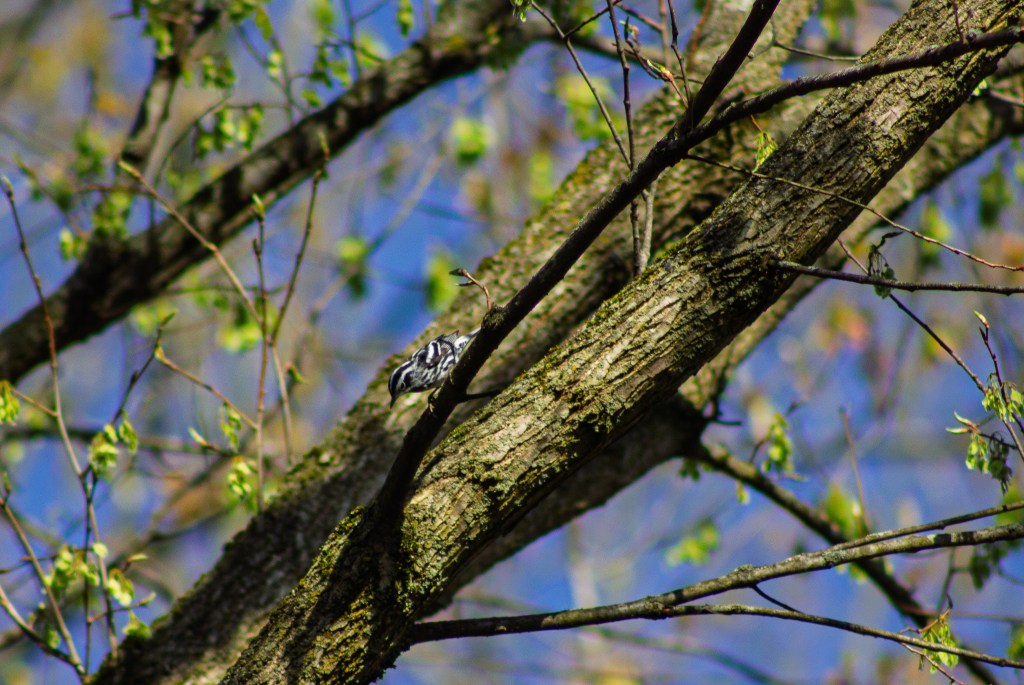
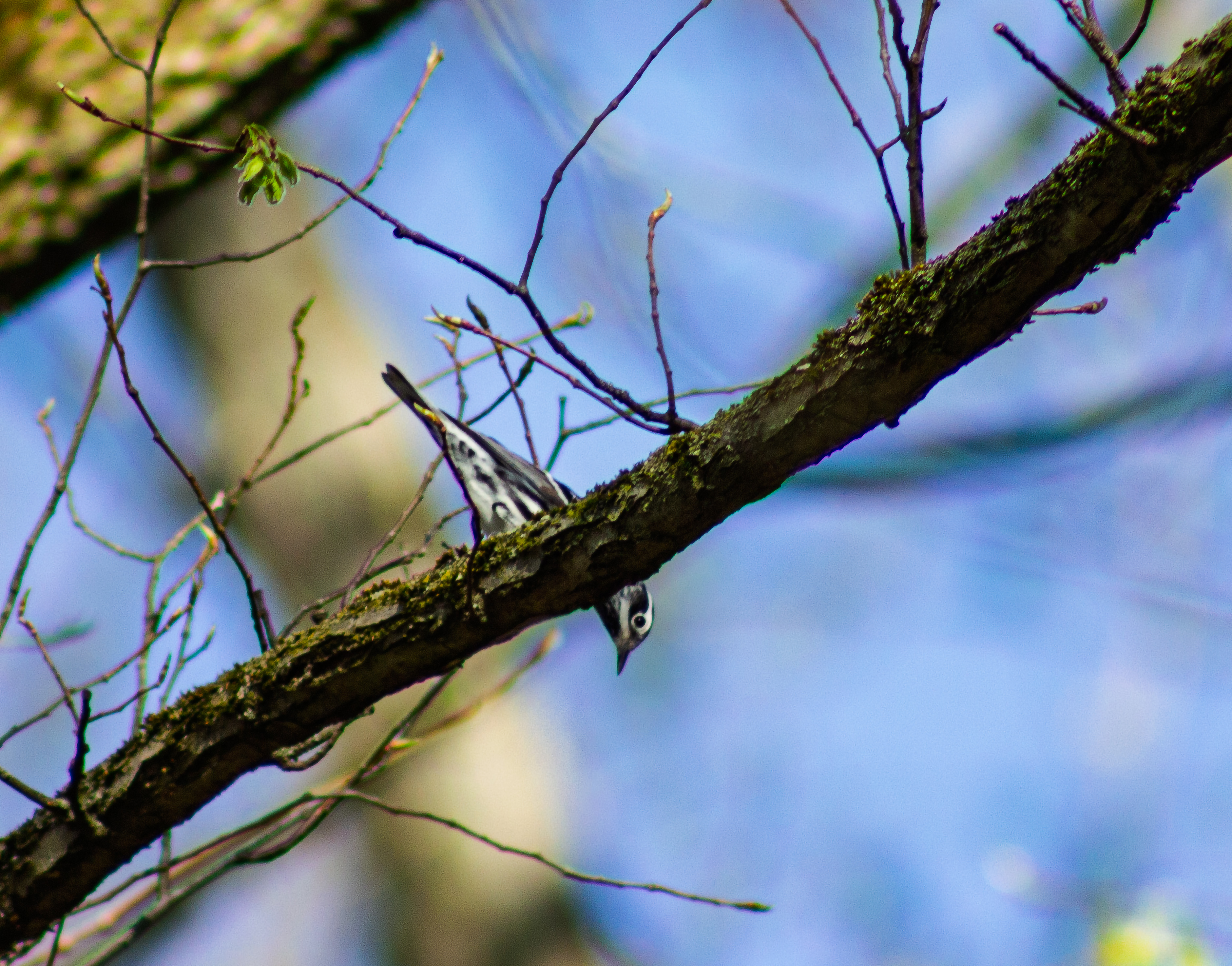
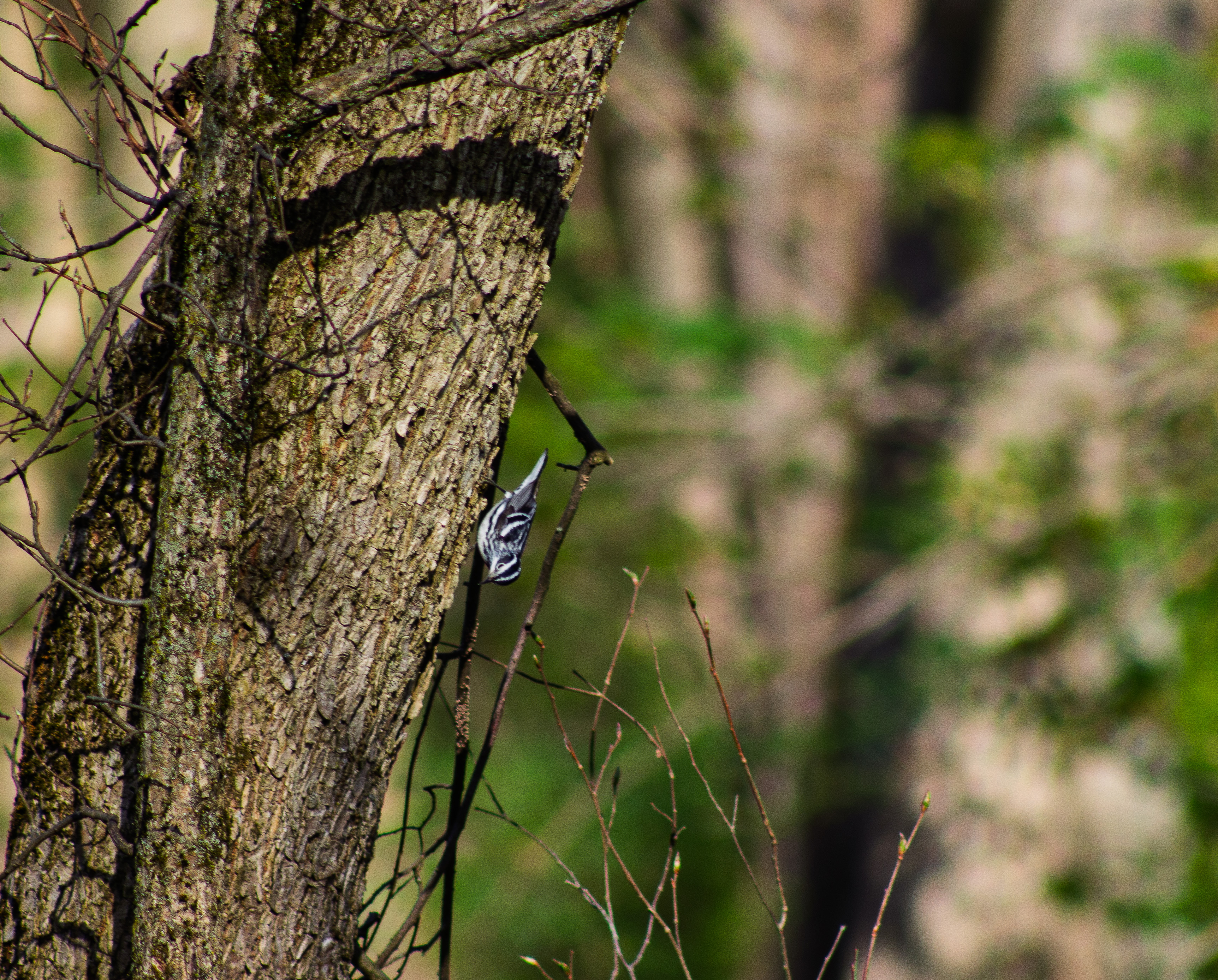
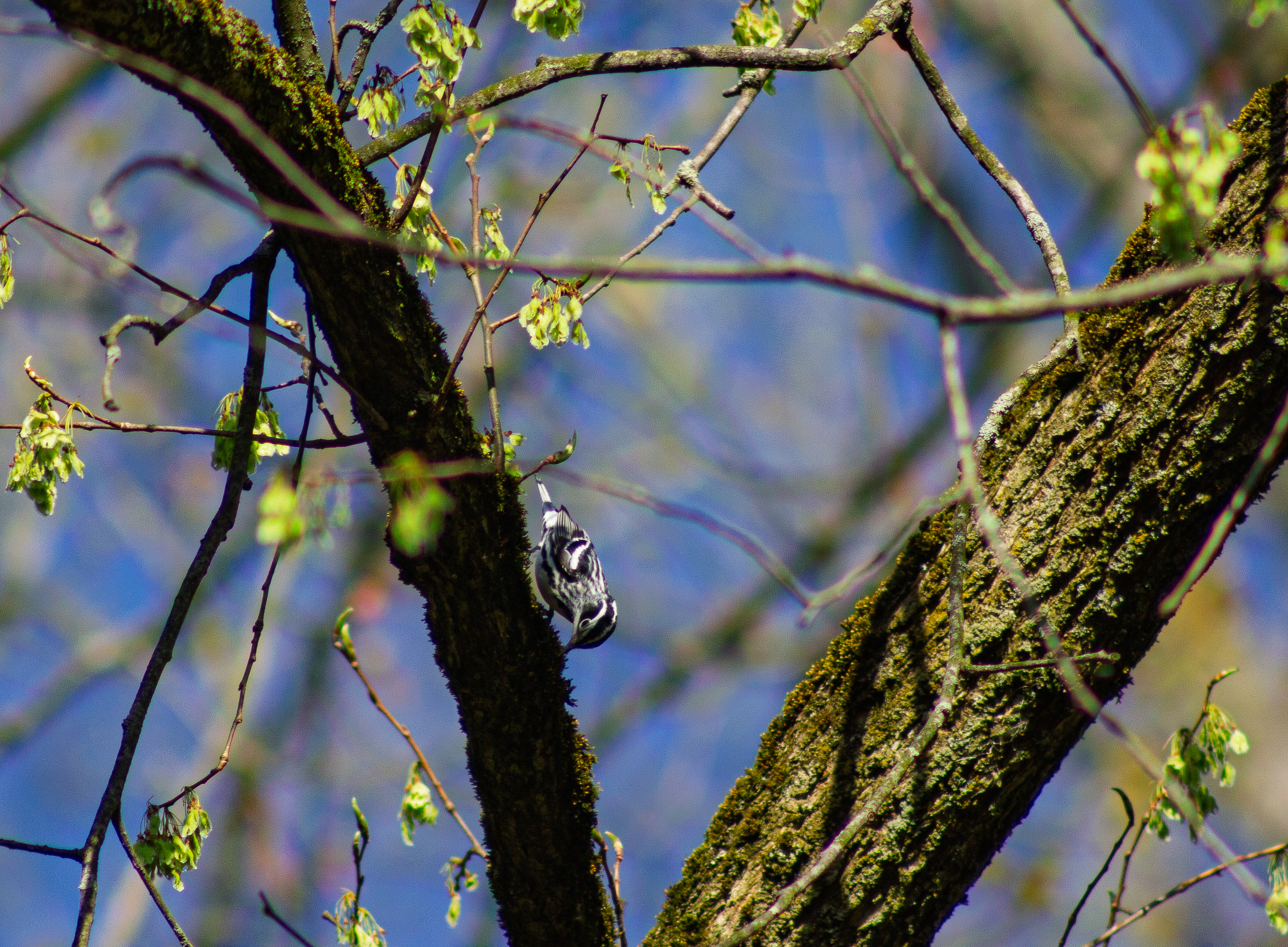
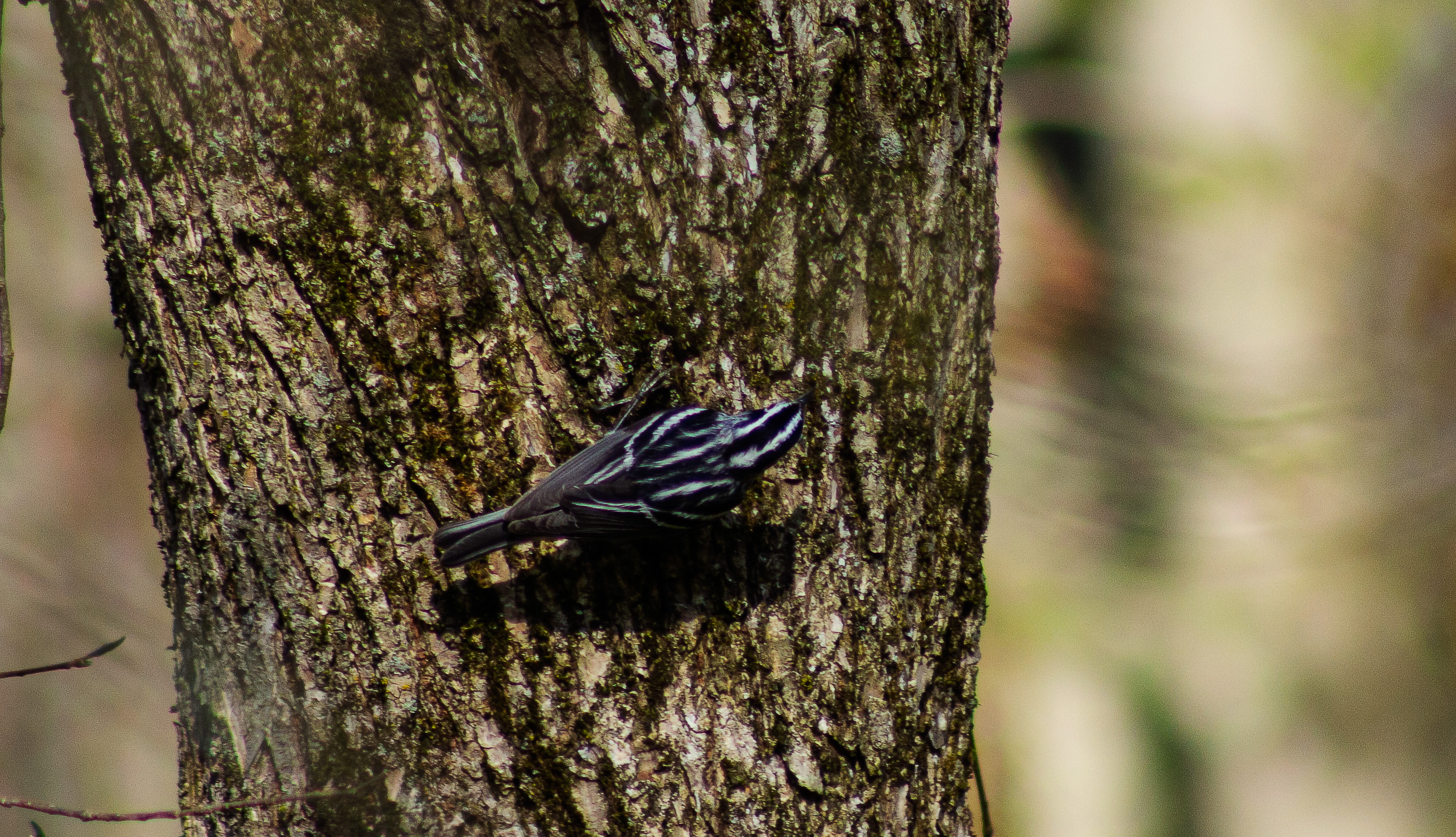
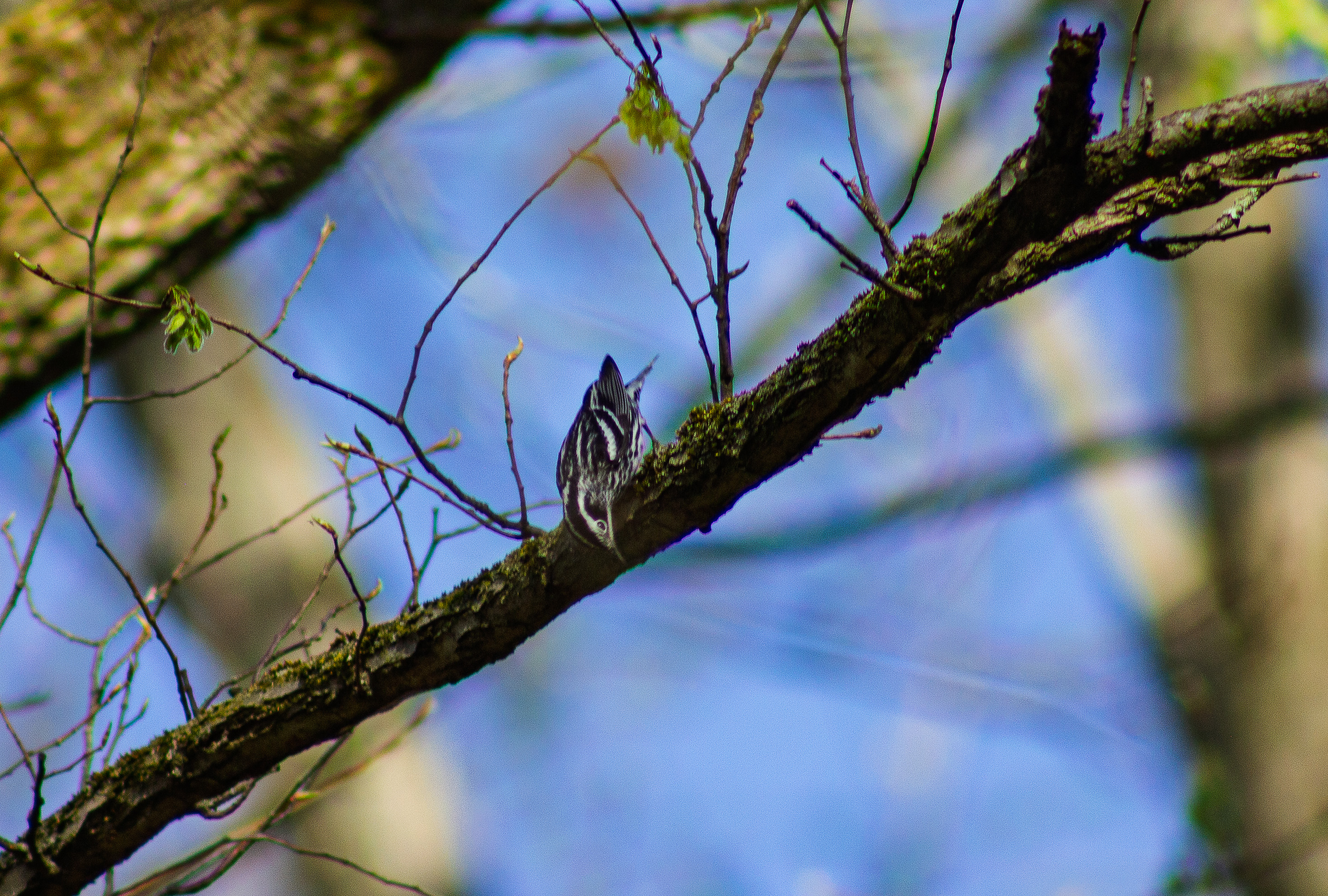
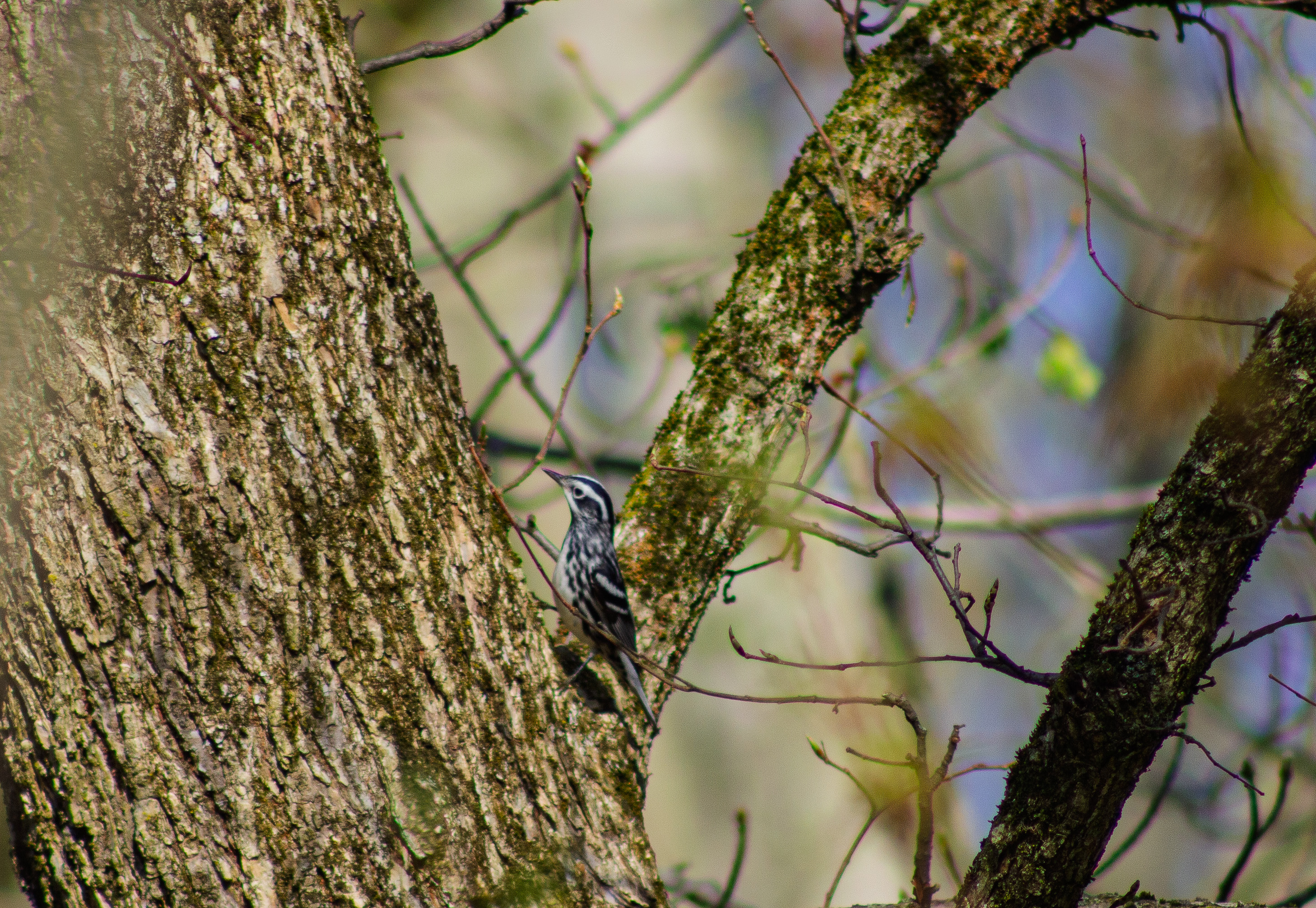

The Black-and-white Warbler is a small songbird in the family Parulidae (the New World warblers). True to its name, it is easily recognized by its bold black-and-white streaked plumage, making it look somewhat like a tiny zebra or a tree bark pattern.
Size: 11–13 cm (4.3–5.1 inches) long.
Wingspan: 18–22 cm (7.1–8.7 inches) Weight: 8–15 grams (0.28–0.53 ounces).
Plumage: Black and white stripes cover the body. Males are more boldly marked, while females and juveniles are somewhat duller and browner.
Bill: Slightly curved downward, well-suited for probing bark for insects.
Legs and feet: Strong and adapted for creeping along tree trunks and branches, much like a nuthatch or creeper.
Behavior
Feeding: Primarily insectivorous. They forage by creeping along tree trunks and branches, picking insects and spiders from crevices. Their style is unique among warblers and resembles the behavior of woodcreepers or nuthatches more than their fellow warblers.
Song: A high-pitched, repetitive, squeaky song that sounds like “wee-see, wee-see, wee-see” or “swee-swee-swee”. Males sing to establish territory and attract mates.
Territoriality: Very territorial during the breeding season; males are aggressive towards intruders.
Migration: They are long-distance migrants. They breed in North America and winter in the southern United States, Central America, the Caribbean, and northern parts of South America.
Habitat
Breeding habitat: Prefers mature, mixed or deciduous forests, particularly those with large trees and dense undergrowth.
Winter habitat: Tropical forests, mangroves, plantations, and shrubby habitats. They are quite adaptable outside the breeding season.
Nesting: Nests are built on the ground, usually well-hidden at the base of a tree, under leaf litter or dense shrubbery.
Nest: Cup-shaped, made of leaves, grass, and bark strips.
Eggs: 4–6 per clutch; eggs are white or creamy, often speckled with brown.
Distribution
Breeding range: Across much of Canada and the eastern United States.
Wintering range: Florida, Mexico, Central America, the Caribbean islands, and as far south as northern South America (Colombia, Venezuela).
Ecology and Interactions
Predators: Nest predators include snakes, mammals like raccoons, and birds like jays.
Parasites: Often parasitized by Brown-headed Cowbirds, which lay their eggs in warbler nests.
Role in Ecosystem: Helps control forest pest populations by consuming large quantities of insects.
Conservation Status
IUCN Red List: Least Concern. However, populations have declined in some areas due to habitat loss, particularly the loss of mature forests through logging and urban development.
Conservation concerns: Forest fragmentation, climate change impacts on migration patterns, and pesticide use affecting insect populations.
Evolution and Classification
Unique Genus: Mniotilta is monotypic, meaning the Black-and-white Warbler is the only species in its genus.
Evolutionary traits: Their tree-creeping behavior sets them apart evolutionarily from most other wood-warbler species.
Fun Facts
Unlike most warblers, which flit through foliage, the Black-and-white Warbler specializes in searching tree trunks and branches, behaving like a tiny woodpecker.
Because of their bark-foraging behavior, they were once mistakenly grouped with creepers and woodpeckers.
Despite their bold patterns, their black-and-white striping provides excellent camouflage against the bark of trees.
 Wild Bird Journal
Leave a comment