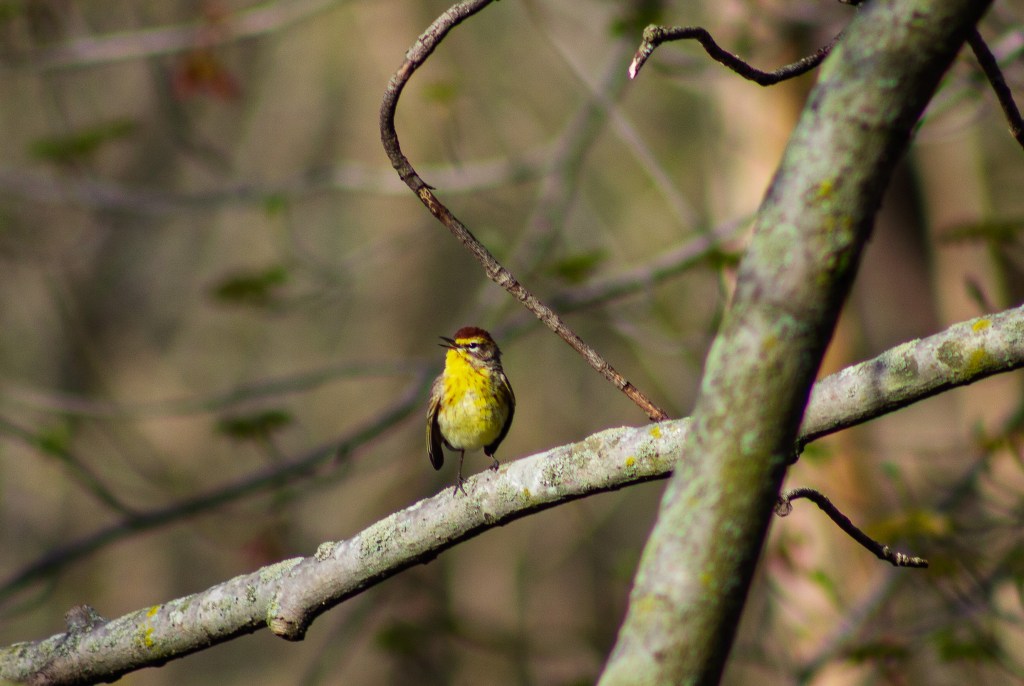
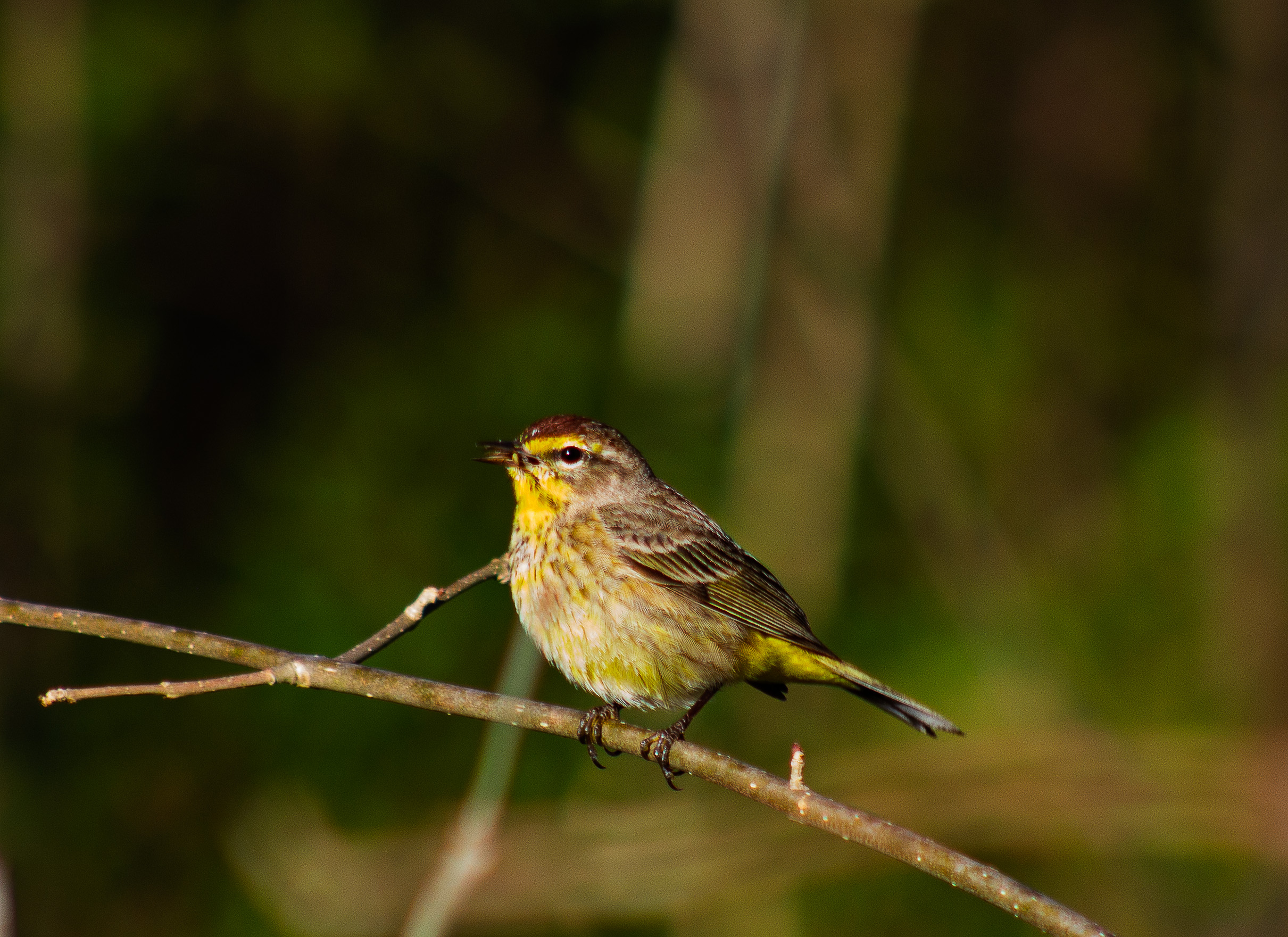
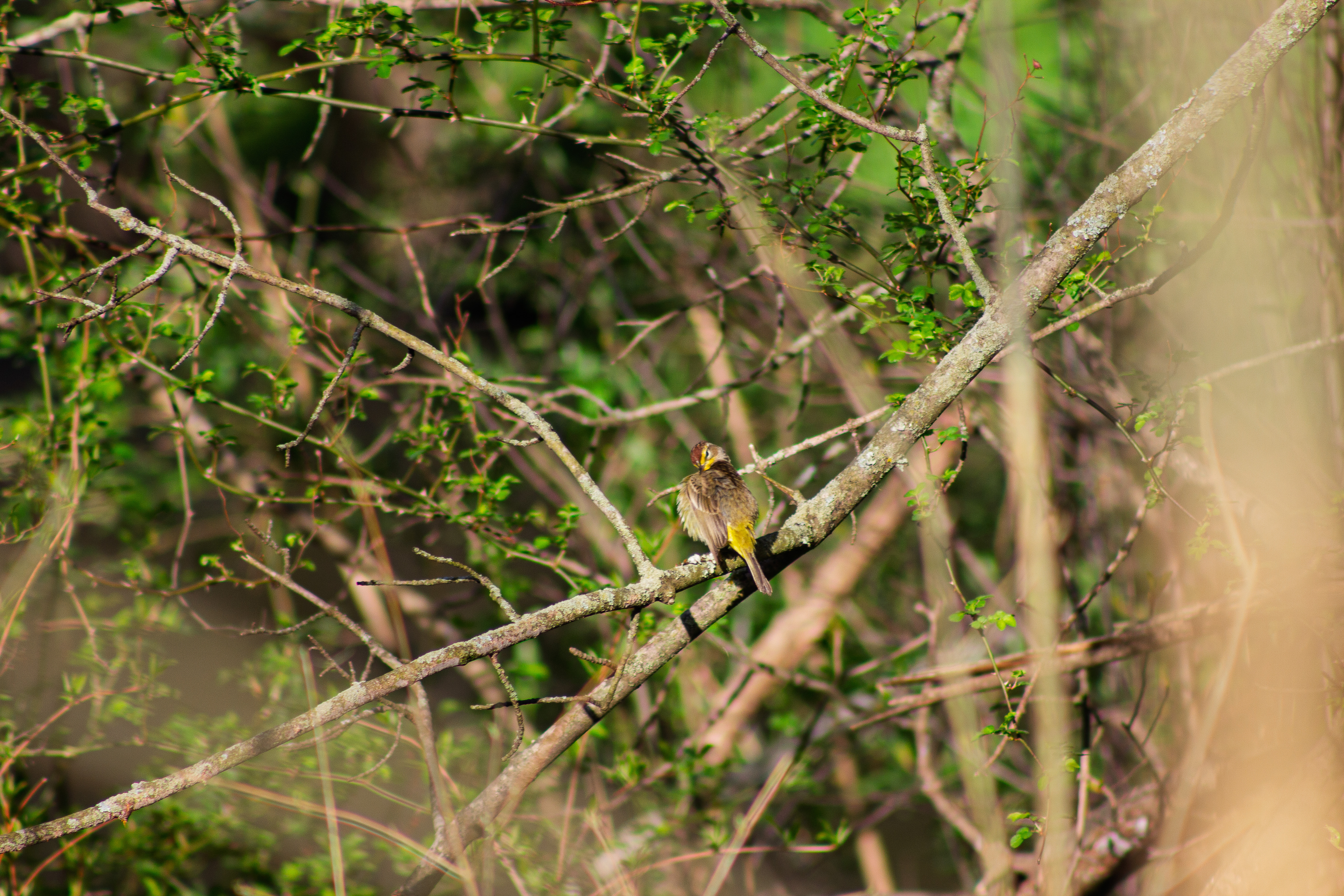
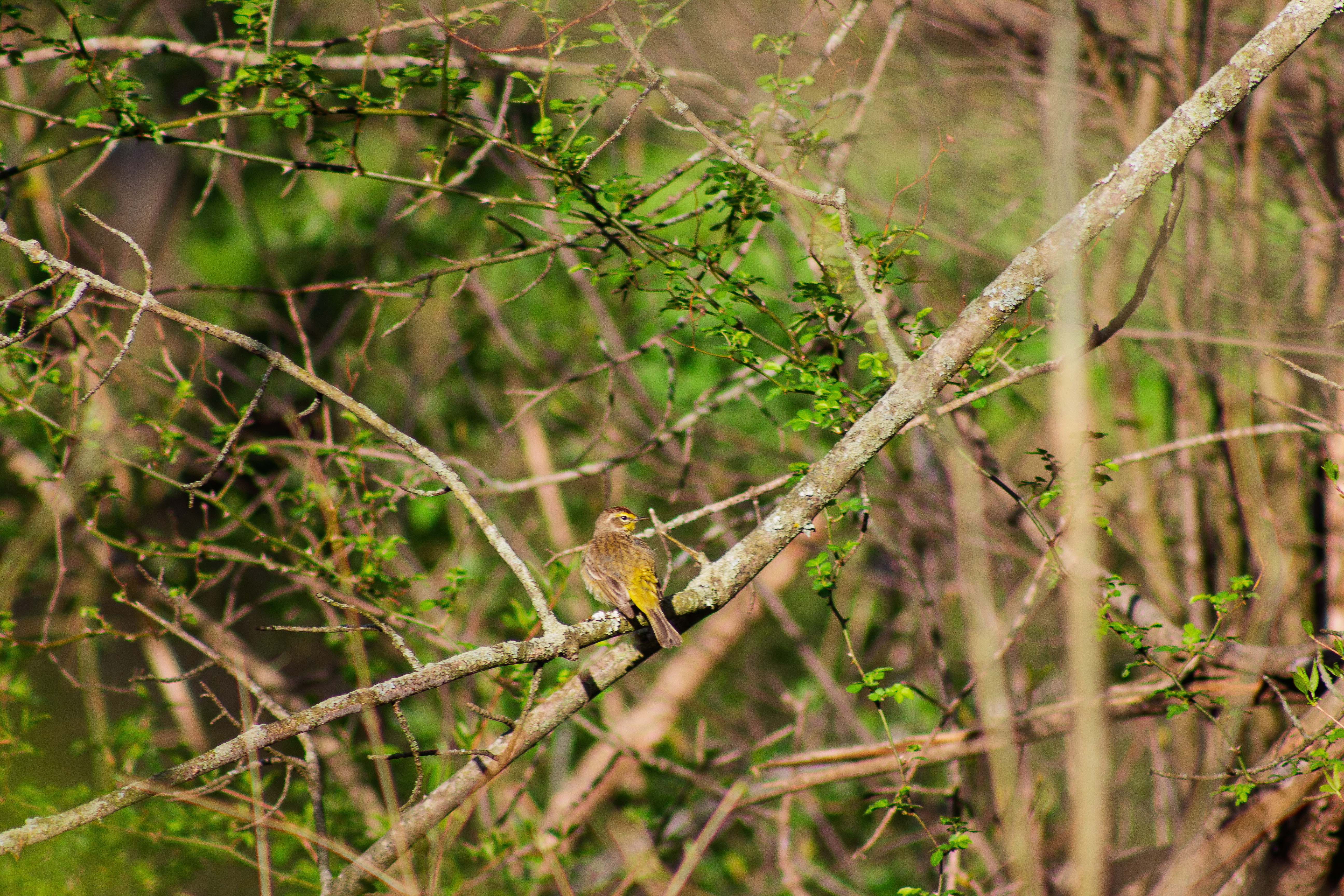
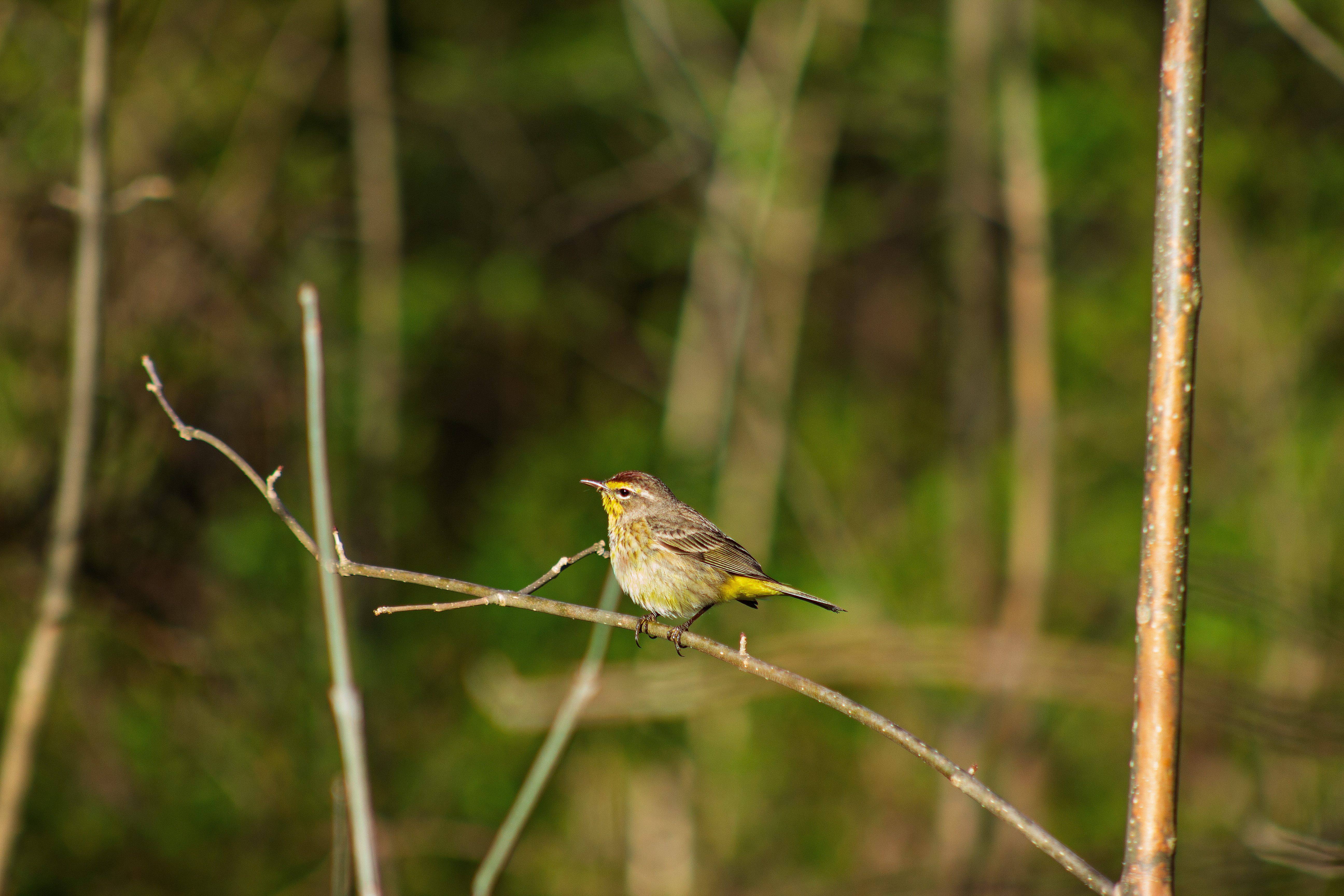

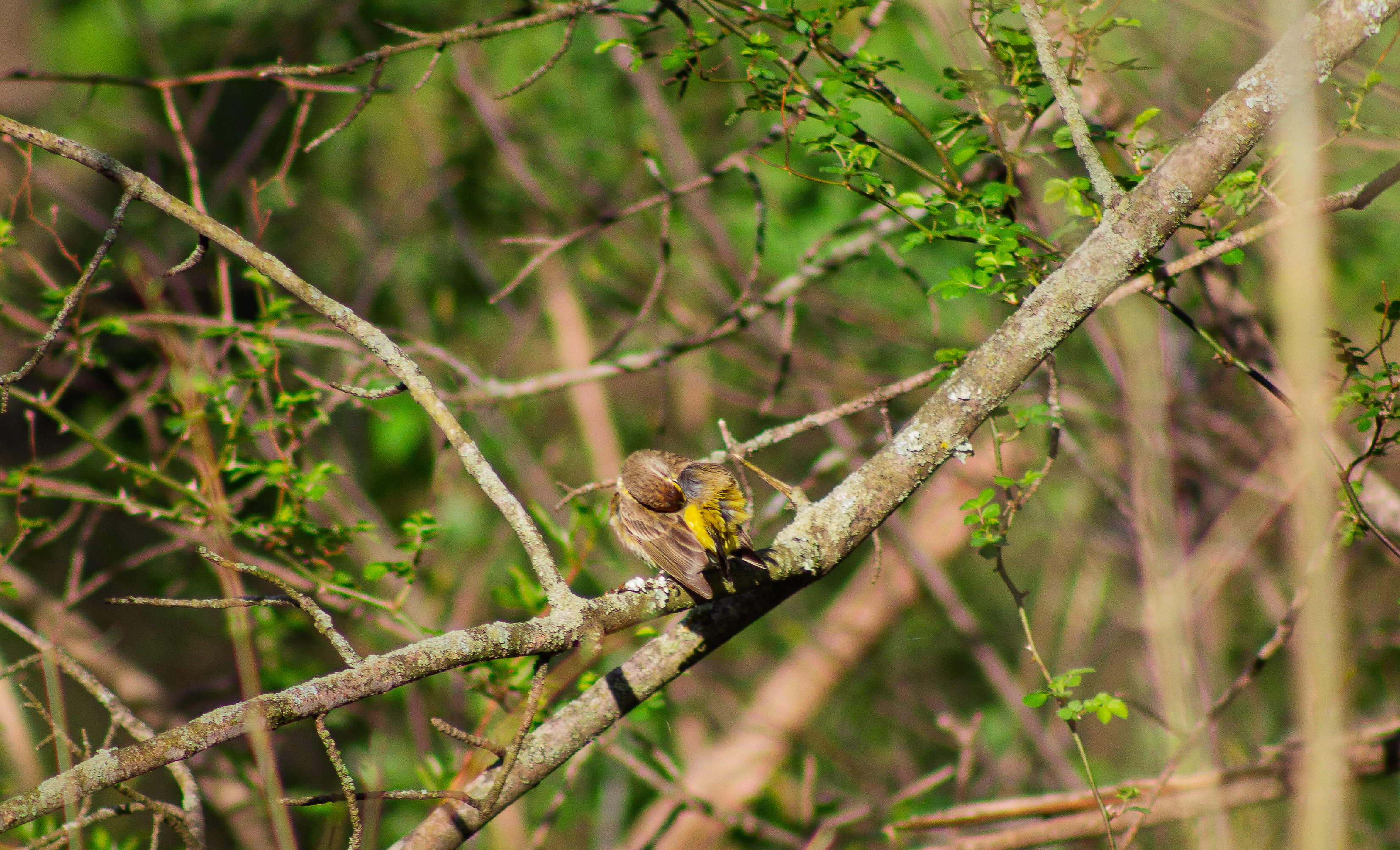
The Palm Warbler (Setophaga palmarum) is a small songbird in the New World warbler family (Parulidae). Despite its tropical-sounding name, it spends much of its life far from palm trees. Here’s a detailed overview of this species:
TAXONOMY
Scientific Name: Setophaga palmarum.
Family: Parulidae (New World warblers).
Order: Passeriformes.
Physical Description
Size: 4.7–5.5 inches (12–14 cm) in length.
Wingspan: 7.9–8.3 inches (20–21 cm).
Weight: 0.3–0.5 oz (7–14 g).
Coloration: Olive-brown upperparts, Yellow underparts (more vivid in the eastern subspecies). Reddish-brown cap (most noticeable during breeding season). Pale eyebrow and dark eye-line. Constant tail-bobbing behavior (a key field mark).
Sexes: Males and females look similar; males are slightly brighter during breeding season.
Distribution and Range
Breeding Range: Boreal bogs and taiga in Canada, especially in the provinces of Ontario, Quebec, and Newfoundland. Some breeding populations extend into the northern U.S. (Great Lakes region).
Wintering Range: Southeastern United States (Florida, Gulf Coast), The Caribbean, Parts of Central America, Occasionally seen in southern California or the southwestern U.S. during migration.
Migration: One of the earlier warblers to arrive in spring and one of the last to leave in fall. Migrates mostly east of the Rockies
Habitat
Breeding Habitat: Bogs, fens, and open spruce or tamarack forests in the boreal zone.
Migration and Wintering Habitat: Open fields, brushy areas, weedy roadsides, coastal scrub, mangroves, and urban parks. Often seen foraging on the ground—unusual for warblers
Behavior
Foraging: Eats primarily insects (beetles, flies, ants, wasps, caterpillars). Supplements with berries and seeds in fall and winter. Commonly forages on the ground or low in shrubs.
Tail-Bobbing: Constant tail-wagging is a distinctive behavior. Helps distinguish it from other similar species.
Song and Call: Song: A weak, buzzy trill (often described as less musical than other warblers) Call: Sharp “tsip” or “chup” notes.
Nesting: Nests are built on or near the ground in mossy hummocks or sphagnum moss. Cup-shaped nest made of grass, bark strips, and plant fibers. 4–5 eggs per clutch, incubated by the female
Conservative Status
IUCN Red List: Least Concern.
Population Trend: Stable to slightly increasing.
Threats: Habitat loss due to bog drainage or development. Collisions with buildings during migration. Climate change affecting boreal breeding habitat
Interesting Facts
Despite its name, the Palm Warbler breeds nowhere near palms; the name likely came from early sightings in wintering grounds like Florida.
It is one of the few warblers that can often be seen walking along the ground.
Because of its early migration, it’s often one of the first warblers seen by birdwatchers in spring.
 Wild Bird Journal
Leave a comment