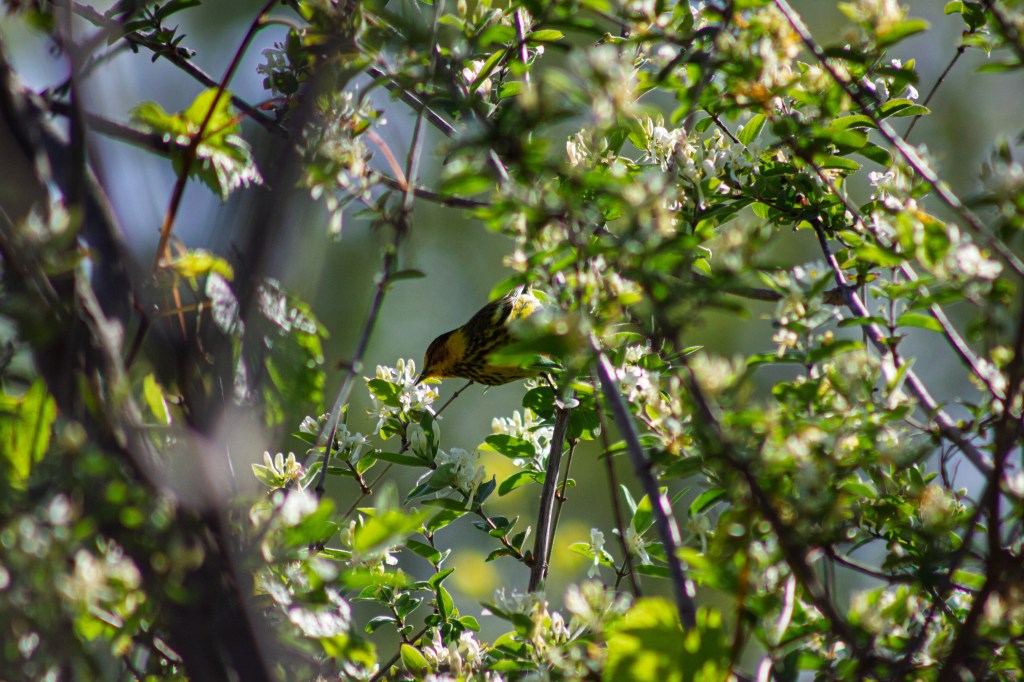


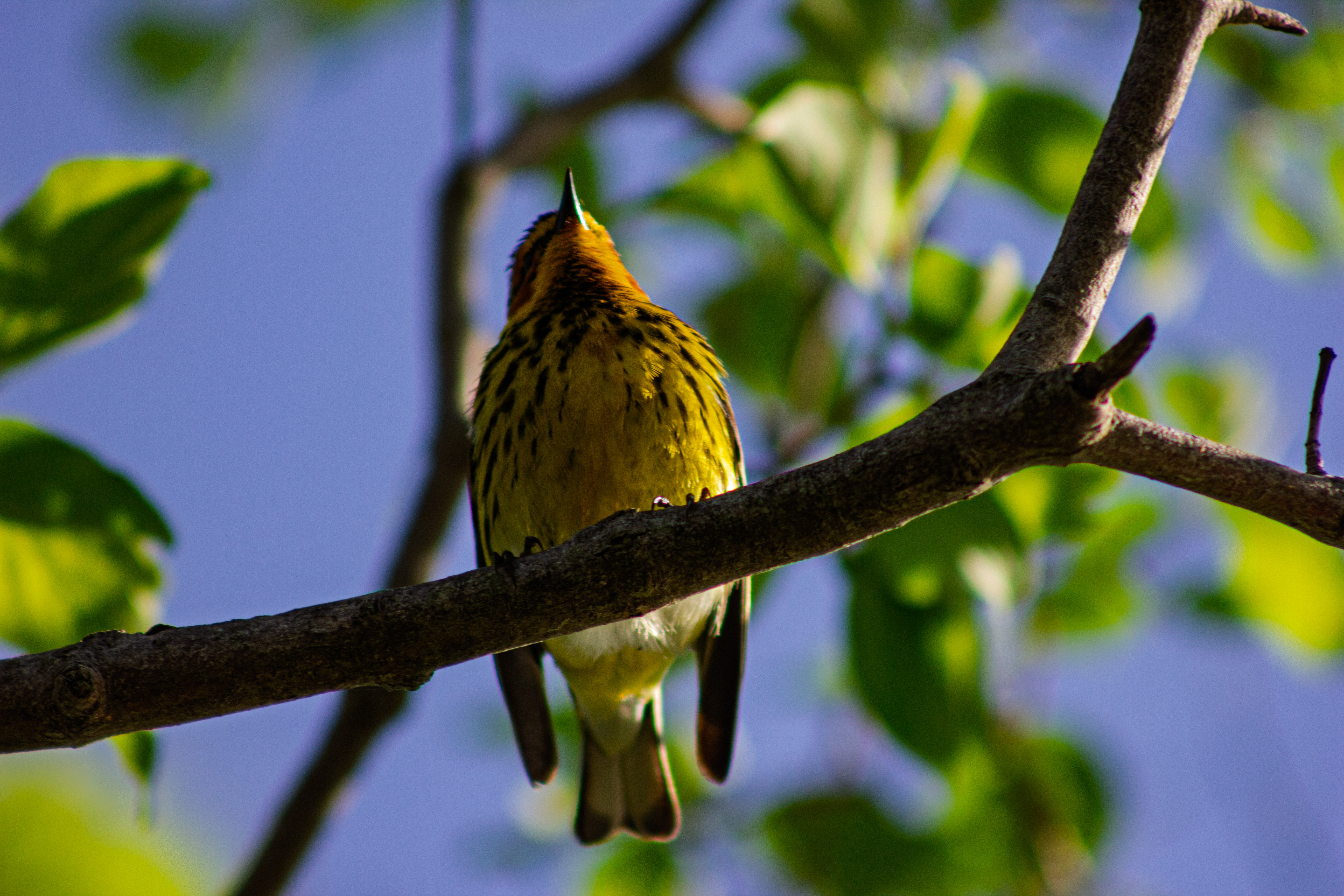
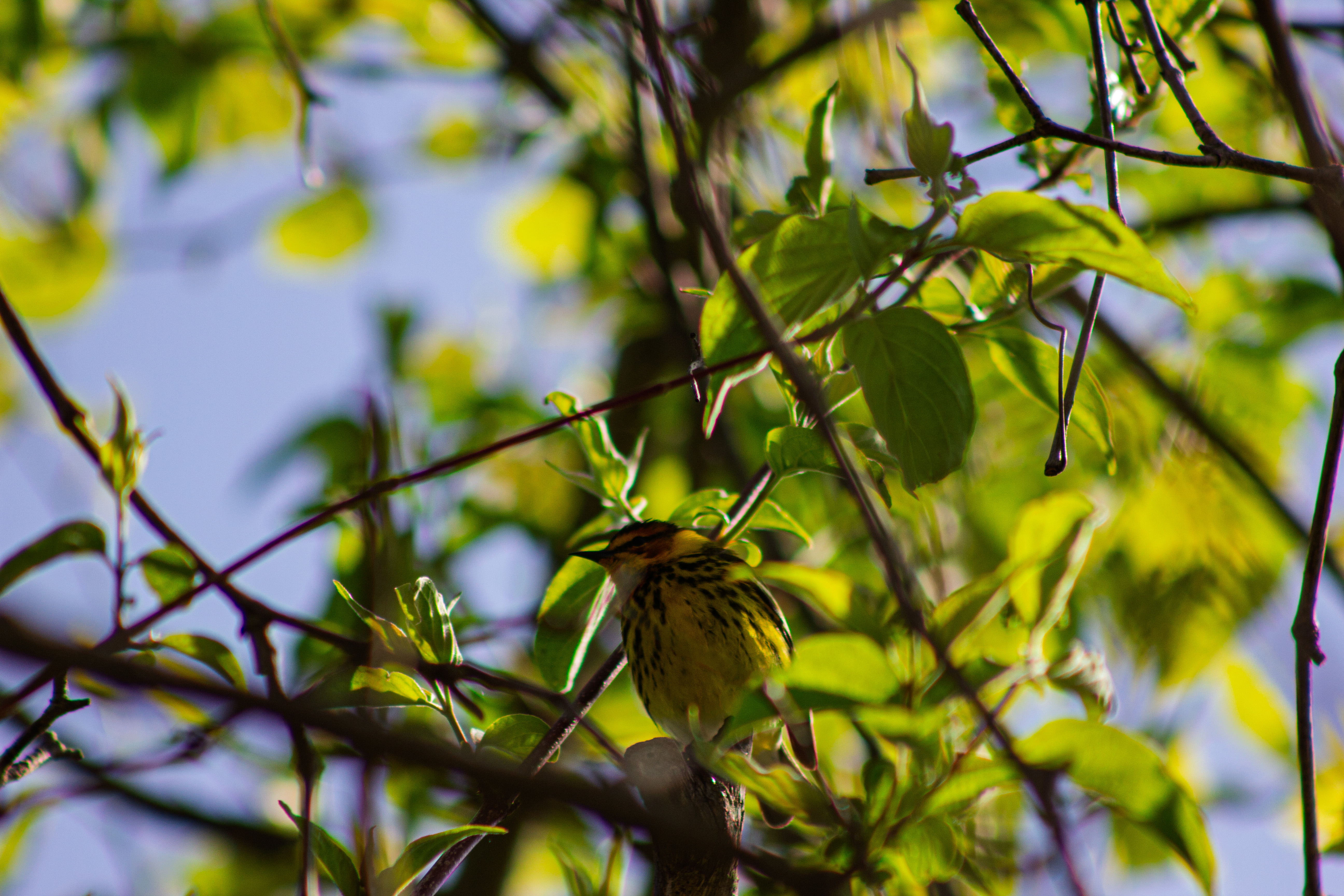
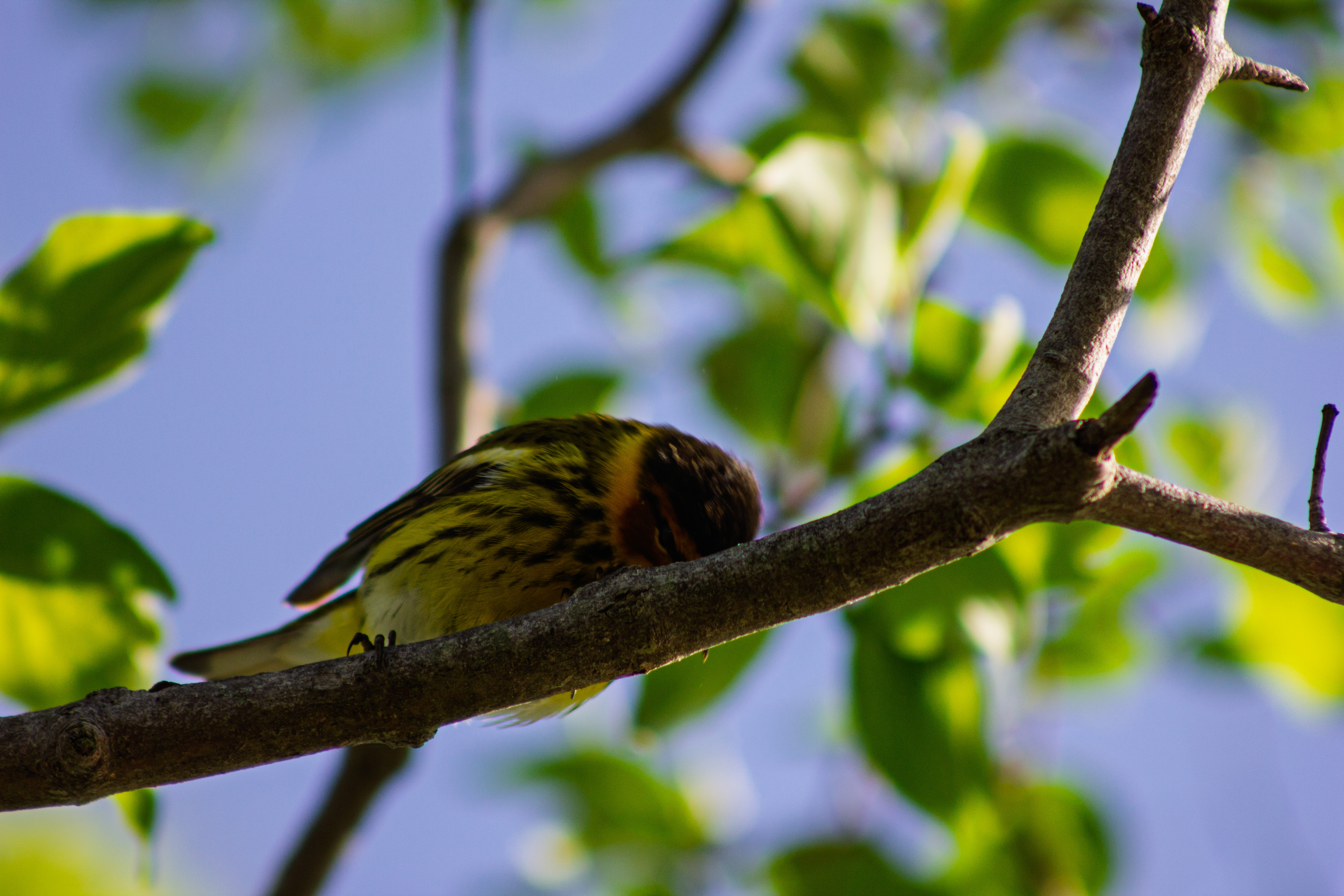
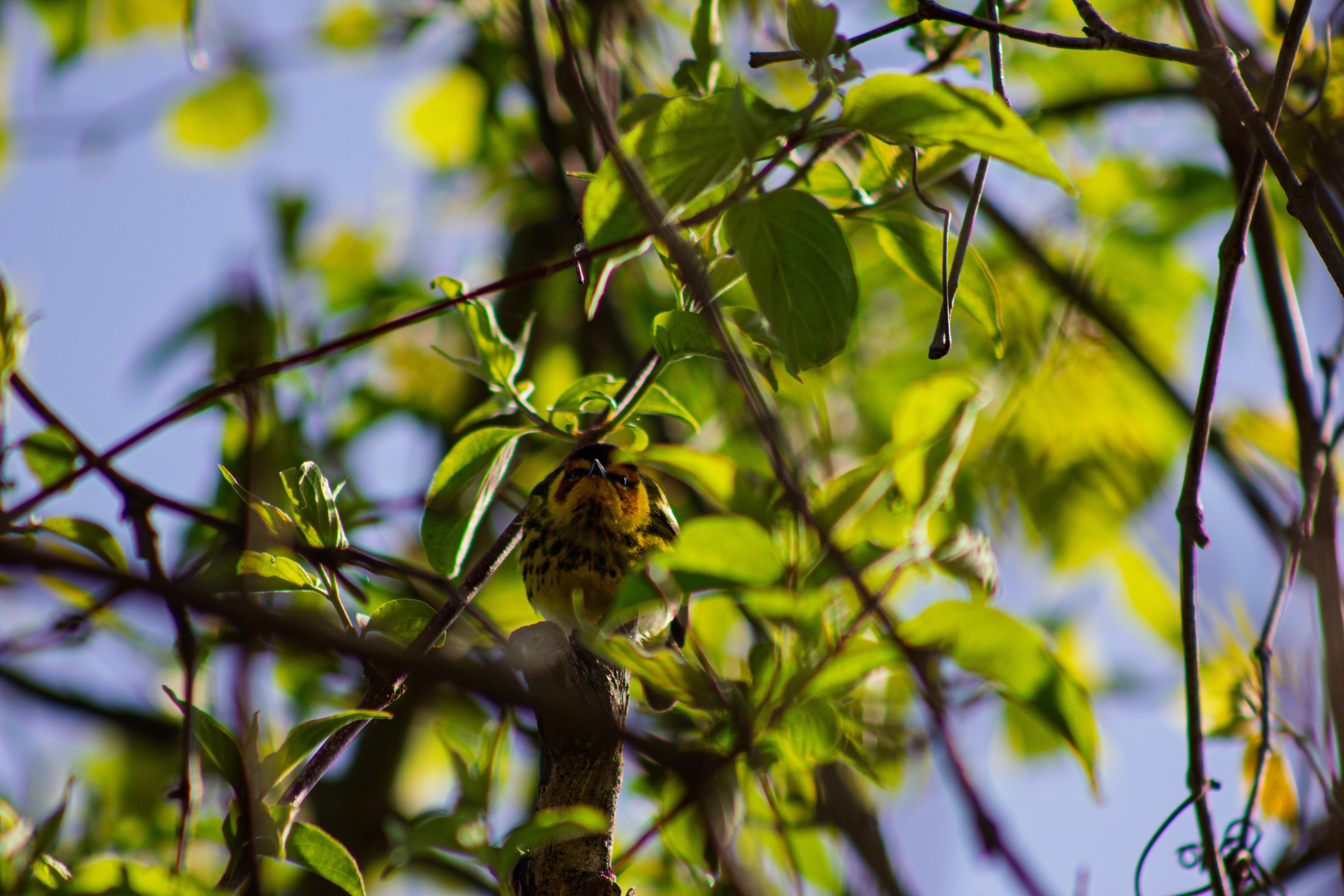
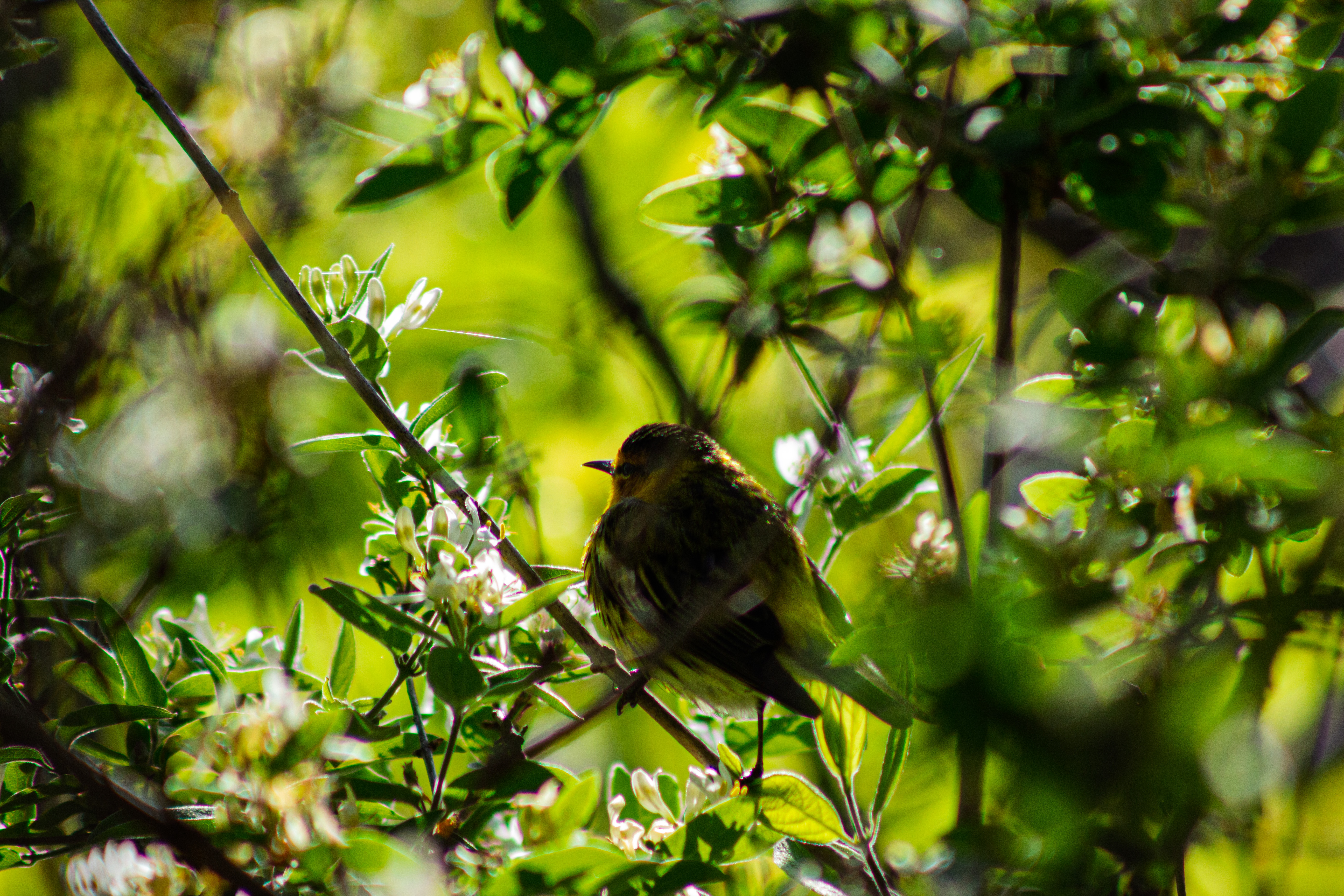
The Cape May Warbler (Setophaga tigrina) is a small songbird in the New World warbler family (Parulidae). It is known for its distinctive plumage, specialized feeding habits, and seasonal migration patterns. Below is a comprehensive overview covering taxonomy, appearance, distribution, behavior, and conservation.
Appearance
Size: ~12–14 cm (4.7–5.5 inches) in length.
Wingspan: ~20–22 cm (7.9–8.7 inches).
Weight: ~9–17 grams.
Plumage: Males (breeding): Striking yellow underparts streaked with black, chestnut cheek patch, dark crown, and greenish upperparts. Wings have white patches.
Females and non-breeding males: Duller, with less streaking, more olive tones, and fainter cheek patches.
Juveniles: Even duller, more subdued tones.
Range and Distribution
Breeding Range: Boreal forests of Canada and the northeastern United States, especially in spruce and fir dominated areas.
Wintering Grounds: Caribbean Islands, especially the Greater Antilles (e.g., Dominican Republic, Cuba, Jamaica, Puerto Rico).
Migration: Long-distance migrant; travels thousands of kilometers between breeding and wintering areas. Seen in eastern North America during migration.
Habitat
Breeding Habitat: Coniferous (boreal) forests, particularly with spruce and fir trees.
Winter Habitat: Tropical lowlands, plantations, and gardens.
During Migration: Found in a wide variety of wooded habitats, including urban parks and orchards.
Diet and Foraging
Primary Diet: Insects (especially spruce budworm caterpillars), spiders, and other arthropods.
Unique Trait: Has a brush-tipped tongue adapted for feeding on nectar and fruit juices—unusual among warblers.
Winter Feeding: Often feeds on nectar from flowers or fruit juices, similar to hummingbirds.
Breeding
Nesting Season: May to July
Nest: Cup-shaped, usually built high in conifer trees near the trunk.
Eggs: Typically 4–9 eggs, whitish with reddish or brown spots.
Incubation: About 12 days, mostly by the female.
Fledging: Chicks leave the nest 10–12 days after hatching.
Vocalizations
Song: A thin, high-pitched series of notes, often described as “tsi tsi tsi tsi tsi,” repeated quickly.
Call: A short “tsip” or “seet.”
Behavior
Solitary or in Mixed Flocks: Often solitary during breeding; may join mixed-species flocks during migration or in winter.
Territorial: Males defend breeding territories with song and displays.
Agile Forager: Gleans insects from foliage, hovers to pick prey, and sips nectar.
Conservation Status
IUCN Red List: Least Concern (LC).
Threats: Deforestation in breeding and wintering areas. Pesticide use affecting insect prey. Habitat loss due to logging and climate change.
Population Trends: Stable overall but susceptible to declines during spruce budworm population crashes.
Interesting Facts
Cape May Warblers show population booms during spruce budworm outbreaks, a primary food source in breeding areas. They are one of the few warbler species with a specialized tongue for feeding on nectar. Despite being named after Cape May, New Jersey, the species was not seen there again for over 100 years after its first discovery.

 Wild Bird Journal
Leave a comment