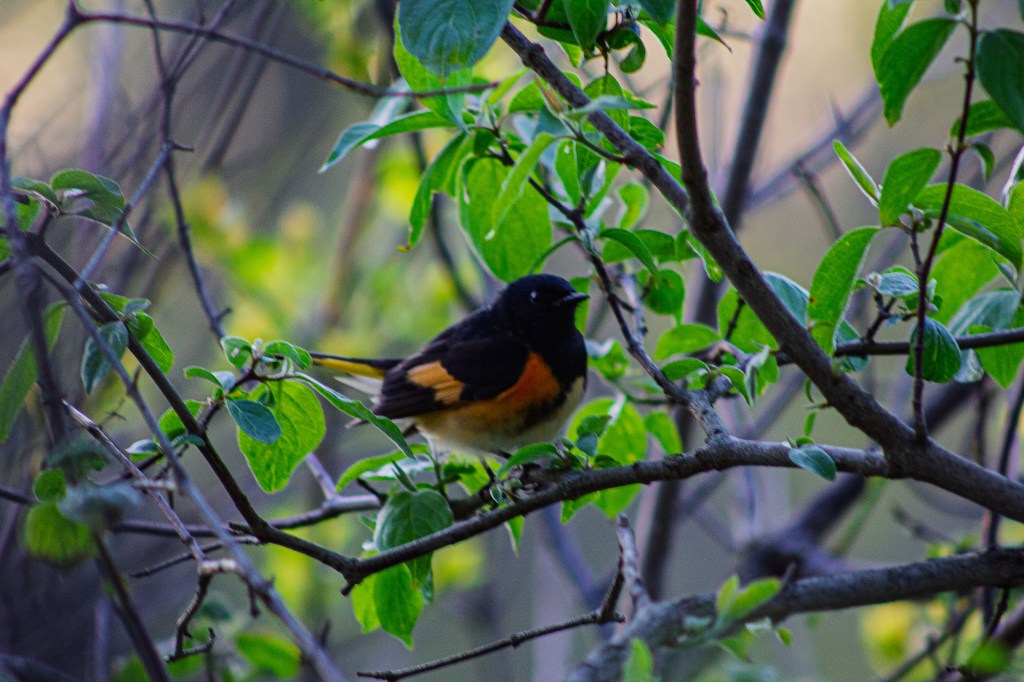
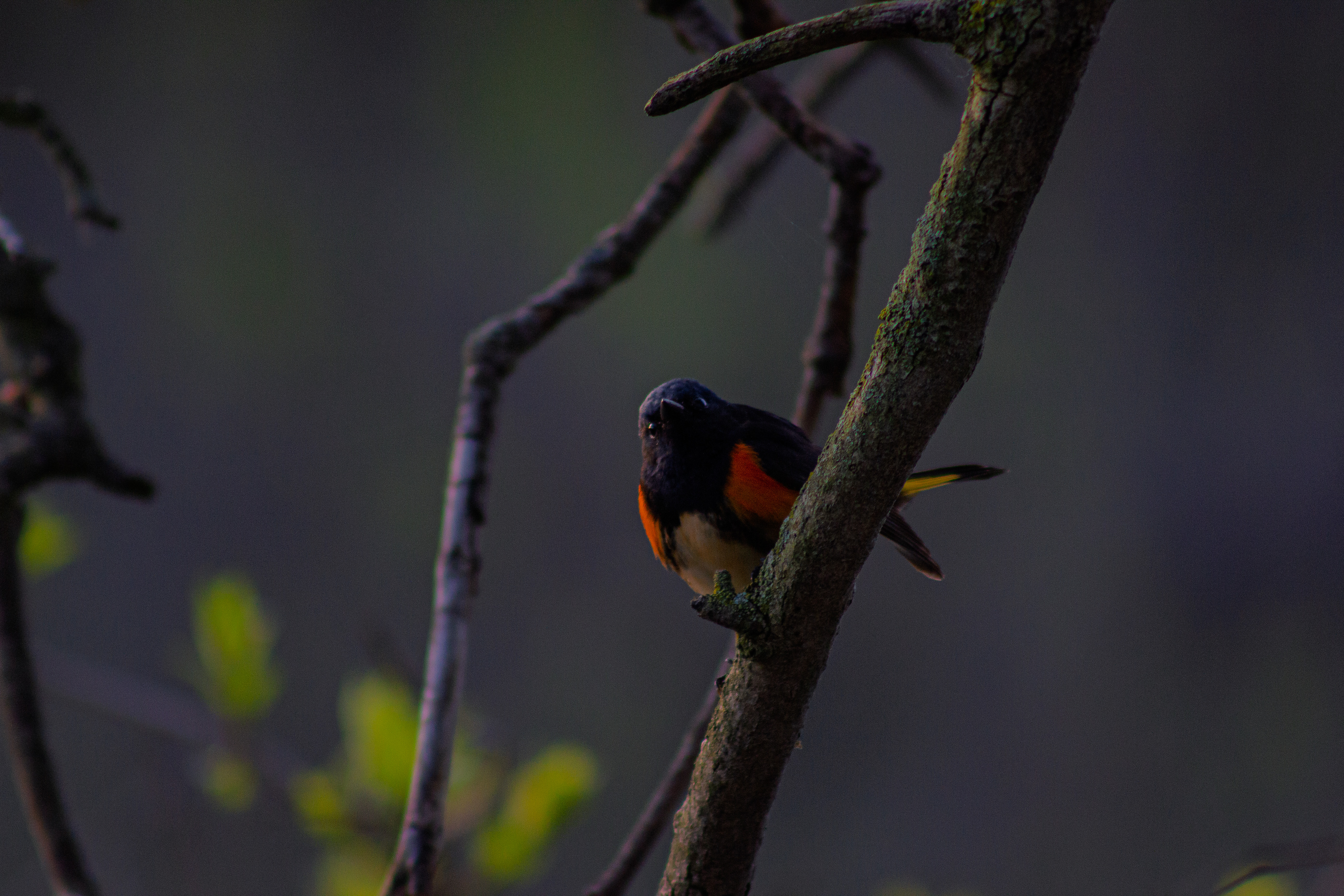
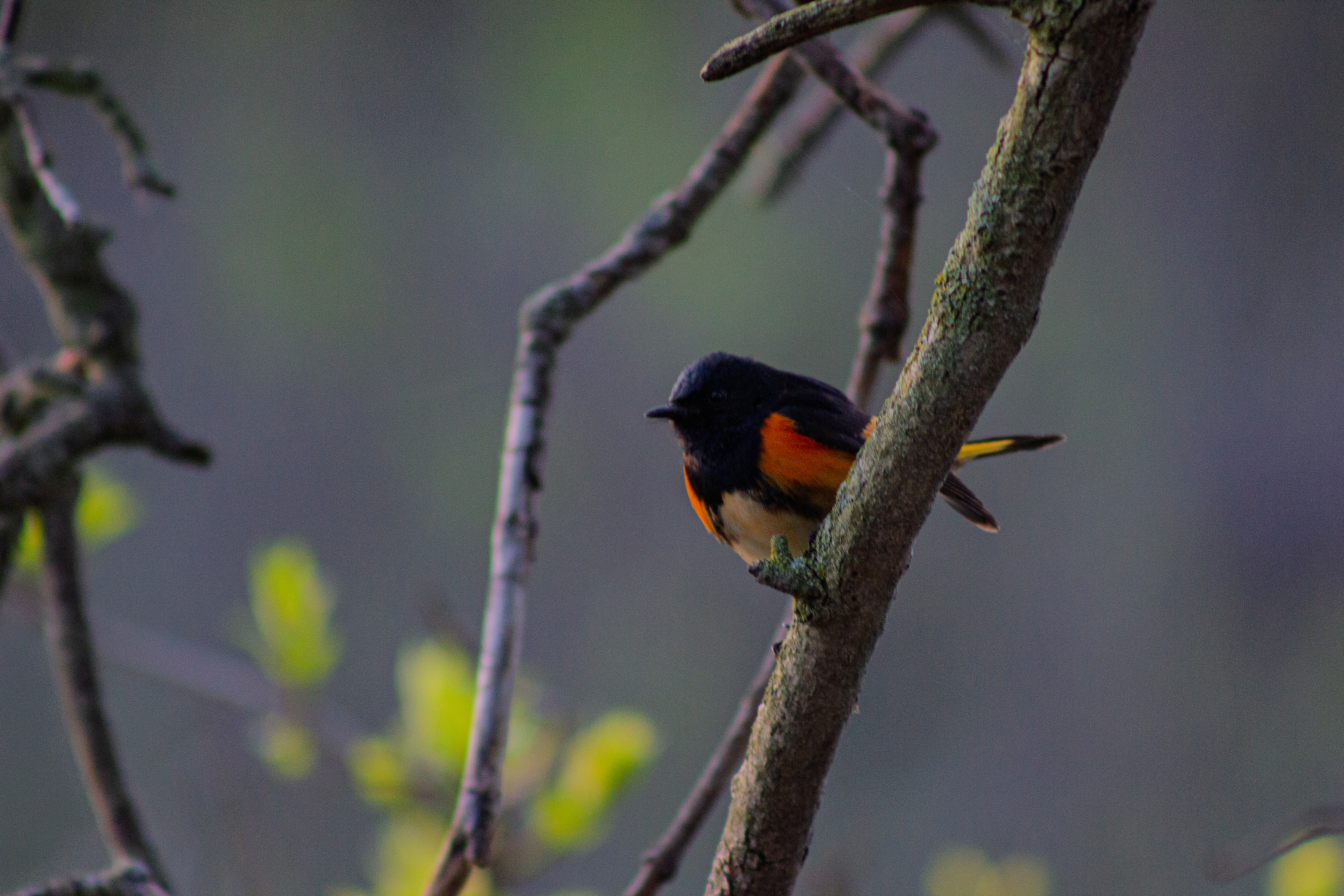
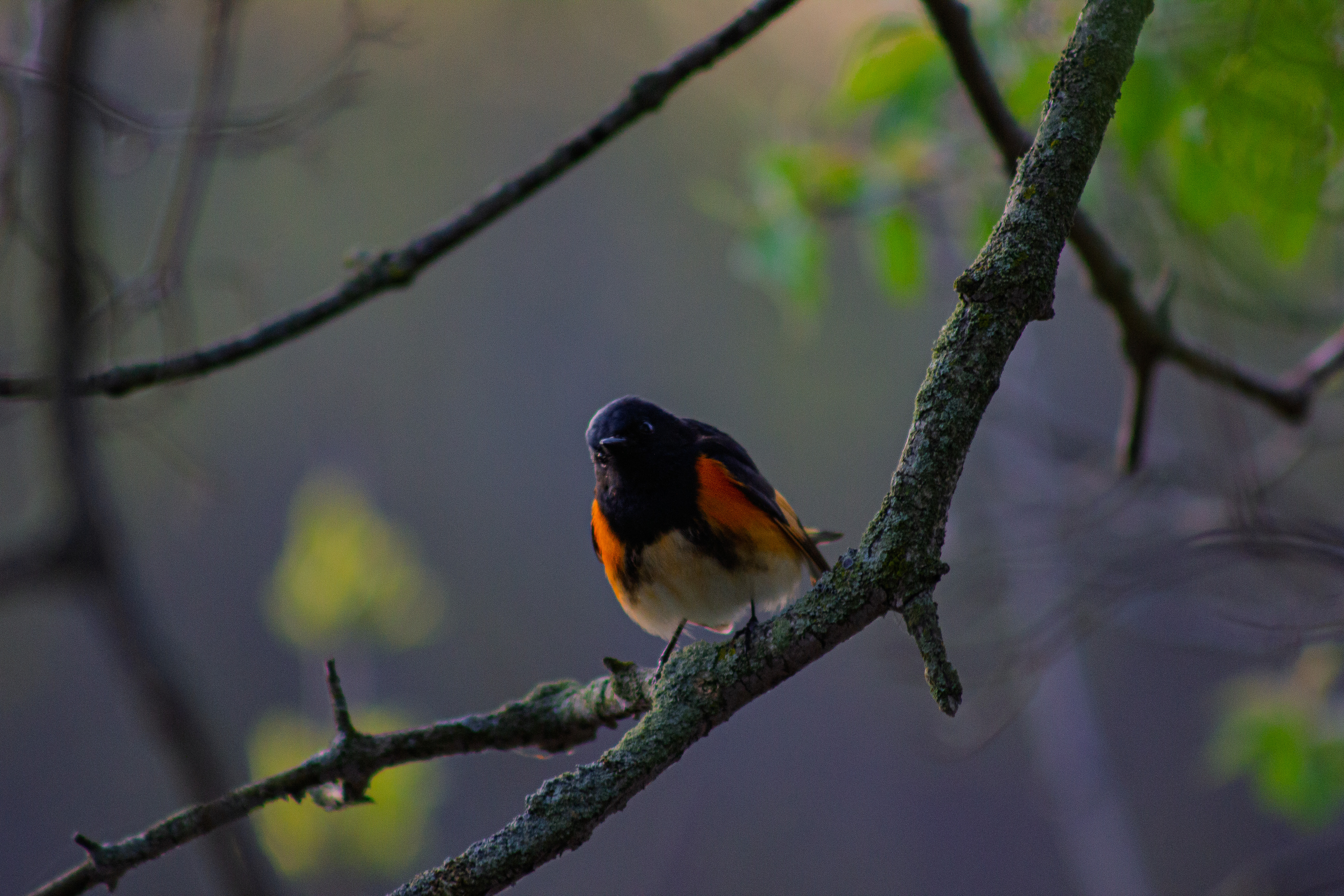
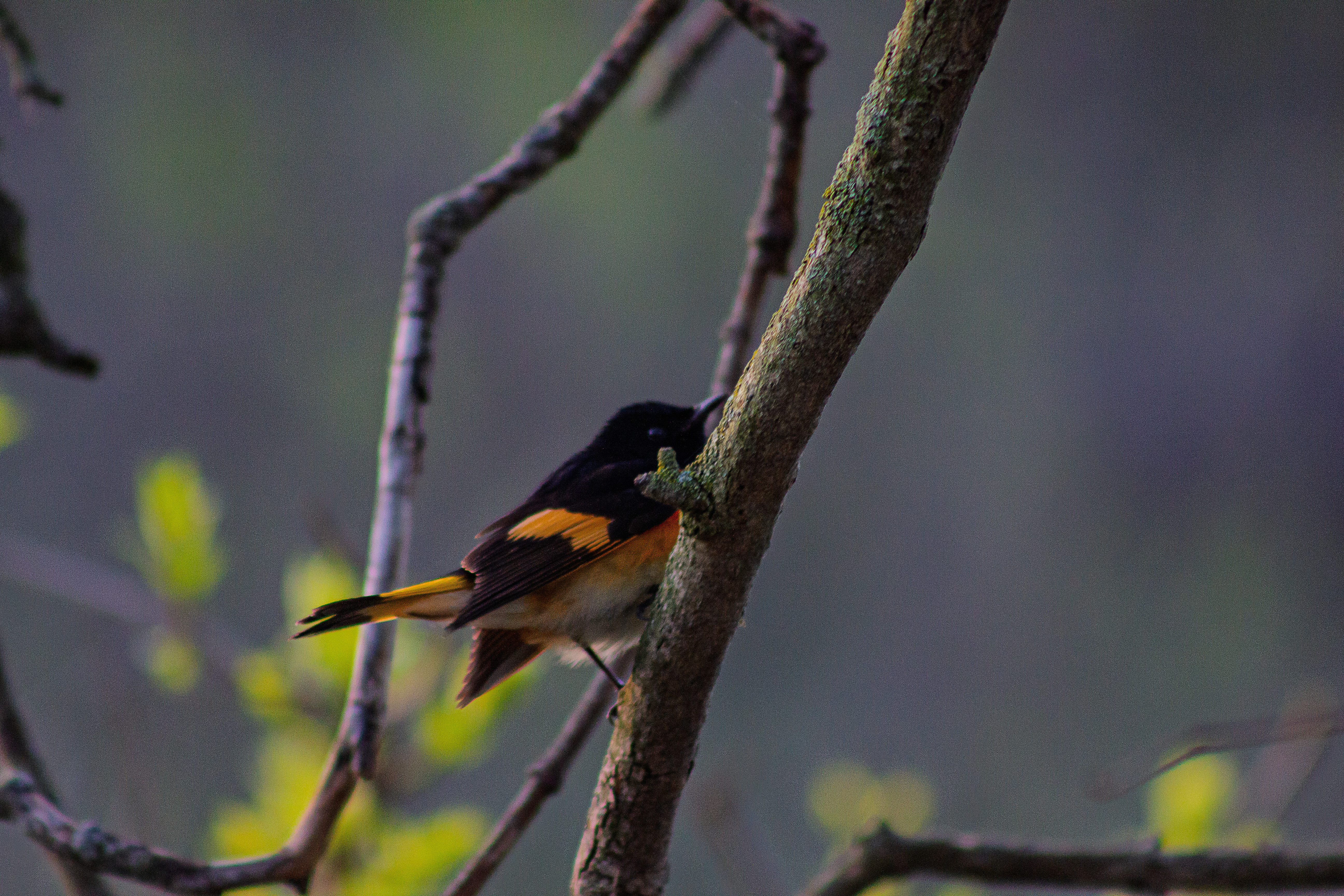
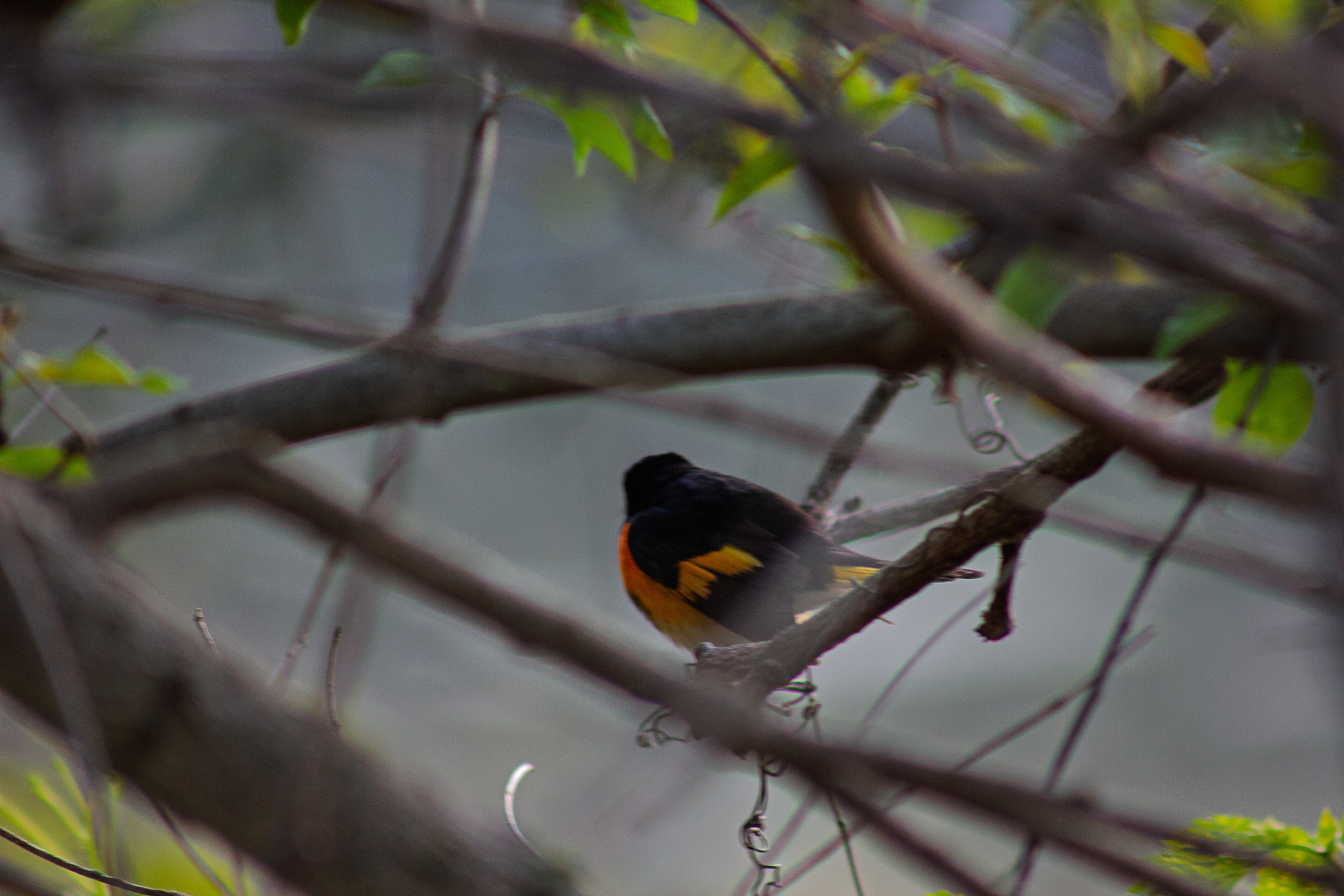
The American Redstart (Setophaga ruticilla) is a striking and active warbler species native to the Americas. It is best known for its vivid plumage and energetic behavior. Here’s a comprehensive overview:
Physical Description
Adult Males:
Bold black and orange plumage. Jet black head, back, and chest. Bright orange patches on wings, sides of the breast, and tail. White underbelly.
Females and Juveniles:
Olive-gray upperparts. Yellow patches (instead of orange) on the wings and tail. Pale gray or whitish underparts. Less vivid but still distinctive.
Distribution and Habitat
Breeding Range: Eastern and central North America, from southern Canada through the eastern United States.
Wintering Range: Southern Florida, the Caribbean, Central America, and northern South America.
Migration: Long-distance migrant; among the earlier warblers to migrate south in the fall.
Preferred Habitats:
Breeding: Open woodlands, forest edges, second-growth forests, and shrubby areas. Wintering: Tropical forests, thickets, mangroves, coffee plantations.
Behavior and Ecology
Feeding:
Primarily insectivorous. Uses a “flush-pursuit” foraging strategy: fans its tail and wings to flush insects from foliage, then darts out to catch them in midair. Will also eat berries and small fruits, especially during migration and on wintering grounds.
Vocalizations:
Male song: a series of high-pitched, sweet, musical phrases. Calls include sharp “chip” notes. Songs are used to defend territory and attract mates.
Breeding:
Season: Spring to early summer. Nesting: Cup-shaped nests made of grasses, bark, and hair, placed in shrubs or low trees. Eggs: 3–5 eggs, pale with speckles. Incubation: About 10–13 days, primarily by the female. Fledging: Chicks leave the nest roughly 9 days after hatching.
Lifespan and Predators
Typical lifespan in the wild: 5–10 years. Predators include snakes, domestic cats, raccoons, and birds of prey. Nest predation is a common threat.
Conservation Status
IUCN Red List: Least Concern. Populations are generally stable but face pressures from: Habitat loss (especially on wintering grounds). Collisions with buildings during migration. Climate change (shifting ranges and food availability).
Interesting Facts
One of the few warblers where males have such bold, contrasting plumage.
Often called the “butterfly of the bird world” due to its fluttery flight and bright coloration.
Males can arrive on breeding grounds before females to establish territories. The name “redstart” is a reference to the red (orange) in the tail, from an old English word “start” meaning tail.
In Culture
The American Redstart has been celebrated in nature writing and birdwatching communities for its beauty and dynamic presence. Often one of the easier warblers to observe due to its active foraging behavior.
 Wild Bird Journal
Leave a comment