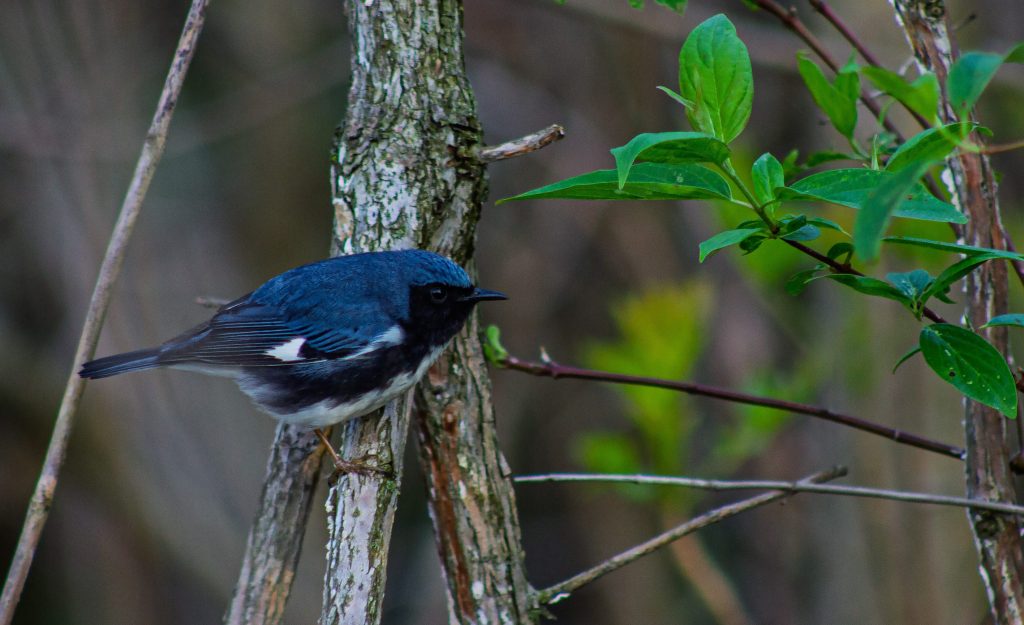
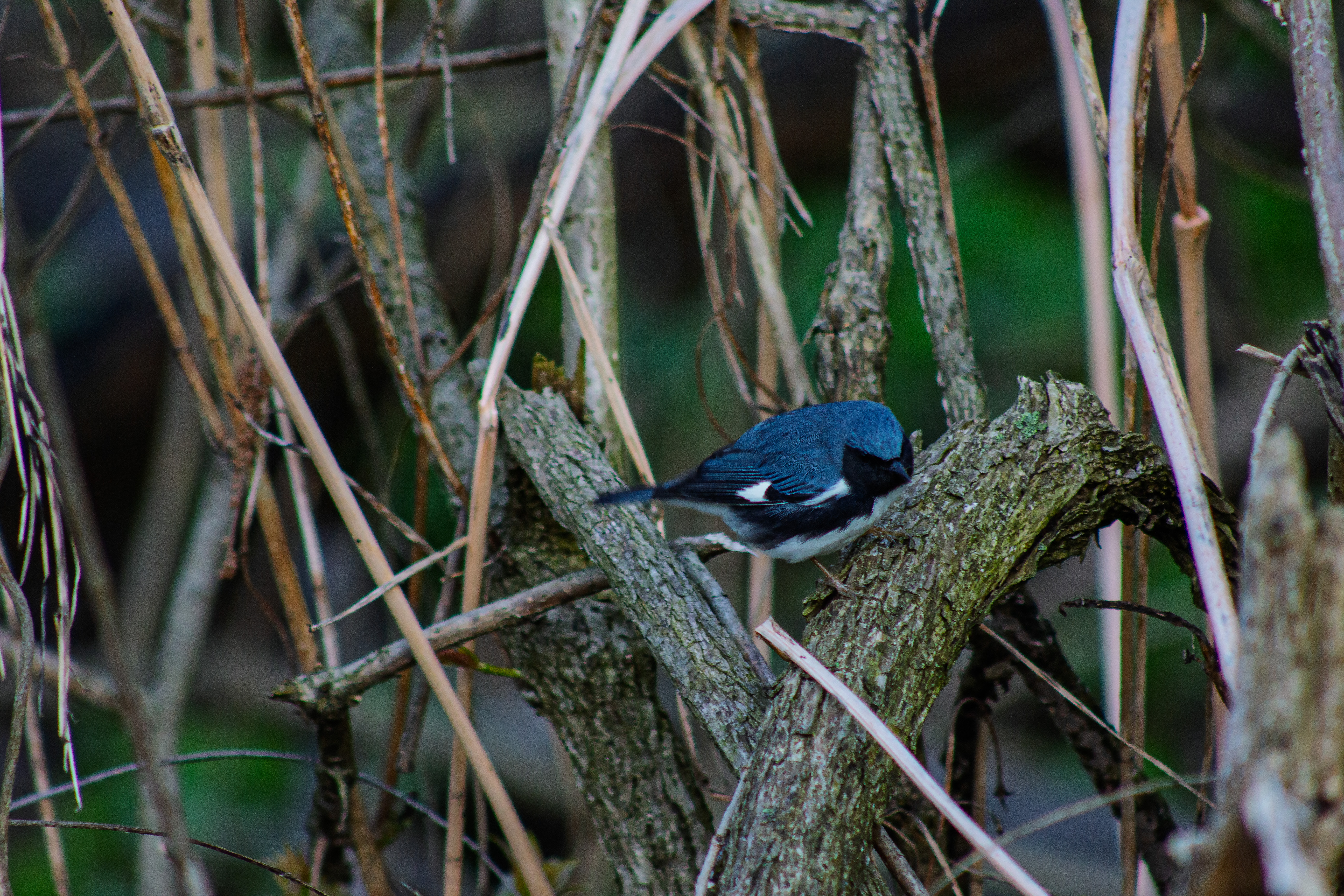

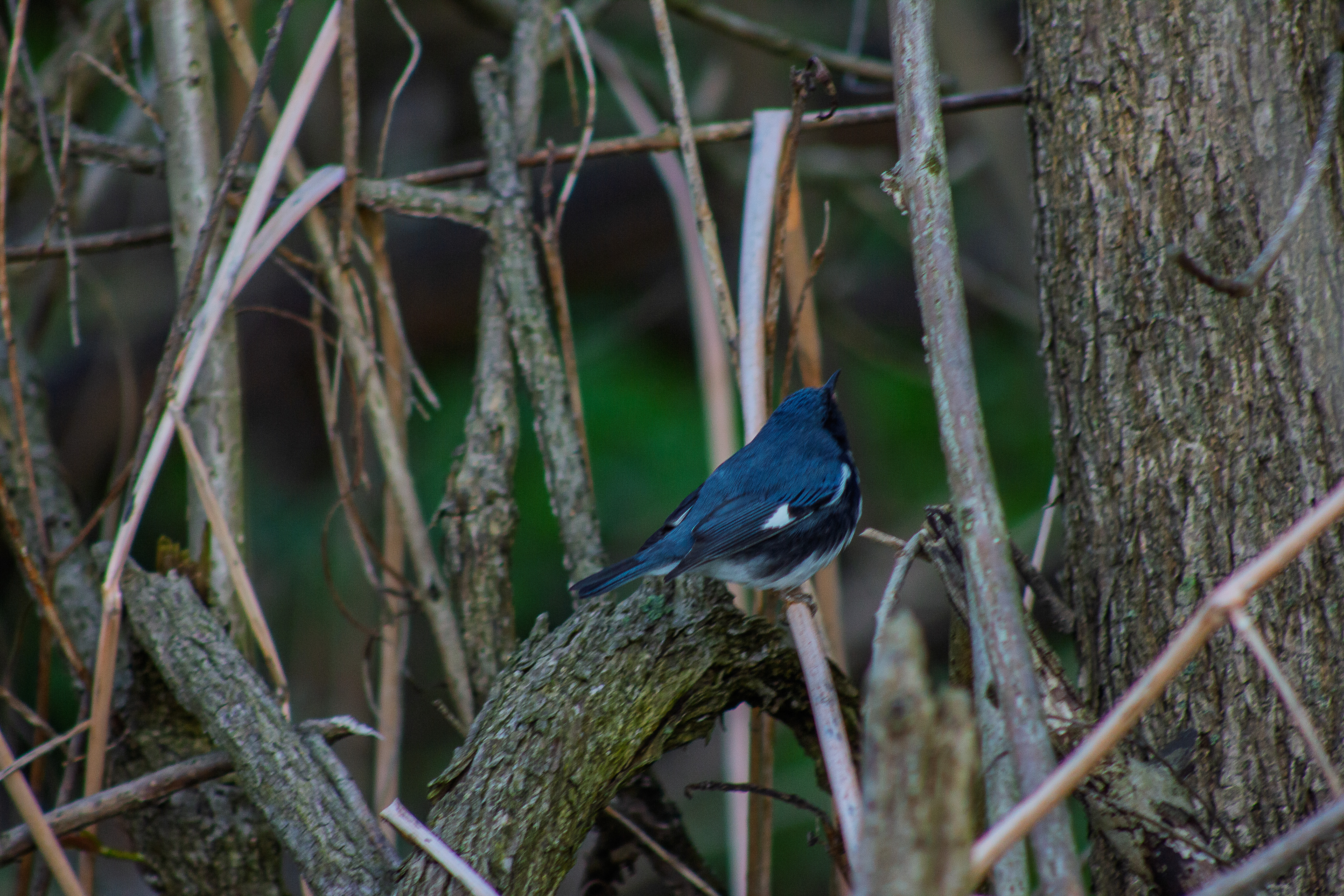
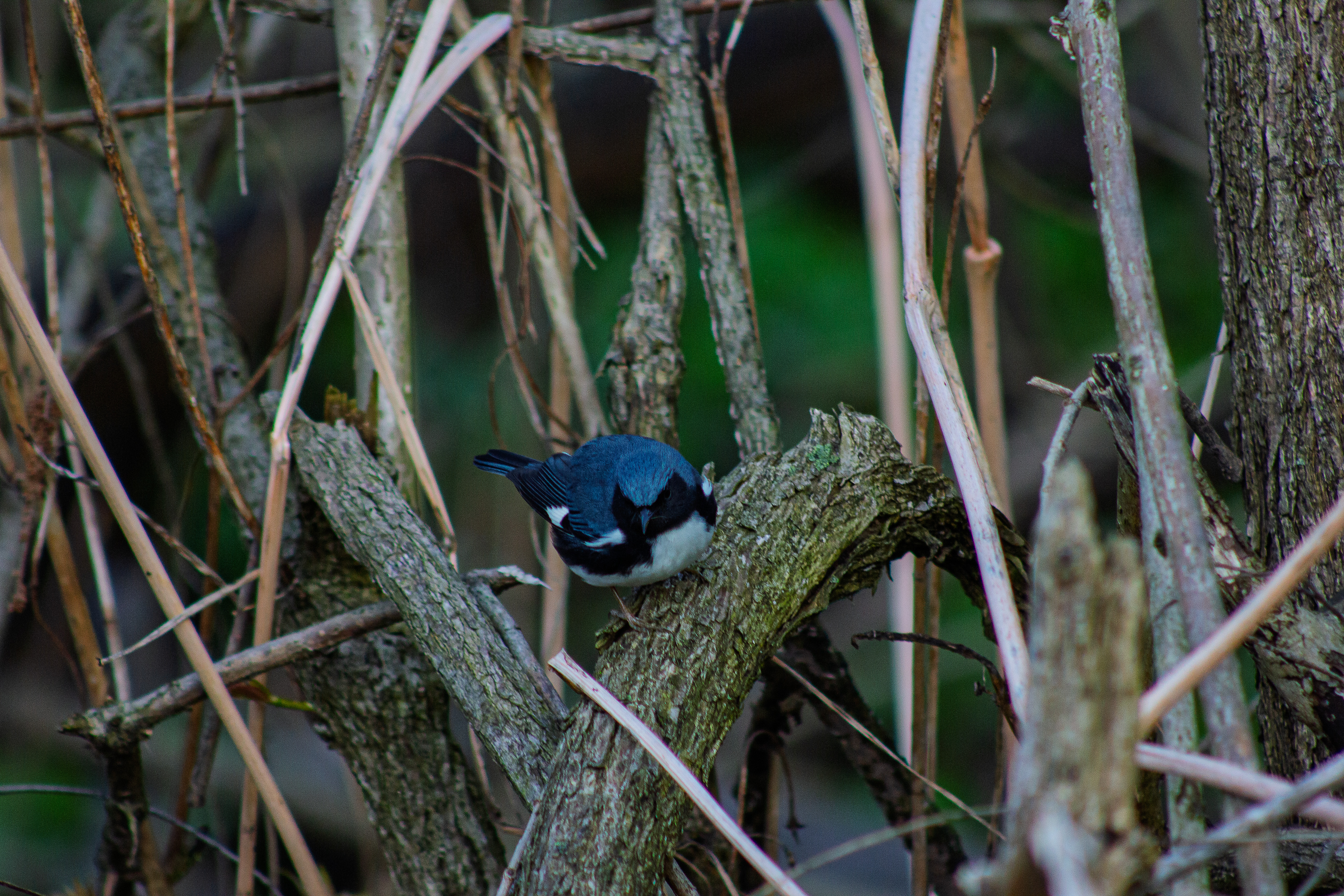
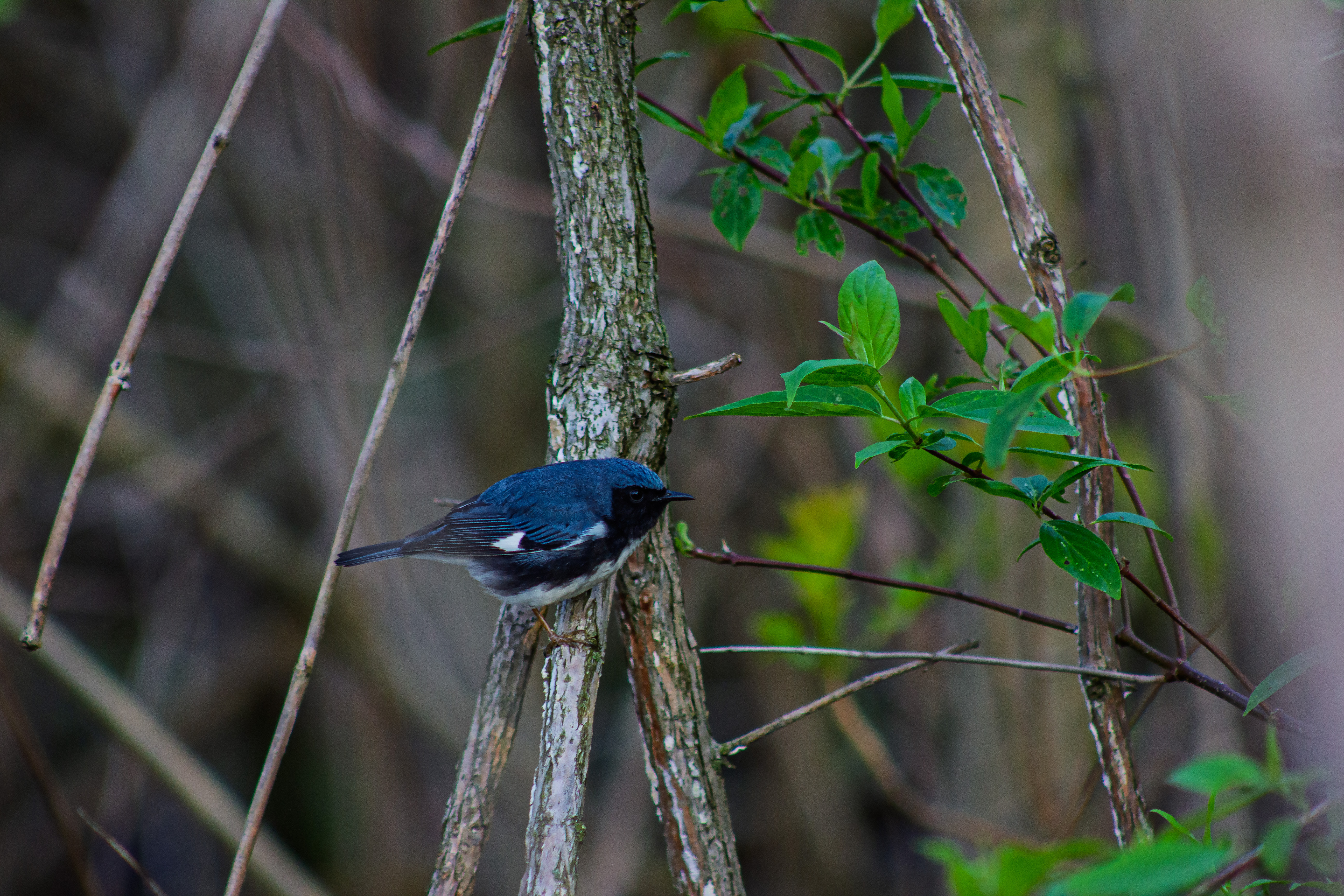
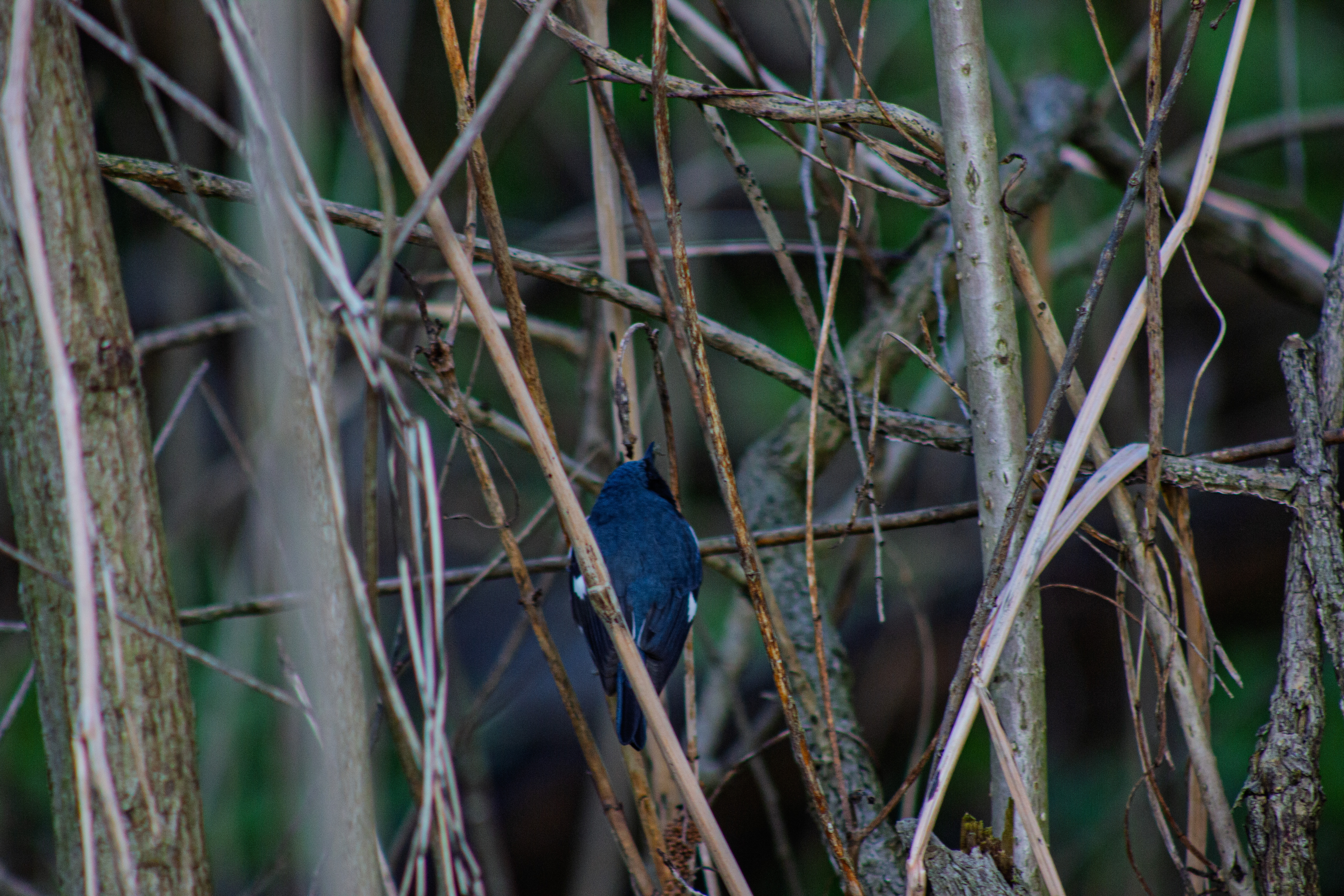
The Black-throated Blue Warbler (Setophaga caerulescens) is a small songbird native to North America and belongs to the New World warbler family, Parulidae. It is well-known for its striking coloration, unique song, and specific habitat preferences.
Physical Description
Males:
Deep blue upperparts. Black face and throat. White belly and undertail. Small white wing patch, often used for identification in flight.
Females:
Olive-brown upperparts. Pale yellow or whitish underparts. Distinct white “eyebrow” (supercilium).. Dusky face and a subtle wing patch.
Size:
Length: 12–13 cm (4.7–5.1 in). Wingspan: 19–21 cm (7.5–8.3 in). Weight: 8–12 g (0.3–0.4 oz)
Sexual dimorphism is pronounced, with males much more colorful than females.
Distribution & Habitat
Breeding Range:
Northeastern United States (Appalachians to New England). Southern Canada (Ontario, Quebec, Maritime provinces)
Wintering Range:
Caribbean islands, especially the Greater Antilles (e.g., Cuba, Jamaica, Hispaniola, Puerto Rico)
Habitat:
Prefers mature deciduous or mixed hardwood forests with dense understory. Breeds in moist, shady forests. Winters in tropical broadleaf forests, often in mountain regions.
Migration
Migratory Species: Moves from North American breeding grounds to Caribbean wintering grounds.
Migration Period: Southbound: August to October. Northbound: March to May. Often solitary during migration and less likely to join mixed flocks than other warblers.
Diet and Foraging
Diet: Primarily insectivorous; eats caterpillars, spiders, beetles, flies, and other arthropods. Occasionally consumes small fruits and berries in winter.
Foraging Behavior: Actively gleans insects from the undersides of leaves. Forages in the lower to mid-levels of the forest.
Employs “hover-gleaning” and short sallying flights.
Breeding and Reproduction
Breeding Season: May to July.
Nesting: Cup-shaped nest built low in dense shrubs or saplings (often <1 m above ground). Constructed by the female using bark strips, moss, and spiderwebs.
Clutch Size: 3–5 eggs.
Eggs: White or cream with brown speckling.
Incubation: 12–13 days by the female.
Fledging: Young leave nest about 8–10 days after hatching.
Parental Care: Both parents feed the young.
Vocalizations
Song: A distinctive, buzzy series of rising notes, often rendered as “zoo-zoo-zoo-zweee” or “I am so lazzzy”.
Call: A short, sharp “tsip”.
Males sing to defend territory and attract mates; song frequency declines after mating.
Behavior
Territorial: Males are strongly territorial during the breeding season.
Solitary or in Pairs: Often seen alone or with a mate; less social than some other warblers.
Secretive: Tends to stay within dense understory vegetation, making it harder to observe.
Conservation Status
IUCN Red List: Least Concern.
Population Trend: Stable to slightly declining.
Threats: Habitat loss from logging and forest fragmentation. Climate change may alter forest composition or migratory timing. Collisions with buildings and predation during migration.
Interesting Facts
Sexual Dimorphism led early ornithologists to mistakenly believe males and females were separate species.
Philopatry: Males are known to return to the same breeding territories year after year.
Hybridization: Rare, but occasional hybrids with closely related warblers have been reported.
Research and Study
This species is commonly used in avian ecology research, particularly studies involving:
Migratory connectivity. Territory and mating systems. Forest ecology and effects of fragmentation. Climate-related phenology changes


 Wild Bird Journal
Leave a comment