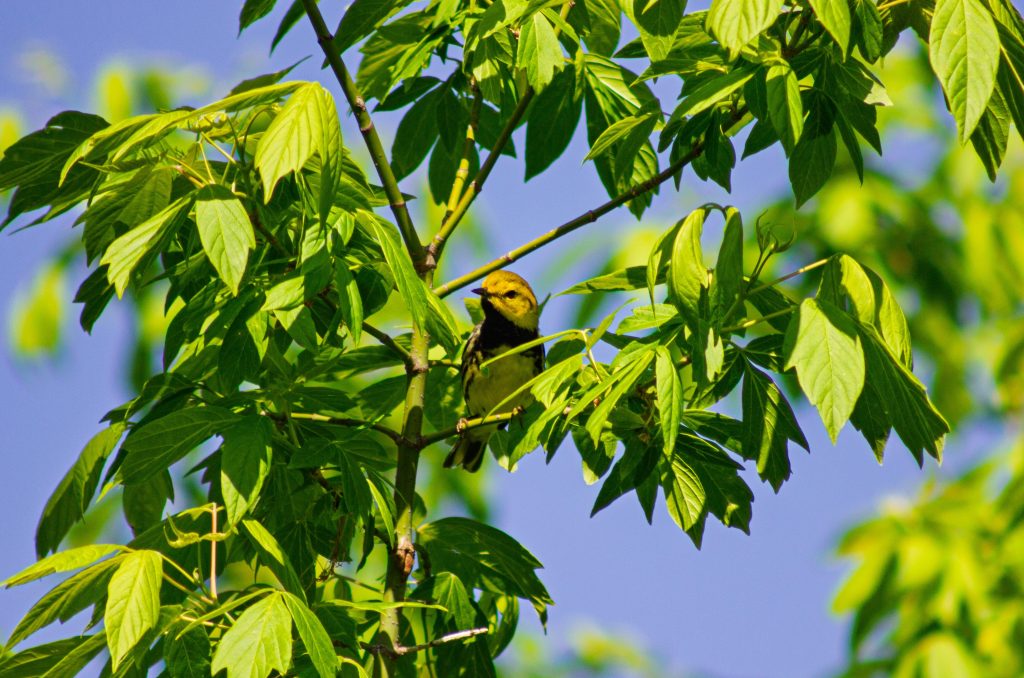
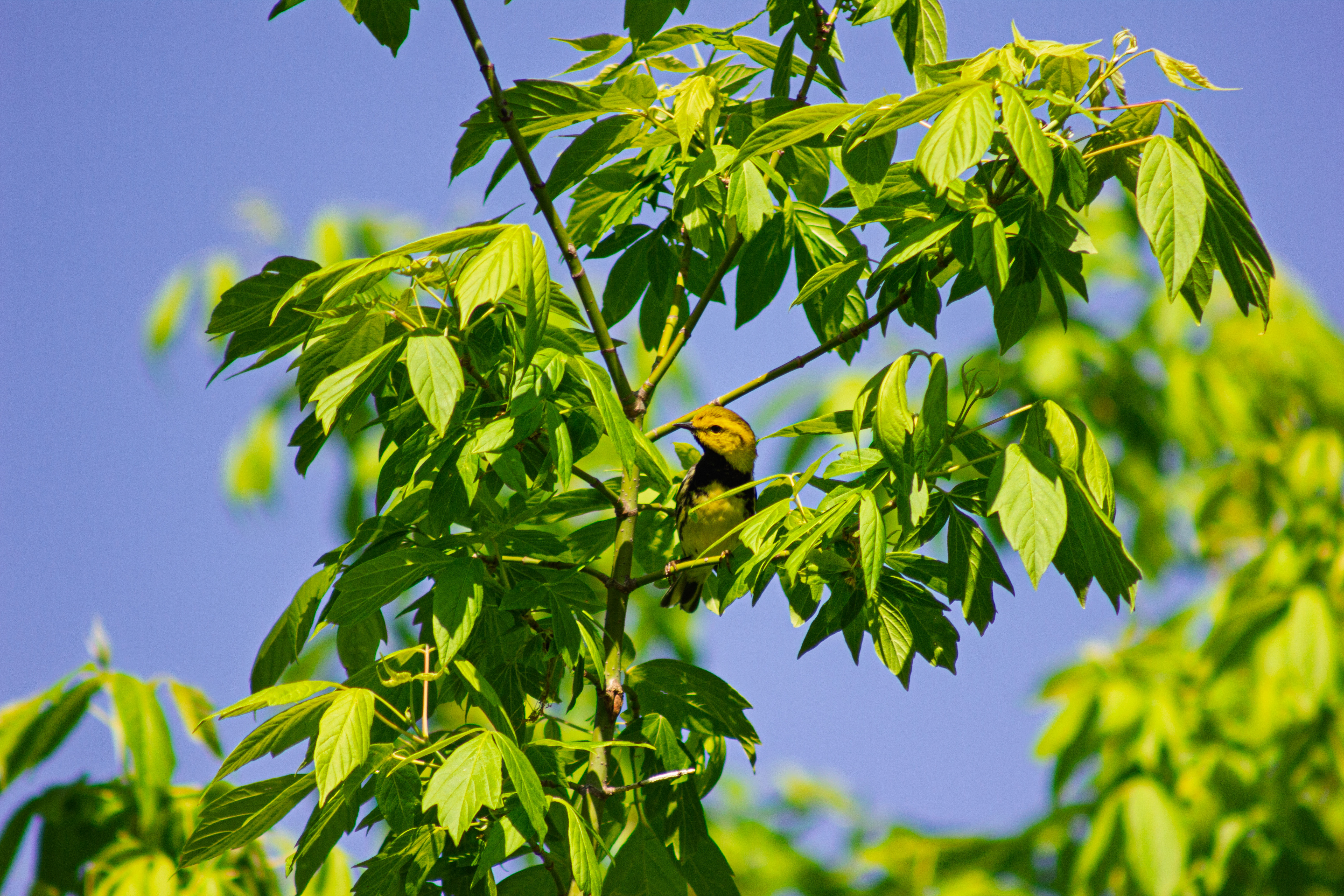

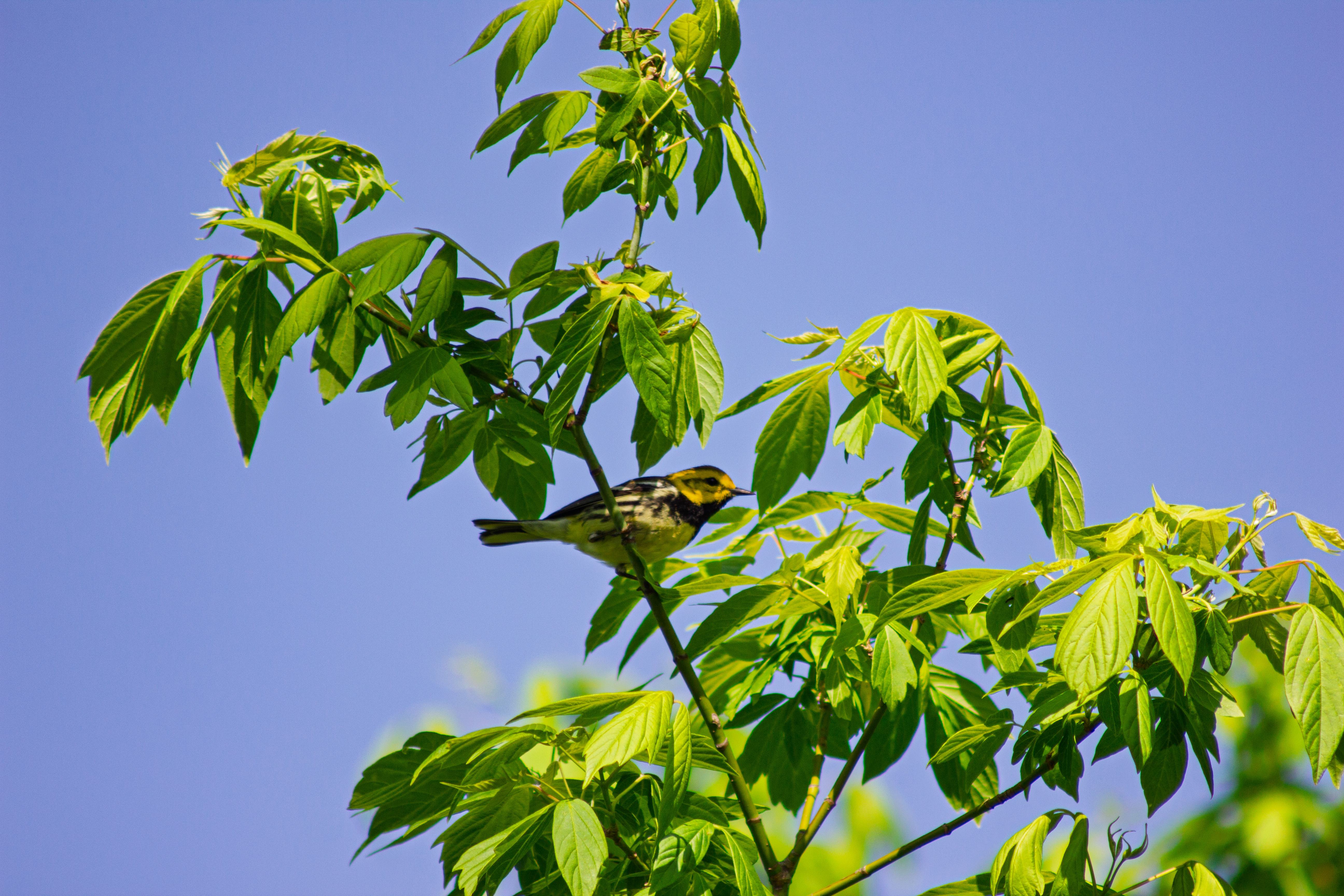
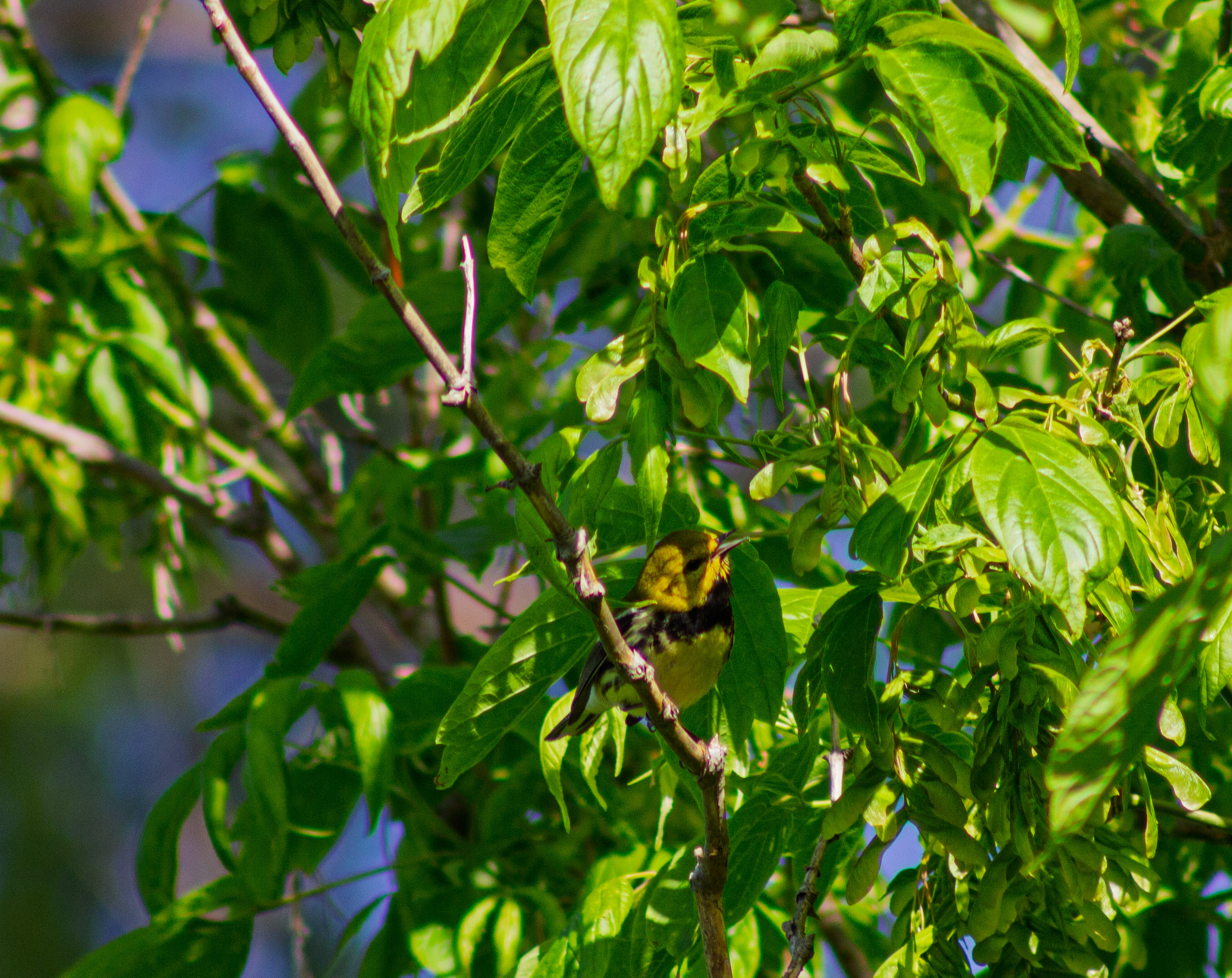


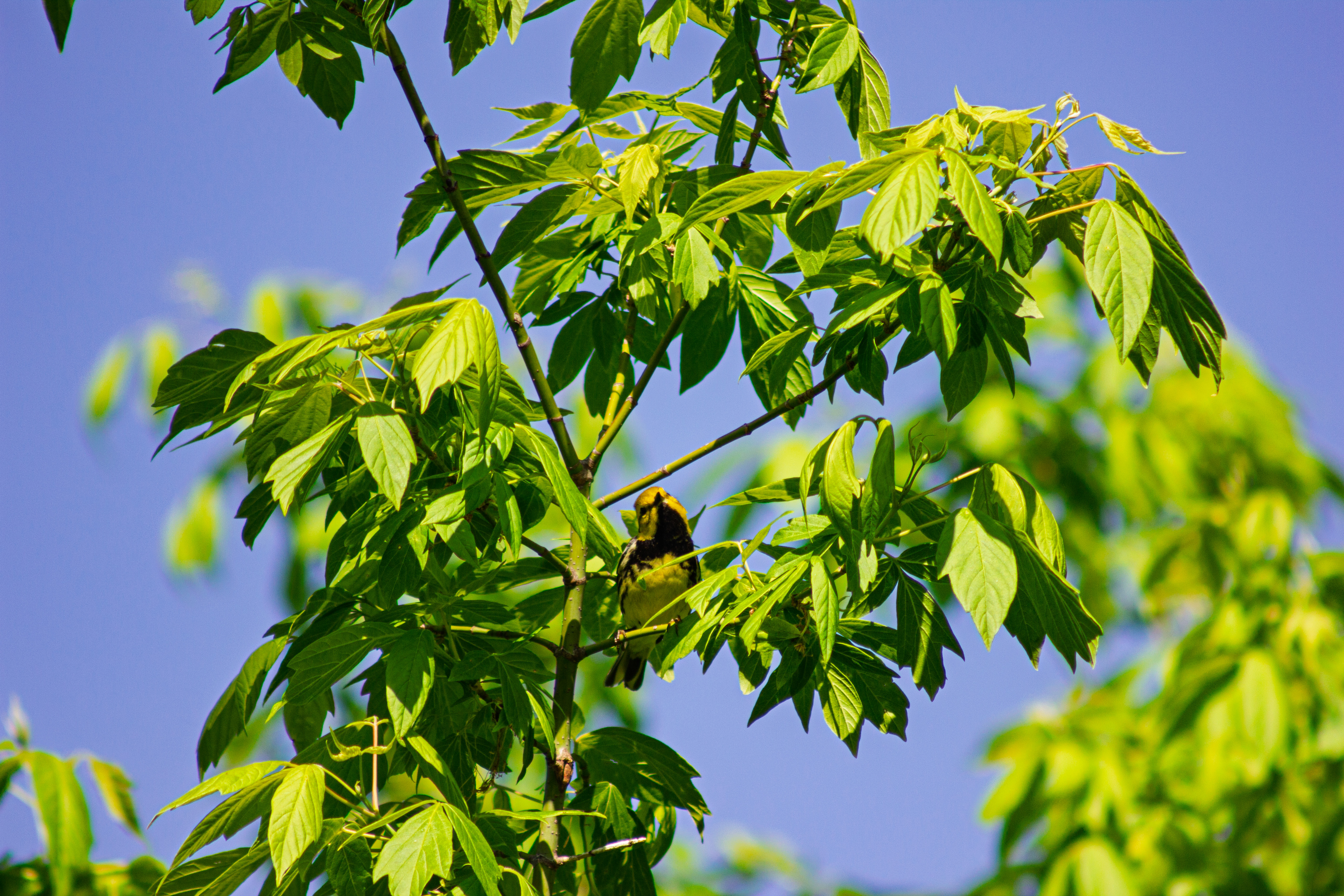
The Black-throated Green Warbler (Setophaga virens) is a small, colorful songbird found primarily in North America. It is known for its distinctive plumage, unique vocalizations, and seasonal migratory patterns. Here’s a detailed overview covering all major aspects of the species:
Physical Description
Size: About 11–12.5 cm (4.3–5 inches) in length.
Wingspan: 18–22 cm (7.1–8.7 inches).
Weight: 9–11 grams (0.32–0.39 oz).
Coloration: Males have a bright yellow face with olive-green crown and nape. A bold black throat and upper chest. Whitish belly and two white wing bars. Females and immatures have less black on the throat (sometimes grayish or olive-buff).
Distinctive features: Greenish back, yellow face, and black streaking on the flanks
Range and Distribution
Breeding Range:
Eastern Canada, from Newfoundland and Nova Scotia west to Manitoba. Northeastern United States, including the Appalachian Mountains
Wintering Range:
Southern Florida, Mexico, Central America (e.g., Honduras, Nicaragua), Caribbean islands, especially the Greater Antilles
Migration:
Migratory species, traveling long distances between breeding and wintering grounds, typically passing through the southeastern U.S., Gulf Coast, and Central America
Habitat
Breeding Habitat: Prefers coniferous or mixed forests. Especially found in spruce, fir, hemlock, and white pine regions. Also inhabits eastern deciduous forests in some areas.
Winter Habitat: Tropical evergreen forests. Coffee plantations, forest edges, and secondary growth
Behavior
Feeding: Primarily insectivorous: eats caterpillars, beetles, spiders, and flies. Forages actively by gleaning from foliage and twigs. May hover or sally to catch flying insects.
Song and Vocalizations: Distinctive two-pattern song: “zoo-zee-zoo-zoo-zee”: typical male song in breeding season. Alternate version sounds like “zee-zee-zee-zoo-zee”. Used for territorial defense and mate attraction. Also has chip calls used in alarm and contact.
Breeding: Monogamous; males defend territories during the breeding season. Nests are cup-shaped, built by the female. Typically located in conifers, about 1–10 meters above ground. Clutch size: 3–5 eggs. Incubation: 12–13 days; fledging: 10–11 days after hatching. Only the female incubates, but both parents feed the young
🔹 Conservation Status
IUCN Red List: Least Concern Population trends: Generally stable, but some declines due to habitat loss and climate change.
Threats: Deforestation in breeding and wintering ranges.
Climate change shifting suitable habitat northward. Collisions with buildings and towers during migration
Ecology and Interactions
Role in ecosystem: Important in insect population control.
Prey for hawks, snakes, and nest predators (e.g., squirrels, blue jays).
Hybridization: Occasional hybridization with Townsend’s Warbler and Hermit Warbler in western North America where ranges overlap
Interesting Facts
One of the few warbler species that frequently sings two different song types—and uses them for different social purposes. Males often return to the same breeding territory year after year. During migration, they can be found in mixed-species foraging flocks, including with other warblers.
 Wild Bird Journal
Leave a comment