
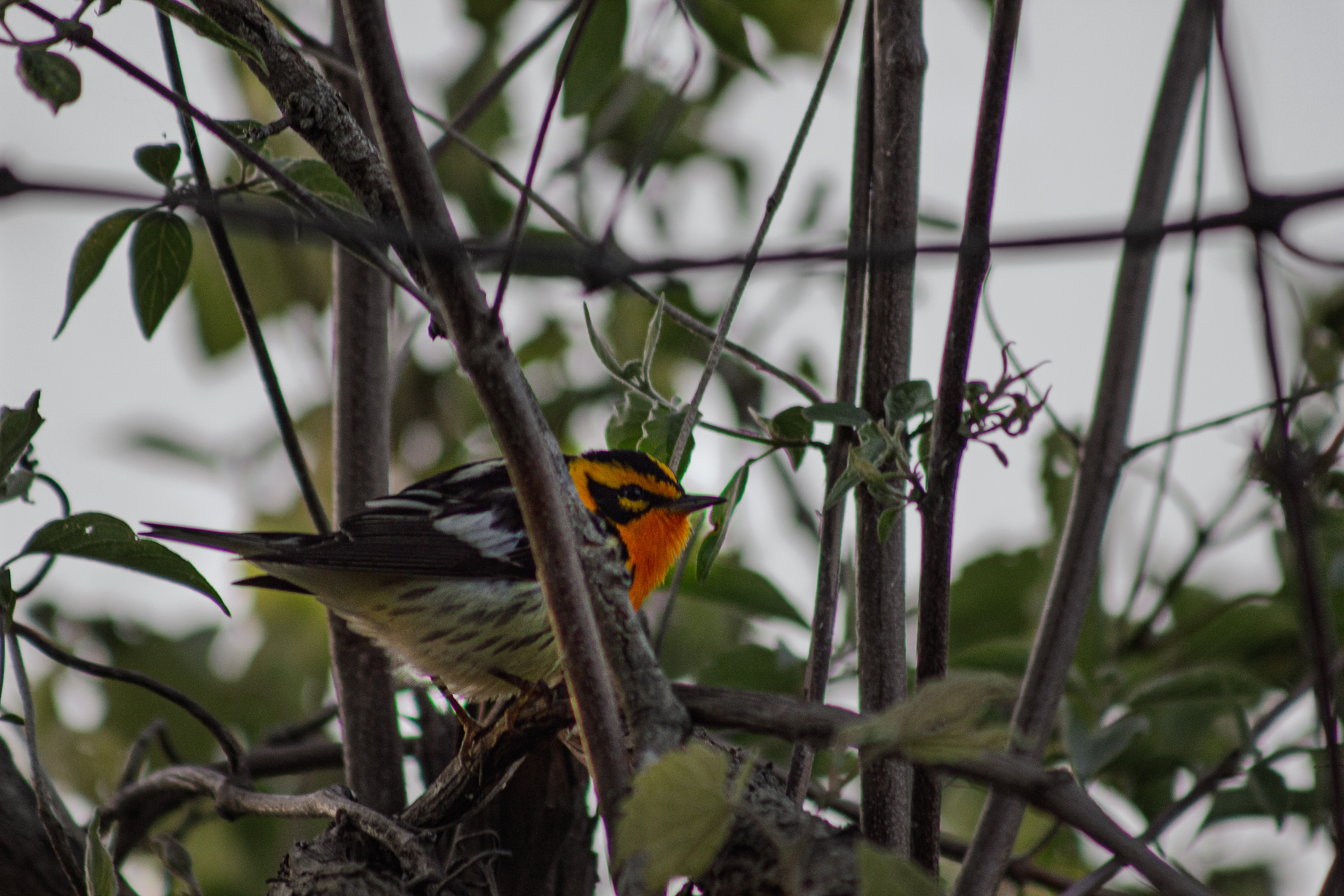

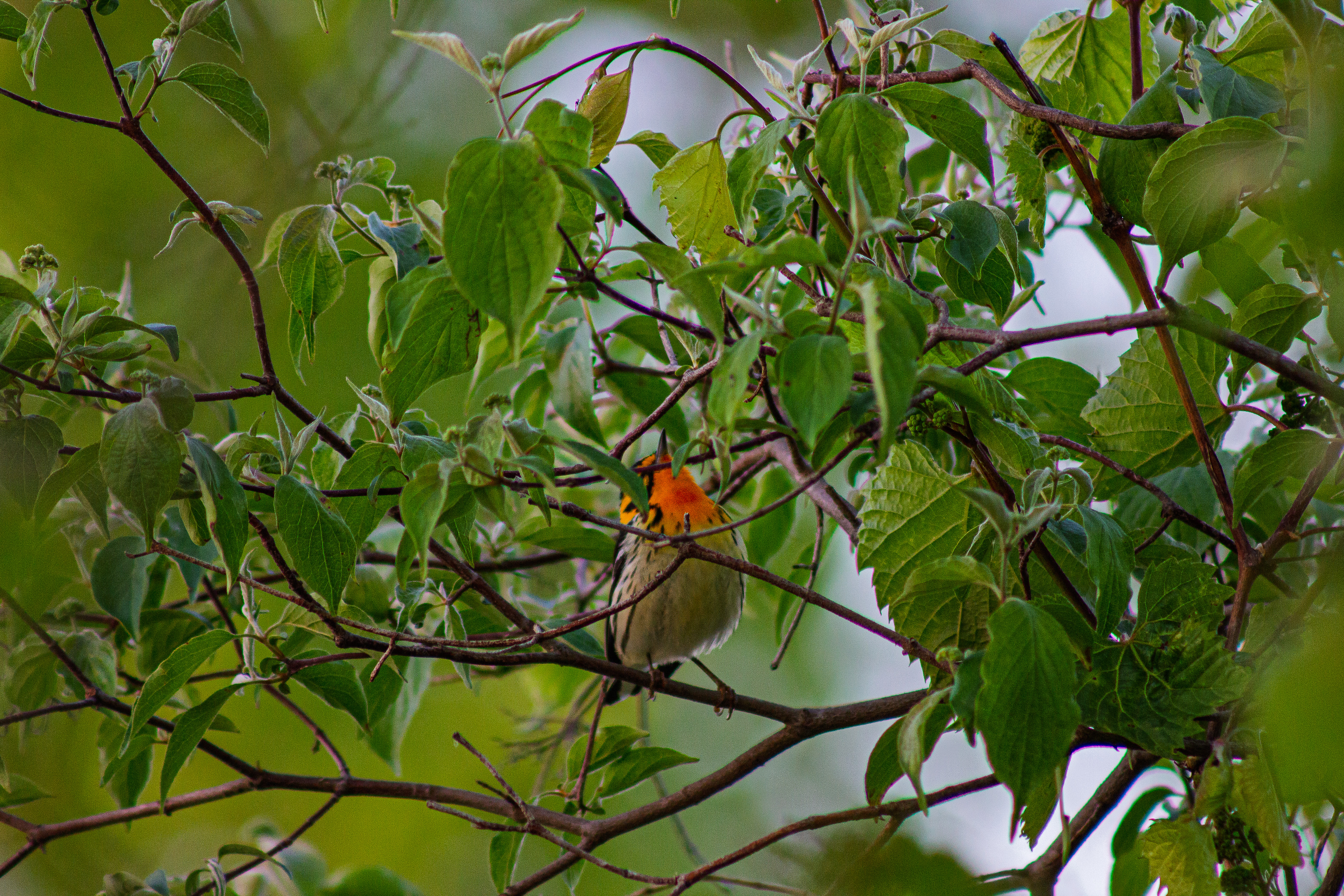
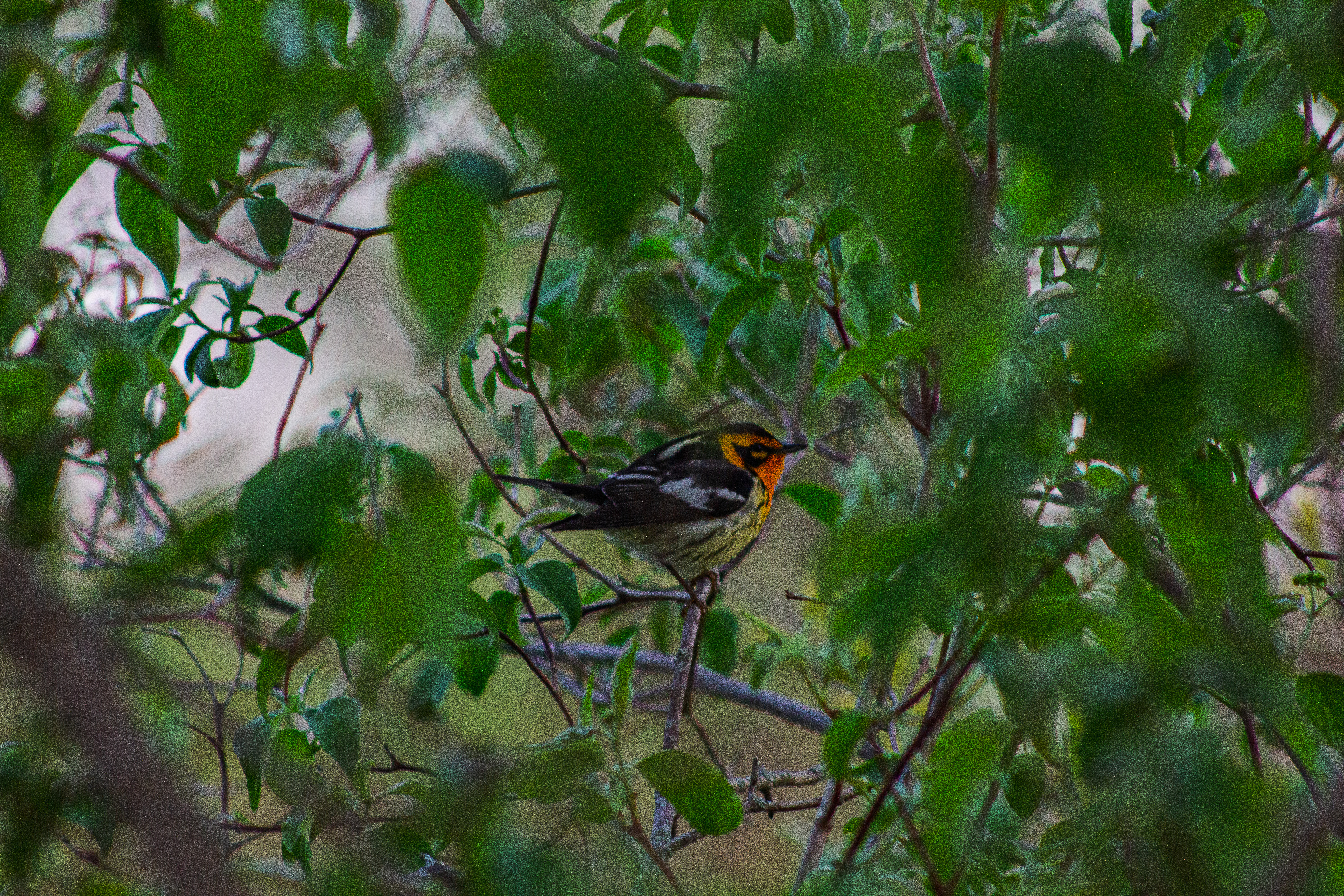
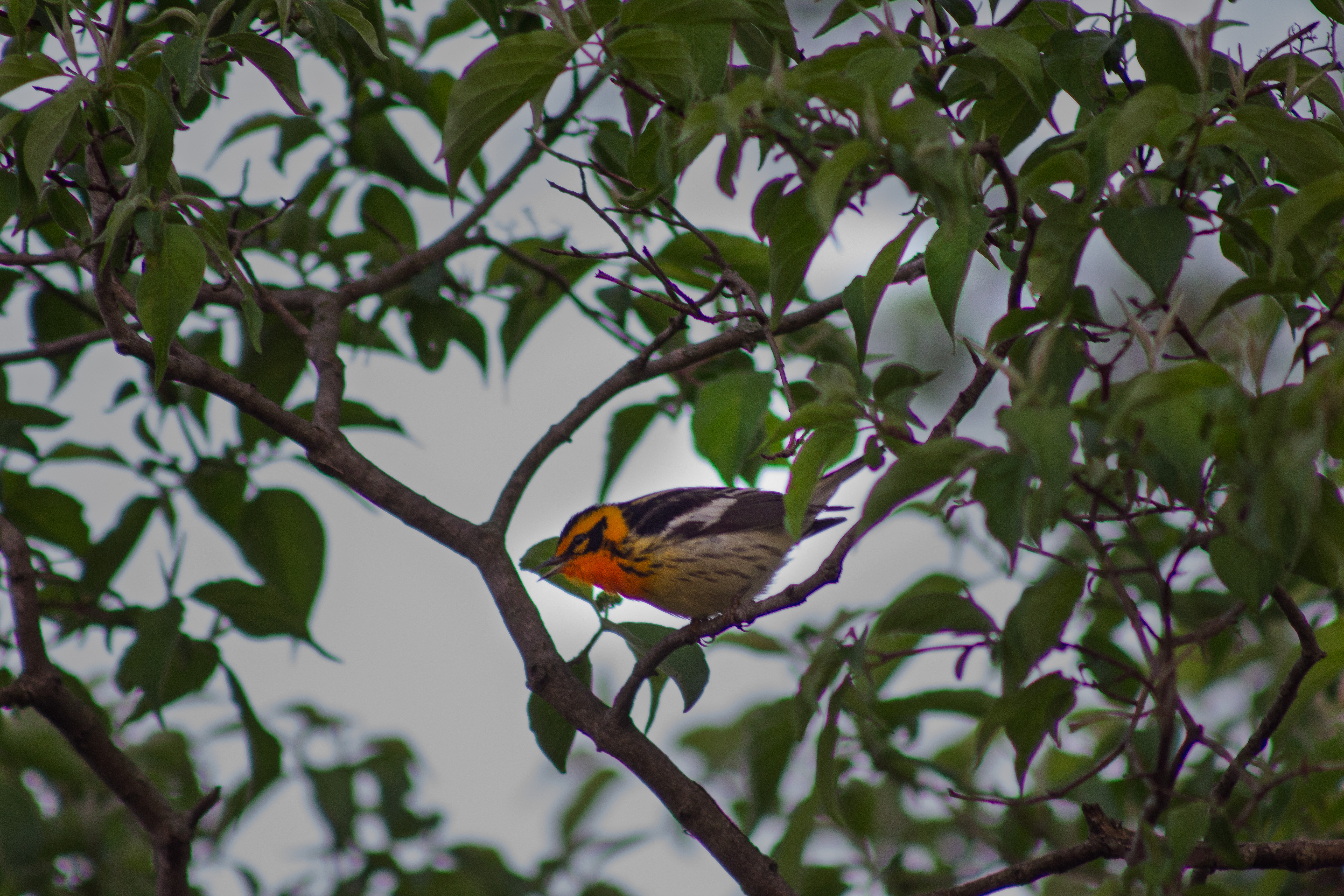

The Blackburnian Warbler (Setophaga fusca) is a striking and charismatic songbird native to the Americas. Known for its vivid coloration and high-pitched song, it is a favorite among birdwatchers and ornithologists. Here’s an in-depth profile covering taxonomy, appearance, habitat, behavior, migration, and more:
Physical Description
Size: Length: 11–13 cm (4.3–5.1 in) Wingspan: 20–22 cm (7.9–8.7 in).
Weight: 8–13 g (0.3–0.5 oz).
Plumage: Breeding Males: Brilliant flame-orange throat and face, contrasting with a black crown, black streaks on the sides, and white belly and wing patches.
Females: Duller overall, with a yellow-orange throat, olive-gray back, and more subdued markings.
Non-breeding & Juveniles: Lack the intense orange and black contrast; appear more yellow and olive, but still have distinctive face markings.
This warbler is often considered one of the most beautiful North American songbirds due to its vivid coloration.
Habitat
Breeding Grounds: Found in mature coniferous and mixed forests of northeastern North America, including parts of Canada and the northeastern U.S. Prefers tall spruce, fir, and hemlock trees.
Wintering Grounds: Migrates to montane and subtropical forests in Central America and the northern Andes, particularly Colombia, Ecuador, and Peru.
Migration: Long-distance migrant: Travels thousands of kilometers between North and South America. Migrates at night, like many warblers, often appearing in large numbers during spring and fall migration events in the eastern and southern U.S.
Diet & Foraging
Diet: Primarily insectivorous. Eats caterpillars, beetles, ants, spiders, and other arthropods. Occasionally consumes berries and nectar, especially during migration.
Foraging Behavior: Gleans insects from high in the forest canopy. Agile and active, often seen hopping among branches or hovering briefly to pick insects from foliage.
Vocalizations
Song: A thin, high-pitched series of “zip zip zip zip tsee”, usually ascending or accelerating toward the end.
Call: Sharp “tsip” or “tik” notes. The song is a key field mark during the breeding season and can be difficult to hear due to its high pitch, especially for older listeners.
Reproduction
Nesting: Nest is typically placed high in coniferous trees, well hidden in dense branches. Made of twigs, moss, bark strips, and lined with softer material.
Eggs: Clutch size: 3–5 eggs Eggs are pale, with brown or reddish speckling.
Incubation & Fledging: Female incubates eggs for about 12 days. Both parents feed the nestlings, which fledge after roughly 10–12 days.
Ecological Role
Predator Control: Helps control forest insect populations, especially caterpillars during outbreaks.
Prey Species: Eggs and nestlings are prey for snakes, squirrels, and jays. Pollination: Occasionally visits flowers for nectar, potentially aiding in pollination.
Conservation Status & Threats
IUCN Status: Least Concern. Population Trend: Declining moderately due to habitat loss and forest fragmentation.
Main Threats:
Breeding Habitat Loss: Logging and deforestation in northern forests.
Wintering Ground Destruction: Agricultural expansion and mining in the Andes.
Climate Change: Alters timing of insect emergence and availability of nesting habitats.
Window Collisions: Like many migratory birds, faces risks from urban environments.
Interesting Facts
The Blackburnian Warbler is the only warbler with an orange throat, a trait that distinguishes it from all other species. Despite its small size, it makes an epic migratory journey between continents twice a year. It often joins mixed-species foraging flocks in the tropics, especially during the non-breeding season.
 Wild Bird Journal
Leave a comment