
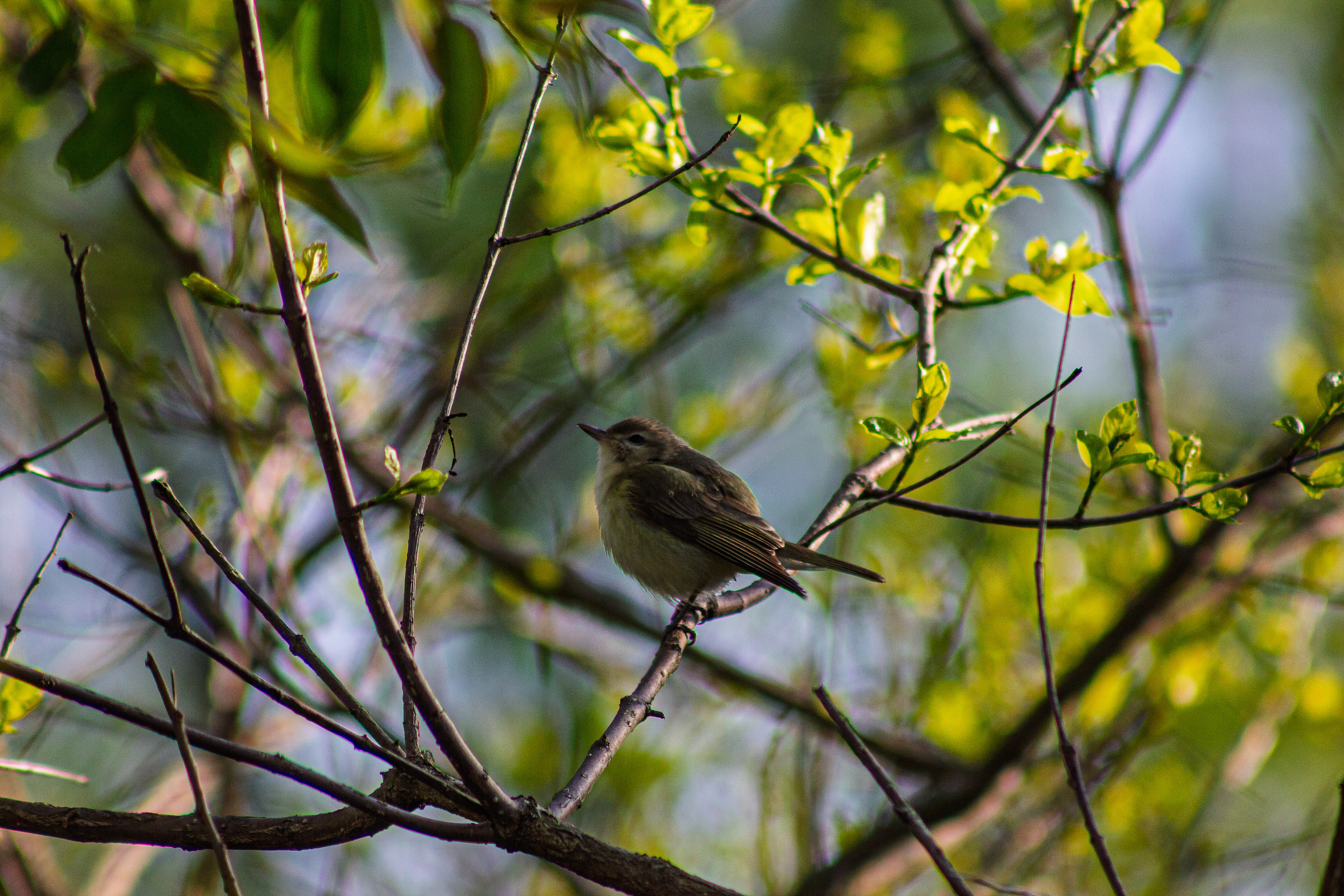
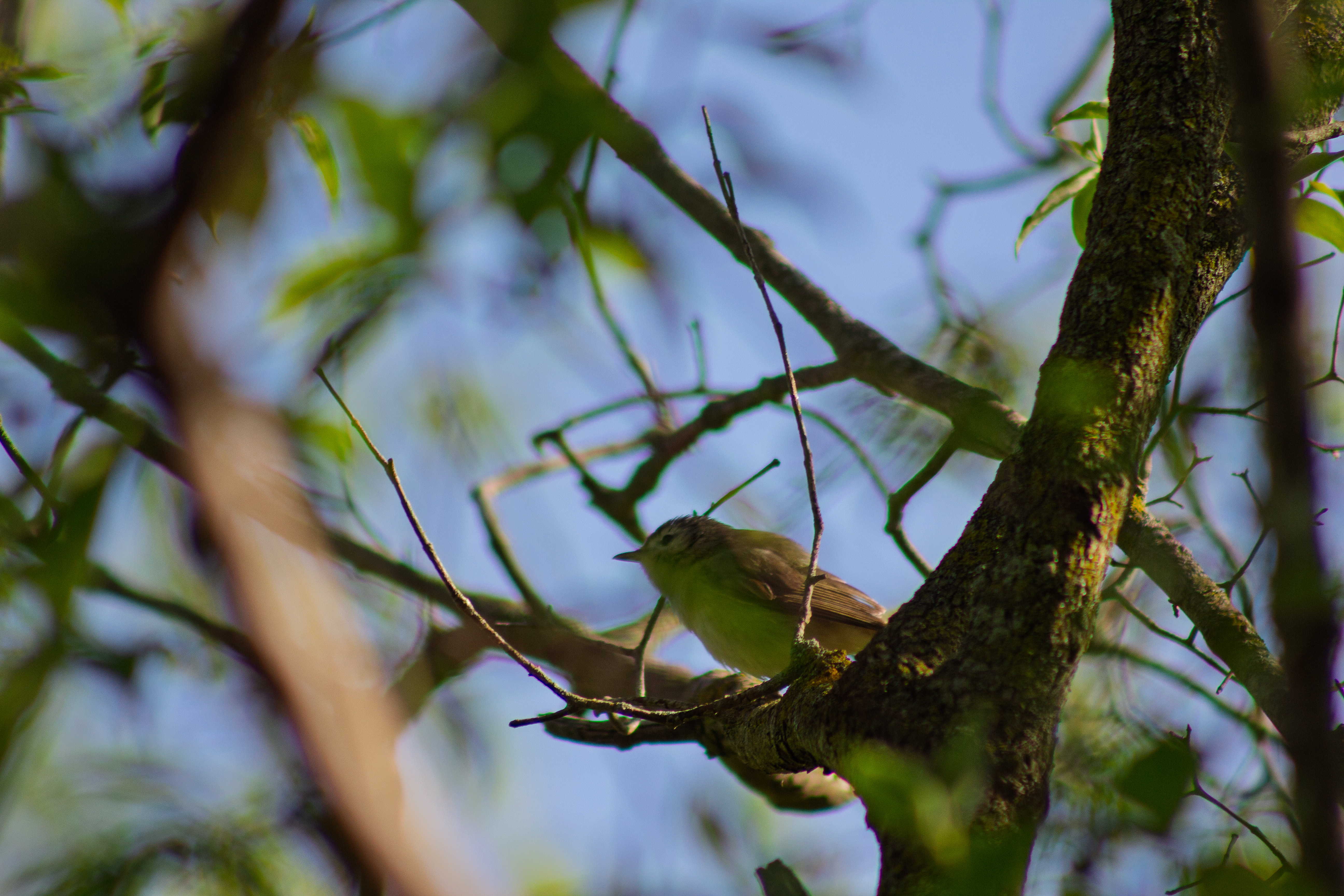

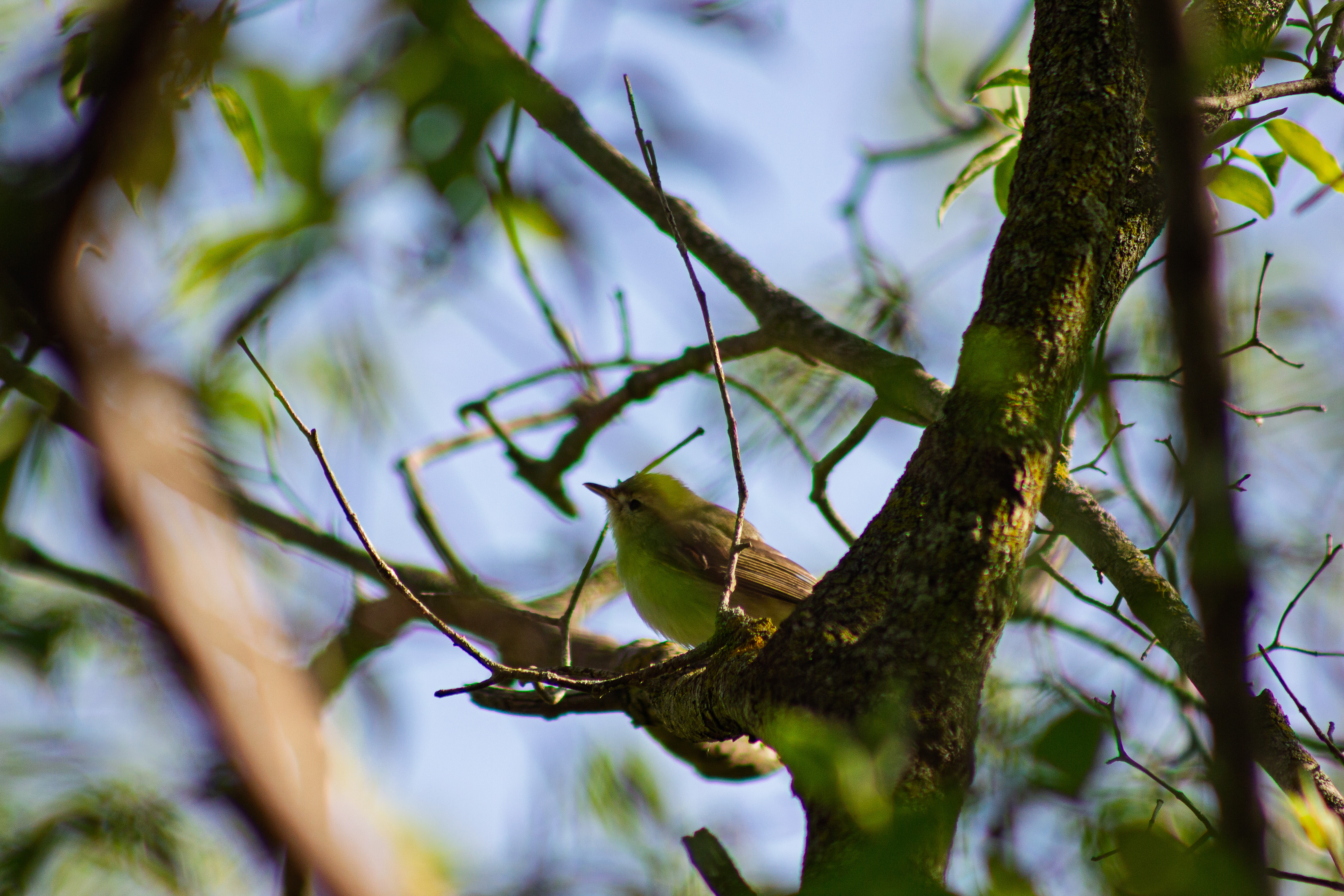
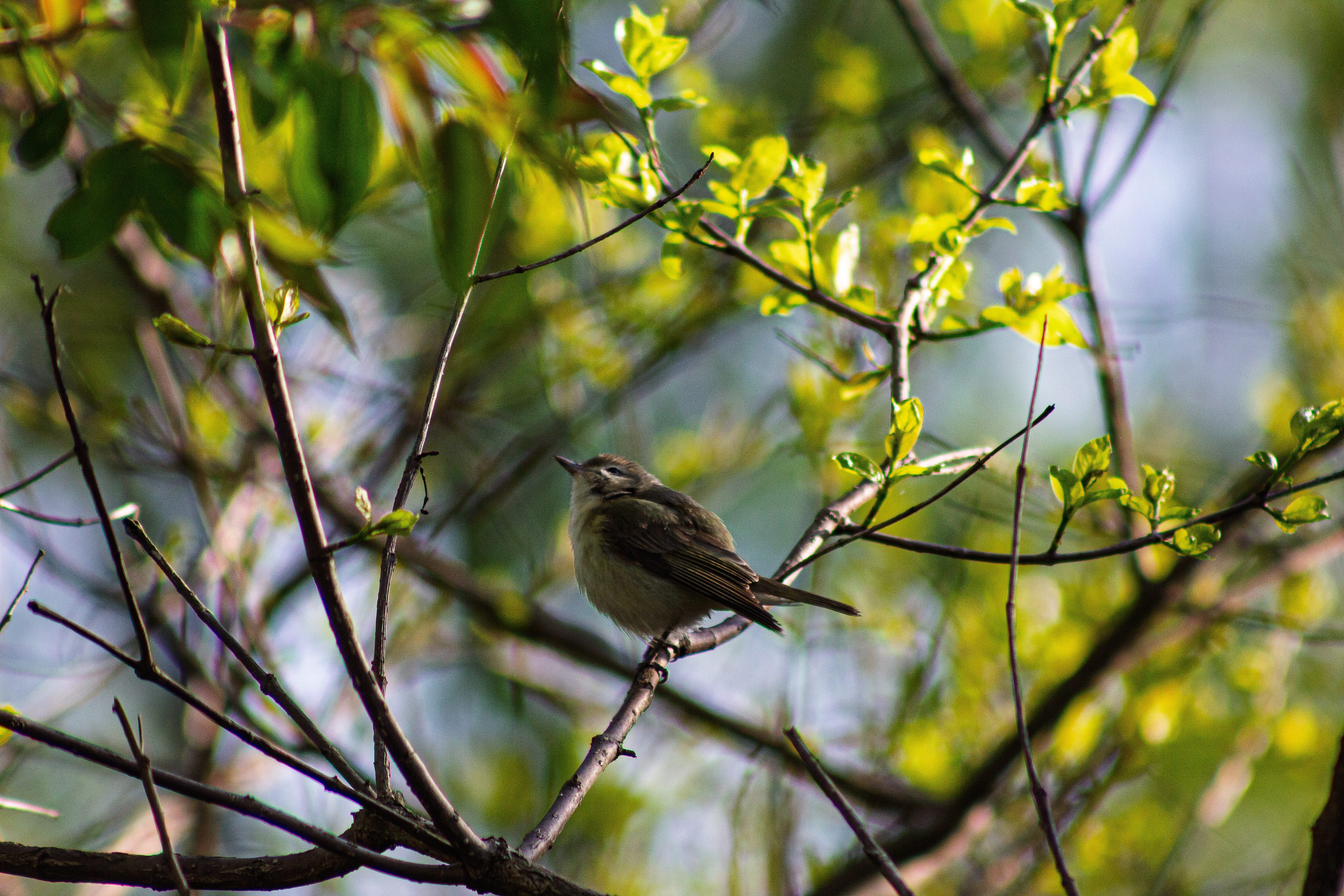
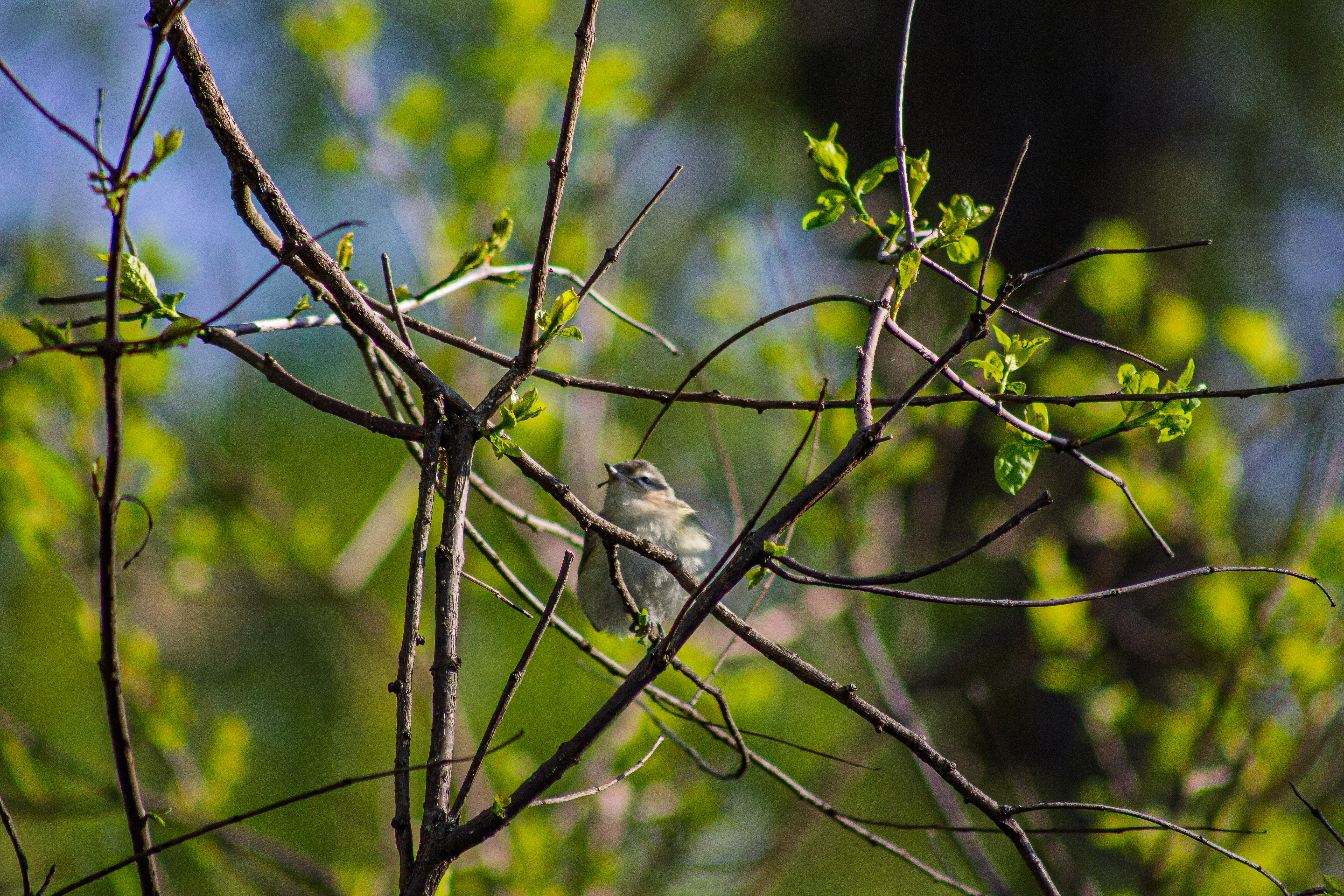
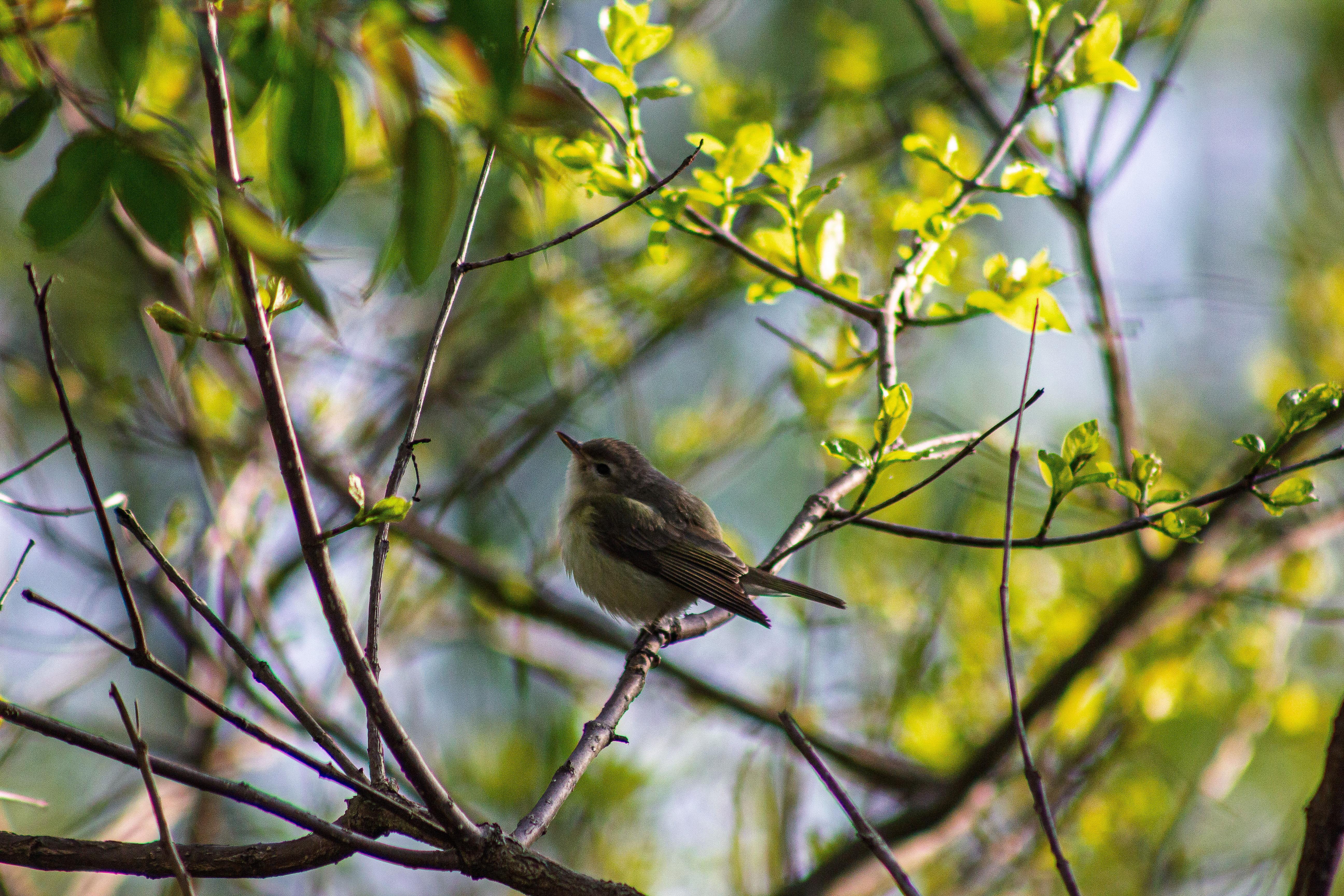
The Warbling Vireo is a small, inconspicuous songbird found across much of North America during the breeding season. Despite its drab appearance, it is beloved by birders and naturalists for its long, cheerful, warbling song, often heard high in the trees throughout spring and summer.
Physical Description
Size: 12–13 cm (4.7–5.1 in). Weight: 10–16 g (0.35–0.56 oz). Wingspan: ~22 cm (8.5 in)
Plumage: Olive-gray upperparts. Whitish underparts with a faint yellowish wash on the sides (more in western birds). Grayish crown with a whitish supercilium (eyebrow line). No wing bars. Thin, slightly hooked bill (typical of vireos). Sexes look alike, and juveniles resemble adults but may appear duller.
Vocalizations
The Warbling Vireo is best known for its long, bubbly warbling song, which sounds like:
“If I see you I will seize you and I’ll squeeze you till you squirt!” — a mnemonic used by birders. The song consists of a rapid series of musical notes. Males sing persistently throughout the breeding season, often from high perches. Their call note is a soft, whiny “cheee”.
Habitat
Breeding habitat: Deciduous and mixed woodlands, especially near water. Common in cottonwood groves, aspen stands, riparian corridors, urban parks, and suburban neighborhoods.
Elevation range: From sea level to over 10,000 feet in the western U.S. During migration and winter, they are found in semi-open forests, shrublands, and coffee plantations in Central America.
Geographic Range
Migration: Long-distance migrant. Wintering: Southern Mexico to Central America, including Honduras and Nicaragua
Breeding: Across most of southern Canada and the U.S. (excluding the Southeast). V. g. gilvus: Eastern and Central North America. V. g. swainsonii: Western U.S. and southwestern Canada.
Behavior
Feeding: Primarily insectivorous (caterpillars, beetles, flies, aphids, etc.). Also eats spiders and some fruit (especially in fall and winter). Forages deliberately among leaves and branches, often high in trees.
Breeding:. Monogamous pair bonds. Male arrives first and sings to establish territory. Nest: a deep, hanging cup woven from grasses, bark strips, and spider webs, suspended from a forked tree branch. Female builds the nest and incubates the eggs.
Eggs: Clutch size: 3–5 eggs. Eggs are white with dark spots. Incubation: ~12–14 days. Both parents feed the young. Fledging: ~13–14 days after hatching. Territorial: Males vigorously defend their nesting territory through song and chasing intruders.
Migration
Warbling Vireos are neotropical migrants. They leave breeding grounds in August–September and arrive in Central America by October.
Return migration begins in April, with arrival on breeding grounds from late April to May. Migration is mostly nocturnal.
Predators and Threats
Nest predators: snakes, squirrels, jays, and domestic cats.
Cowbird parasitism: frequent victims of Brown-headed Cowbirds, which lay eggs in vireo nests and reduce vireo nesting success.
Habitat loss: urbanization and deforestation, especially of riparian corridors, impact breeding and wintering habitat
Conservation Status
IUCN Red List: Least Concern. Population trend: Stable to slightly declining in some areas.
This species is common and widespread but can be sensitive to riparian habitat degradation, especially in the arid western U.S.
Fun Facts
The Warbling Vireo’s song varies slightly between eastern and western populations. Some ornithologists propose splitting them into two separate species based on vocal and genetic differences. They are among the earliest-arriving vireos in spring migration. Though visually plain, their constant singing makes them easy to locate during the breeding season.
Similar Species
Philadelphia Vireo (Vireo philadelphicus): shorter tail, more yellow on underparts, shorter song.
Red-eyed Vireo (Vireo olivaceus): more strongly marked head pattern, red eye, larger size.
Tennessee Warbler (Leiothlypis peregrina): more active, tail often flicked, thinner bill
 Wild Bird Journal
Leave a comment