
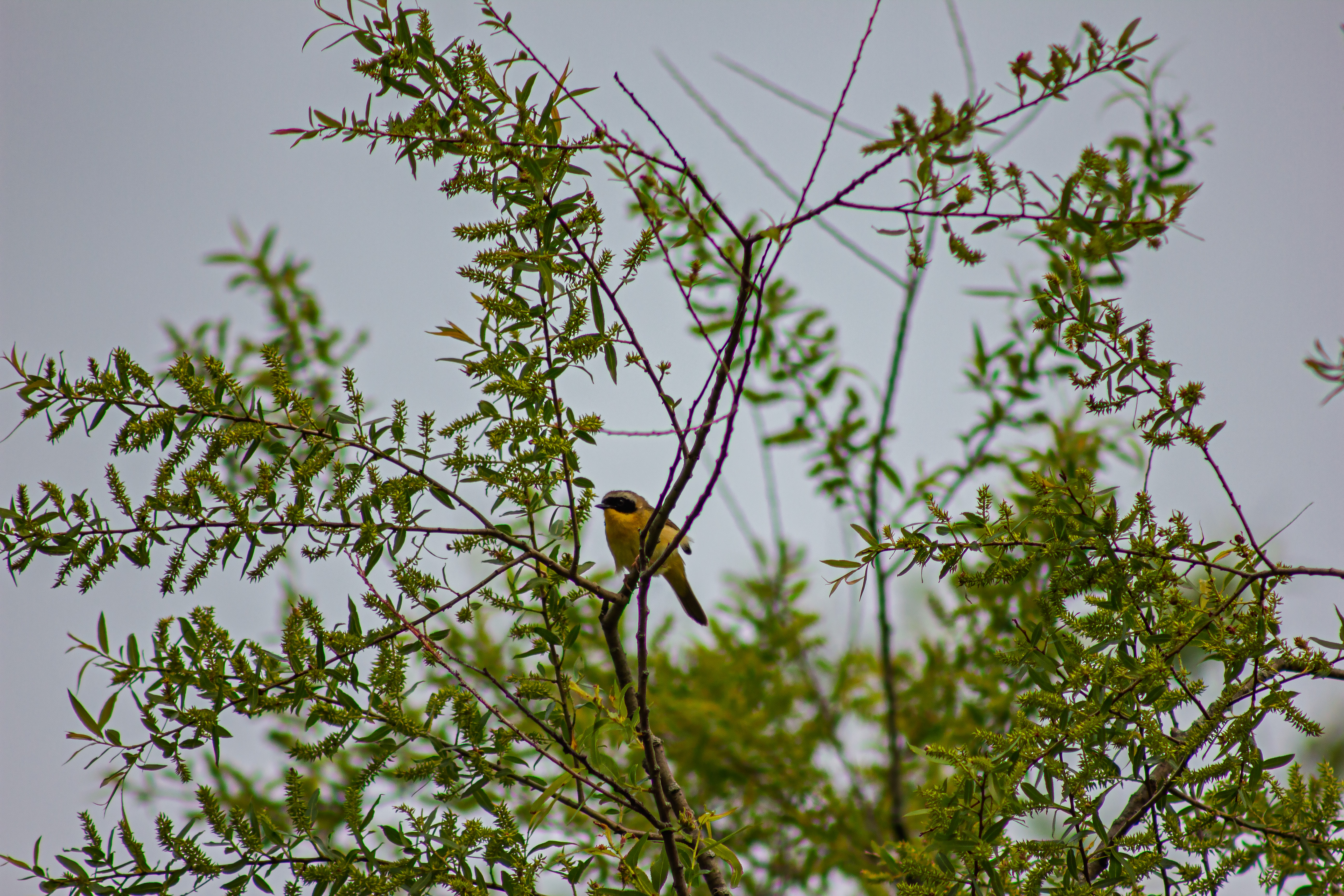
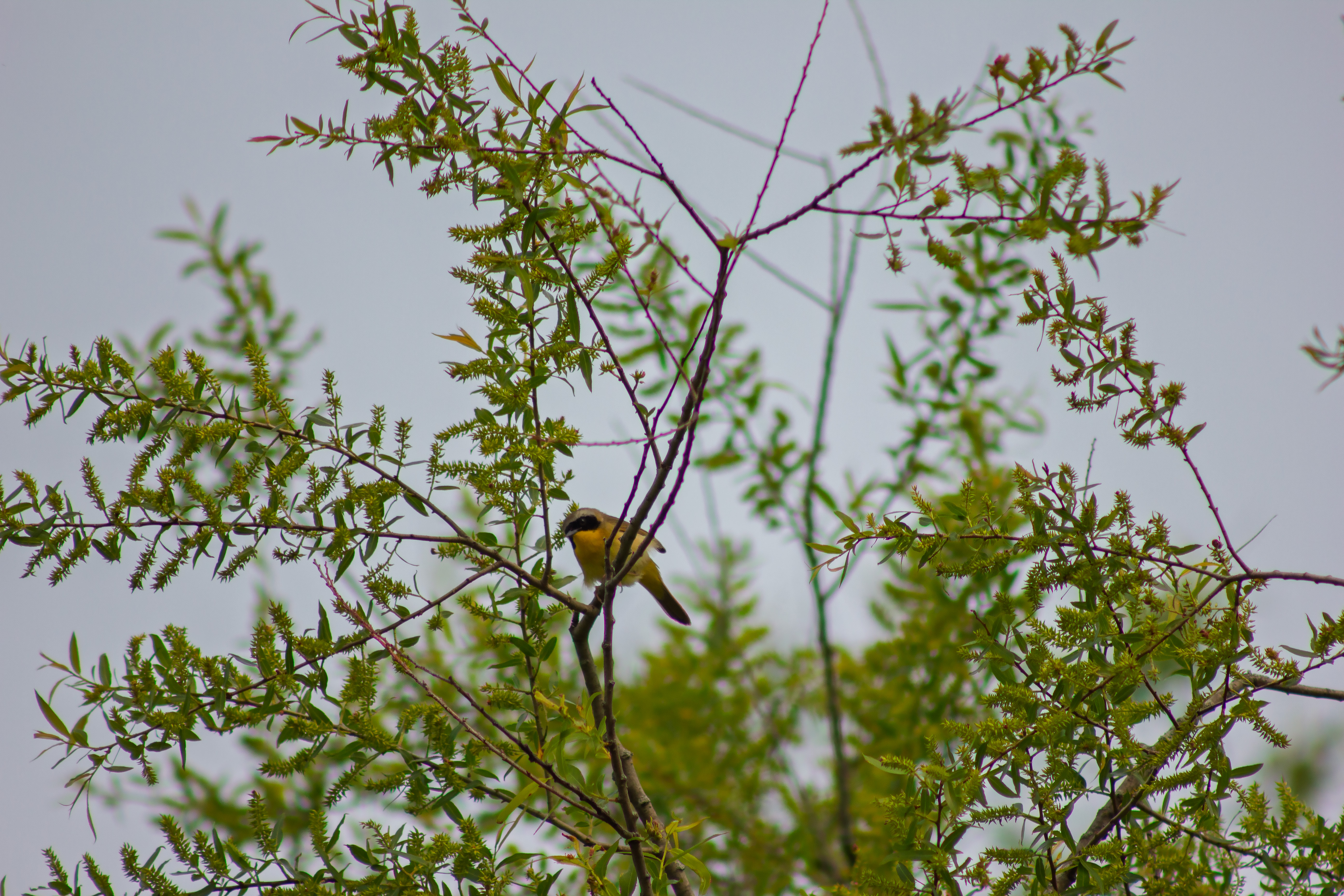
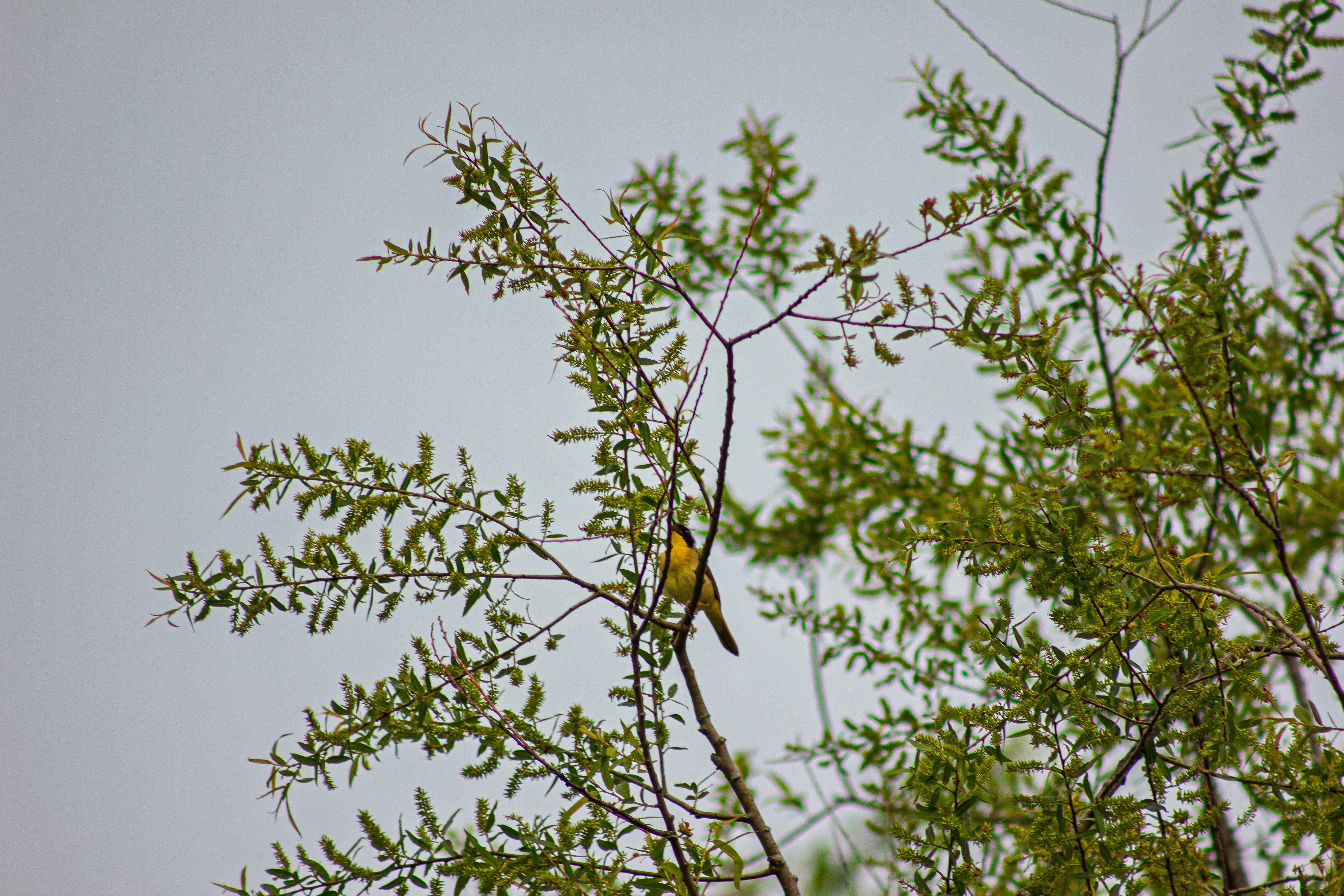
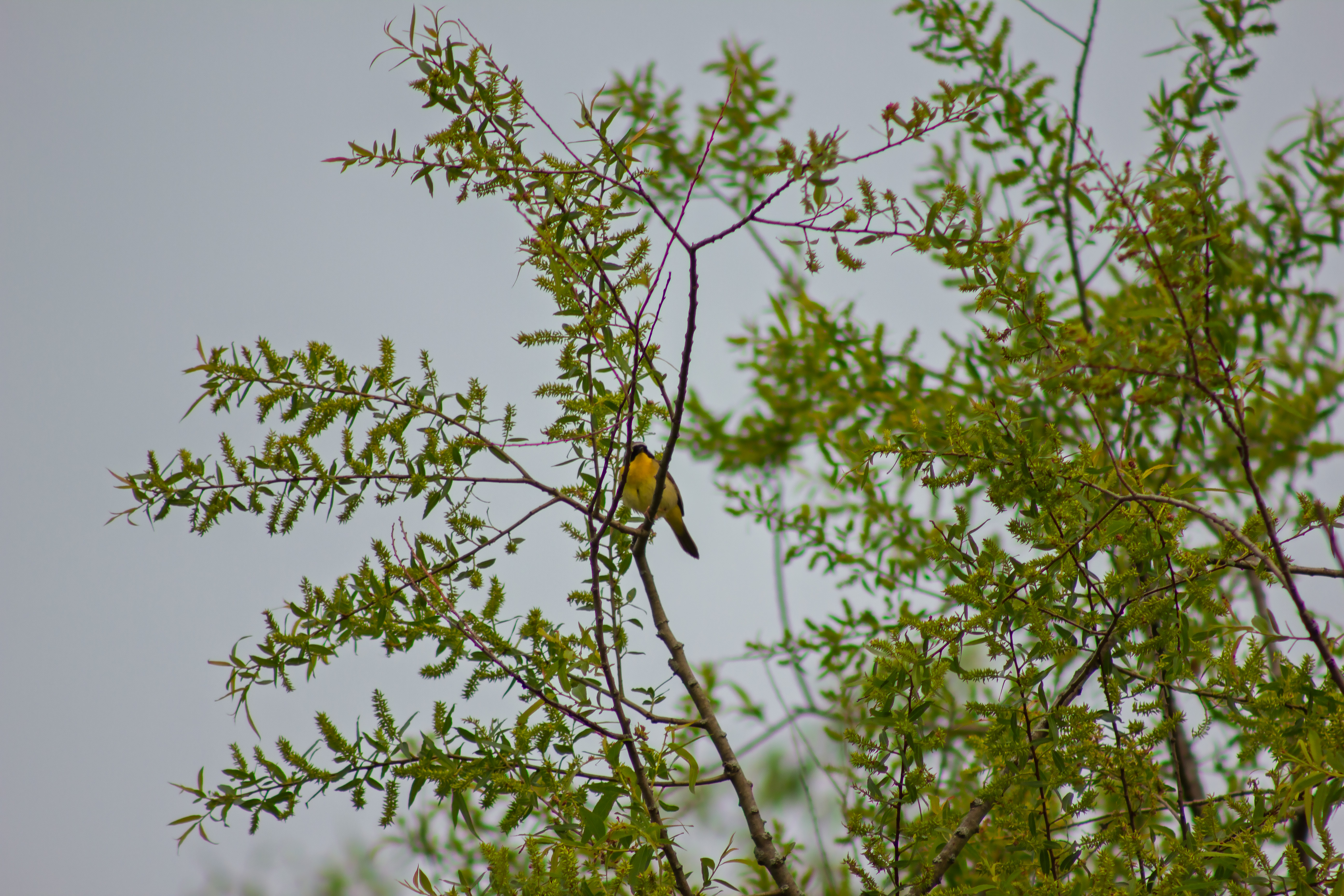
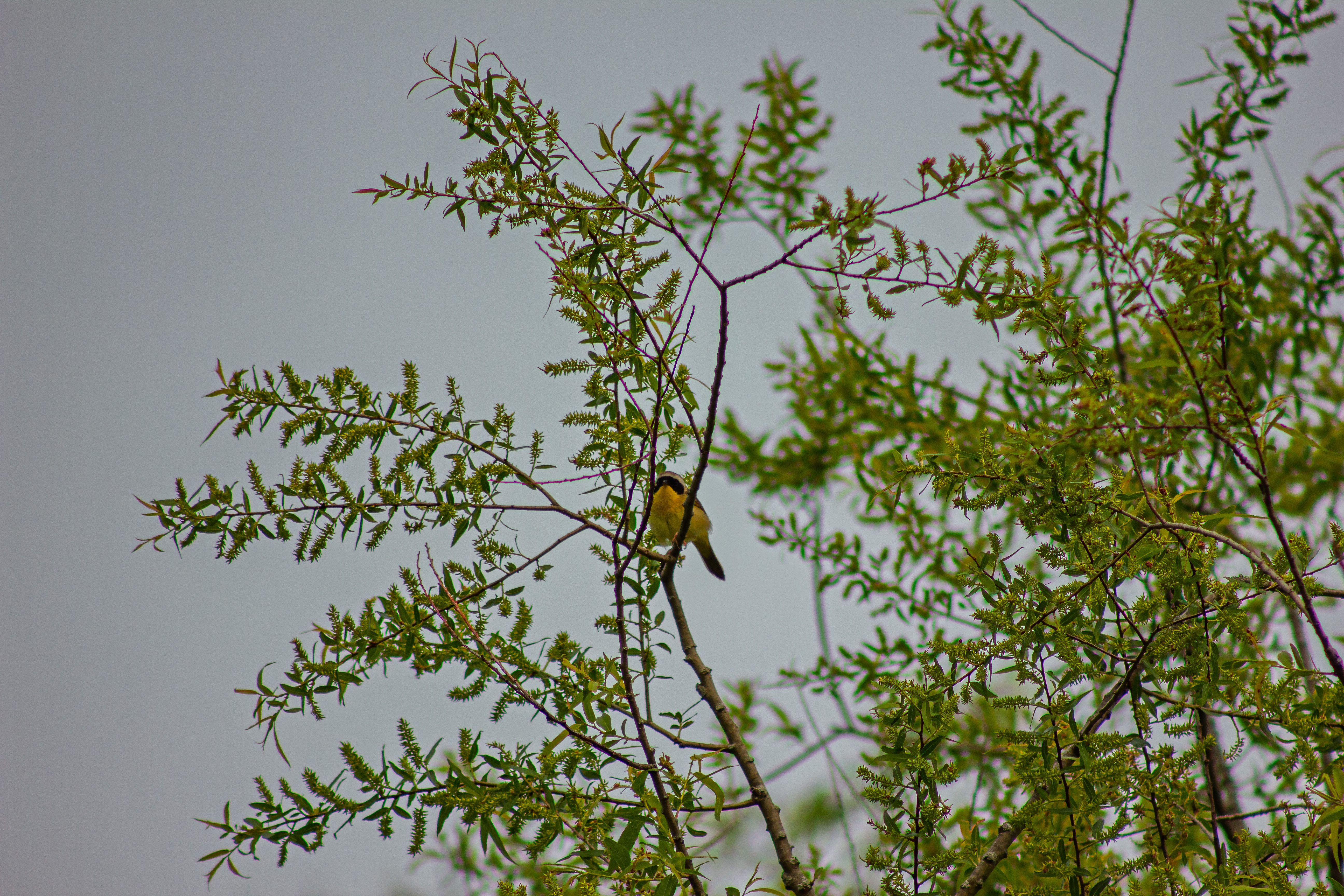
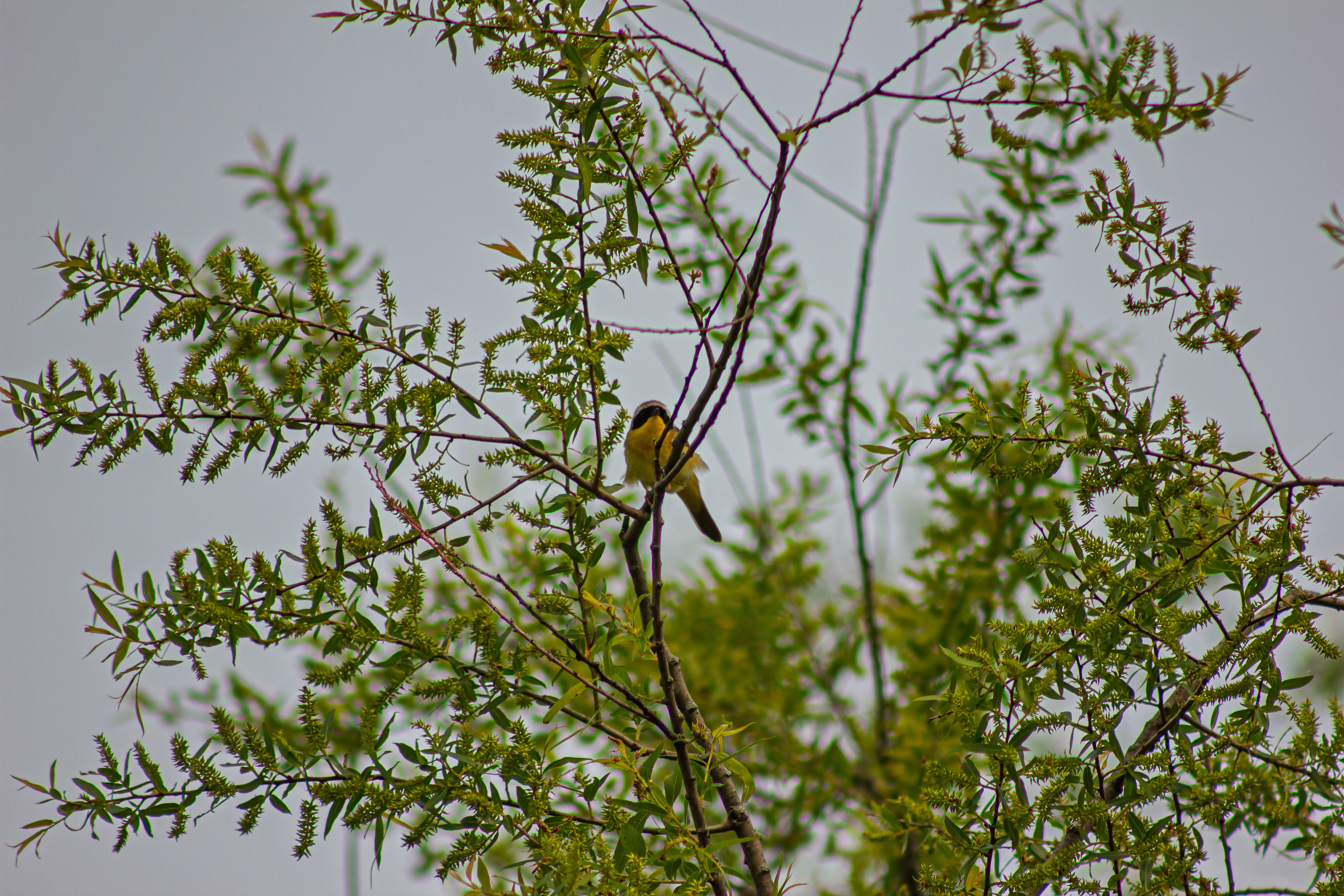
The Common Yellowthroat (Geothlypis trichas) is a small, energetic warbler widely distributed across North America. Known for its distinctive appearance and catchy song, this bird is a favorite among birdwatchers and a frequent inhabitant of marshy or brushy areas.
Physical Description
Males: Bright yellow throat and upper chest.
Black mask across the eyes and forehead, edged above with a white or gray border. Olive-brown upperparts and crown.
Pale underparts below the yellow breast. Small, rounded body with a relatively short tail and slightly curved bill. Females: Lack the black mask. More muted yellow on the throat.
Overall olive-brown coloration with paler underparts.
Size: Length: 4.3–5.1 in (11–13 cm).
Wingspan: 5.9–7.5 in (15–19 cm).
Weight: 0.3–0.4 oz (9–11 g)
Range and Distribution
Breeding Range: Across most of the U.S. and southern Canada, especially in areas with dense vegetation and wetlands.
Wintering Range: Southeastern U.S., Mexico, Central America, and the Caribbean.
Migratory Behavior: Long-distance migrant in northern populations; southern birds may be year-round residents
Habitat
Prefers wet, brushy, or marshy areas.Common in cattail swamps, reed beds, overgrown fields, forest edges, and roadside thickets. Requires dense low vegetation for foraging and nesting
Diet and Foraging
Insectivorous Feeds on: Caterpillars, beetles, flies, ants, spiders. Occasionally consumes seeds and small fruits. Forages in low vegetation, often flicking its tail and making quick hops through tangles and shrubs.
Will sometimes “sally” out from cover to catch flying insects mid-air
Breeding and Nesting
Breeding Season: May to July (varies by region).
Nesting: Females build a cup-shaped nest on or near the ground, hidden in thick vegetation. Constructed with grasses, bark, and sedges.
Eggs: 3–5 eggs per clutch. Creamy white with brownish speckling. Incubation: 12 days (female only).
Fledging: Nestlings leave the nest after about 8–10 days
Vocalizations
Song: A distinctive, rolling “witchety-witchety-witchety” often heard during spring and summer. Call: Harsh “chack” or “chep” notes, especially when alarmed. Males sing to attract mates and defend territories
Behavior
Very secretive; often heard before being seen. Males are territorial during breeding season. Tail often held cocked and flicked frequently. Does not form large flocks; typically seen alone or in pairs
Parental Behavior
Only the female incubates the eggs. Both parents feed the young. May raise 2 broods per season in southern areas
Interesting Facts
Frequently parasitized by Brown-headed Cowbirds. Males may sing up to 150 songs per hour. Despite bright colors, can be hard to see due to skulking behavior
Conservation Status
IUCN Red List: Least Concern Population Trend: Stable overall, but vulnerable to habitat loss and degradation of wetlands. Still widespread and among the most abundant warblers in North America
Identification Tips
Look for the bright yellow throat and olive back. Males have unmistakable black mask. Most often found low in thickets or reed beds. Song is a key aid in detection
Ecological Role
Helps control insect populations. Prey for small raptors and snakes. Hosts to cowbird parasitism, which may affect local population dynamics
 Wild Bird Journal
Leave a comment