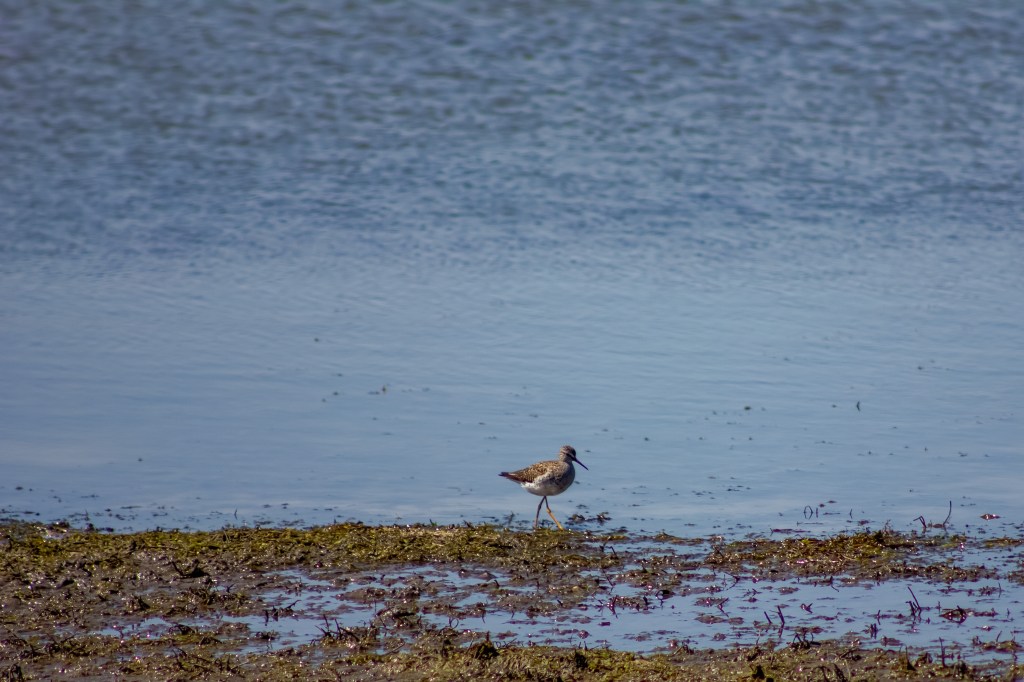
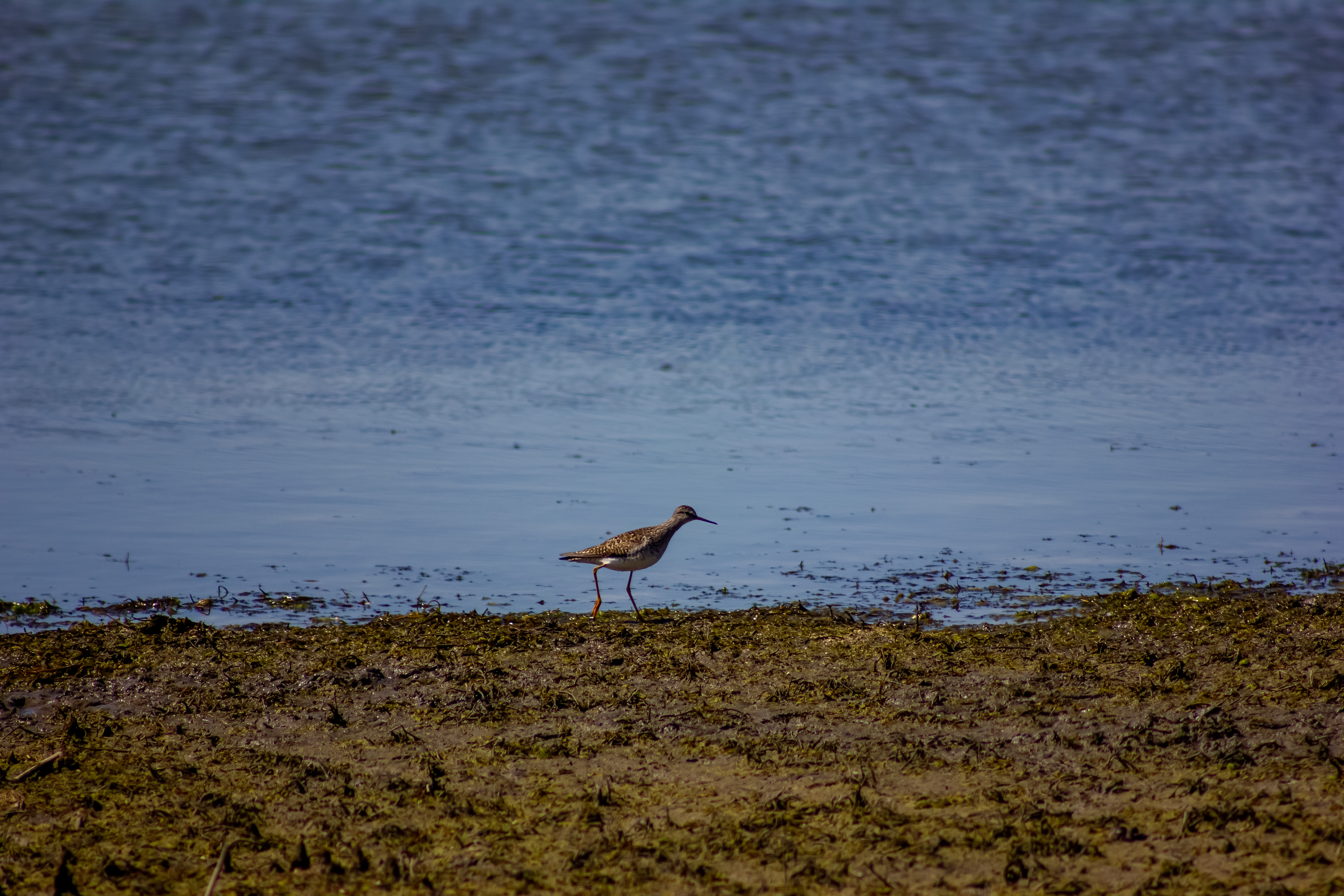
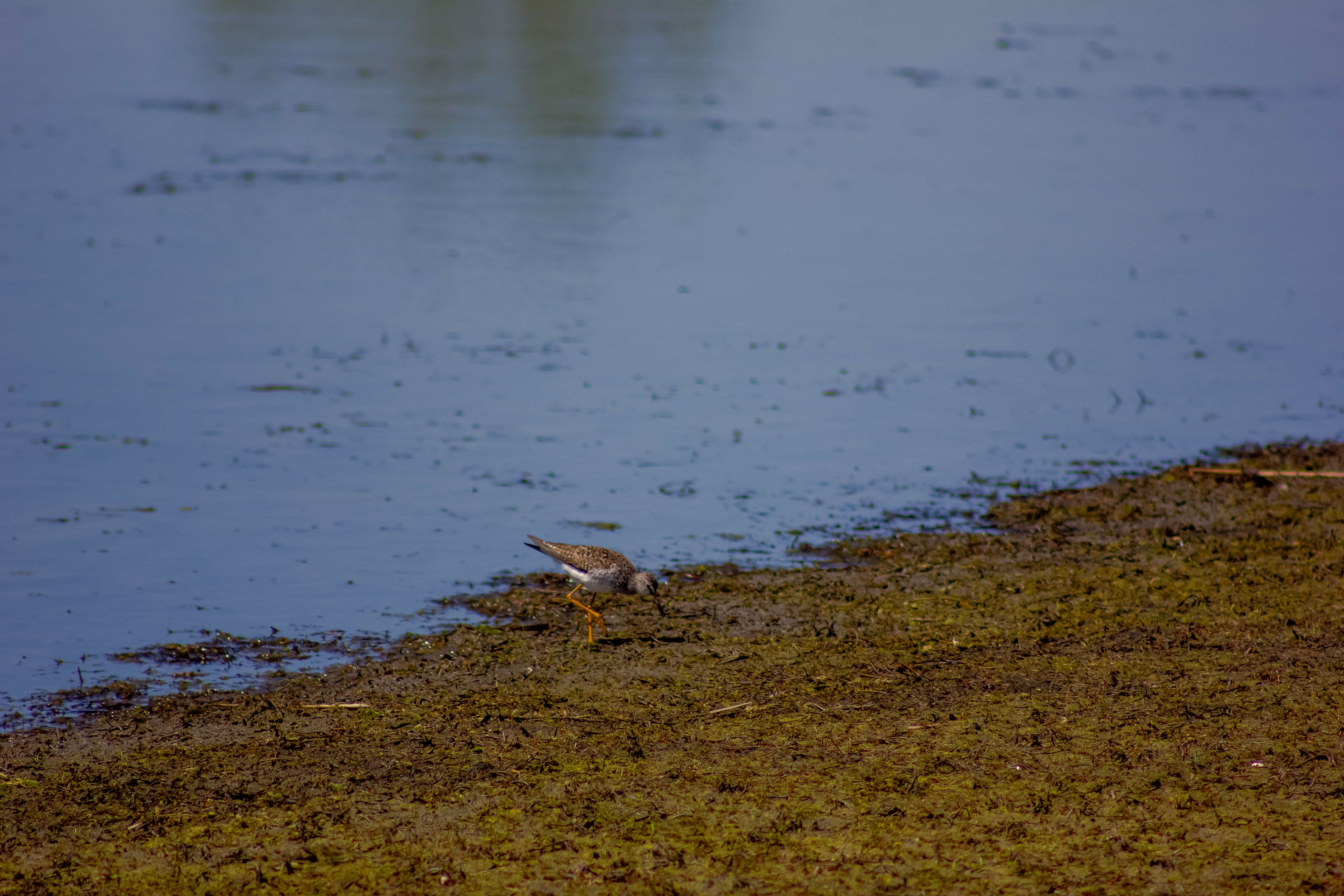
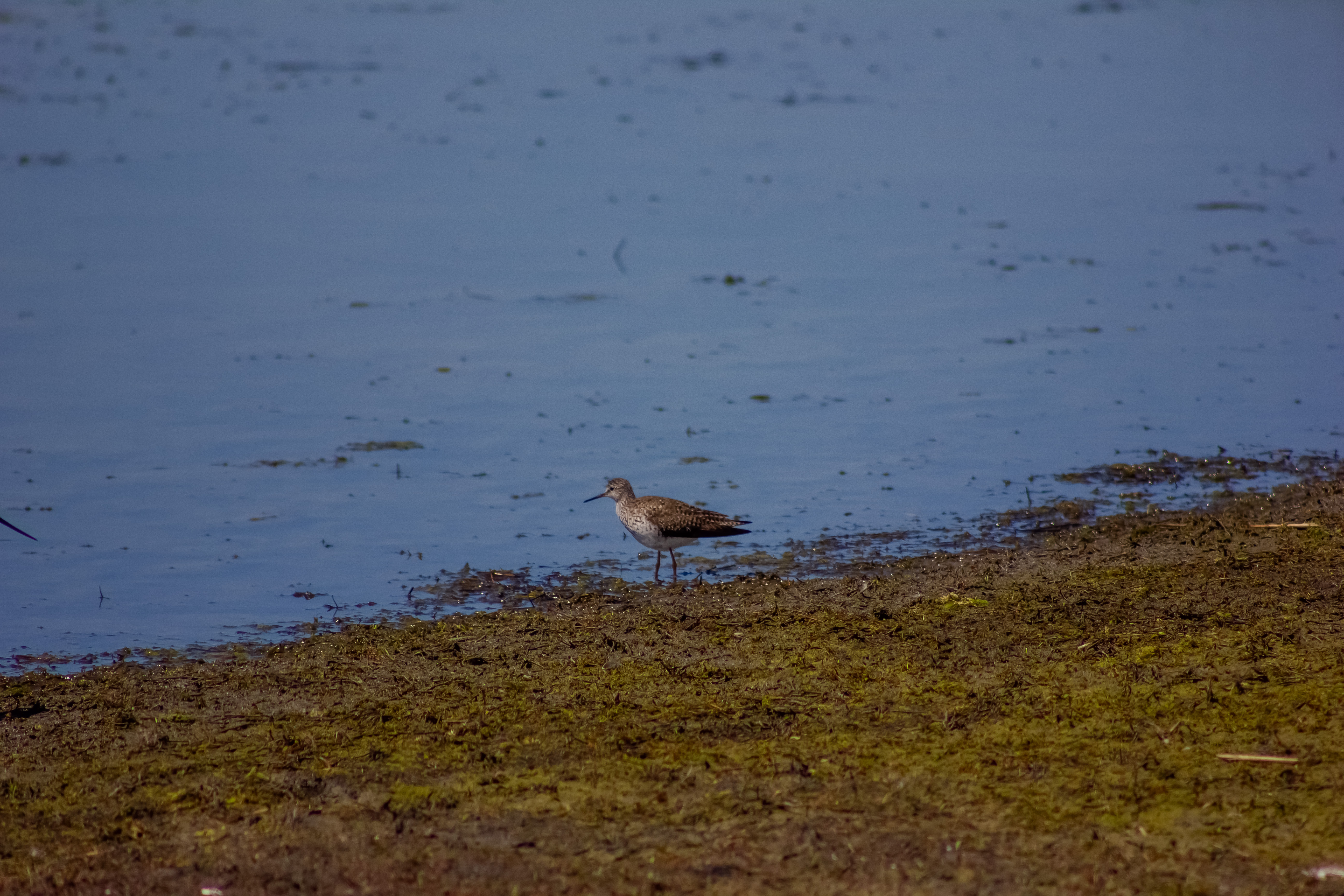


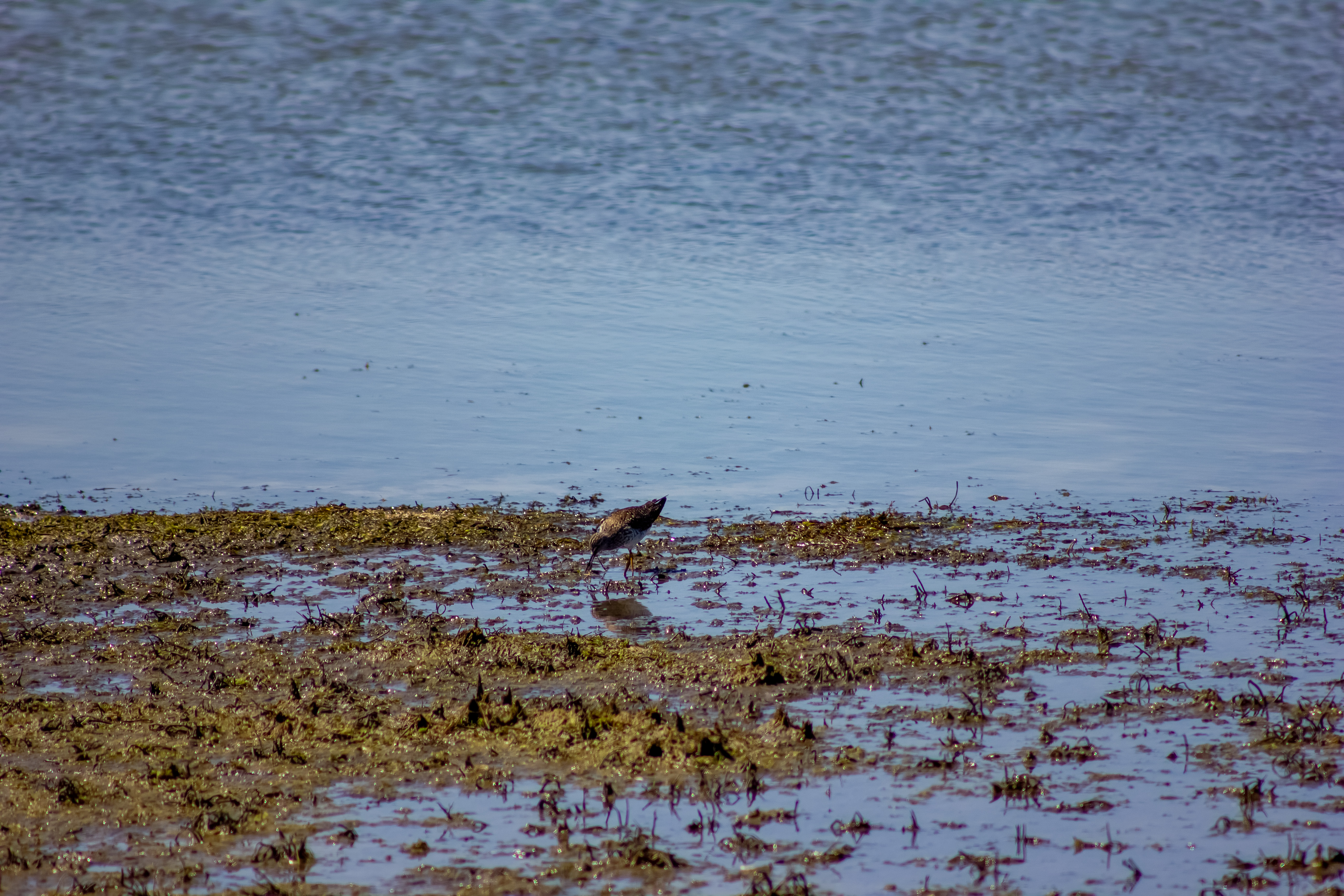
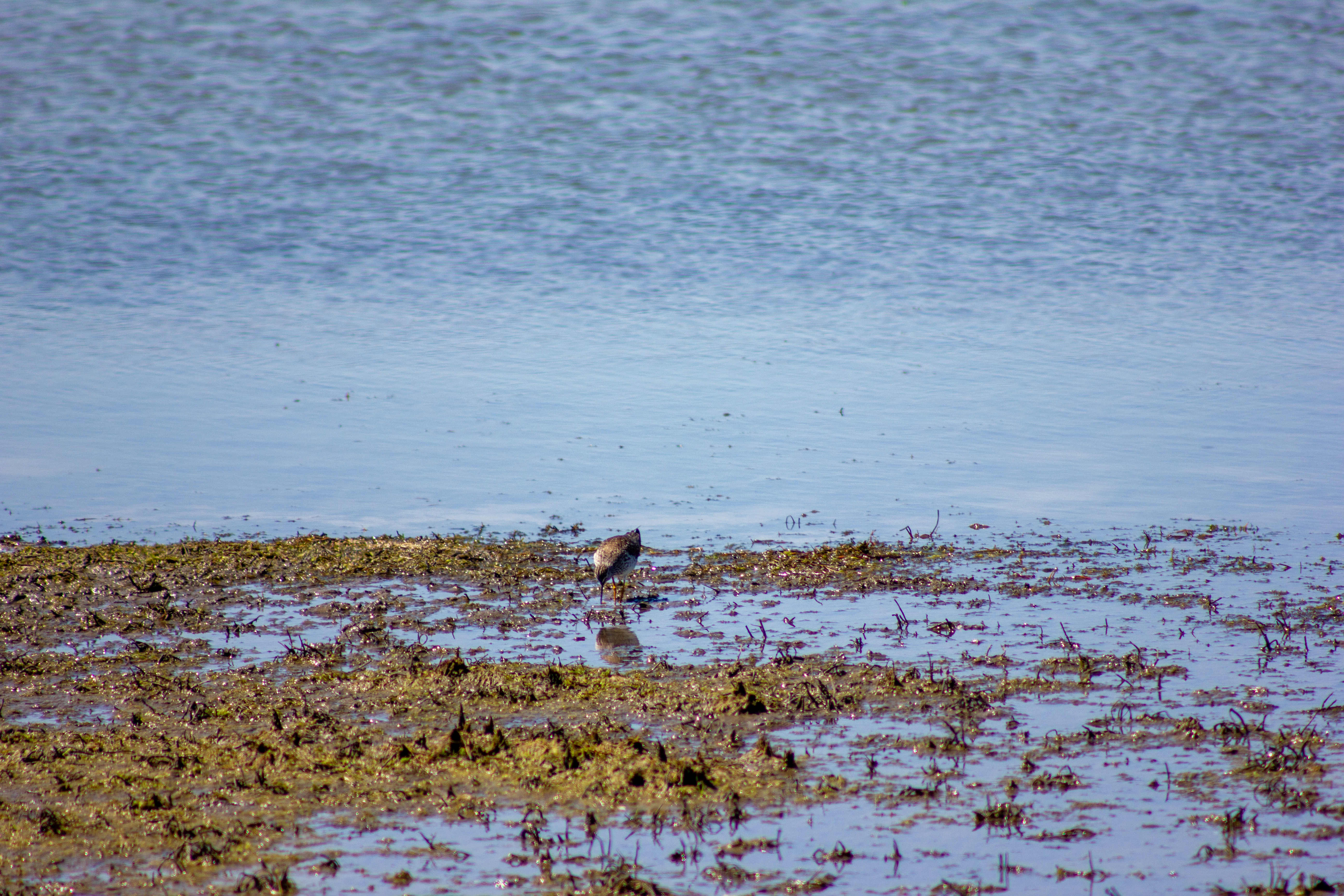
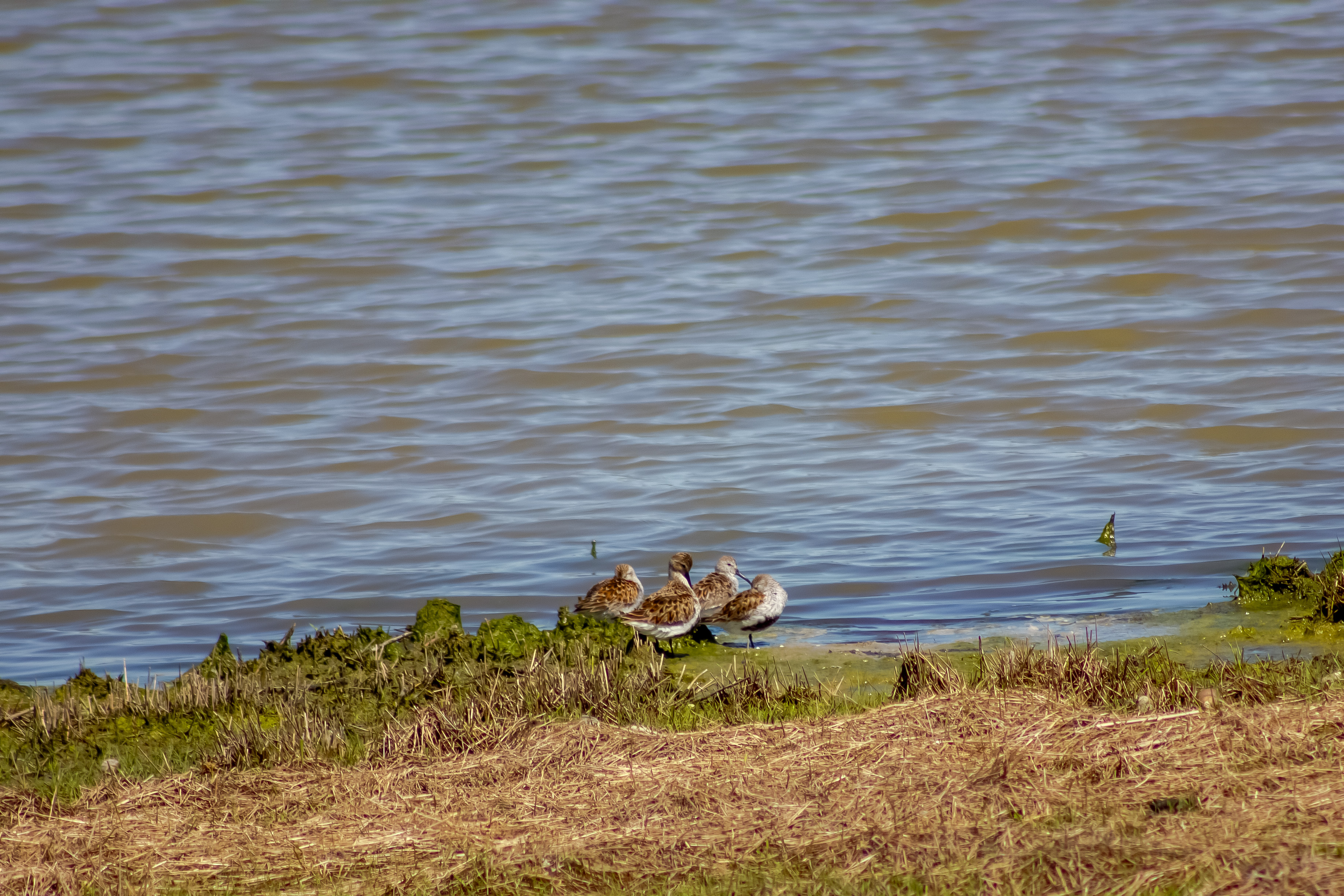
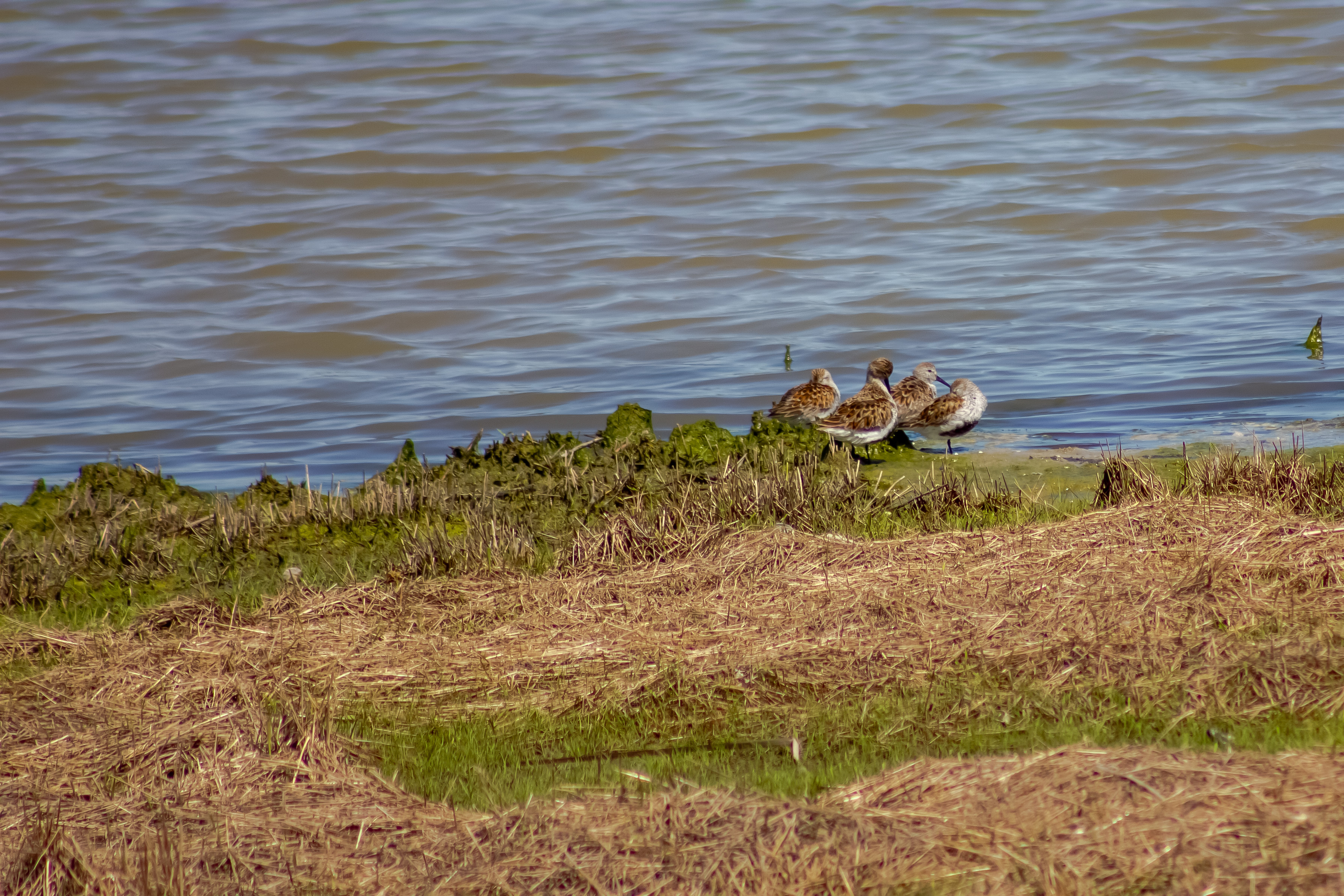
The Spotted Sandpiper (Actitis macularius) is a widespread and distinctive shorebird found across North and Central America. It is particularly notable for its teetering gait, polka-dot-like belly spots, and reversed sex roles during the breeding season.
Physical Description
Size: 18–20 cm (7.1–7.9 in) in length.
Wingspan: 37–40 cm (14.6–15.7 in) Weight: 34–50 grams (1.2–1.8 oz).
Bill: Straight, medium-length, orange at the base and dark at the tip.
Legs: Yellowish or pale Plumage: Breeding Adults: Brown upperparts with bold black spots on the white underparts.
Nonbreeding Adults/Juveniles: Plain white underparts, lacking spots, and brownish above with a subtle eyeline.
Flight: Low, stiff-winged flight over water with rapid wingbeats.
Behavior and Movement
Signature Trait: Constantly bobs its tail and rear end—this is called “teetering” and is distinctive of the species.
Flight Call: A high-pitched, whistled “weet-weet-weet.” Feeding Behavior: Actively forages by walking along shorelines, picking at invertebrates.
Migratory Pattern: Breeds in North America (Alaska to Newfoundland and southward to the central U.S.).
Winters in Central and South America and as far north as the southern U.S. (e.g., California, Gulf Coast).
Habitat
Breeding Habitat: Freshwater shorelines—rivers, lakes, ponds, and streams with gravel or sandy banks.
Wintering Habitat: Mangroves, estuaries, sandy beaches, and even sewage lagoons.
Nesting Sites: Ground nests hidden in grass or vegetation near water.
Diet
Primary Diet: Insects (midges, beetles, flies), small crustaceans, mollusks, spiders, and worms. Forages by visually spotting prey and using rapid pecking motions.
Breeding and Reproduction
One of the most unique breeding systems among North American birds:
Role Reversal: Females are larger, more aggressive, and polyandrous (mate with multiple males). A female will defend a territory and lay eggs for multiple males, each of whom incubates and raises the chicks independently.
Nesting: Clutch Size: Typically 3–5 eggs.
Eggs: Buff or beige with dark brown markings.
Incubation: Done by the male, lasts 19–22 days.
Chick Behavior: Precocial (can walk and feed shortly after hatching).
Fledging: Chicks fledge in about 17–21 days
Lifespan and Predation
Average Lifespan: 8–10 years in the wild.
Predators: Eggs and chicks are vulnerable to raccoons, snakes, gulls, and larger birds. Adults are more agile and can escape many predators.
Conservation Status
IUCN Red List: Least Concern Population Trend: Stable, though local populations may be affected by shoreline development, pollution, and habitat disturbance.
Adaptability: Spotted Sandpipers are relatively adaptable and can live in human-altered landscapes.
Interesting Facts
Name Origin: “Spotted” comes from its speckled belly in breeding plumage; “sandpiper” refers to its habitat and foraging style.
Tail-bobbing Mystery: The reason for their constant teetering is still not fully understood; theories include camouflage, balance, or signaling to other birds.
Migratory Champion: Some individuals travel over 3,000 miles between breeding and wintering grounds.
Cultural and Ecological Role
Helps control insect populations near freshwater habitats. Indicator species for ecosystem health and its presence often signals a healthy shoreline.
Field Identification Tips
Watch for the characteristic teetering motion. Listen for the sharp “weet-weet” call when it flushes from the shoreline. In flight: white wing stripe, stiff wingbeats, low trajectory over water.
 Wild Bird Journal
Leave a comment