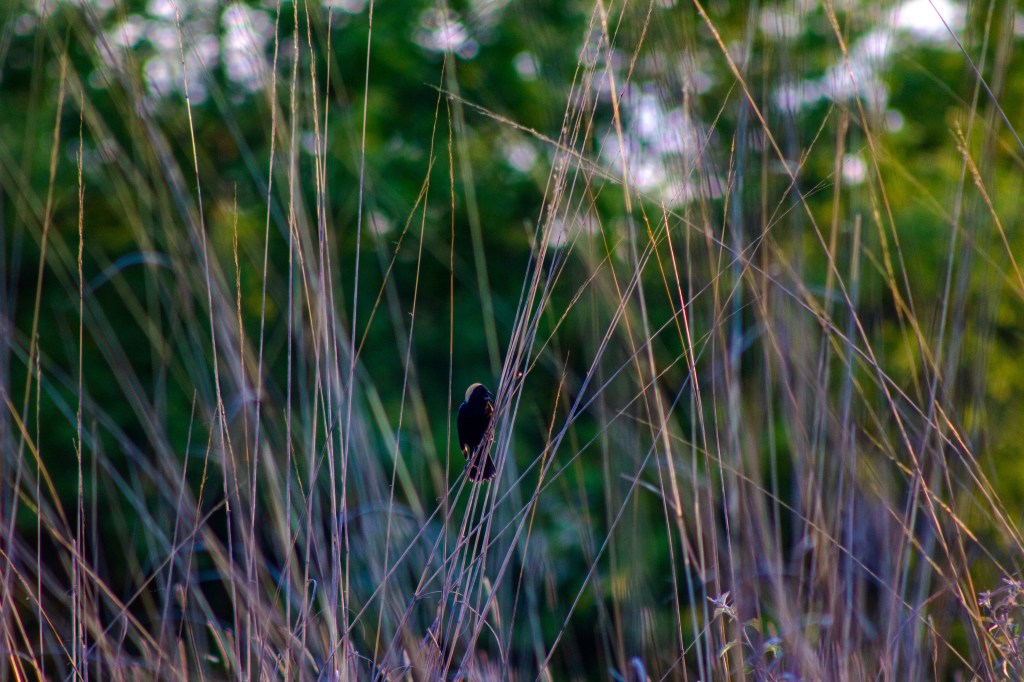
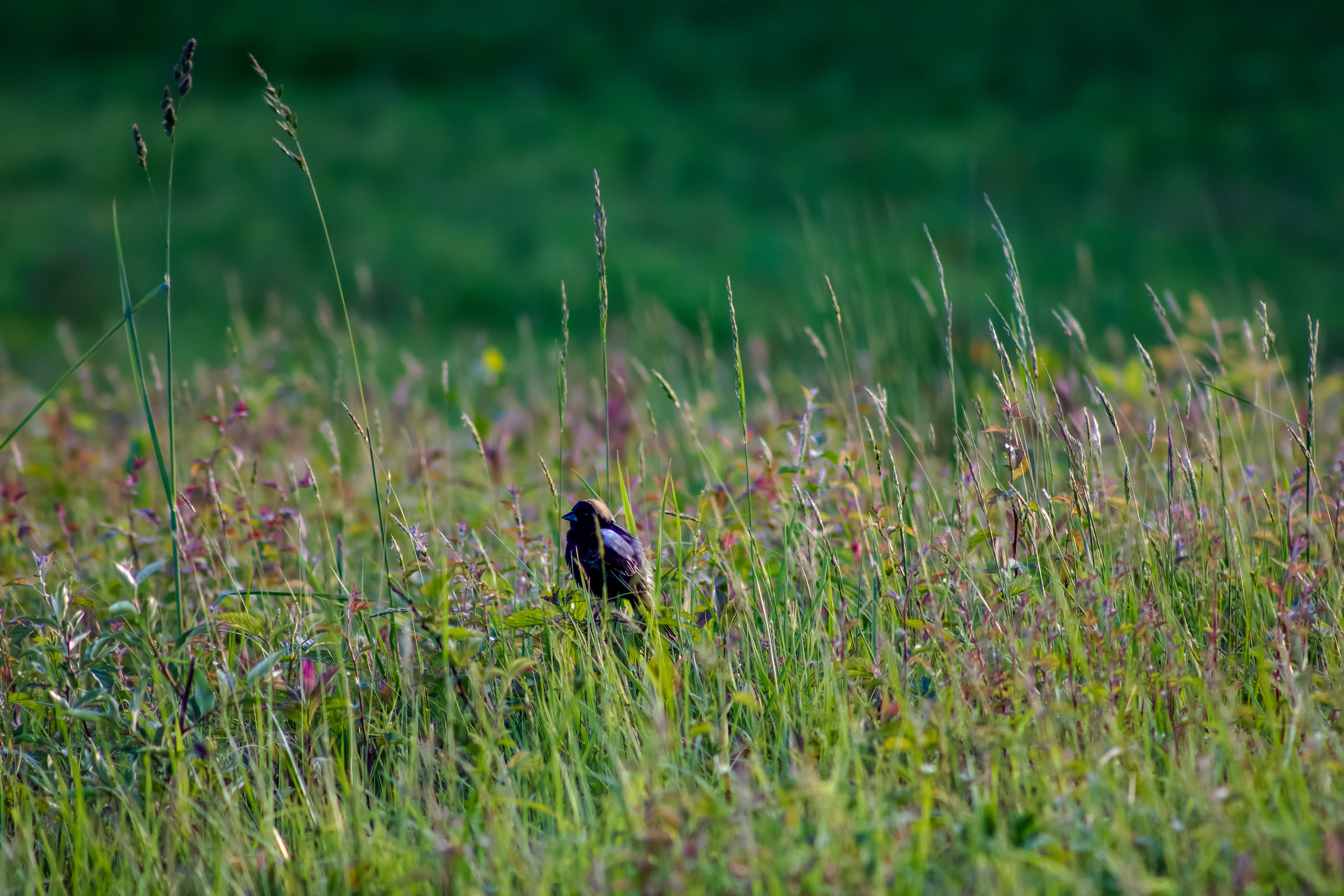
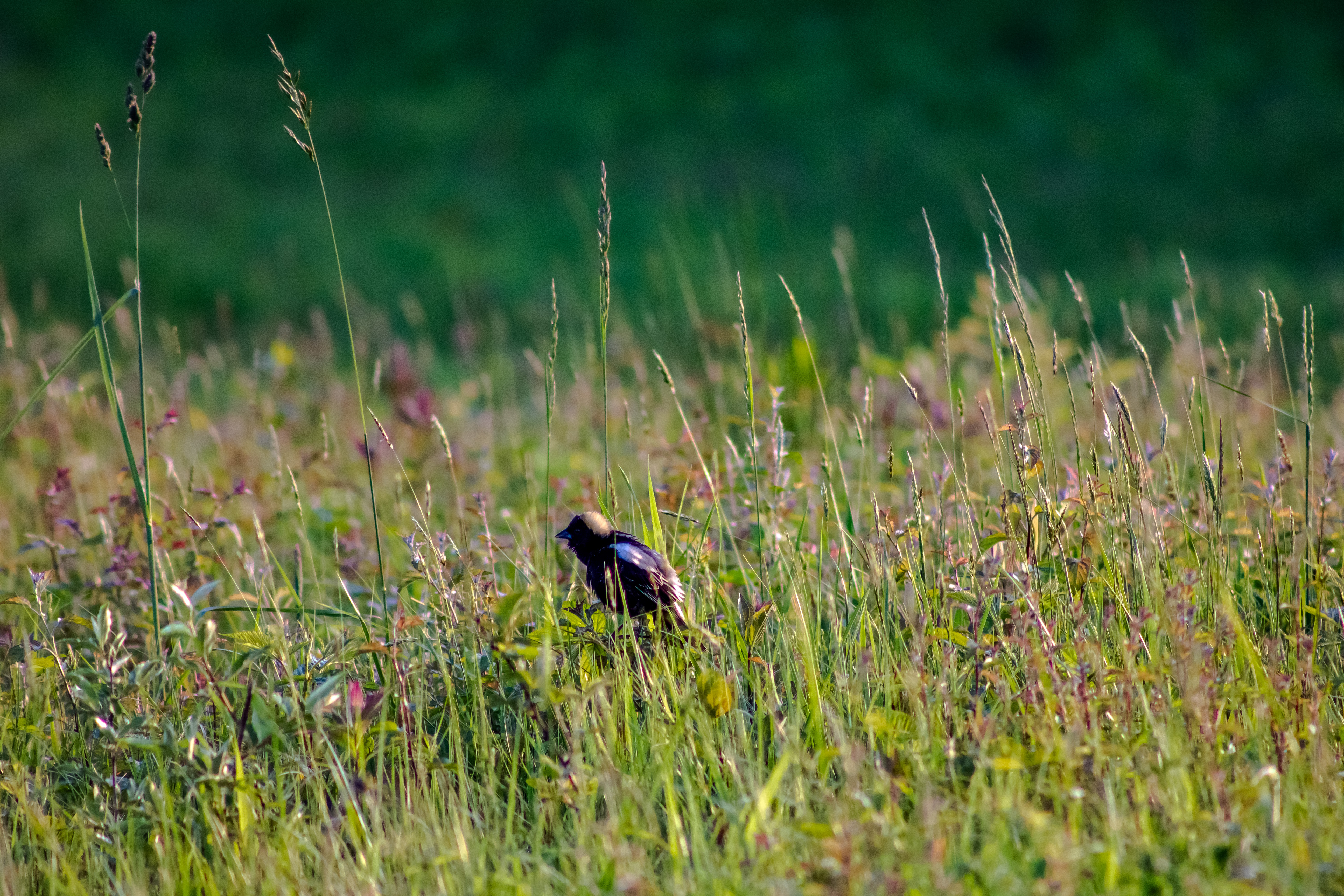
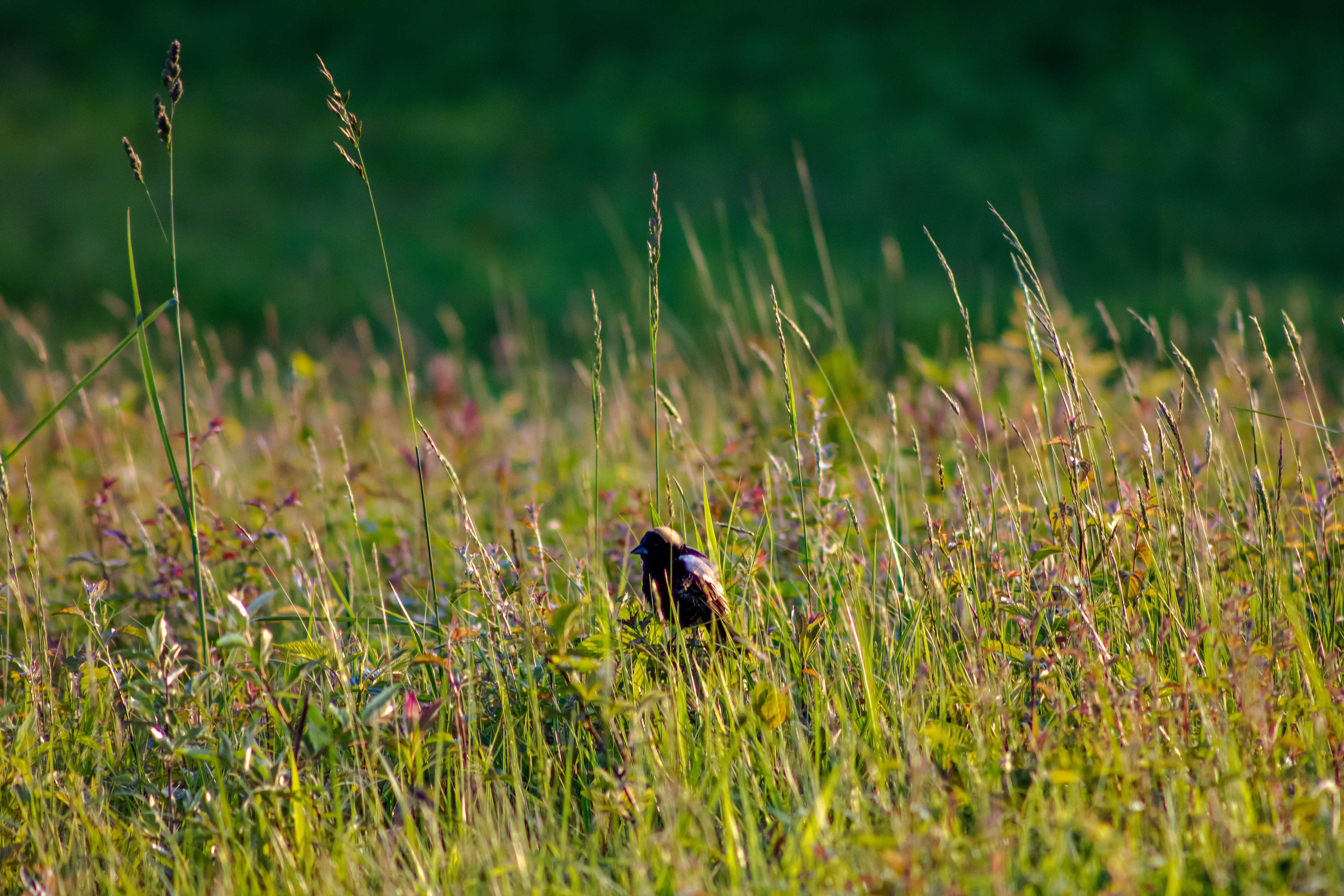

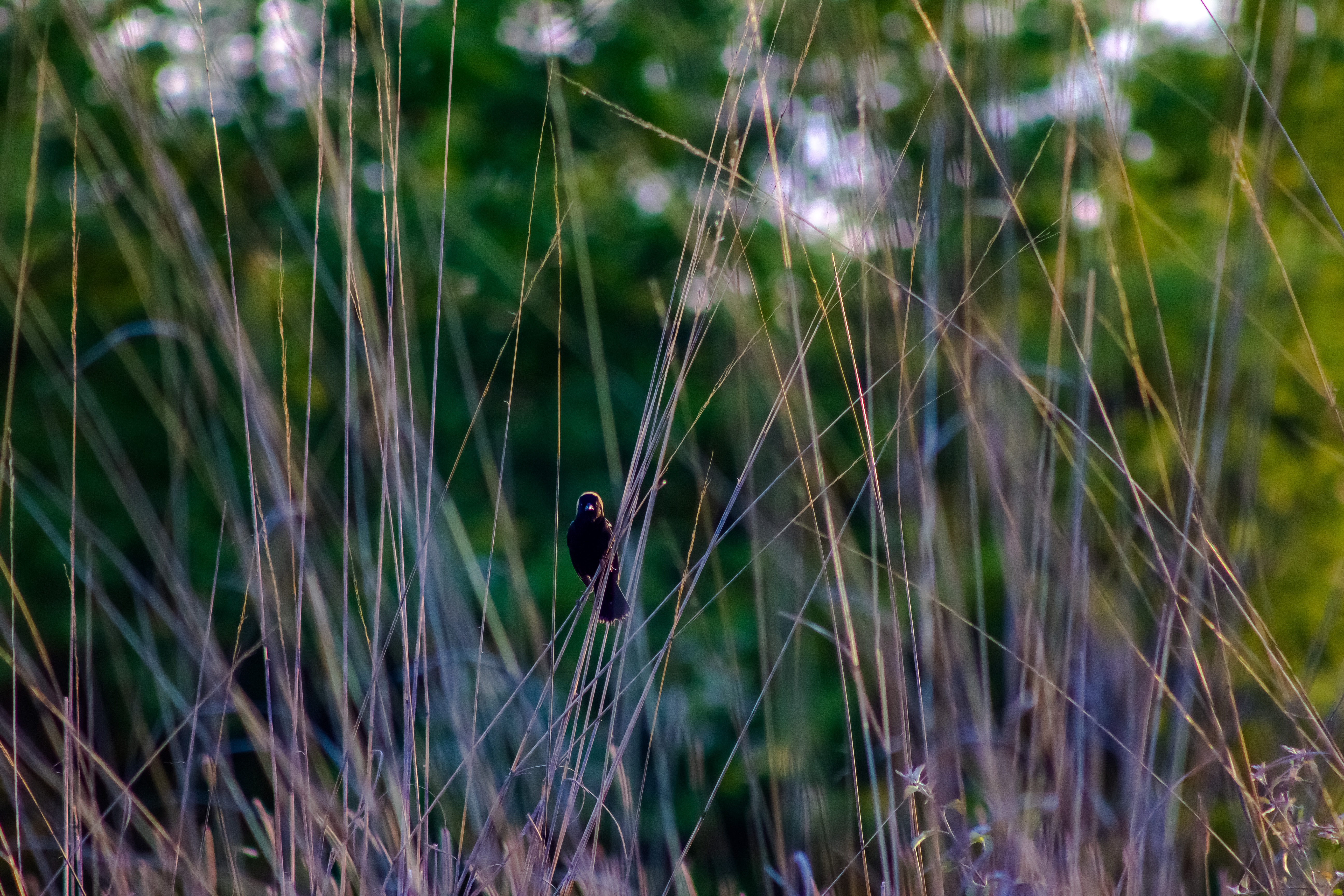


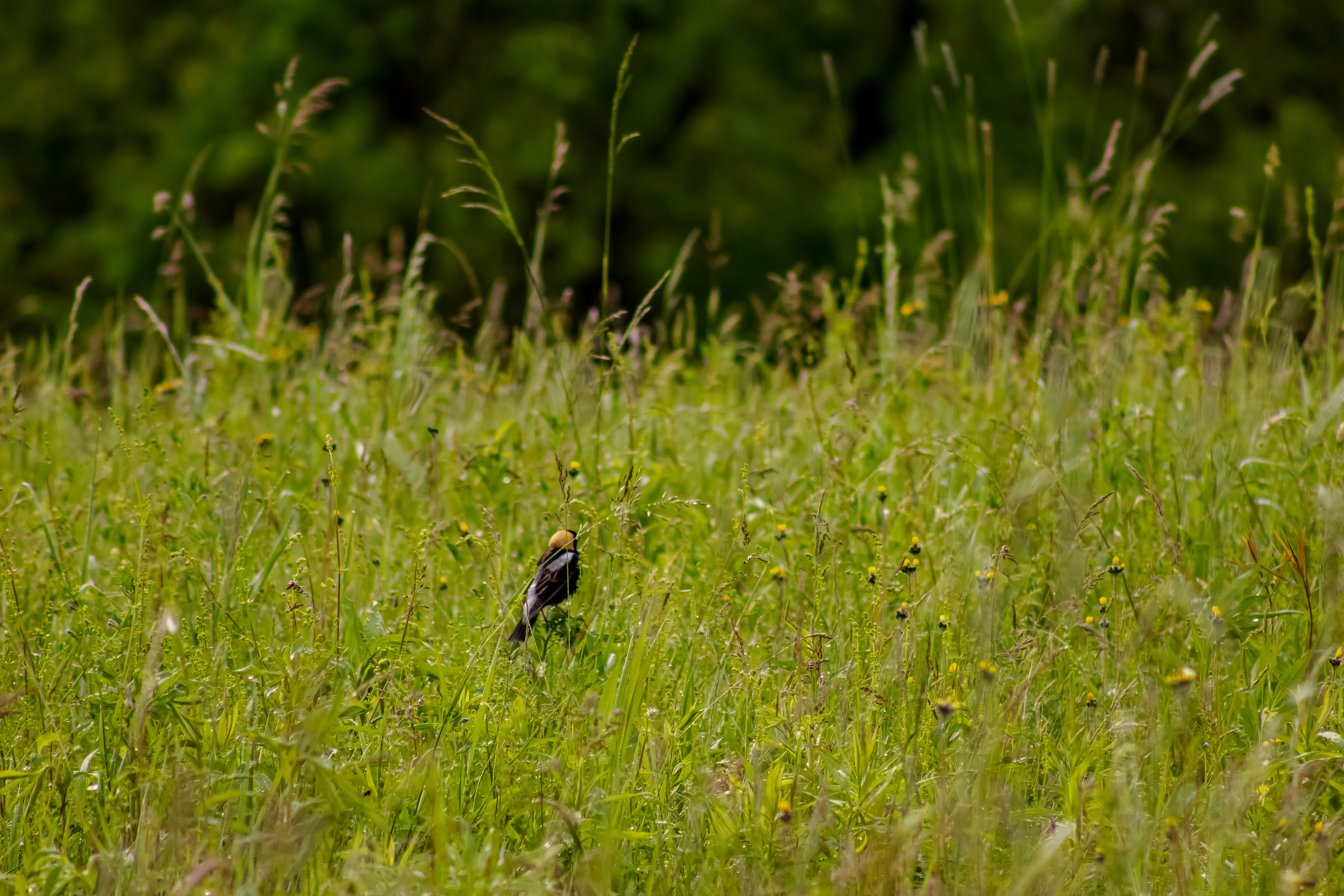

Perched on a swaying grass stem or performing aerial displays above open fields, the breeding male Bobolink stands out with its unmistakable appearance. Unlike any other North American bird, it features a bold contrast of a white back and black underparts—often likened to a tuxedo worn backwards. This striking pattern is accented by a pale, straw-colored patch on the back of the head and a cascading, bubbling song that is both complex and musical. As the summer draws to a close, the male molts into a subtler, buff and brown plumage, closely resembling the female.
Physical Description
Size: About 6–8 inches (15–20 cm) in length.
Wingspan: Approximately 10–11.5 inches (26–29 cm).
Weight: Around 1–2 ounces (28–56 grams).
Male (Breeding Plumage): Striking black underparts and face, with a pale yellow patch on the back of the head and white on the back and wings.
Female & Nonbreeding Male: Buff-colored overall with brown streaking, looking similar to a large sparrow.
Molting: Males lose their distinctive black-and-white breeding plumage after the breeding season and resemble females until the next spring.
Voice and Song
The Bobolink is well known for its bubbly, cascading song, which is a high-pitched medley of notes that sounds almost robotic or electronic. Males often sing in flight displays over their territories.
Distribution and Habitat
Breeding Range: Grasslands, hayfields, and meadows in southern Canada and the northern United States, especially in the Midwest and Northeast.
Migration: Bobolinks are long-distance migrants, traveling over 12,000 miles round trip.
Wintering Range: South America, mainly in Argentina, Paraguay, Bolivia, and Brazil. Stopover Sites: During migration, they rest and feed in wetlands, rice fields, and agricultural areas.
Behavior
Breeding: Males arrive first to establish territories and attract females by singing and performing aerial displays.
Nesting: Nests are built by females on the ground, hidden among grasses. Typically, 4–7 eggs are laid.
Feeding: Summer: Primarily insects (beetles, caterpillars, grasshoppers, etc.), which provide protein for raising chicks.
Migration and Winter: Diet shifts heavily to seeds and grains, especially rice—hence the species name oryzivorus, meaning “rice-eating.”
Flocking: Outside of breeding season, Bobolinks form large flocks and are often seen feeding in groups.
Conservation Status
IUCN Red List: Least Concern, but populations are declining. Threats: Loss of grassland habitat due to development and changes in agricultural practices.
Nest destruction from early hay mowing. Pesticide exposure. Hunting on migration in the Caribbean and parts of South America
Interesting Facts
The Bobolink is one of the longest-distance songbird migrants in the Western Hemisphere. In the 19th century, Bobolinks were known as “ricebirds” and were heavily hunted for food in the southern U.S. Their song was celebrated by poets like Emily Dickinson and William Cullen Bryant. They have a unique reversed sexual dimorphism in plumage during breeding season—males are more ornate while females are more cryptic. Bobolinks navigate migration using the Earth’s magnetic field, stars, and landscape features.
 Wild Bird Journal
Leave a comment