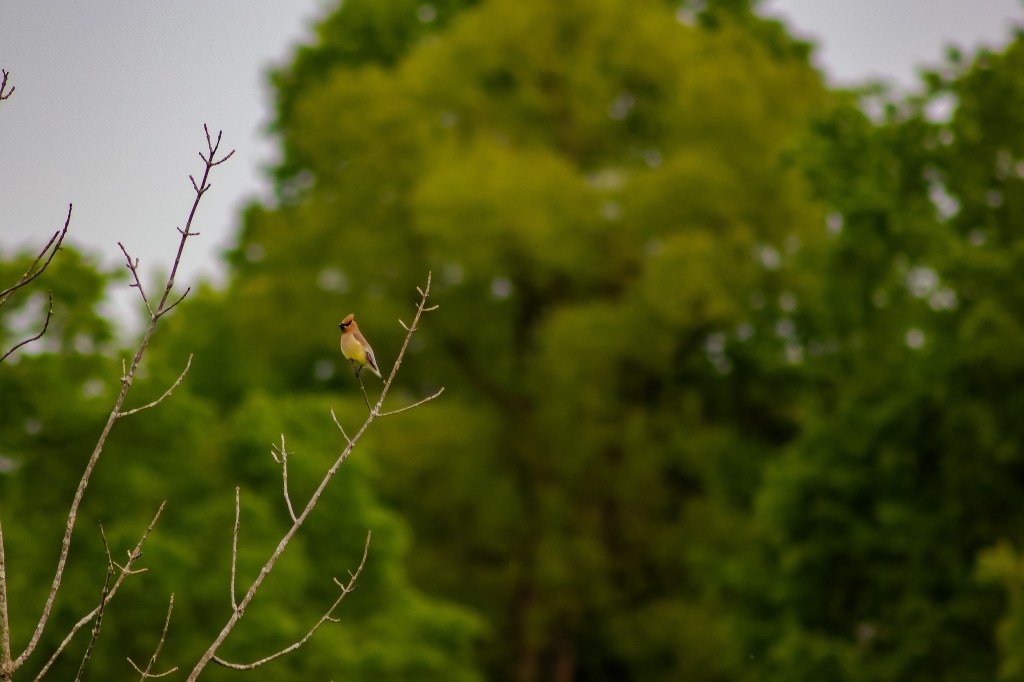
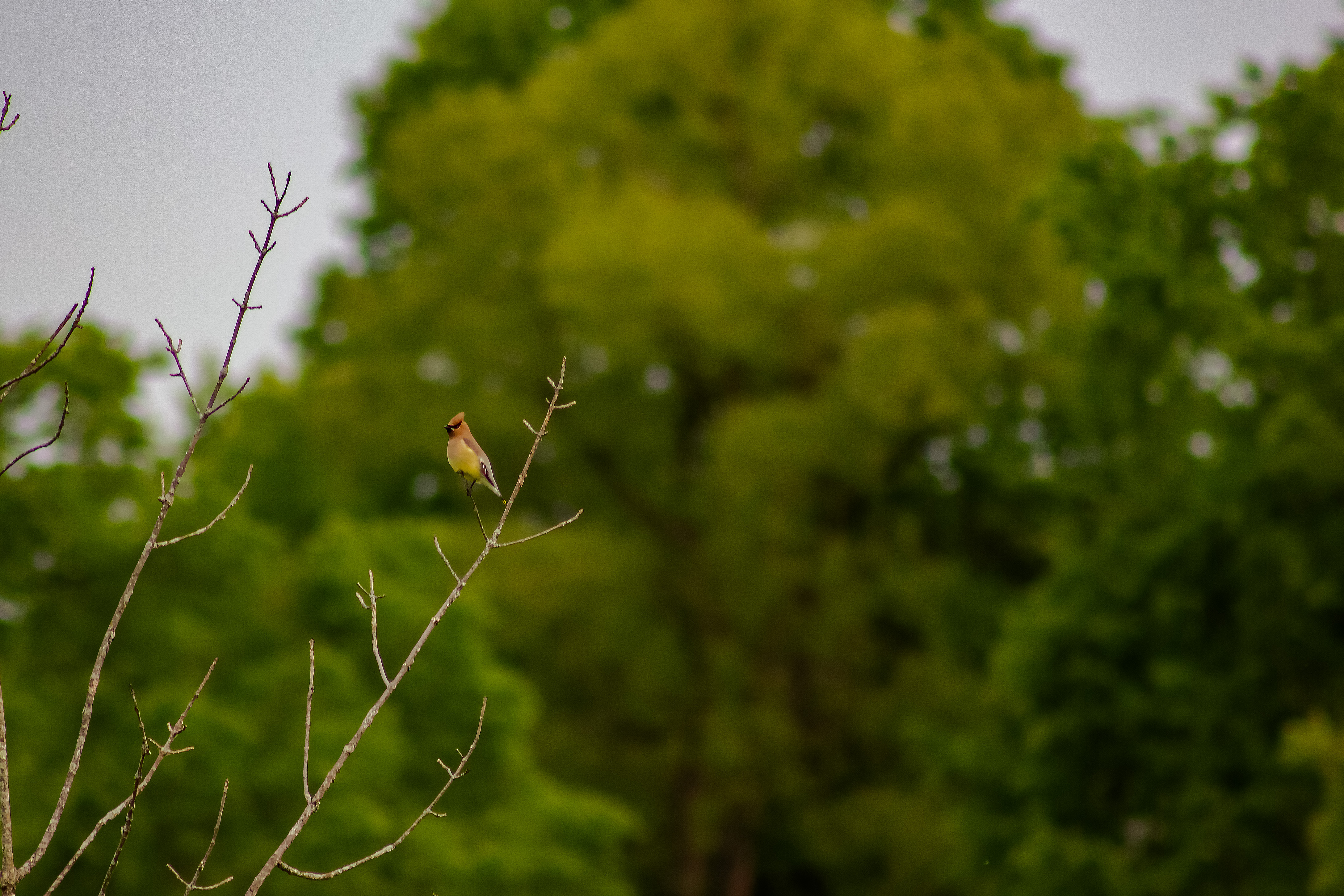
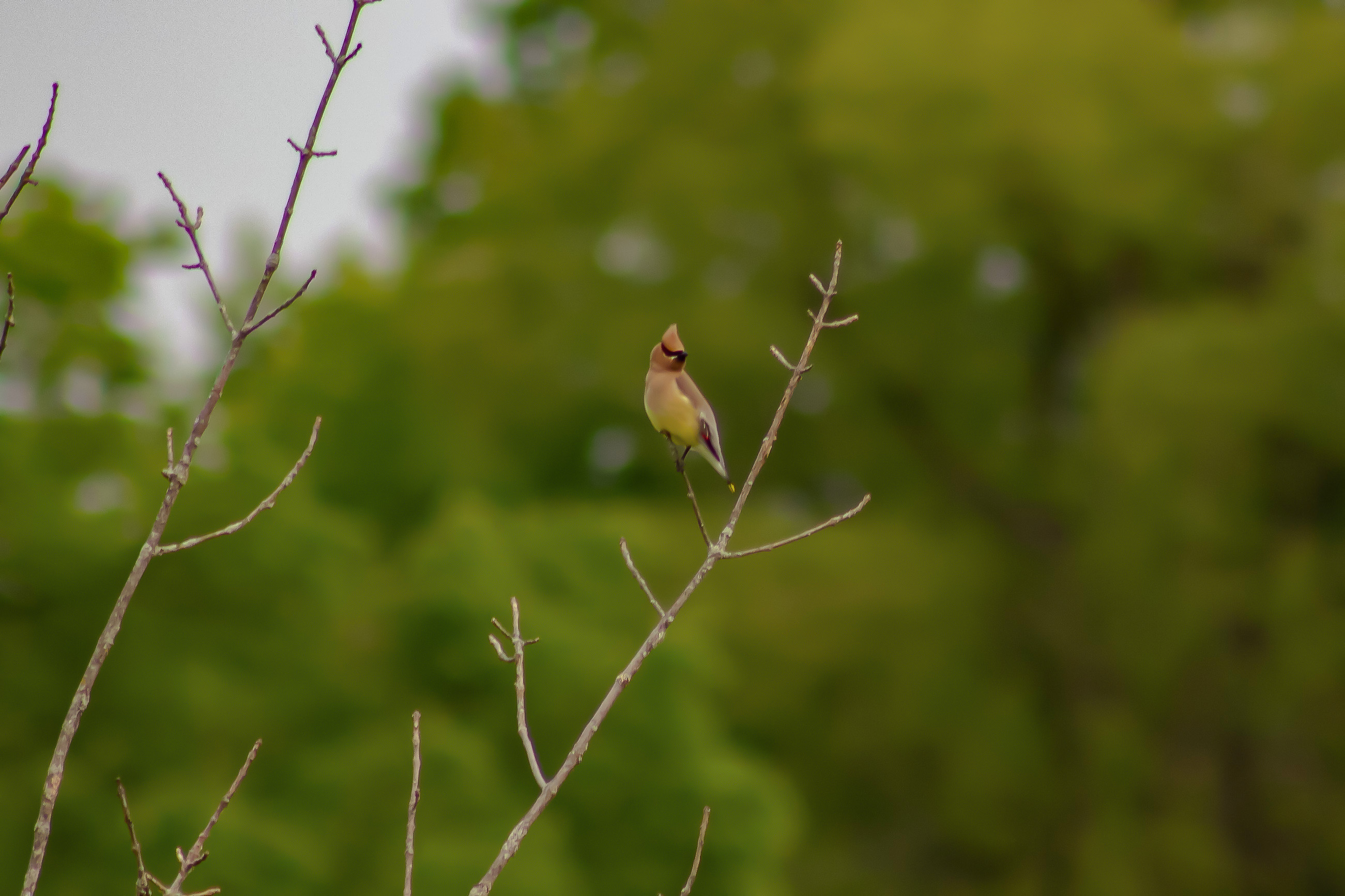
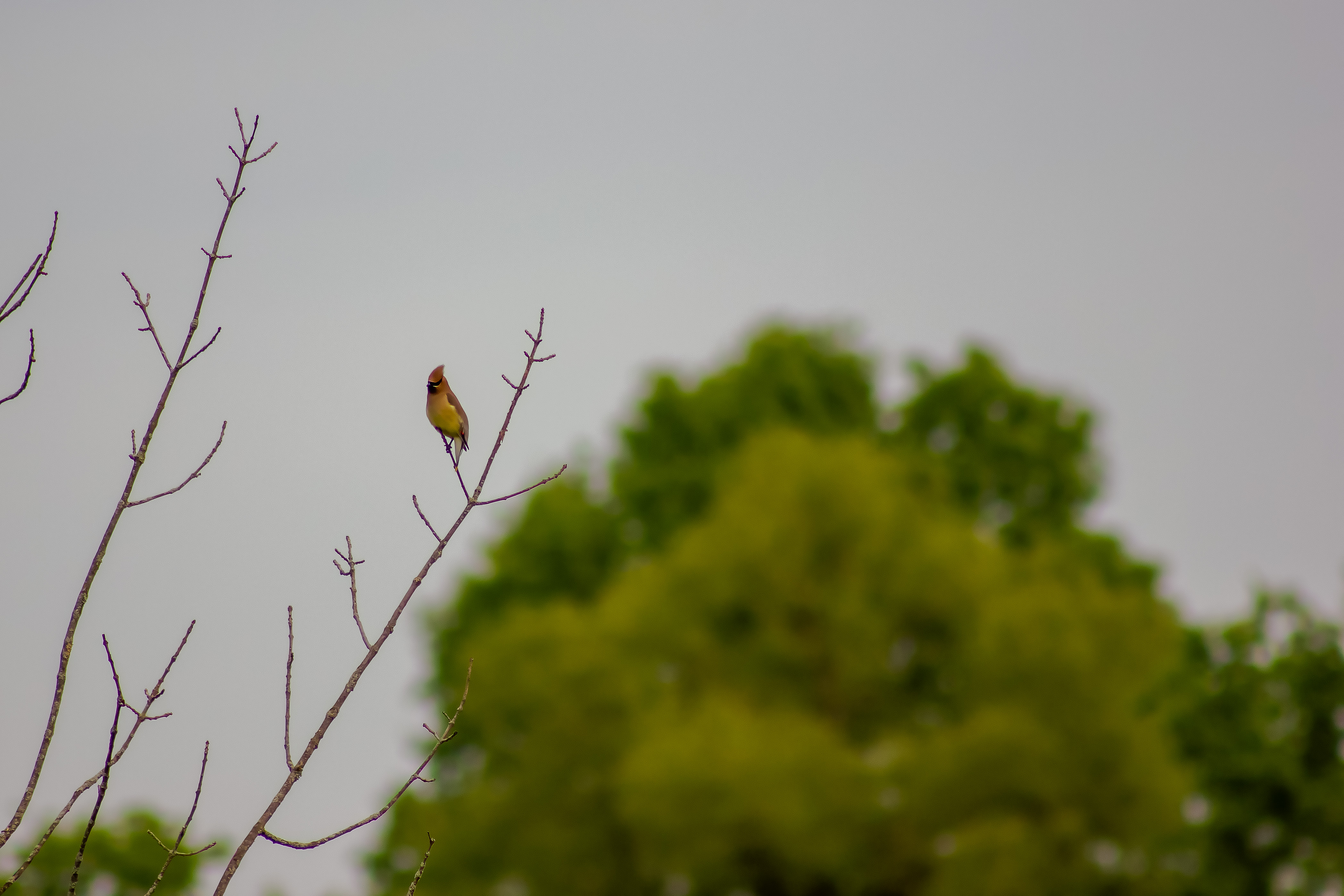
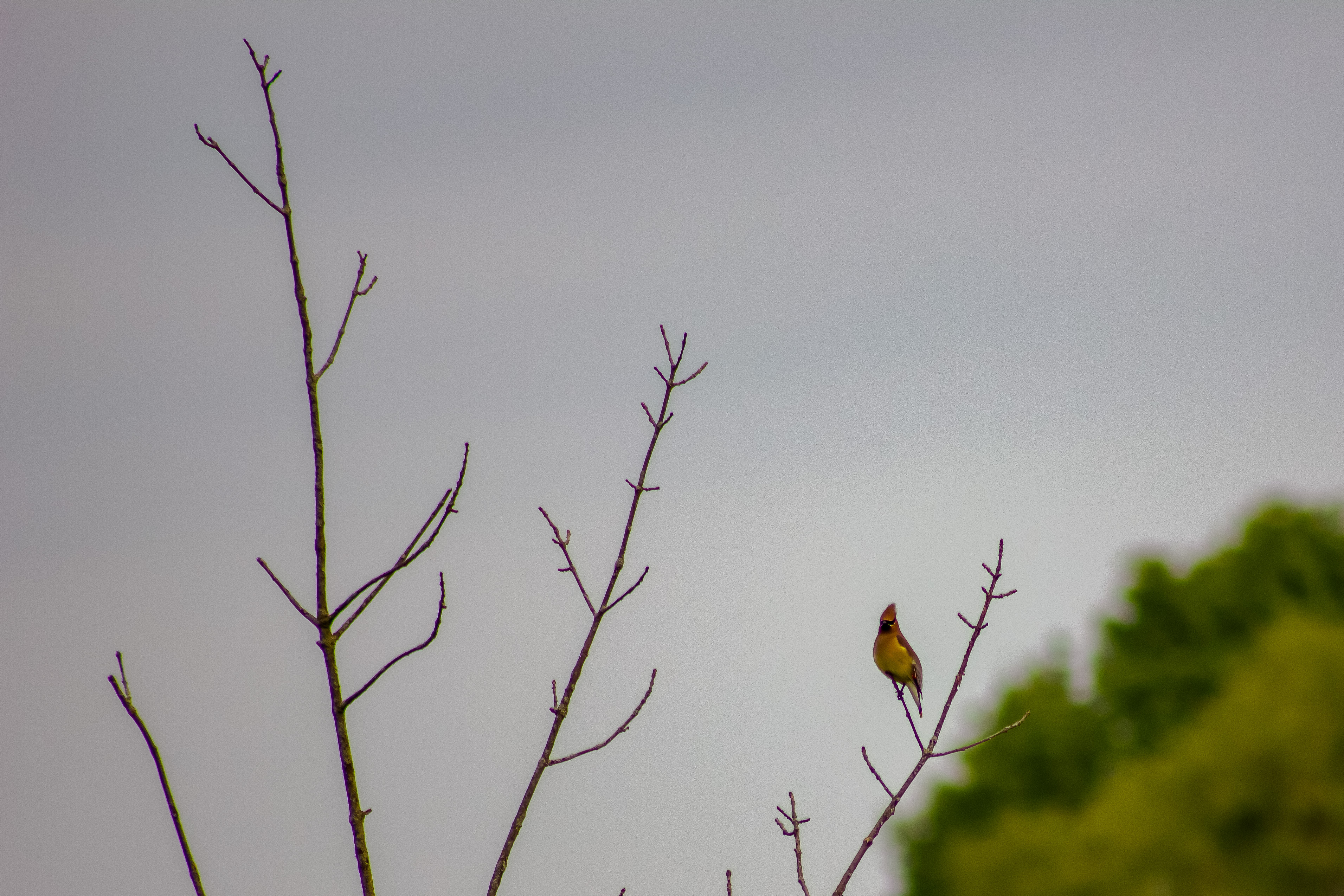
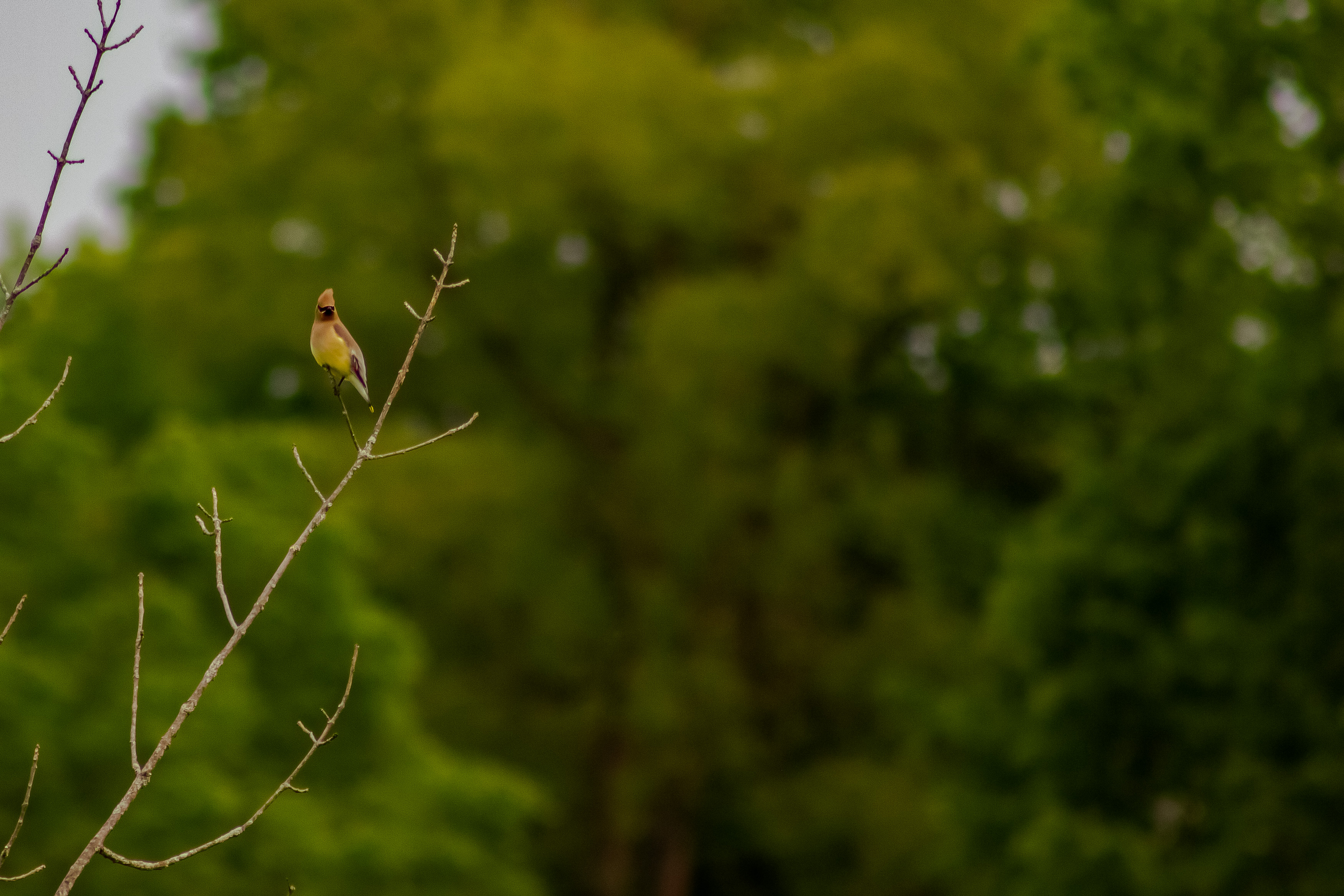

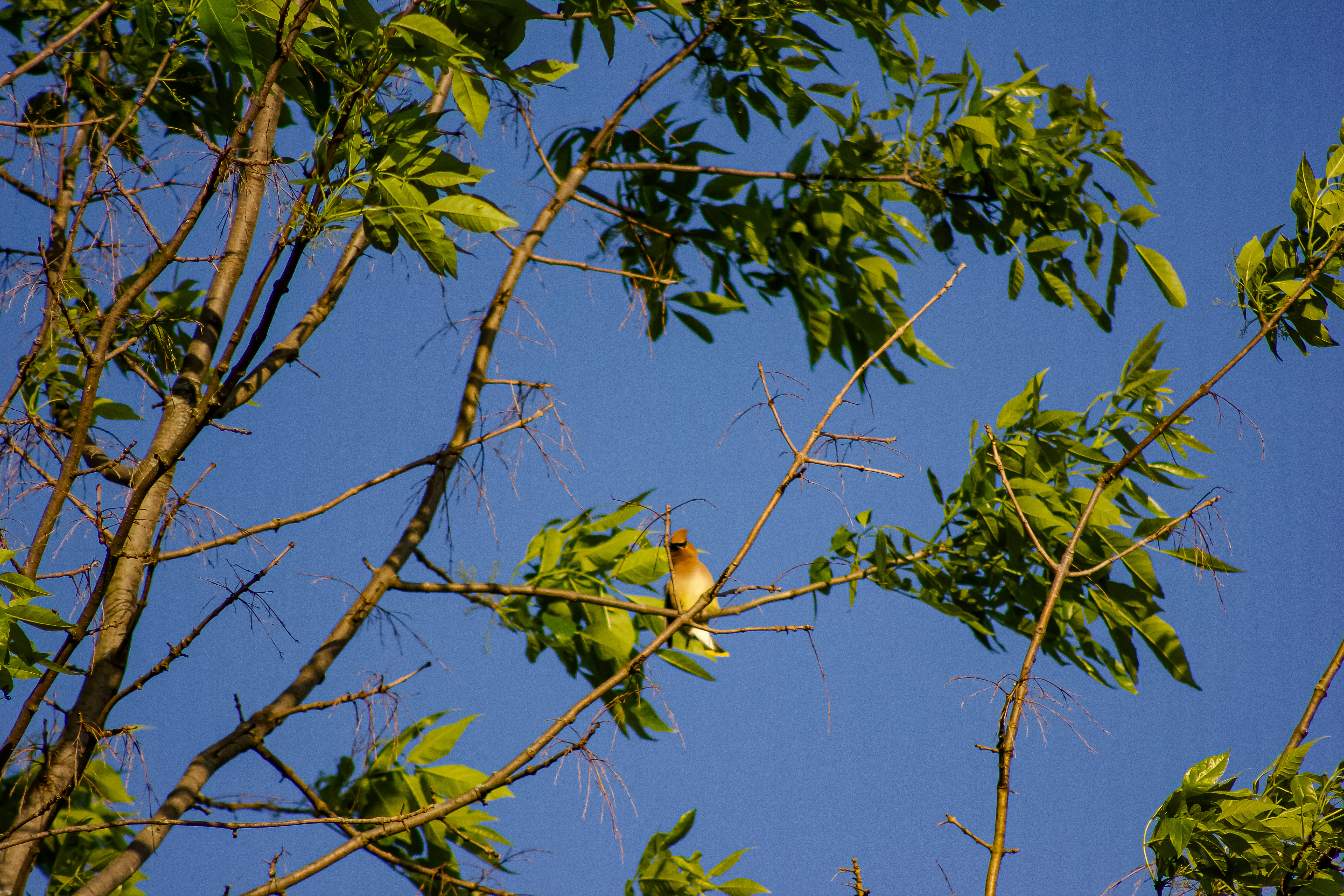
The Cedar Waxwing is a sleek, medium-sized songbird known for its elegant appearance, silky plumage, and love of fruit. It is a member of the family Bombycillidae, which also includes the Bohemian Waxwing. This bird is named for its affinity for cedar berries and the red, waxy tips on some of its wing feathers.
Physical Description
Size: 5.5–6.7 inches (14–17 cm) in length.
Wingspan: 8.7–11.8 inches (22–30 cm).
Weight: 1.1 oz (32 g).
Plumage: Sleek, silky feathers. Pale brown head and chest that fades into soft gray on the wings and pale yellow on the belly. The tail is tipped with bright yellow, sometimes orange, due to diet.
Face features a distinctive black mask outlined in white. Crest atop the head, often raised or flattened depending on mood. Adults usually have red, waxy tips on some secondary wing feathers (function uncertain but likely used in mate attraction)
Habitat
Found throughout North and Central America, particularly in open woodlands, orchards, suburban gardens, and riparian areas. Prefers areas with fruit-bearing trees and shrubs, especially near water.
Range and Migration
Year-round residents in the southern U.S., Central America, and parts of the Pacific Northwest.
Breeds in the northern U.S. and southern Canada.
Migratory in much of its range, moving southward in winter in search of fruit.
Diet
Primarily frugivorous (fruit-eating). Eats a wide variety of fruits and berries: cedar berries, juniper, dogwood, hawthorn, mulberries, serviceberries, and chokecherries.
During summer and breeding season, supplements diet with insects, especially flying insects like mayflies and dragonflies. Known to pass fruit to one another during courtship.
Behavior
Highly social; seen in flocks year-round. Exhibits courtship behavior that includes feeding rituals (passing berries or flower petals back and forth) and hopping dances. Not territorial; nests in loose colonies.
Often seen in tight flocks flying over treetops or feeding together in trees.
Vocalizations
Cedar Waxwings are known for their high-pitched, thin, whistling trills and sreee or see calls. Songs are not elaborate; most vocalizations are soft and sibilant.
Nesting
Breeding season: late spring to early summer.
Nest: open cup made of grass, twigs, and rootlets, often in a horizontal tree branch. Usually built 6–20 feet above the ground. Clutch size: 3–5 eggs.
Incubation: 11–13 days,mainlyy by the female. Both parents feed the young. Young fledge in 14–18 days.
Reproduction and Mating
Monogamous, at least during the breeding season. Bonding includes ritual feeding and display flights. Delayed nesting relative to other species—usually nests after peak berry availability.
Conservation Status
IUCN Status: Least Concern Population stable or increasing. Some threats include window strikes, pesticide poisoning, and loss of fruit-bearing shrubs due to development or landscaping.
Interesting Facts
Cedar Waxwings are one of the few North American birds that can survive almost entirely on fruit for long periods.
The tail tip color can change from yellow to orange depending on their diet—particularly from eating invasive honeysuckle berries. They are susceptible to fermented berries and have been observed becoming intoxicated. Often gather at birdbaths or streams to drink and bathe in flocks.
The red waxy wingtips, while not functionally known, are more prominent in older birds, possibly signaling age and fitness to mates.
 Wild Bird Journal
Leave a comment