
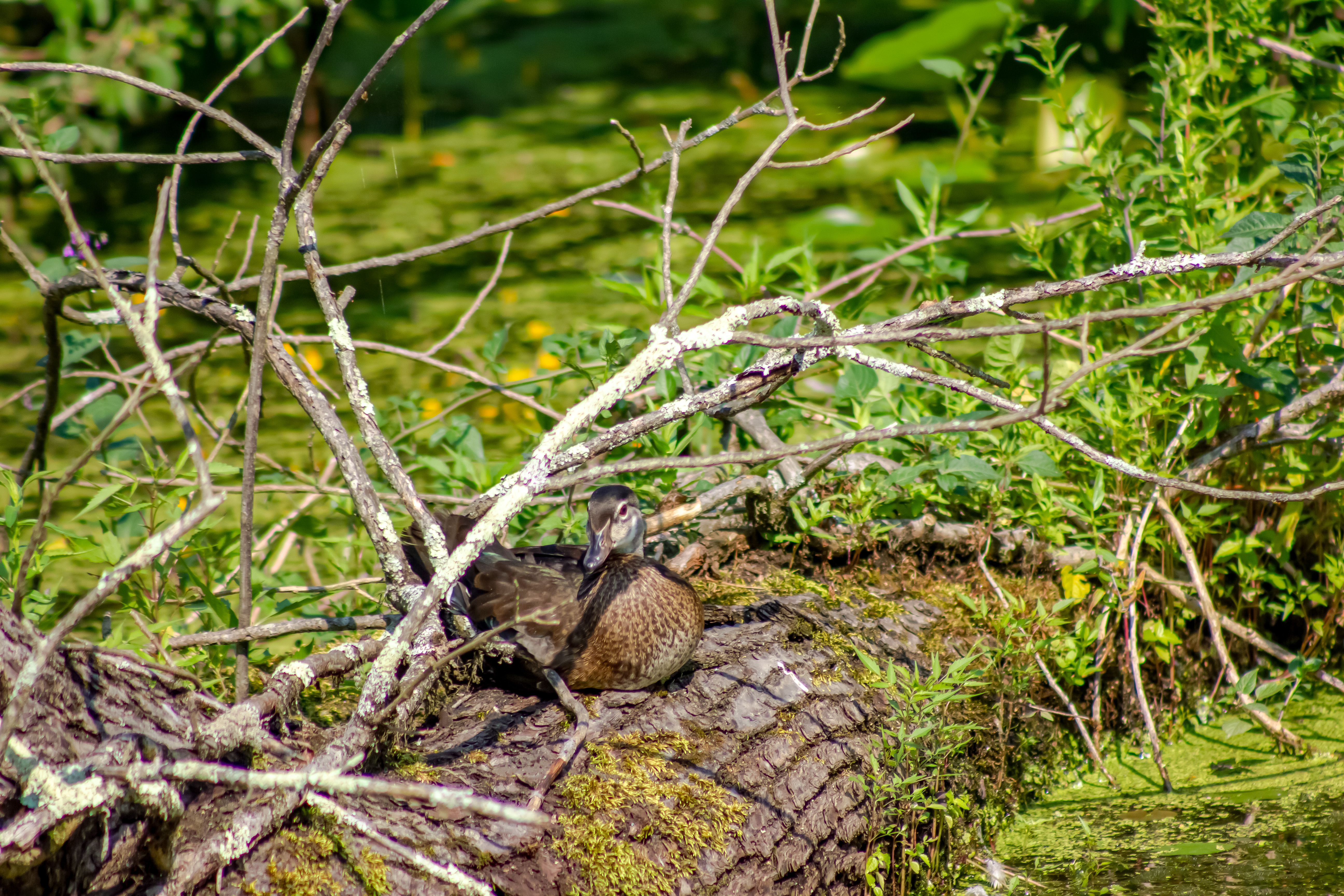
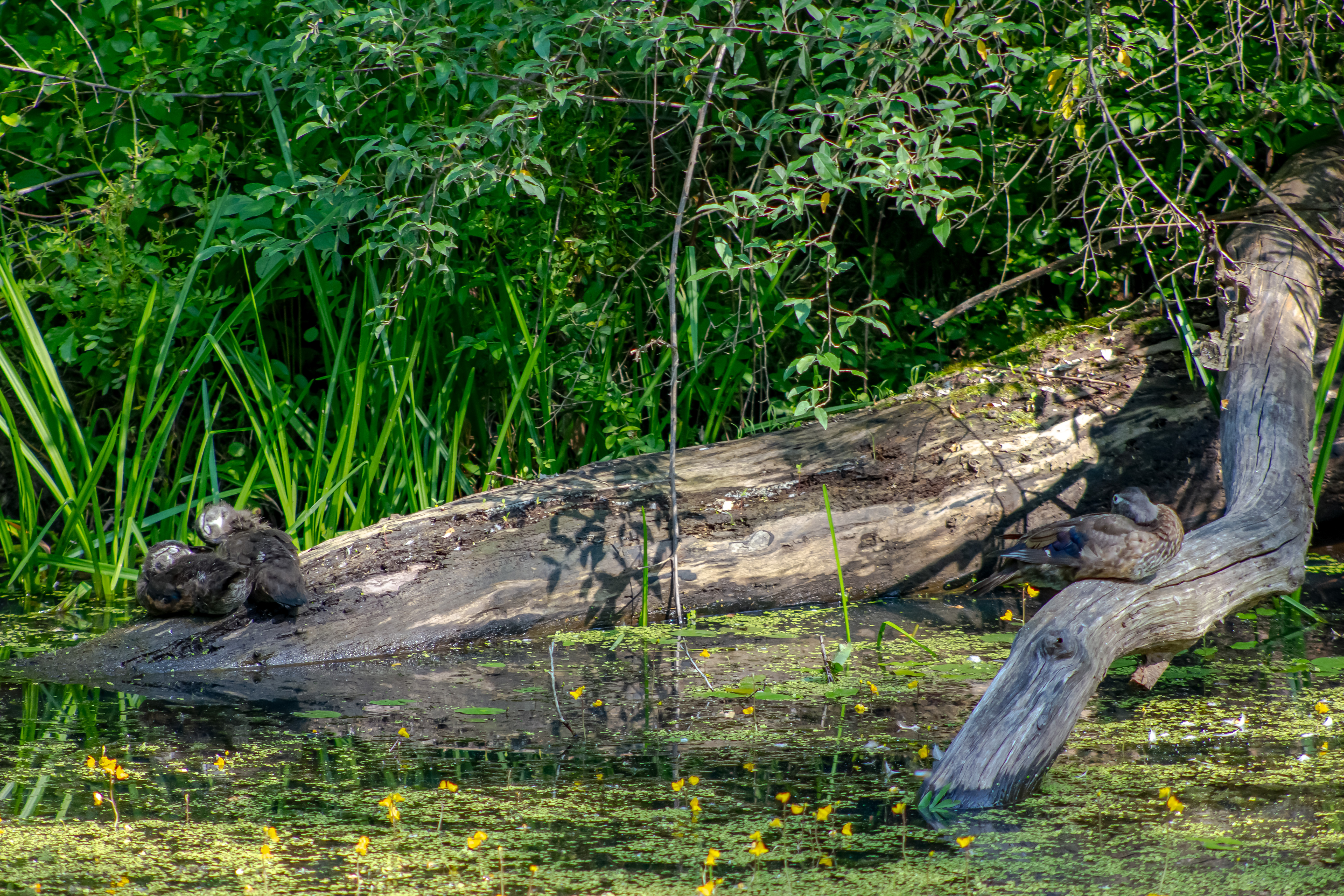

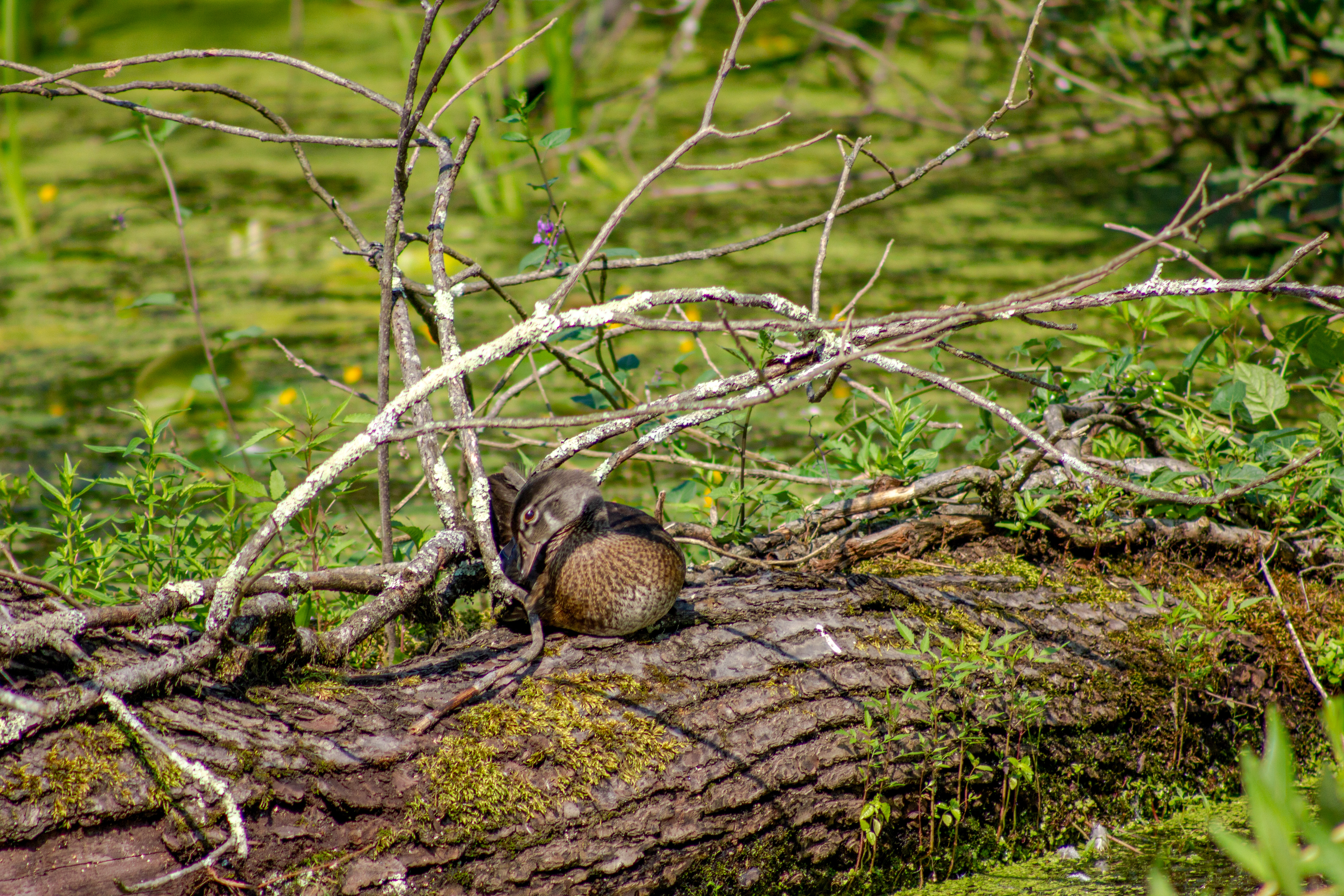
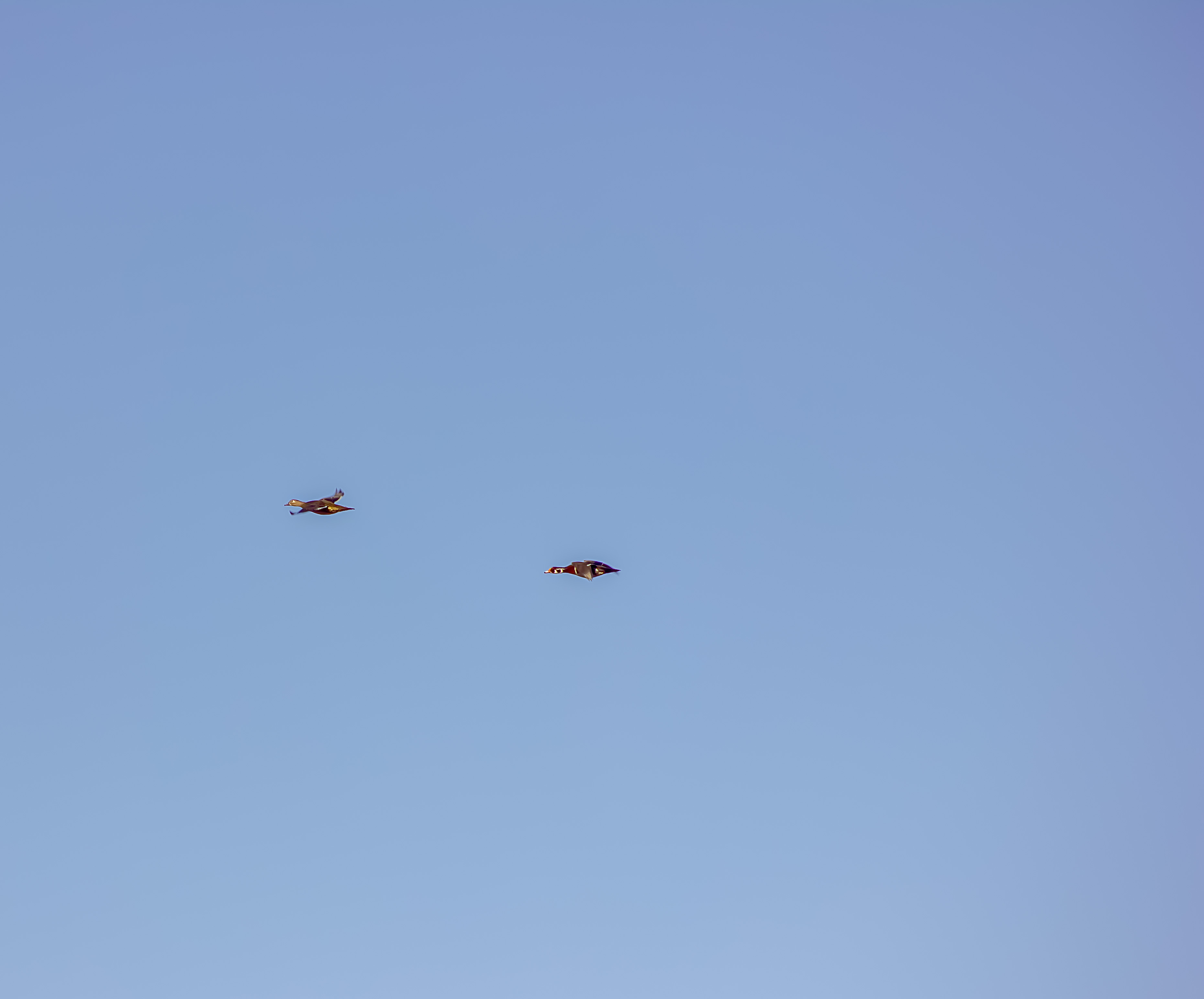
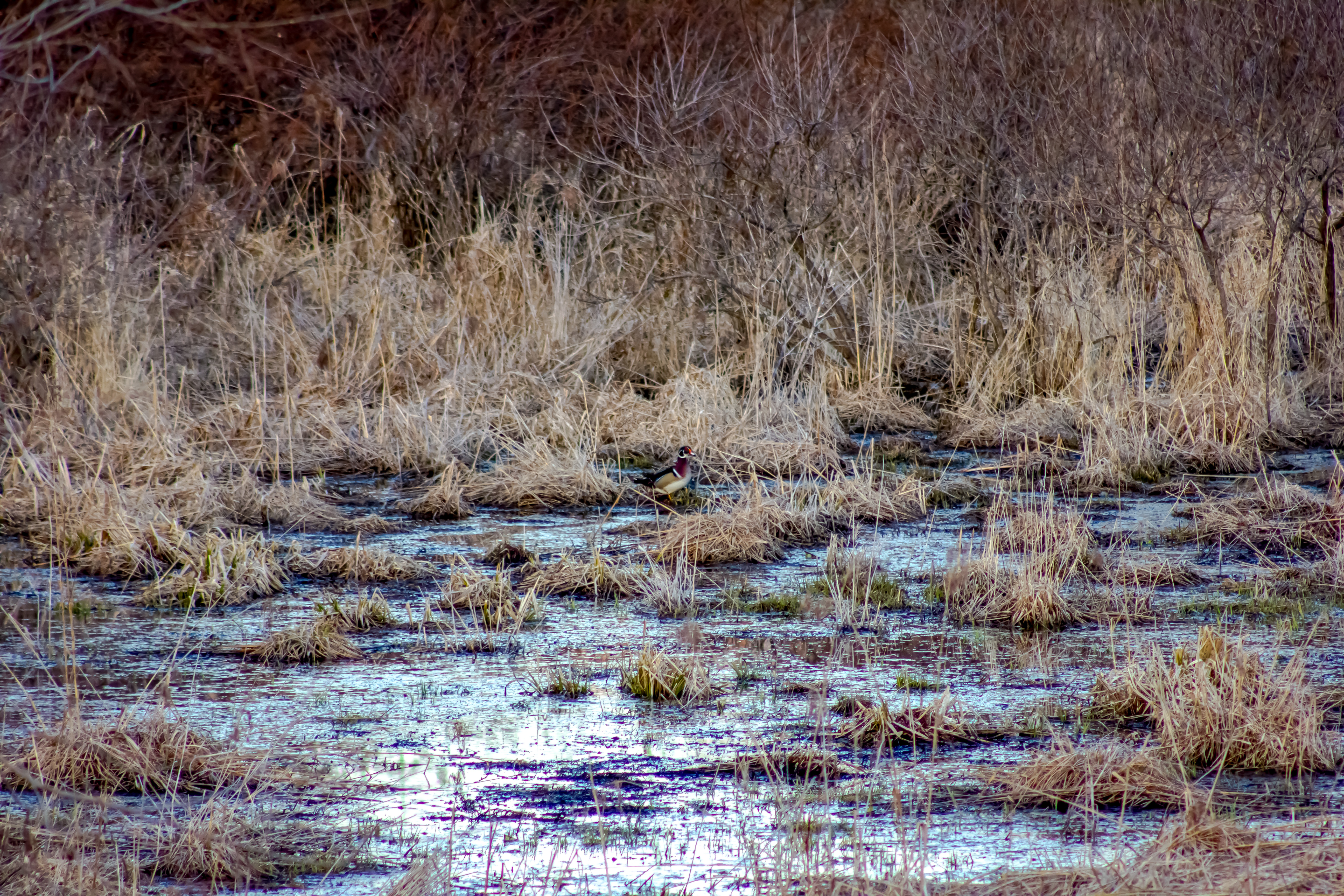

The Wood Duck is a medium-sized perching duck known for its vivid, iridescent plumage and its unusual nesting behavior. It is one of the few North American waterfowl species adapted to nesting in trees, often quite far from water.
Physical Description
Male: Iridescent green and purple crested head. Distinct white stripes on the face and neck. Red eyes and red bill with a black tip. Chestnut breast and buff flanks. Iridescent blues and greens on the wings and back.
Female: Gray-brown overall with a white, teardrop-shaped eye ring. Slight crest on the head. Dull white belly. More muted coloration than the male, but still elegant.
Length: 18.5–21.3 inches (47–54 cm).
Wingspan: 26–29 inches (66–73 cm).
Weight: 1.1–1.6 lbs (500–700 grams)
Range and Habitat
Breeding Range: Eastern and western United States, southern Canada. Winter Range: Southeastern U.S., Pacific Coast, Mexico, occasionally Central America.
Preferred Habitat: Freshwater ponds, swamps, marshes, wooded creeks, and rivers. Requires trees with cavities or man-made nest boxes for breeding. Often found near forested wetlands and bottomland hardwoods
Behavior
Nest in tree cavities, often over water or up to 60 feet high. Will readily use nest boxes provided by humans. The female lays 6–16 eggs and incubates them alone. Hatchlings are precocial: they leap from the nest (sometimes from great heights) within 24 hours of hatching and follow the mother to water.
Feeding Behavior: Dabbling duck: feeds on the surface or tips forward in water, rarely dives. Often forages in shallow water and on land.
Diet: Omnivorous: Plants: seeds, acorns, fruits, duckweed, aquatic vegetation. Invertebrates: insects, snails, and small crustaceans. Diet shifts seasonally—more animal matter during the breeding season for protein
Vocalizations
Female: Loud, rising squeals—oo-eek, oo-eek—especially during alarm or distress. Male: High-pitched, whistling jeeeeb or tooo-eek. Sounds are more musical and less harsh compared to many other duck species
Reproduction and Life Cycle
Breeding begins in early spring. Incubation period: ~28–37 days. Ducklings are independent feeders but stay near the hen for protection. Brood parasitism is common—females sometimes lay eggs in other wood duck nests
Conservation Status
IUCN Red List: Least Concern. Populations suffered severe declines in the late 19th and early 20th centuries due to overhunting and habitat destruction.
Conservation success story: populations rebounded due to nest box programs, legal protections (like the Migratory Bird Treaty Act), and wetland conservation efforts
Interesting Facts
The Wood Duck is one of the only North American ducks that regularly nests in trees. Can fly through dense forests thanks to strong, broad wings and excellent agility.
The scientific name Aix sponsa means “married duck,” referring to the male’s gaudy, tuxedo-like plumage. Highly territorial during breeding season—males often defend females from rivals. Ducklings’ first fall can be from over 50 feet high, yet they land unharmed due to their low mass and soft down
Similar Species
Mandarin Duck (Aix galericulata): its Old World cousin, native to East Asia, and closely related; males share ornate coloration. Mallard: larger, more common, with different coloration and nesting habits
Role in Ecosystem
Helps control insect and invertebrate populations. Disperses seeds and aquatic plants. Prey for raccoons, snapping turtles, foxes, and birds of prey

 Wild Bird Journal
Leave a comment