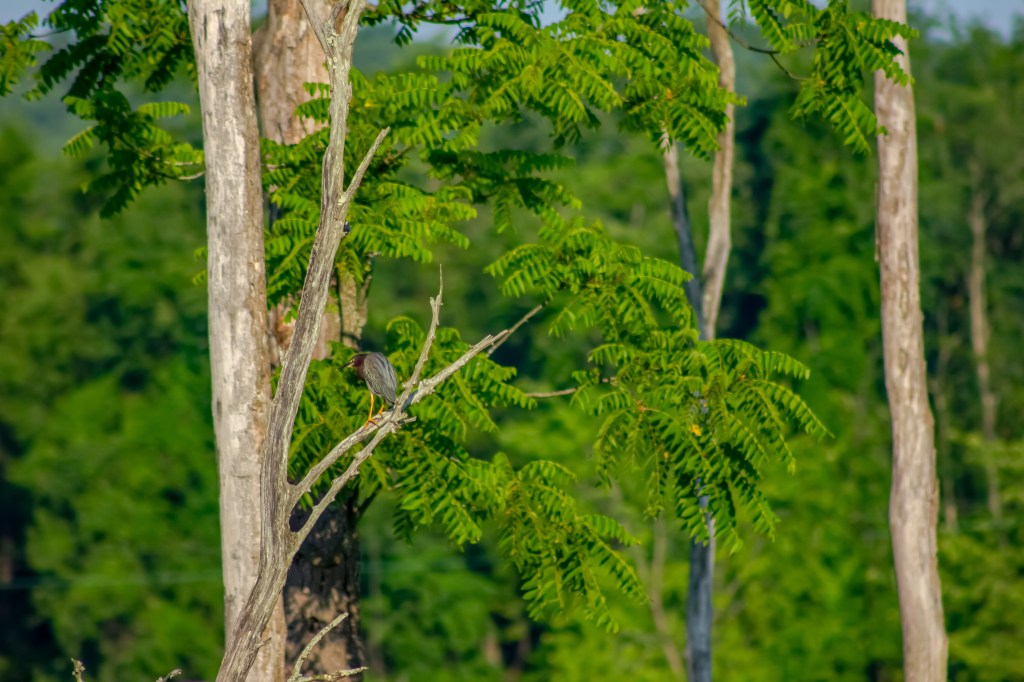
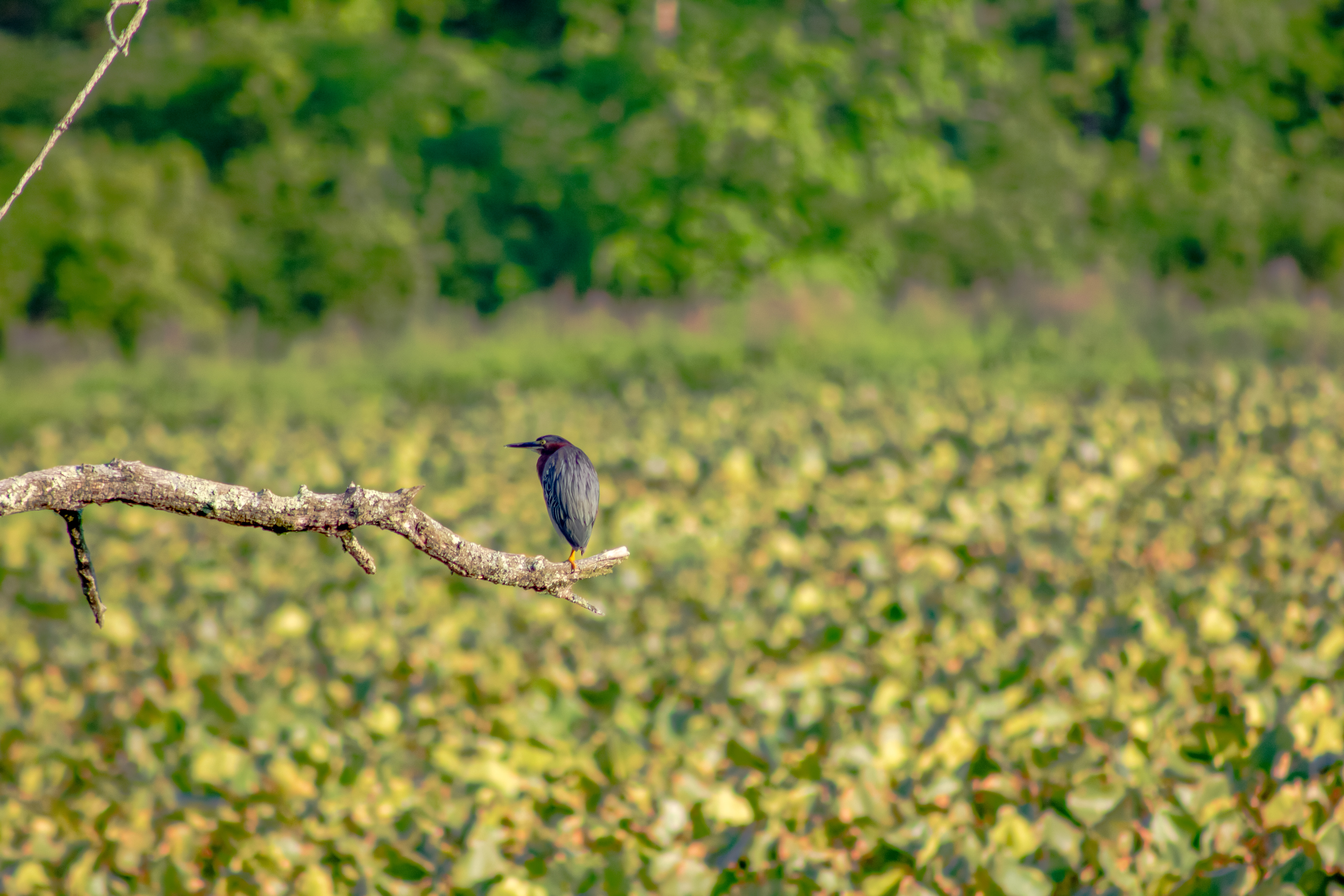
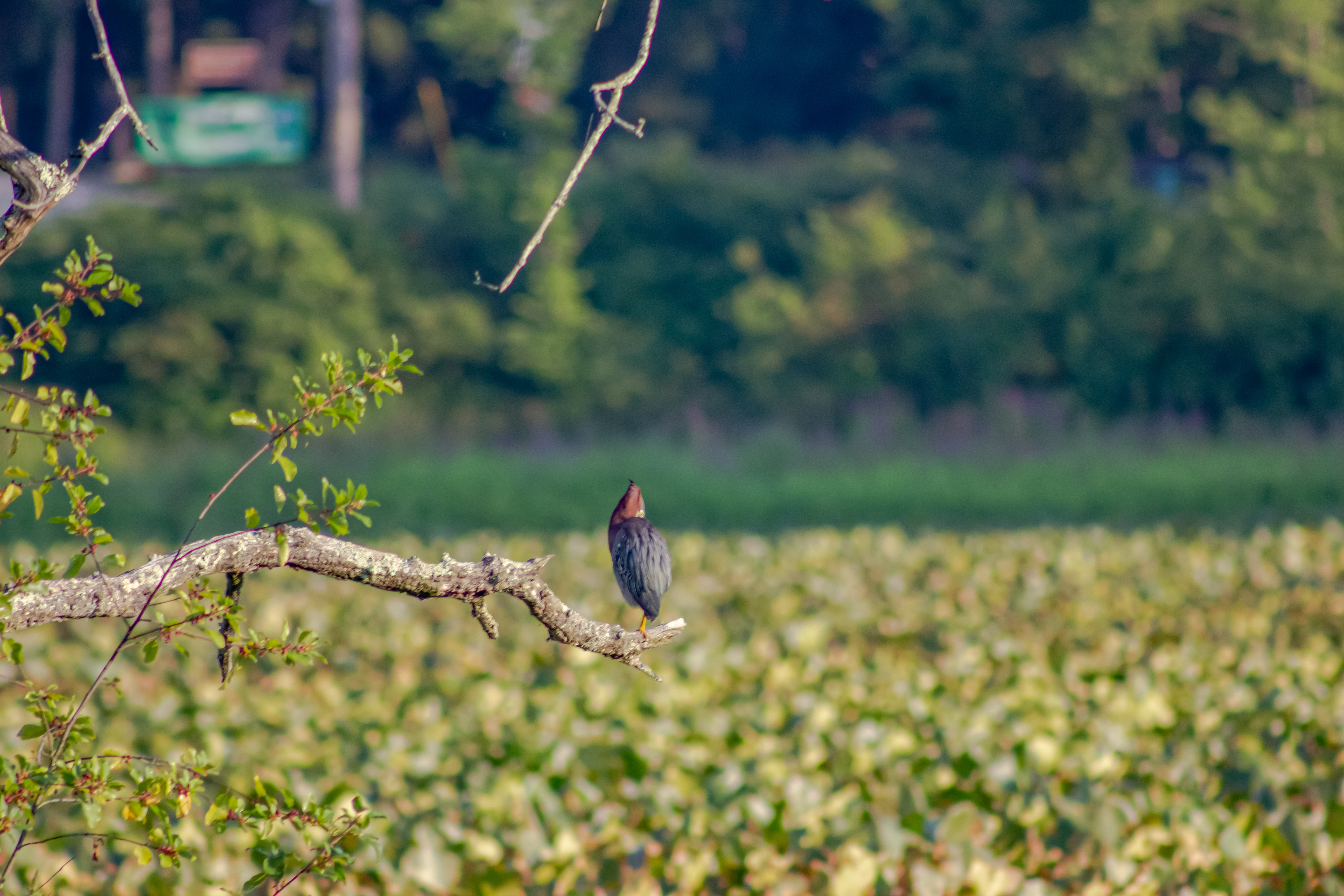
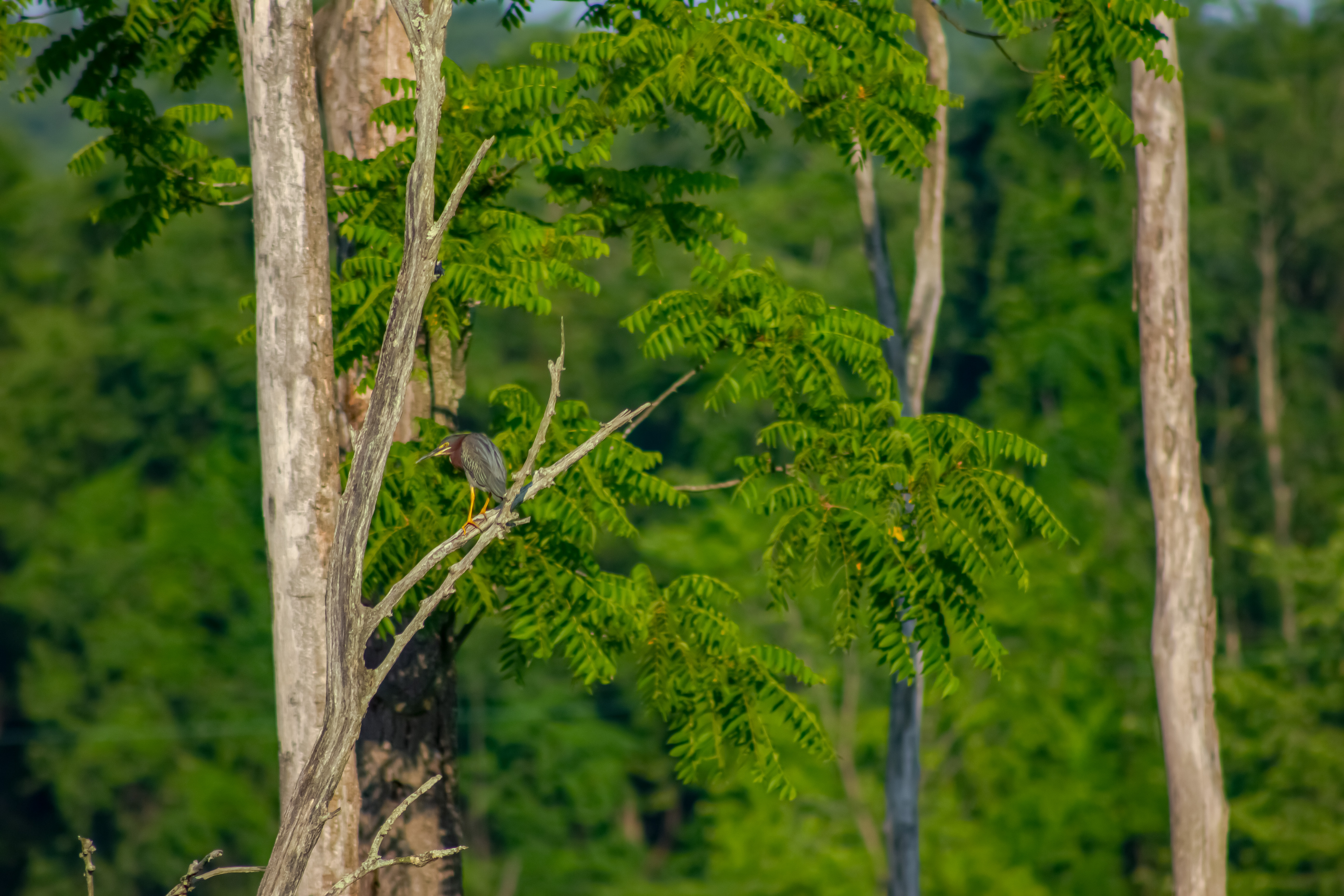
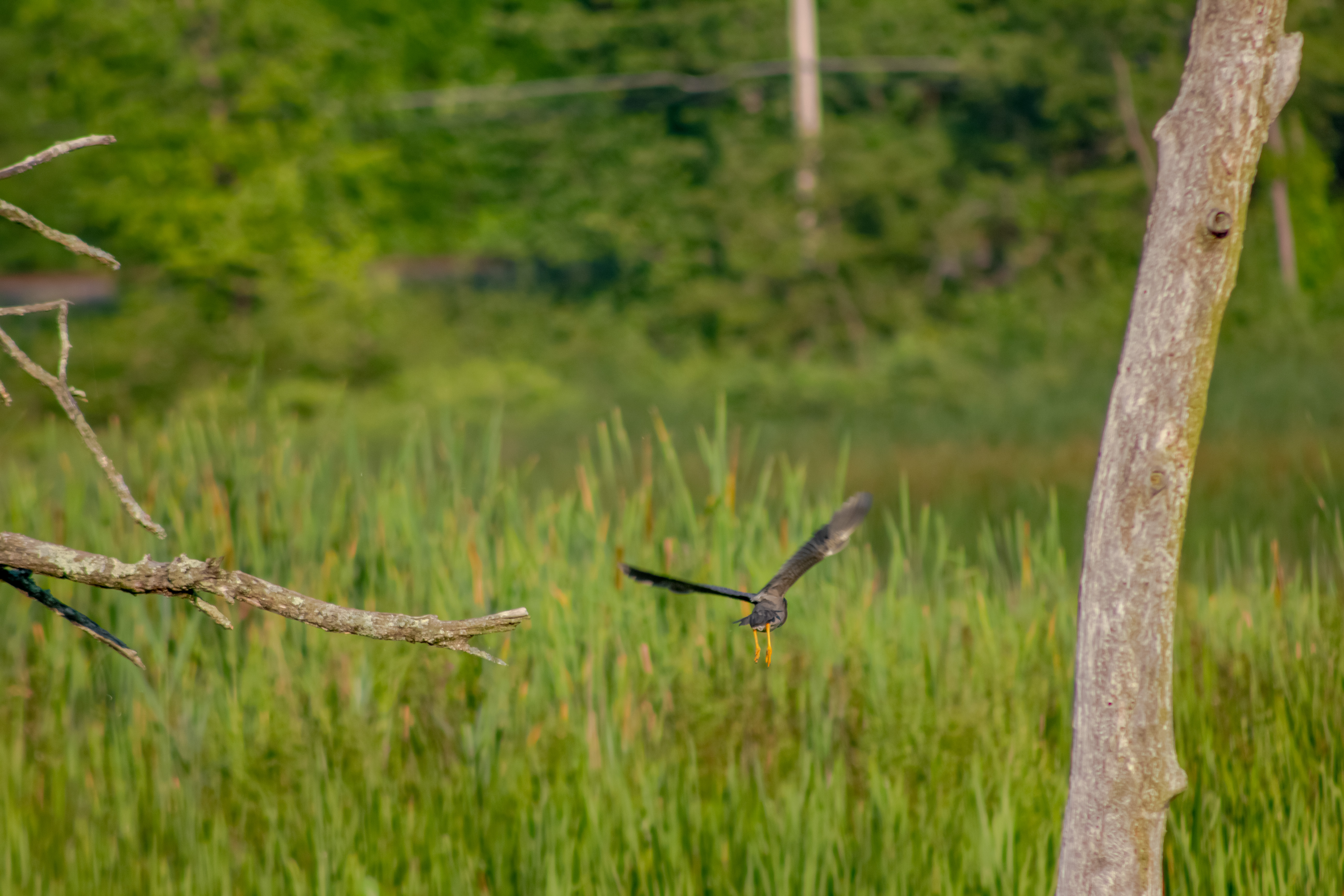
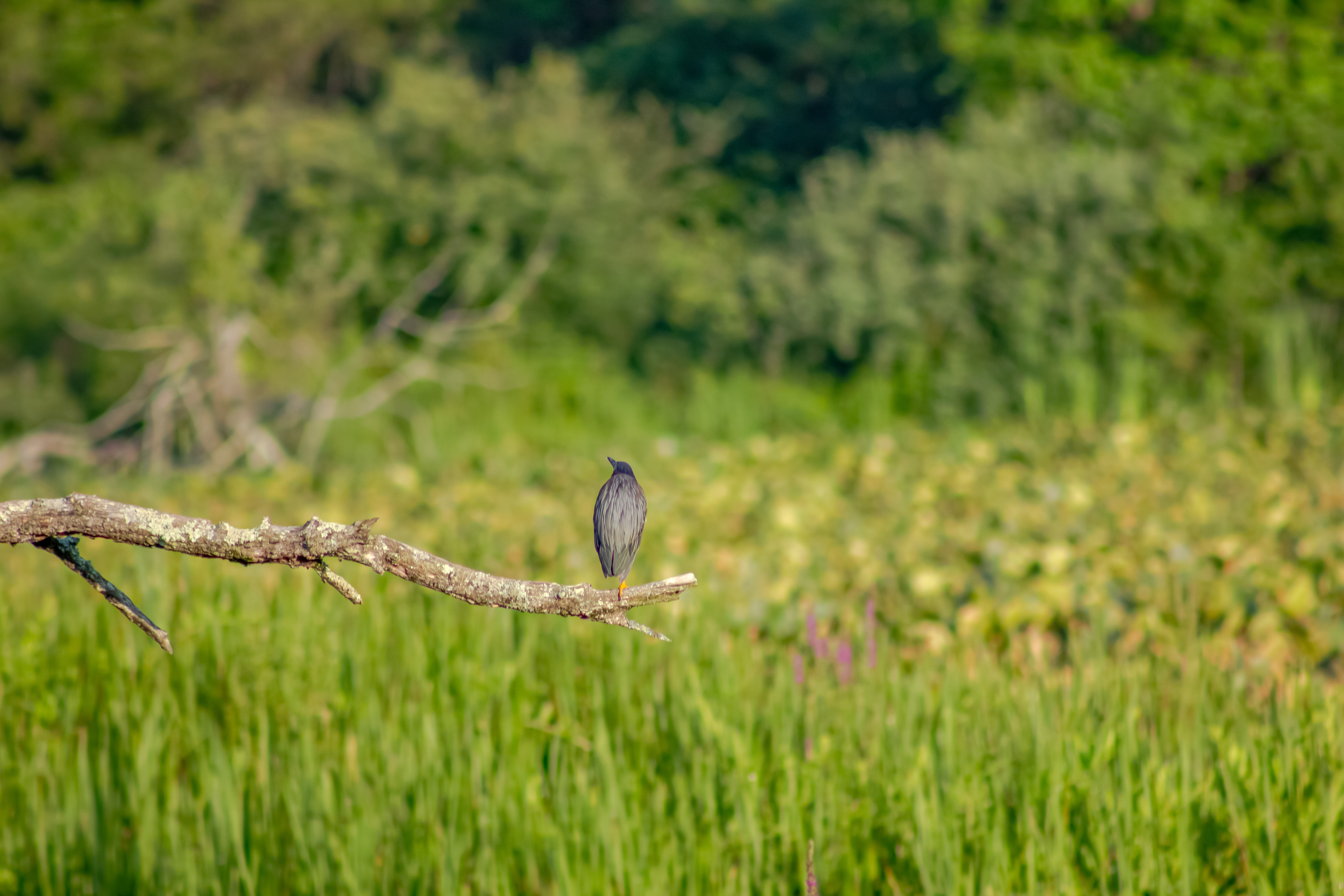
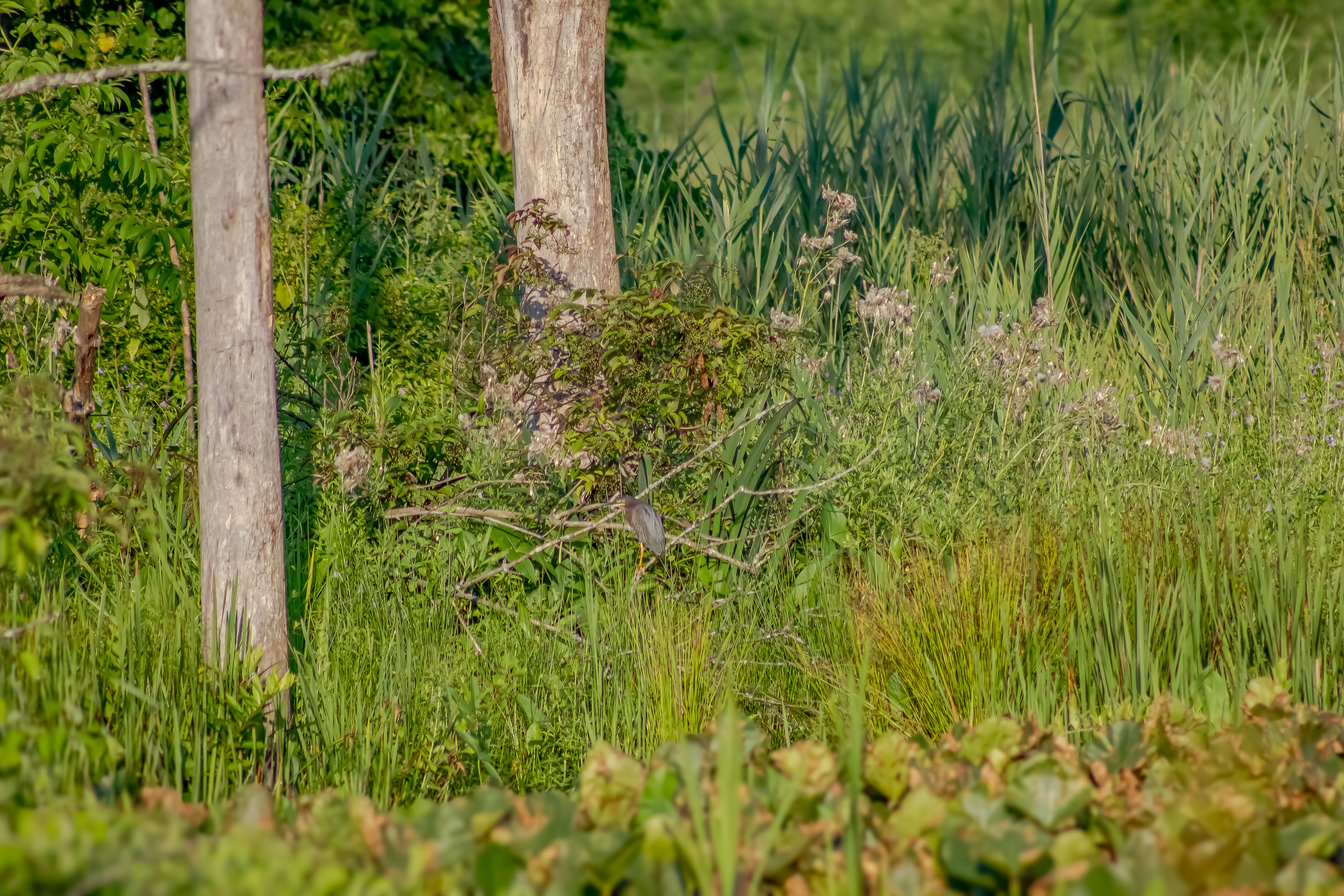
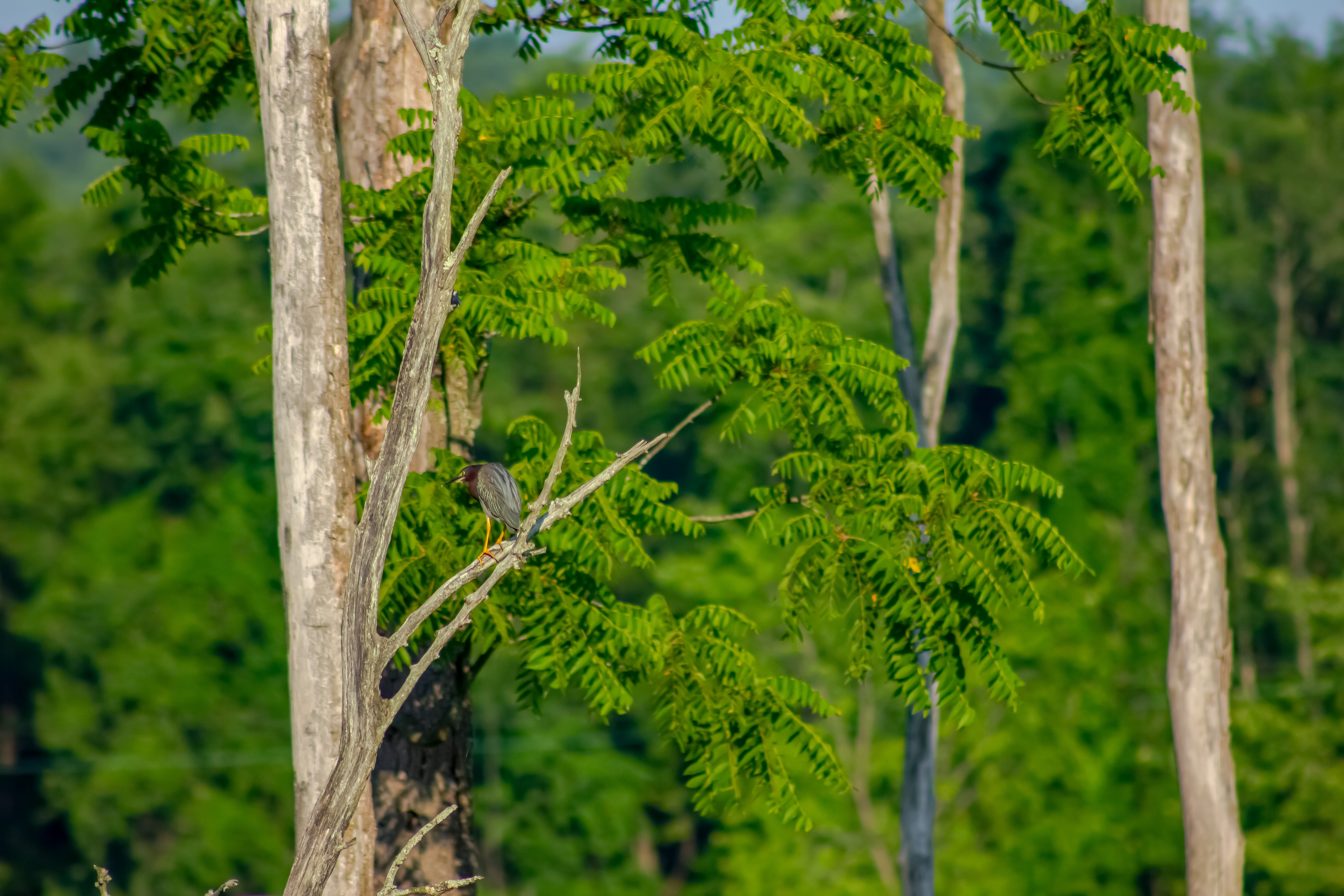
The Green Heron (Butorides virescens) is a small, secretive wading bird found throughout North and Central America. It is one of the few bird species known to use tools, and it displays a rich combination of clever behavior, vibrant plumage, and adaptability to both wild and human-altered environments.
Physical Description
Size: 16–18 inches (41–46 cm) in length.
Wingspan: 25–27 inches (64–68 cm).
Weight: Around 7–9 ounces (200–255 grams).
Coloration: Head & Crest: Dark glossy greenish-black with a shaggy crest.
Back: Rich green-blue.
Neck: Chestnut-colored with a white central stripe.
Belly: Grayish-white. Bill: Long, straight, and sharply pointed; dark on top and yellow at the base.
Legs: Yellowish-orange, turning brighter in breeding season.
Behavior and Intelligence
Tool use: Green Herons are famous for using “bait” (insects, feathers, bread crumbs, twigs) to lure fish—a rare example of tool use in birds. Solitary hunters: Unlike other herons, they usually hunt alone.
Crouching posture: They often adopt a hunched, compact stance at the water’s edge to ambush prey.
Diet and Feeding
Diet: Primarily carnivorous—small fish, frogs, aquatic insects, crustaceans, and sometimes mice or snakes.
Feeding strategy: Still hunting from low perches. Using bait to draw prey. Darting quickly with a sharp bill to spear or grab prey. Hunting locations: Shallow freshwater or brackish habitats—ponds, marshes, creeks, estuaries.
Range and Habitat
Breeding Range: Eastern and southern Canada. Most of the eastern and central U.S., Parts of the Pacific coast, Year-round: Southern U.S., Mexico, Central America, the Caribbean.
Wintering Range: Central America, northern South America, and coastal areas of the southern U.S. Preferred Habitat: Edges of wetlands, rivers, lakes, swamps. Mangroves and estuarine environments. Occasionally in urban parks and backyards with water features
Breeding and Nesting
Breeding season: Late spring to early summer (varies by latitude).
Nesting: Platform nests are built in shrubs or trees near water. Made of sticks and lined with finer materials. Clutch size: 3–6 pale blue or green eggs. Incubation: ~19–21 days by both parents.
Fledgling: Chicks leave the nest around 3 weeks after hatching.
Reproductive strategy: Often double-brooded in warmer climates
Vocalizations
Calls: A sharp, explosive “skeow” or “kyow,” especially when alarmed. Other sounds: Clucks, croaks, and low grunts during nesting or territorial disputes.
Migration
Migratory in the northern parts of the range. Timing: Northbound: Late March to May. Southbound: August to October.
Fly solo or in small loose groups. Navigation: Likely uses landmarks, celestial cues, and magnetic fields.
Conservation Status
IUCN Red List: Least Concern. Population trend: Stable, though localized declines have occurred due to wetland loss and pollution.
Threats: Wetland drainage and degradation. Water pollution. Human disturbance during nesting. Predation by raccoons, snakes, and birds of prey
Cultural and Scientific Notes
Name origin: The genus Butorides means “bittern-like,” and virescens means “becoming green.” Cultural presence: Less well-known than larger herons but admired by birders for its brilliant colors and clever behavior. Scientific significance: Studied for its tool use, an uncommon trait among birds.
Similar Species
Black-crowned Night-Heron (Nycticorax nycticorax): Stockier, lacks chestnut neck, more nocturnal.
Little Blue Heron (Egretta caerulea): Larger, uniformly bluish with no chestnut coloration.
Striated Heron (Butorides striata): Very similar; found mainly in South America, Africa, and Asia; sometimes considered the same species.
Observation Tips
Best time: Early morning or late afternoon. Where to look: Near overhanging branches along slow-moving water. Quiet marsh edges. Behavior to watch: Patience while hunting. Tool use (especially where humans feed ducks and throw bread into water)
 Wild Bird Journal
Leave a comment