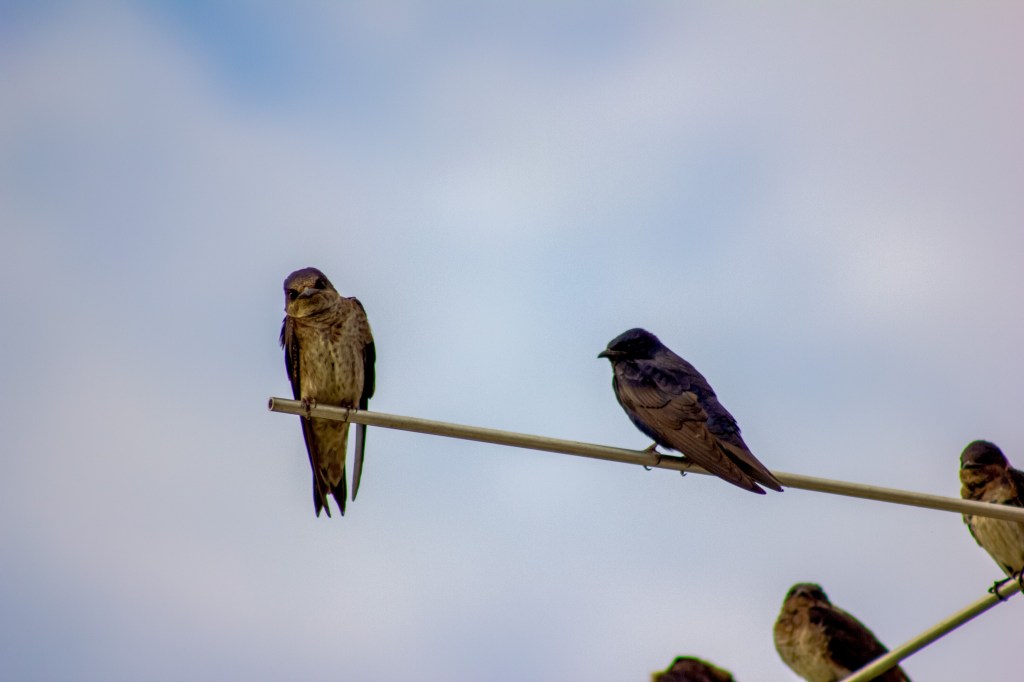
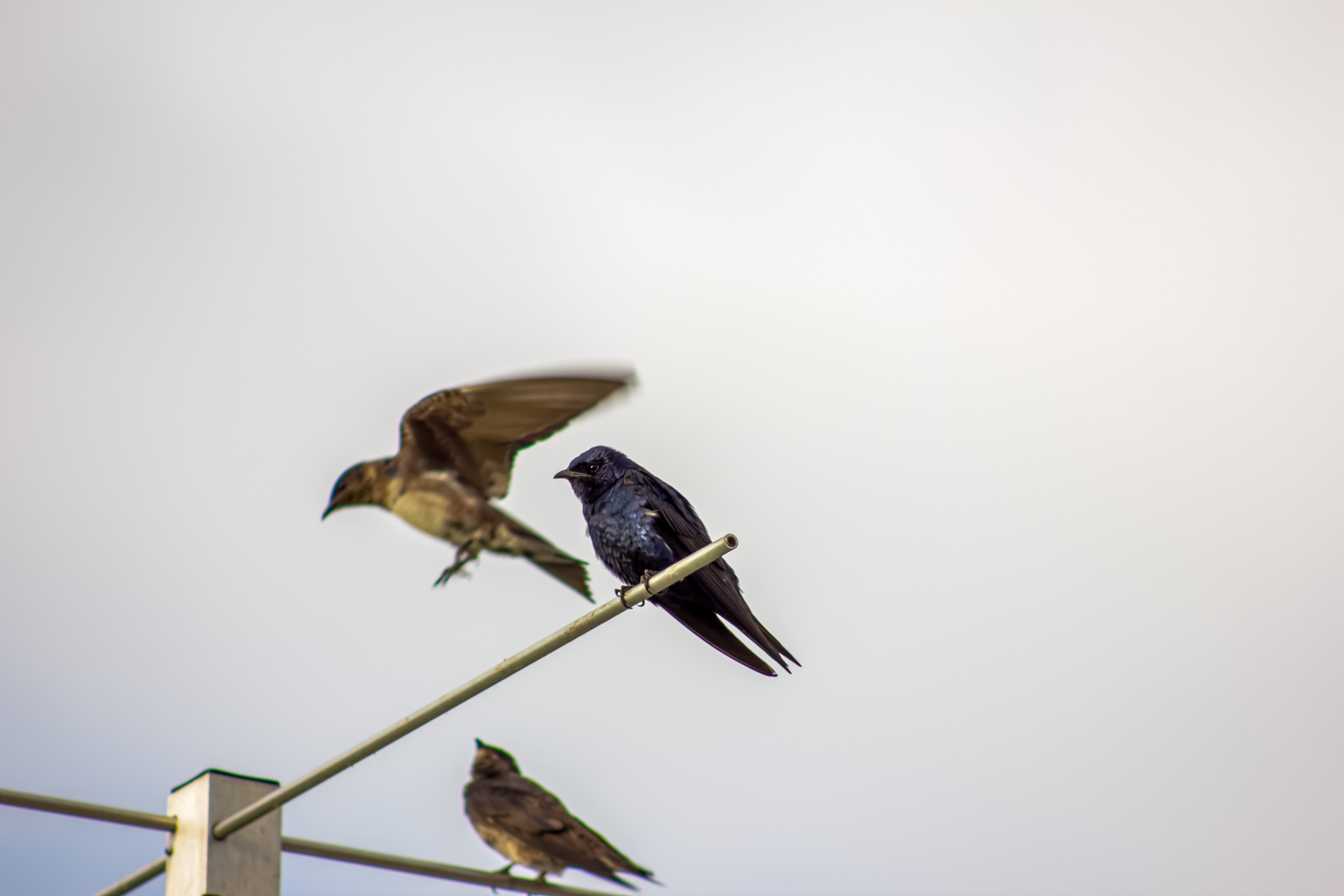
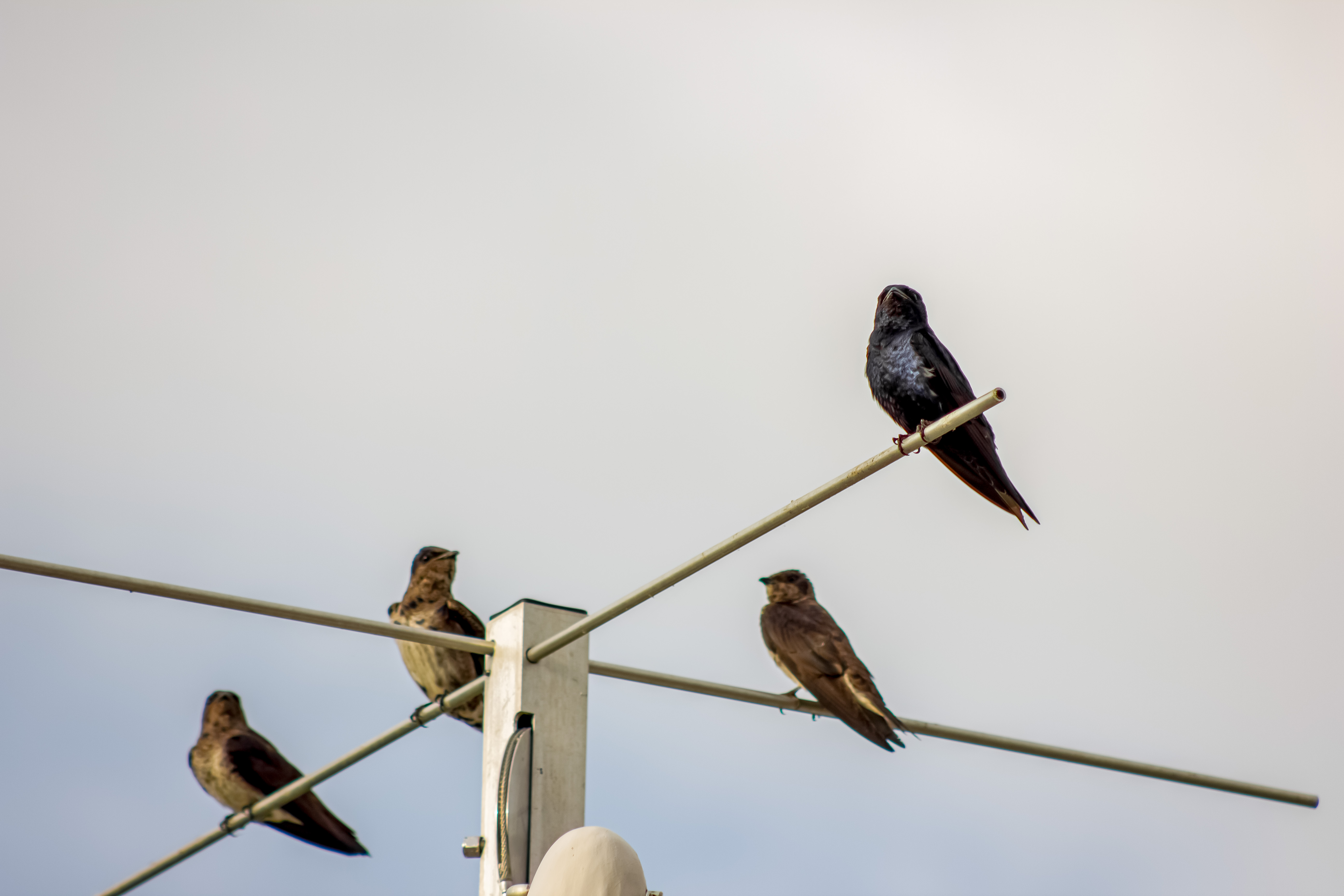
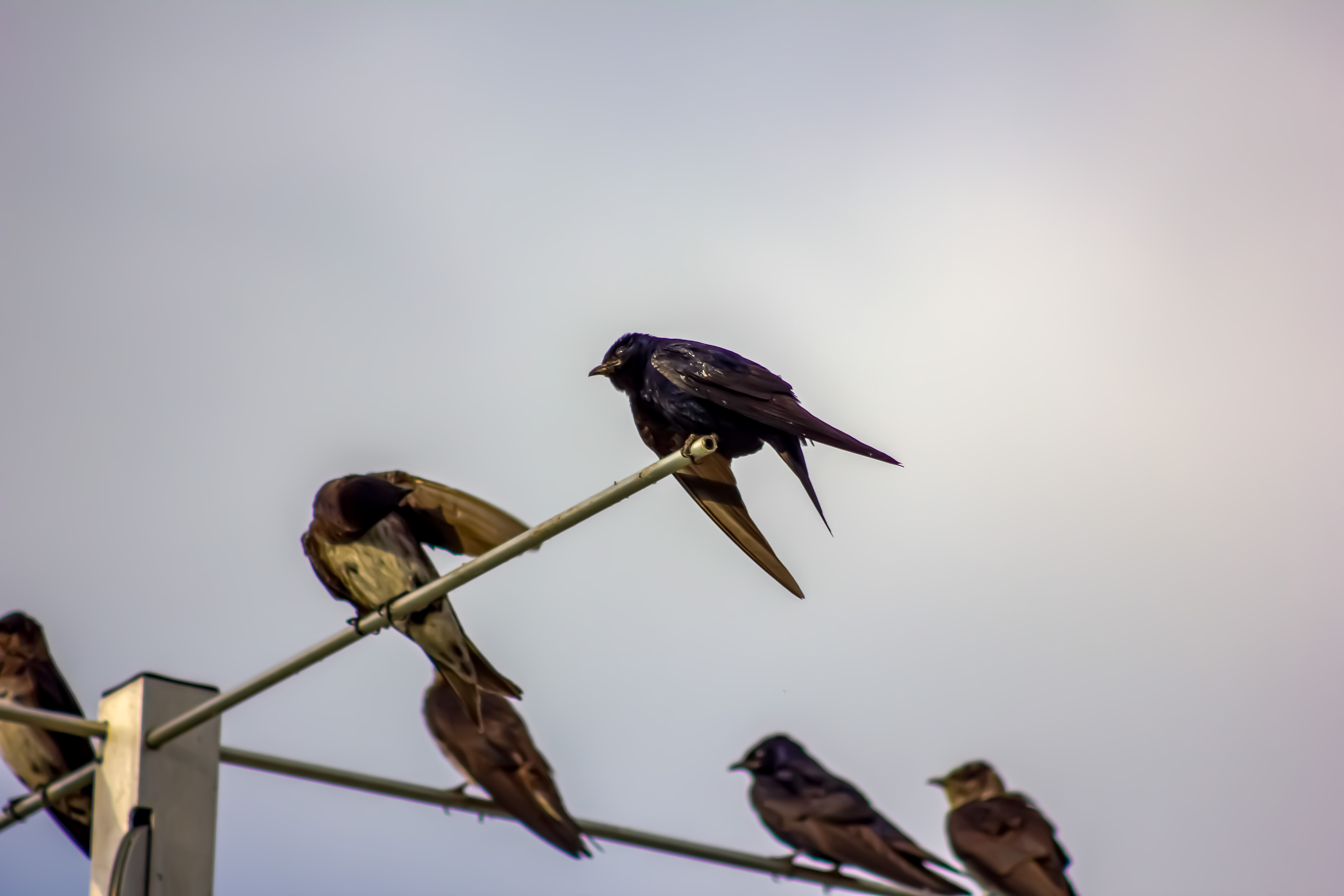

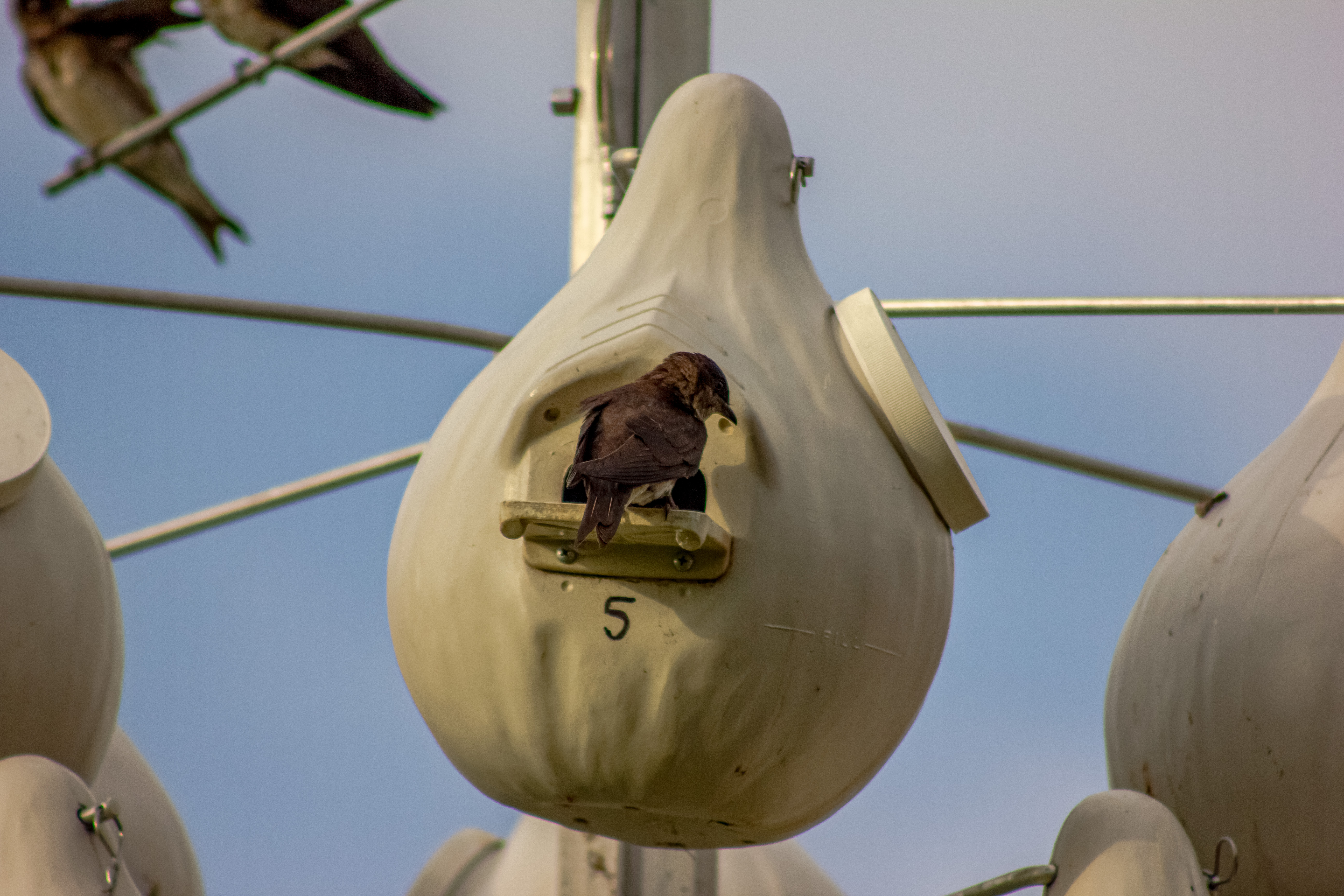
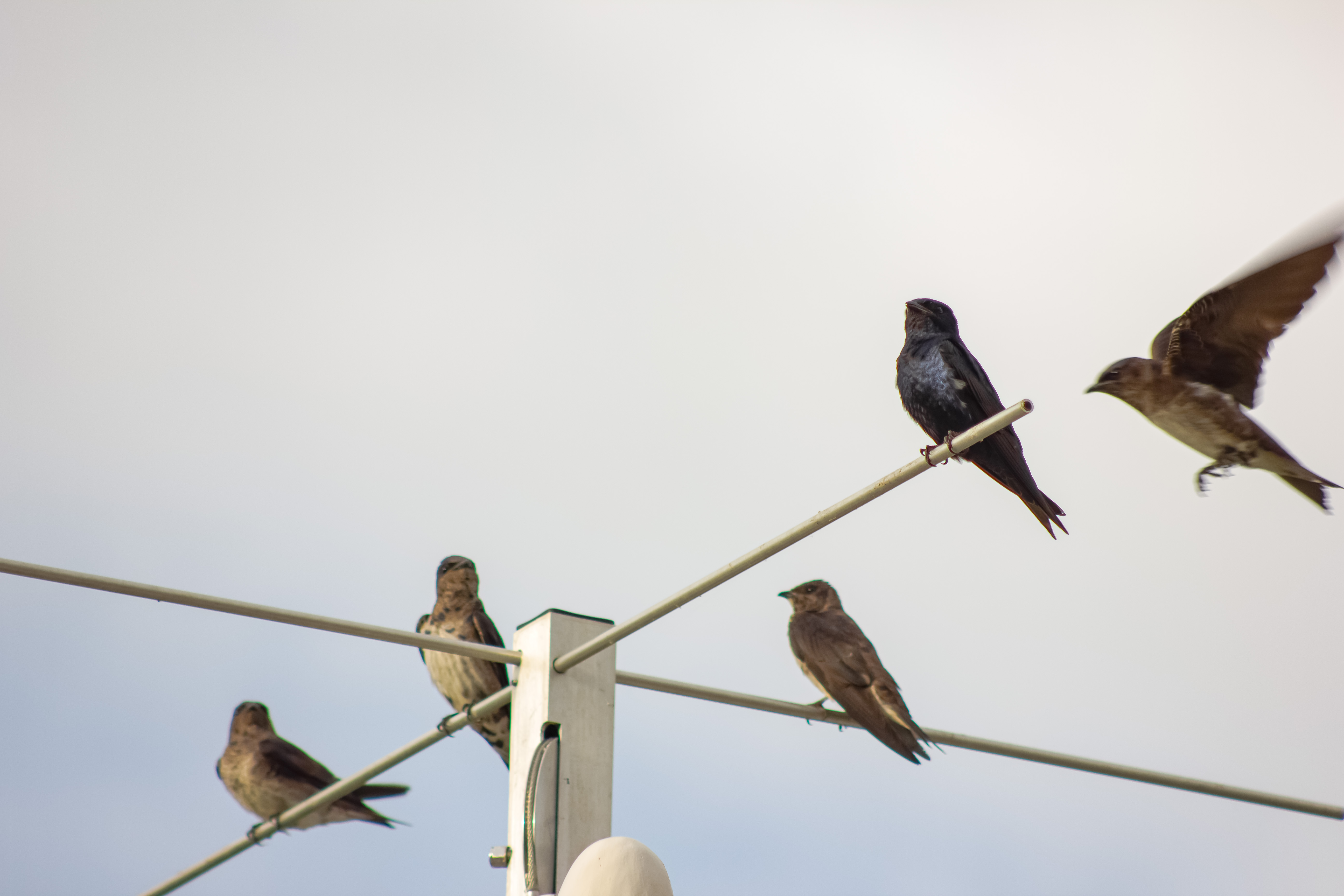
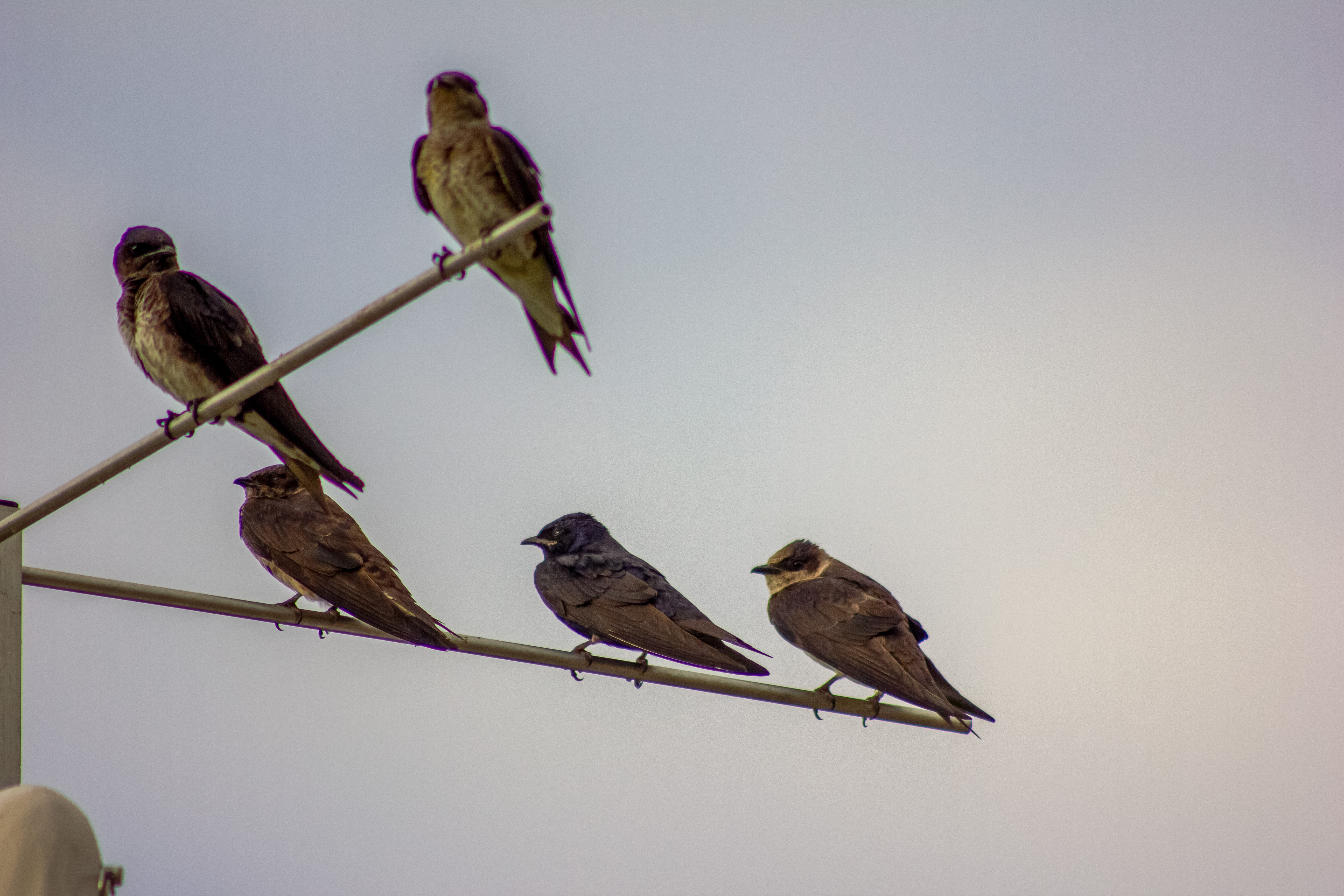
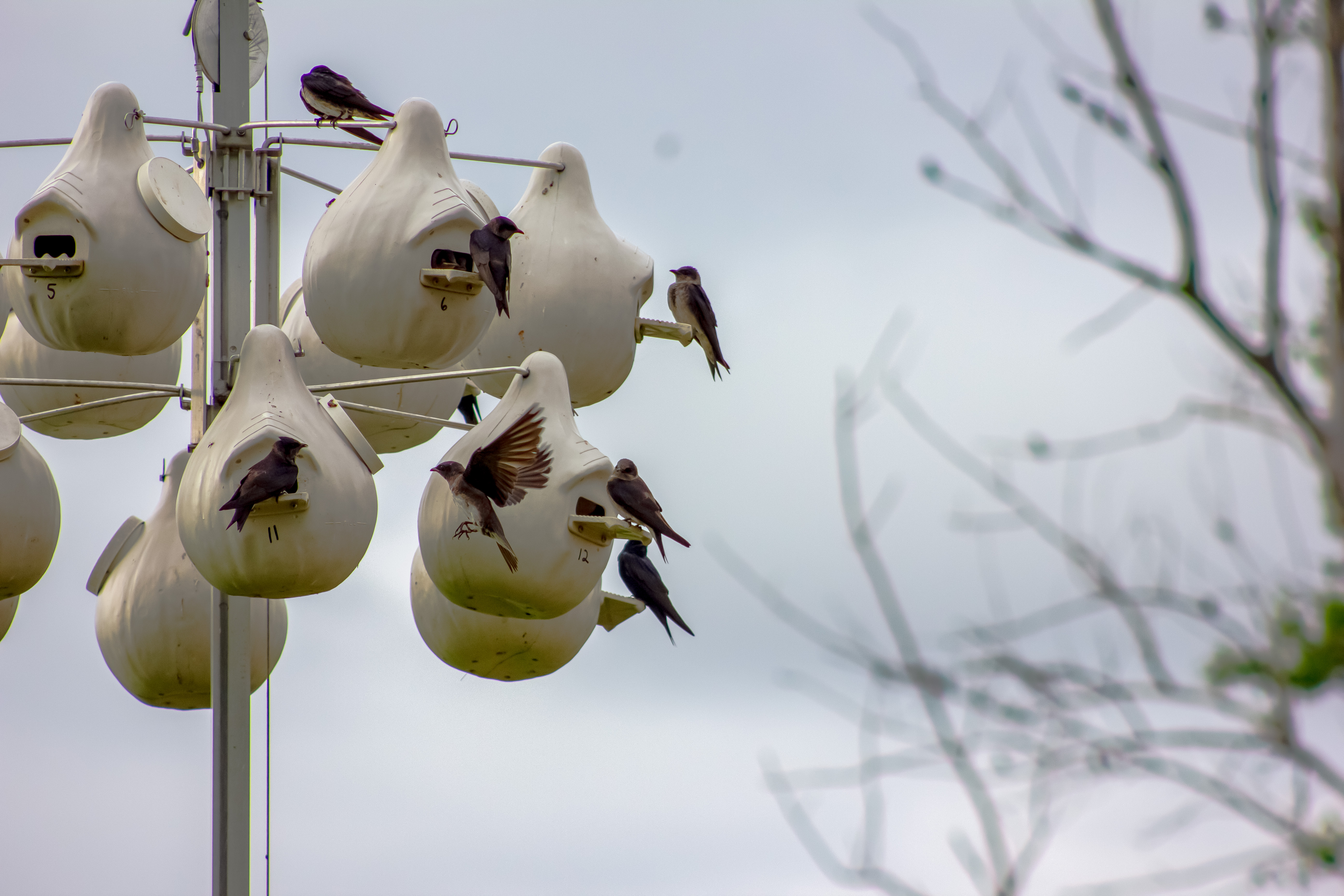
The Purple Martin (Progne subis) is North America’s largest swallow and a charismatic species known for its glossy plumage, aerial acrobatics, and close relationship with humans. Below is a comprehensive overview of the species, covering its taxonomy, physical description, behavior, range, nesting habits, migration, diet, conservation status, and interesting facts.
Physical Description
Size: 7.5–8.5 inches (19–22 cm) long.
Wingspan: 15–16 inches (38–41 cm).
Weight: 1.5–2.1 oz (40–60 grams).
Male Plumage: Iridescent dark purple-blue, often appears black in certain lighting.
Female Plumage: Duller than males, with grayish underparts and some iridescent upperparts.
Juvenile Appearance: Similar to females, but with less sheen and more brownish tones.
Flight Pattern: Agile, fast, and buoyant and acrobatic in flight while catching insects midair
Distribution & Range
Breeding Range: Eastern and central North America, parts of western U.S., and Mexico.
Wintering Range: Primarily in South America, especially Brazil, Bolivia, and surrounding countries.
Migration: Long-distance migrant; among the earliest swallows to return in spring (as early as January in the Gulf states and as late as May in northern areas)
Habitat
Breeding Habitat: Open areas near water, meadows, fields, suburban gardens, parks.
Preferred Nesting Areas: Eastern birds heavily depend on human-provided nesting structures like Martin houses and gourd colonies.
Western birds: Often nest in natural cavities such as old woodpecker holes or saguaro cacti
Nesting & Reproduction
Nesting Type: Cavity nesters. Preferred Structures: In the east, nearly 100% nest in artificial housing provided by people.
Nest Material: Twigs, grass, mud, and green leaves (often fresh leaves added throughout nesting period). Clutch Size: 3–7 eggs (usually 4–6). Incubation Period: 15–18 days.
Fledging Period: 26–32 days after hatching. Broods: Typically one brood per year. Site Fidelity: Many return to the same colony site annually
Diet
Primary Diet: Flying insects and aerial insectivores.
Common Prey: Beetles, Flies, Dragonflies, Wasps, Moths, Ants.
Feeding Behavior: Forages exclusively on the wing, often at higher altitudes than other swallows. Drinking: Scoops water in flight from the surface of lakes, ponds, or rivers
Behavior
Social Structure: Highly social; nest in colonies, roost in large flocks. Vocalizations: Variety of chirps, clicks, and chortles; males sing a rich, gurgling warble.
Territoriality: Males defend cavity entrance but tolerate nearby neighbors in colonies.
Courtship Displays: Includes wing-fluttering and song; males often perch and sing near potential nest sites
Migration
Timing: Spring Migration: Begins January through April depending on latitude.
Fall Migration: Late July to September. Route: Fly across the Gulf of Mexico or through Central America.
Stopover Sites: Known to gather in enormous pre-migratory roosts, sometimes in the hundreds of thousands
Predators & Threats
Predators: Owls (especially Eastern Screech-Owls), Hawks, Snakes, Raccoons, and Domestic cats.
Nesting Threats: Competition from House Sparrows and European Starlings for cavities. Nest usurpation or destruction by other birds. Other Threats: Habitat loss. Declining insect populations (pesticide use). Severe weather during migration
Conservation Status
IUCN Status: Least Concern. Population Trends: Declining in some areas due to competition and habitat loss.
Conservation Efforts: Providing nesting boxes and gourd colonies. Controlling invasive bird species in colonies. Public education via the Purple Martin Conservation Association (PMCA)
Human Connection
Purple Martins have been encouraged to nest near humans for centuries. Indigenous peoples of the southeastern U.S., especially the Cherokee, were among the first to hang hollow gourds for martins. Today, landlords (people who maintain martin houses) are crucial to the species’ success, especially in the east.
Interesting Facts
Purple Martins don’t eat mosquitoes as much as commonly believed (mosquitoes fly too low). They can fly up to 500 miles in a single day during migration. Some roosting colonies in the south (e.g., in Texas) may contain up to 750,000 birds. The iridescence of their feathers comes from microscopic structures that refract light, not pigments. Their migration is tracked using geolocators and citizen science projects.
 Wild Bird Journal
Leave a comment