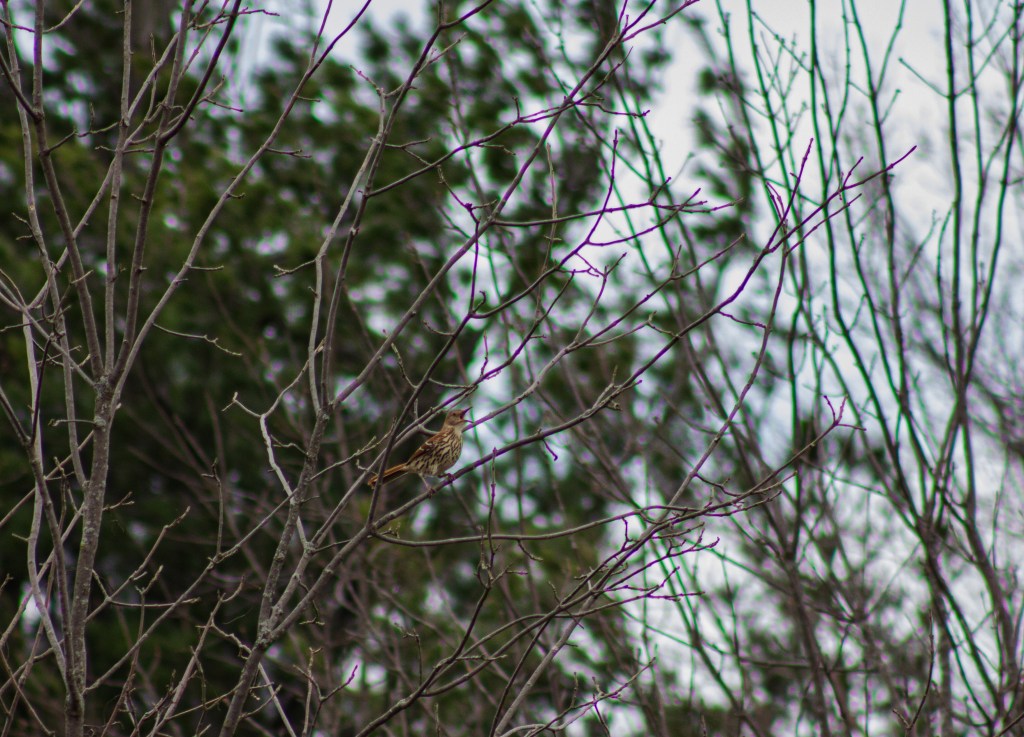
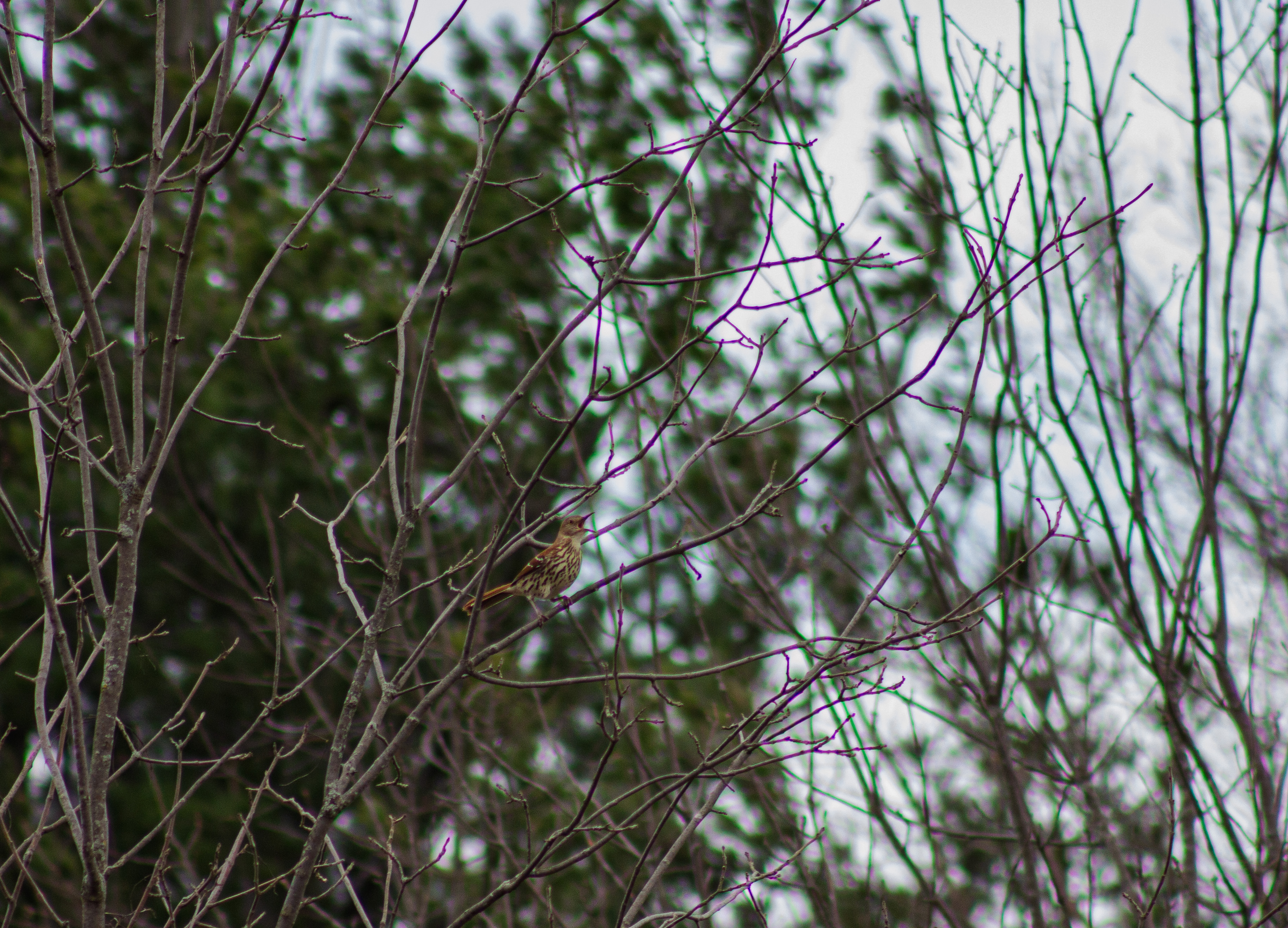
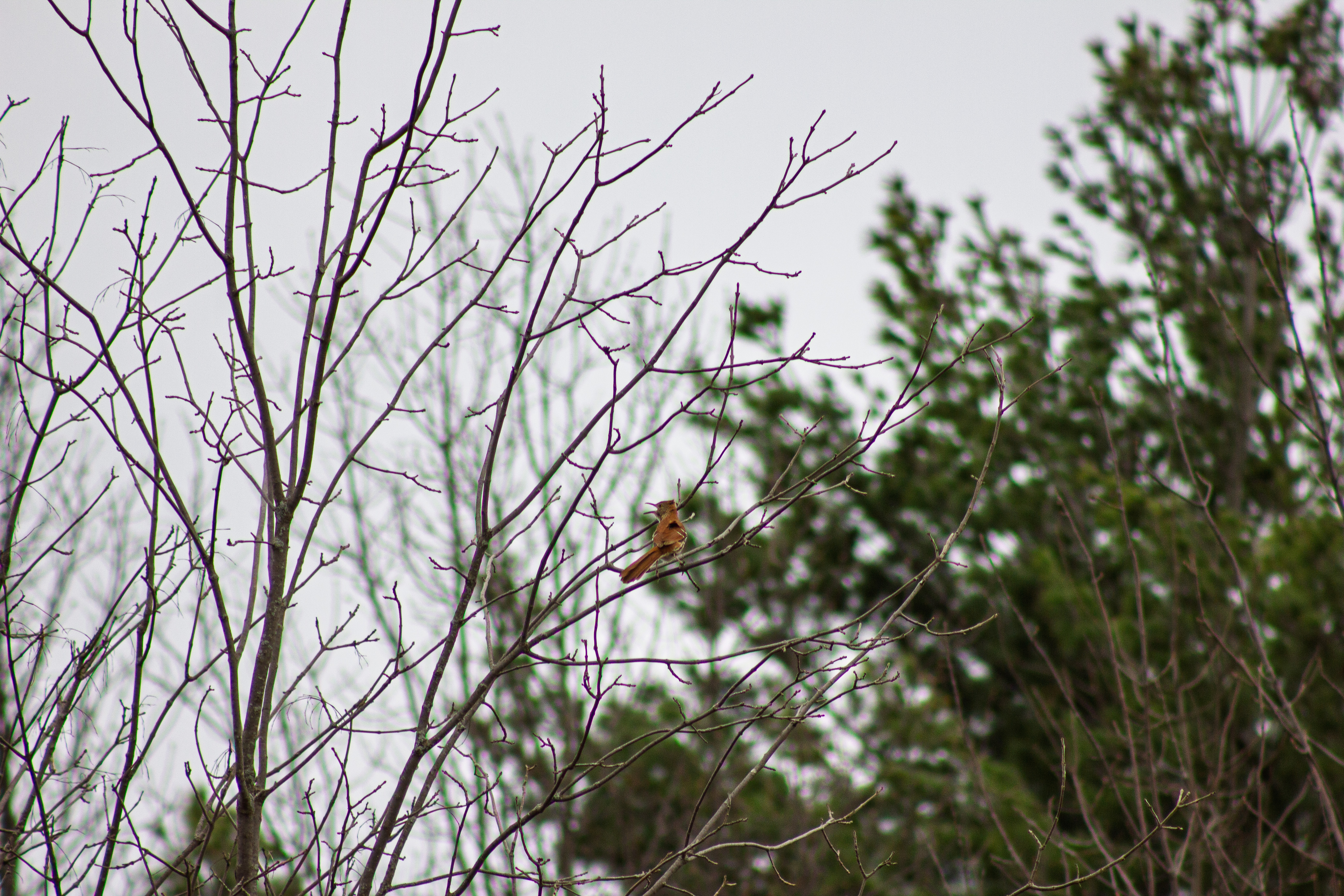
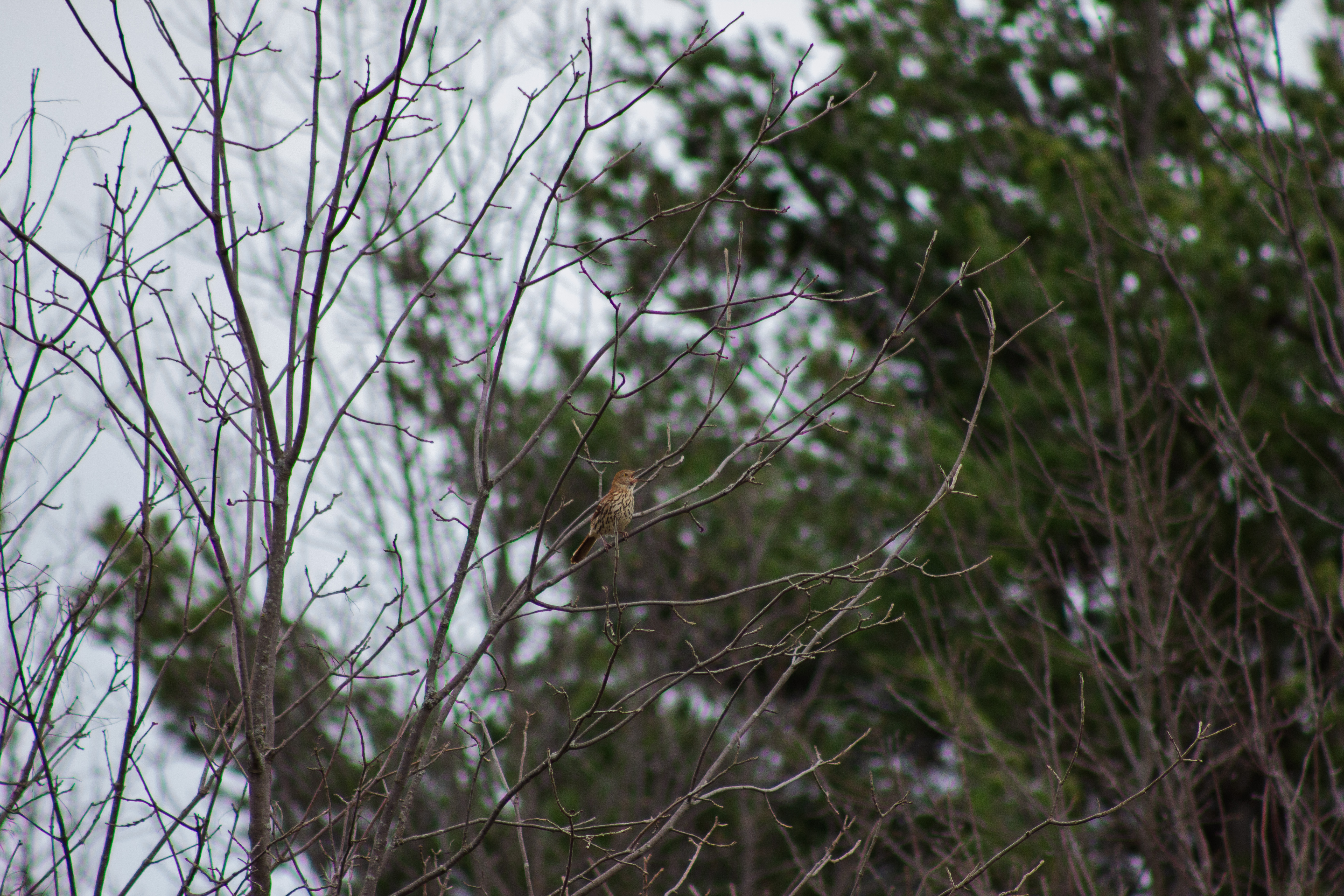
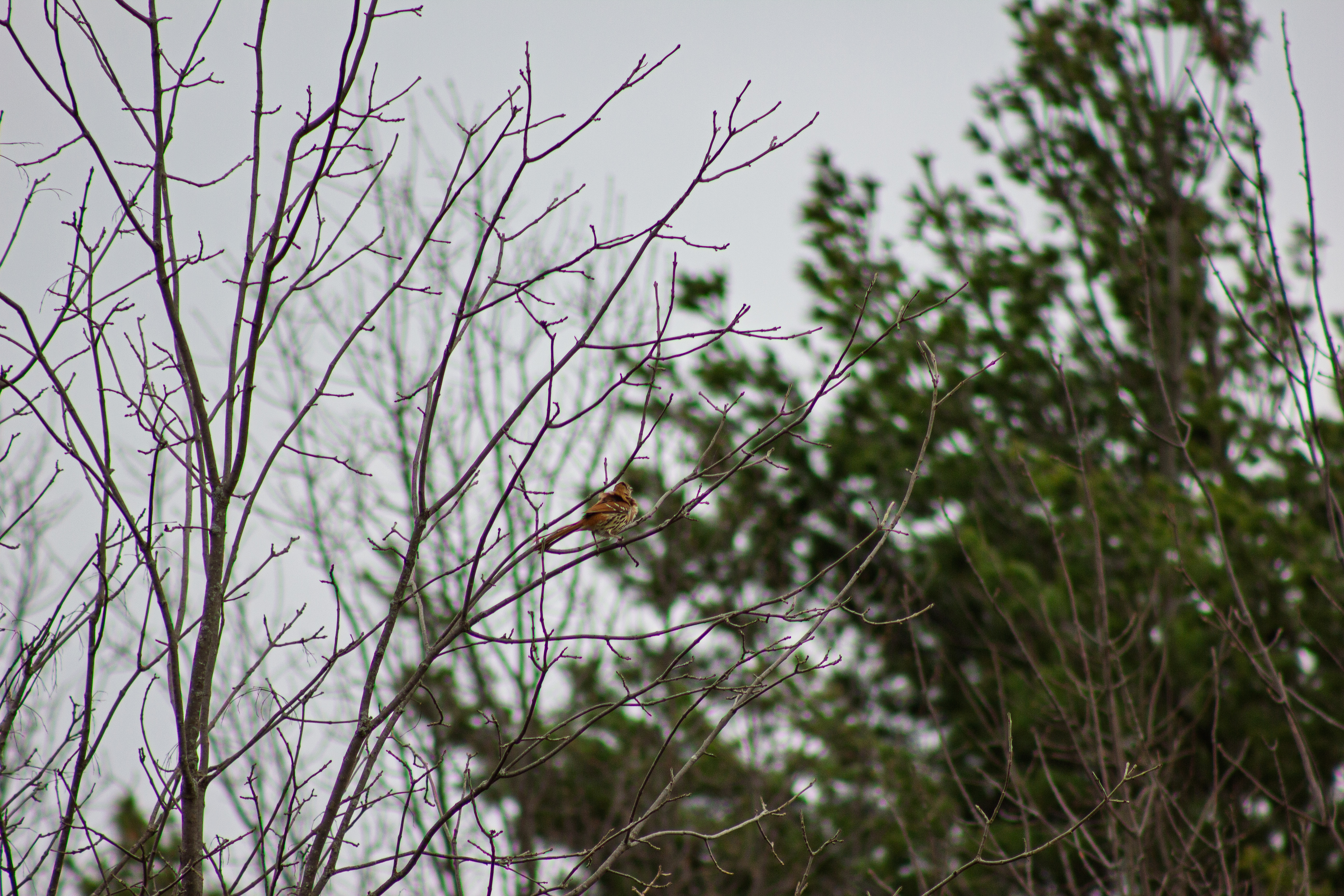
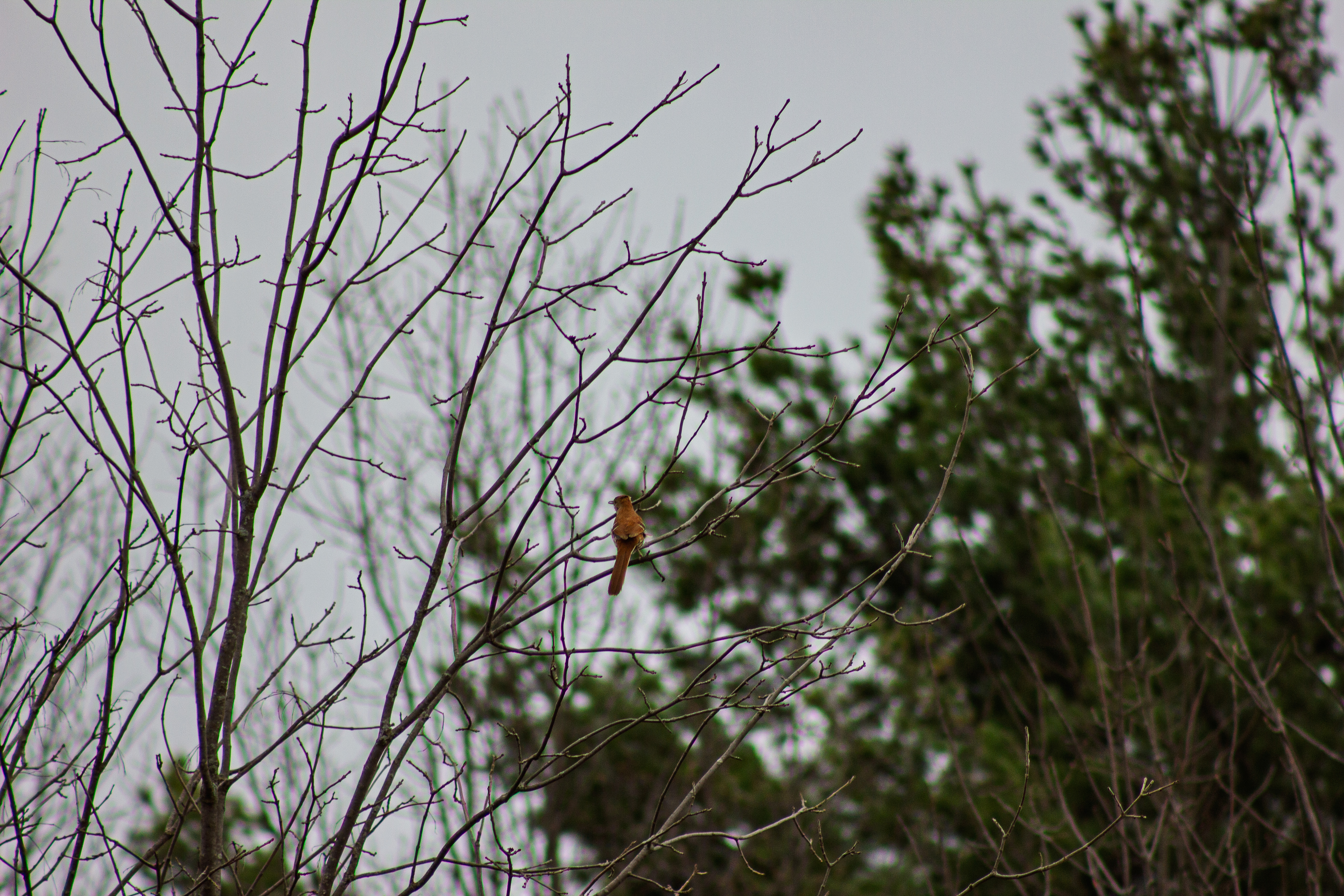
The Brown Thrasher (Toxostoma rufum) is a striking, rufous-colored songbird native to North America and a member of the mockingbird family. Known for its bold yellow eyes, heavily streaked breast, and long tail, this secretive bird is often heard before it is seen. Remarkably, the Brown Thrasher is among the most accomplished songsters in the avian world, with a repertoire of over a thousand different song types, usually delivered in pairs of repeated phrases. Found in dense thickets, hedgerows, and forest edges, it forages on the ground by vigorously “thrashing” through leaf litter in search of insects, fruits, and seeds.
Appearance
Size: About 9–12 inches (23–30 cm) long, similar in length to a Blue Jay but slimmer.
Wingspan: 11–13 inches (28–33 cm).
Weight: ~2.0–3.1 ounces (57–89 grams).
Coloration: Rich rufous-brown upperparts. Slightly down-curved brownish bill. White underparts with bold dark streaking. Long, slightly rounded tail with rufous edges. Yellow eyes (distinctive feature).
Sexes: Males and females look alike.
Behavior
Song: Extremely varied, often mistaken for Northern Mockingbirds. Brown Thrashers can sing over 1,000 song types, making them one of the most versatile songbirds. Unlike mockingbirds (who repeat phrases 3+ times), thrashers usually repeat a phrase twice.
Mimicry: They imitate other birds, frogs, and even mechanical noises.
Foraging: Named “thrasher” because of their foraging style — they use their long bills to thresh through leaf litter on the ground. Diet: Insects (beetles, grasshoppers, caterpillars), earthworms, snails, lizards, small fruits, nuts, acorns, and seeds.
Territoriality: Very aggressive when defending nests. It will attack snakes, cats, and even humans that get too close.
Habitat & Range
Habitat: Dense brush, thickets, hedgerows, forest edges, overgrown fields, and suburban shrubbery.
Geographic Range: Found throughout the eastern and central United States. The range extends into southern Canada during the breeding season. Winters in the southeastern U.S. are sometimes year-round for residents in southern states.
Breeding
Season: Typically April through July.
Nests: Low shrubs, small trees, or sometimes on the ground. Bulky nests made of twigs, leaves, and grasses.
Eggs: 3–5 pale blue to greenish-white eggs with brown speckles. Incubation: ~11–14 days (by both sexes).
Fledging: Young leave nest about 9–13 days after hatching.
Broods: Usually 2 broods per season.
Migration
Northern populations: Migratory (move south for winter). Southern populations: Largely resident year-round. Migration is not as pronounced or noticeable as other songbirds.
Conservation Status
IUCN Status: Least Concern, but populations are declining (~40% decline since 1966 in some areas). Threats: Habitat loss (clearing of hedgerows and thickets). Predation from domestic cats. Collisions with windows.
Interesting Facts
State bird of Georgia. Thrashers are “secretive” — you’ll often hear them before you see them. They are monogamous, with strong pair bonds during the breeding season. Their Latin name Toxostoma rufum means “red bow-mouth” — referring to their curved bill and reddish color. Despite their talent, they are less studied than mockingbirds and catbirds.
How to Spot One
Look for a flash of rufous in thickets or under shrubs. Listen for pairs of repeated phrases (key ID feature in song). Often perched low, not high in trees like mockingbirds.
 Wild Bird Journal
Leave a comment