


General Description
Scientific Name: Tringa melanoleuca.
Family: Scolopacidae (the sandpipers and allies) Size: Medium-to-large shorebird, about 29–40 cm (11–16 in) long, with a wingspan of 55–65 cm (22–26 in). Weight: Roughly 110–250 g (4–9 oz).
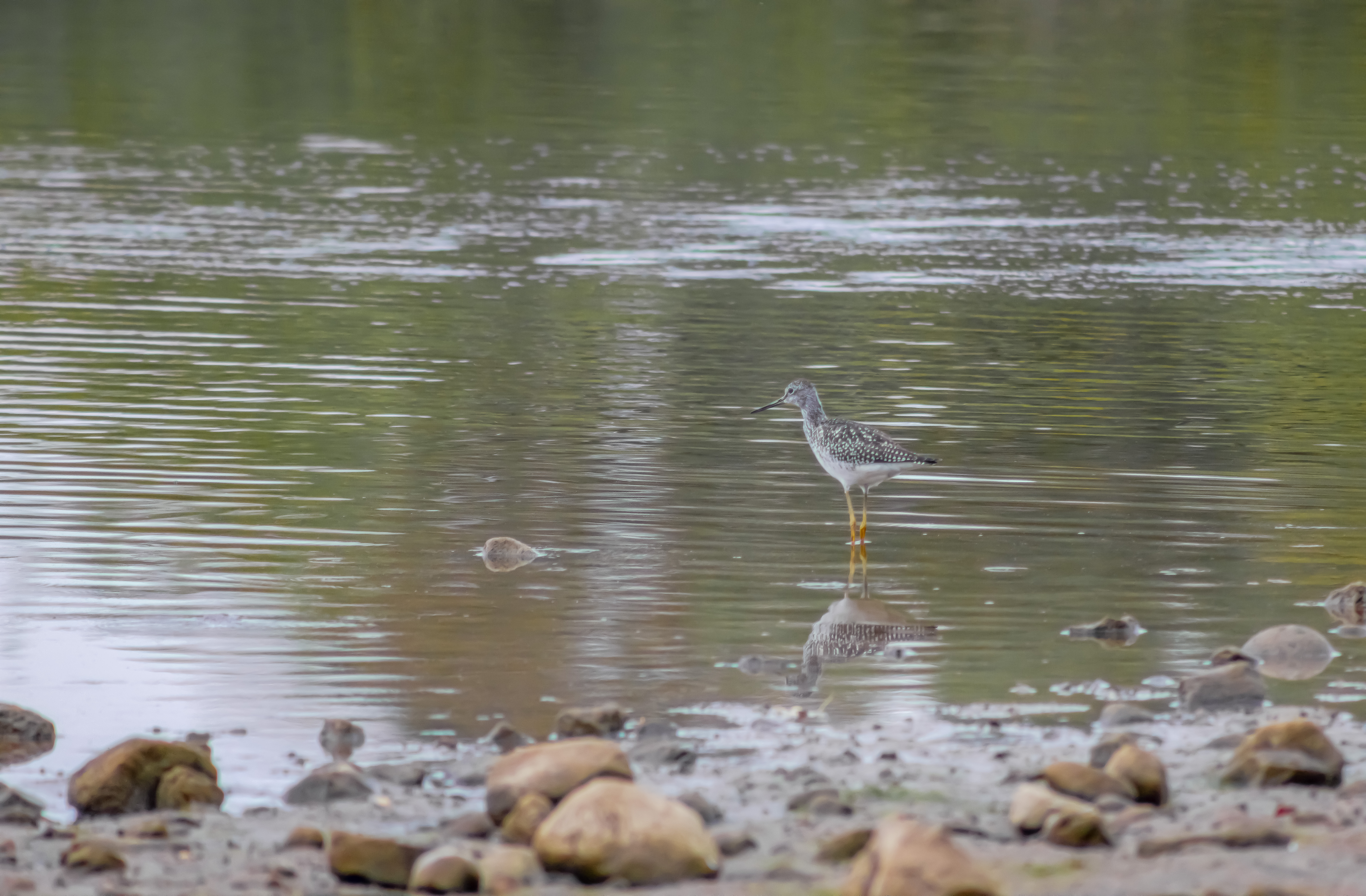
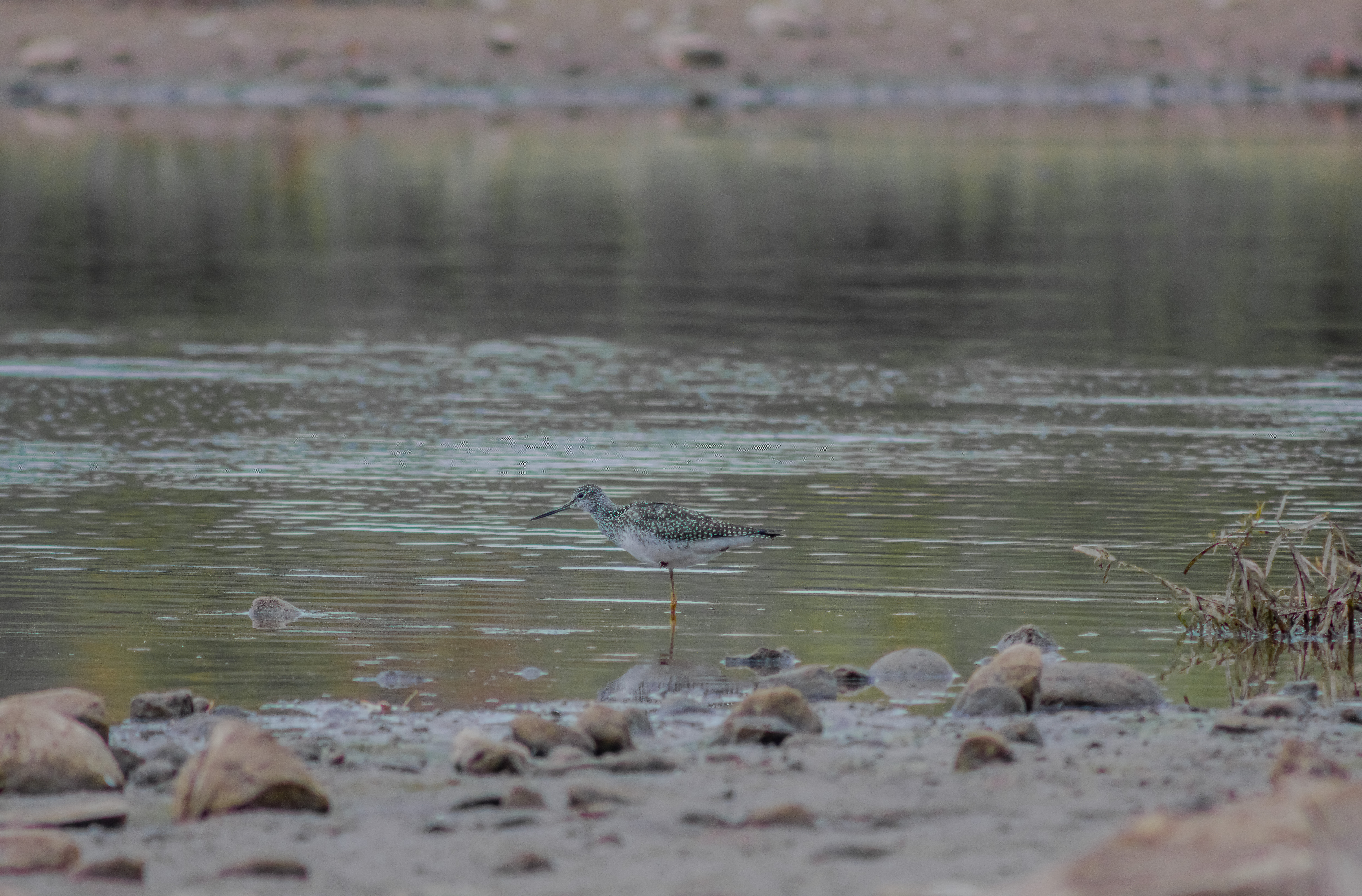
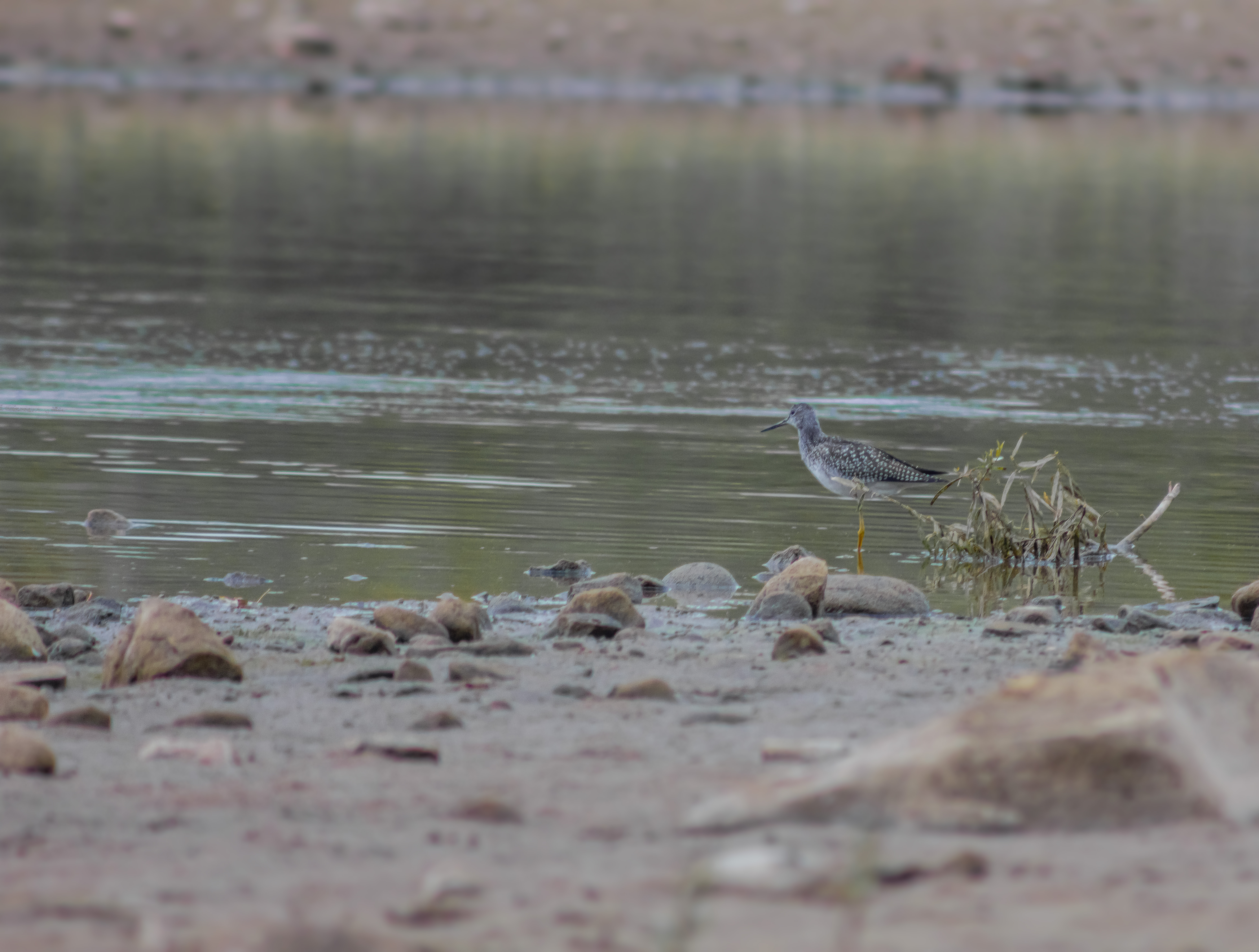
Appearance: Long, slender neck and body. Striking bright yellow legs (hence the name). Long, slightly upturned dark bill (approximately 1.5 times the length of the head, differentiating it from the Lesser Yellowlegs).
In breeding plumage: bold streaks and spots on neck, breast, and back. In winter plumage: plainer grayish above, whitish below.
Range and Habitat
Breeding Range: Boreal forests, bogs, and muskegs of Canada and Alaska. They prefer wet, open areas with scattered trees and ponds.
Migration: A long-distance migrant. They travel through the U.S. during spring and fall, using wetlands, mudflats, and estuaries.
Wintering Range: Southern U.S., Mexico, Central America, the Caribbean, and as far south as southern South America.
Habitat: Shallow wetlands, estuaries, mudflats, flooded fields, coastal lagoons, and mangroves.
Behavior
Foraging: Wades in shallow water, using a characteristic “stitching” motion as it probes mud and water for food. Sometimes seen chasing prey actively in water, unlike many other shorebirds that feed more passively.
Diet: Primarily small fish, aquatic insects, crustaceans, snails, and worms. They occasionally eat frogs and other small marine organisms.
Vocalizations: Distinctive, loud “tew-tew-tew” calls, sharper and more insistent than the Lesser Yellowlegs’ shorter call. They are pretty vocal, especially in flight.
Social Behavior: Often solitary or in small groups, though may mix with other shorebirds during migration and winter.
Reproduction
Breeding Season: May–July, in northern boreal wetlands. Nesting: Ground nest, typically in a clump of sedges or moss near water. Simple scrape lined with grasses, moss, or leaves.
Clutch Size: Usually 4 eggs, buff or olive with dark blotches. Incubation: Both sexes incubate, lasting about 23 days.
Chick Development: Young are precocial, able to walk and feed themselves shortly after hatching, though parents protect and lead them to foraging areas.
Identification Challenges
Greater vs. Lesser Yellowlegs: The Greater Yellowlegs has a longer bill (longer than head, slightly upturned). Calls differ: Greater gives three or more notes, Lesser usually two. Greater is bulkier, with a more solid build. Sometimes confused with Willets or Godwits, but distinguished by leg color and slimmer body.
Conservation Status
IUCN Red List: Least Concern.
Population Trends: Stable overall, though some localized declines due to wetland habitat loss and degradation.
Threats: Loss of wetlands (draining for agriculture, urbanization). Climate change (impacting boreal breeding grounds and coastal stopover sites). Pollution, especially pesticides and contaminants in wetlands.
Ecological Importance
As predators of insects and small aquatic organisms, Greater Yellowlegs play a role in controlling populations in wetland ecosystems. Their migratory behavior also makes them indicators of wetland health across the Americas.
Fun Facts
They are highly wary and noisy sentinels, often alerting other birds to danger with their piercing calls. Despite their relatively small size, they are long-distance migrants, sometimes traveling over 10,000 km between breeding and wintering sites. Known for their active foraging style, they often stir up water with their feet to flush out prey.
 Wild Bird Journal
Leave a comment