
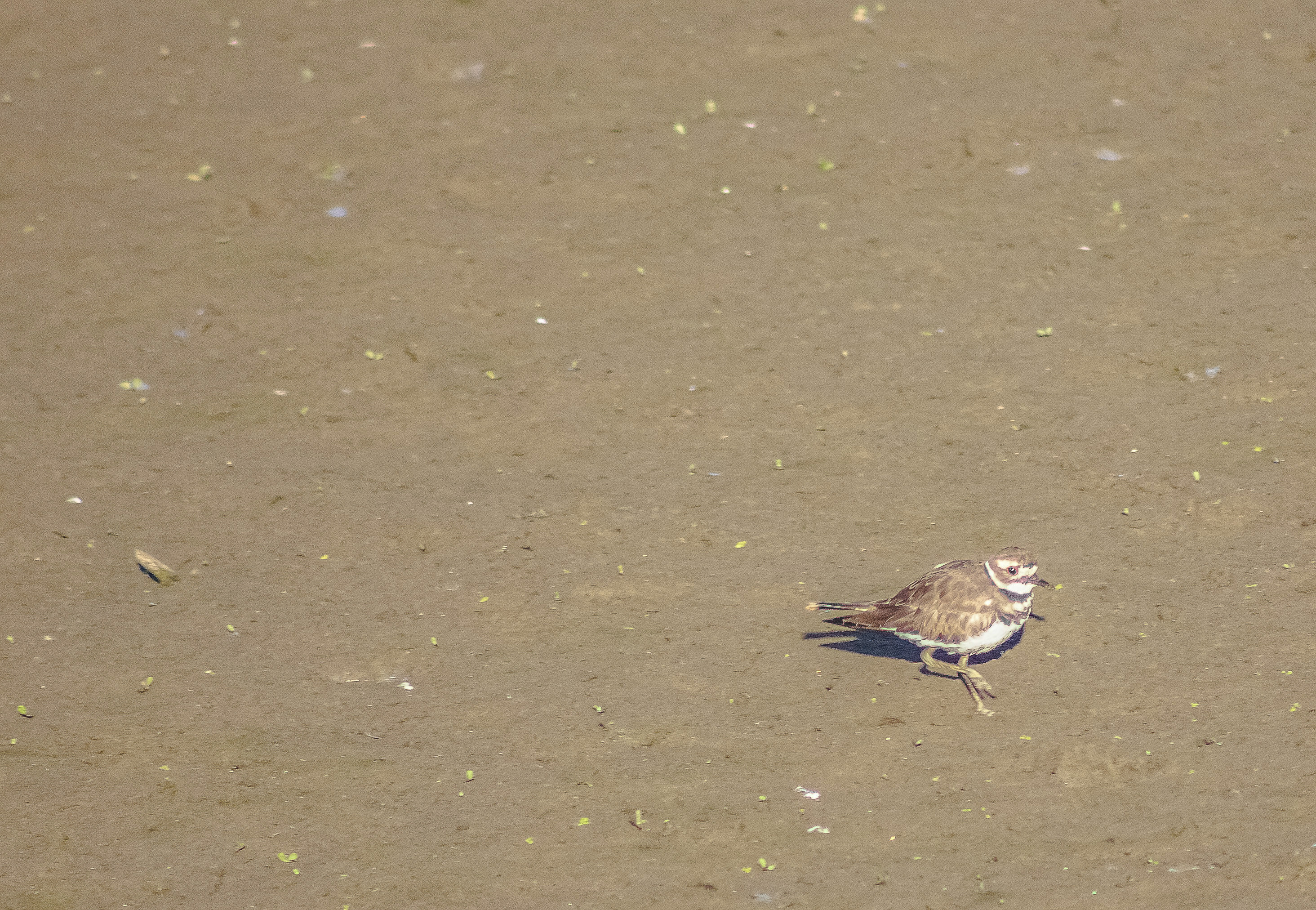

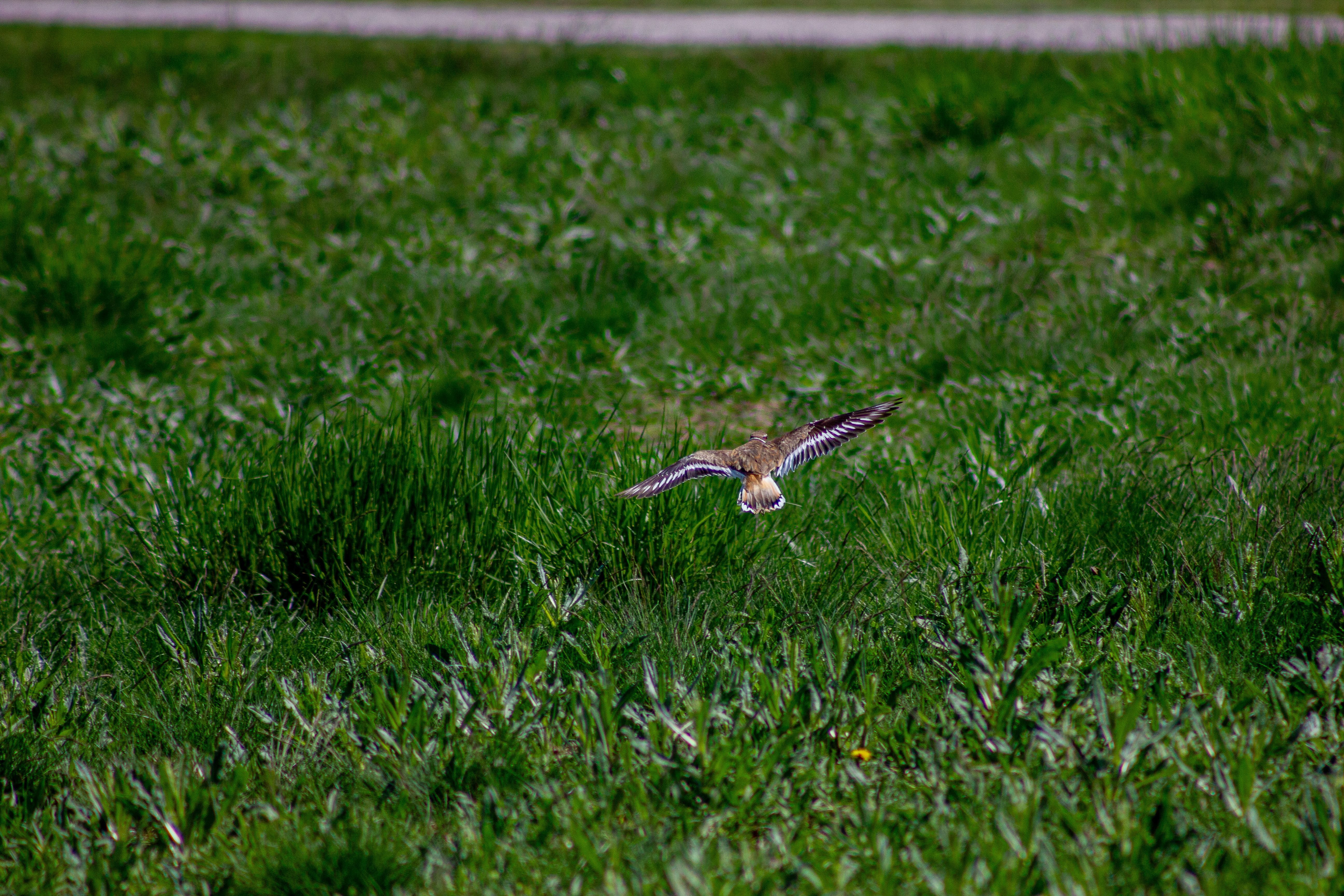
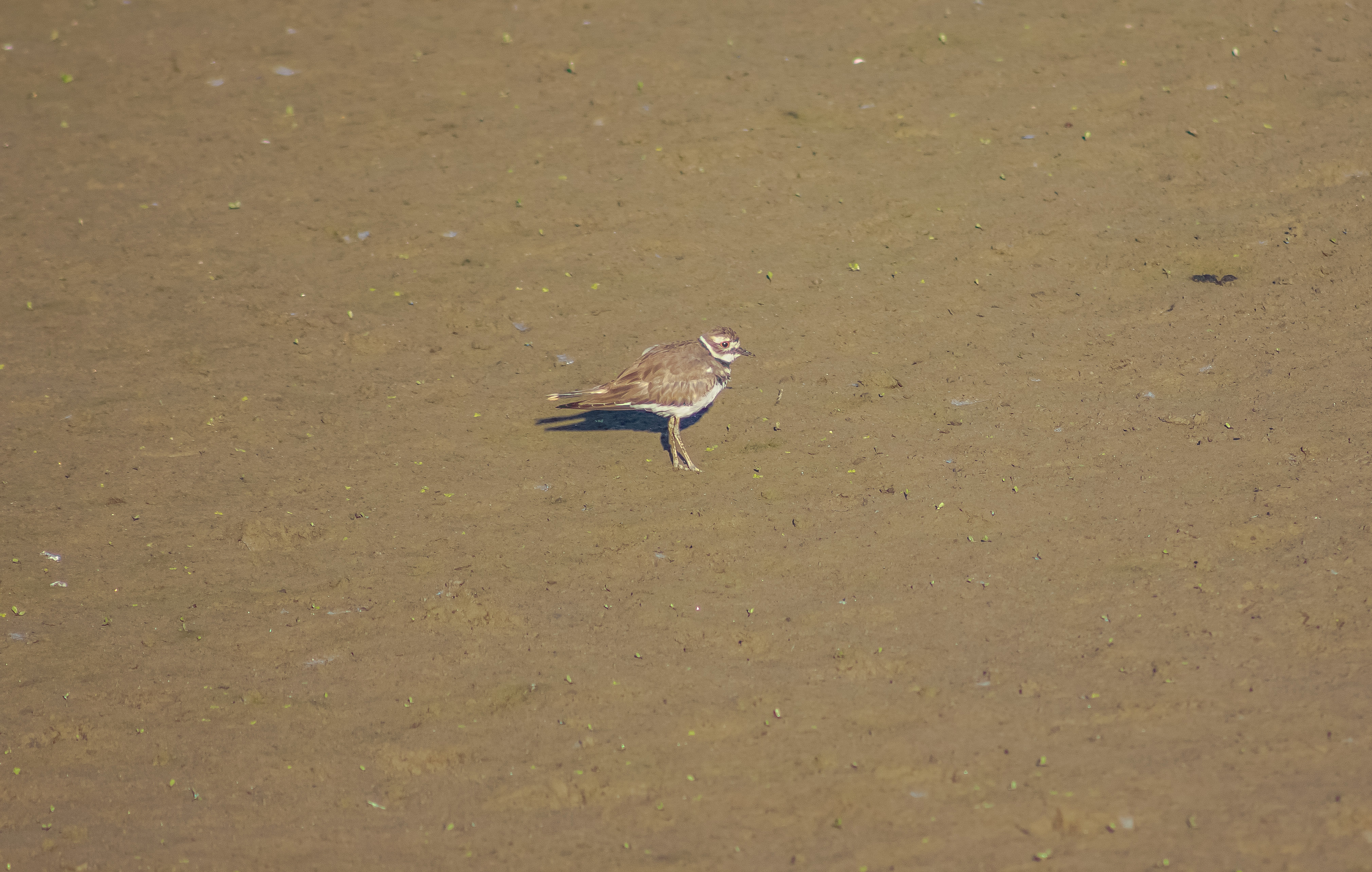
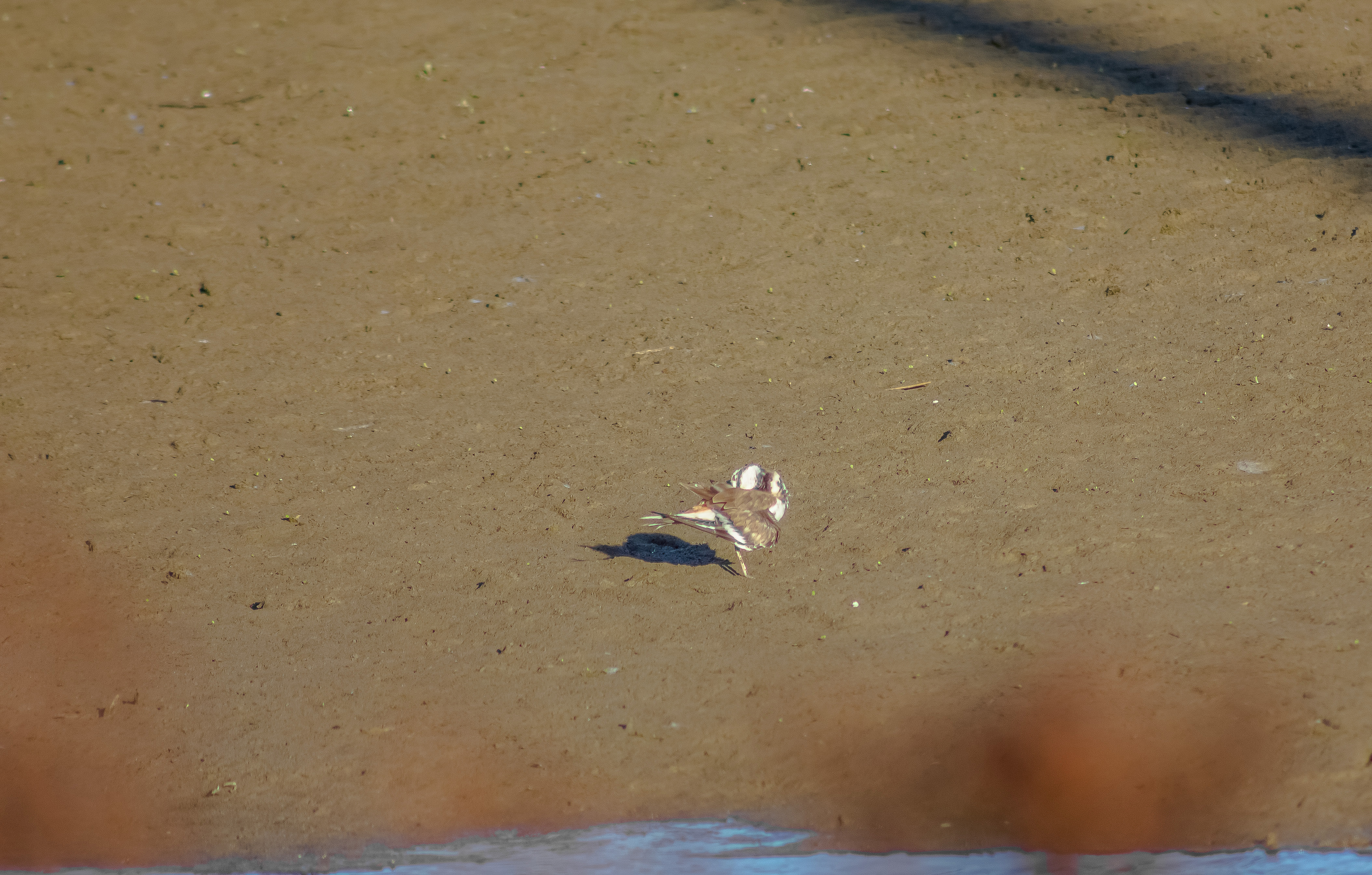
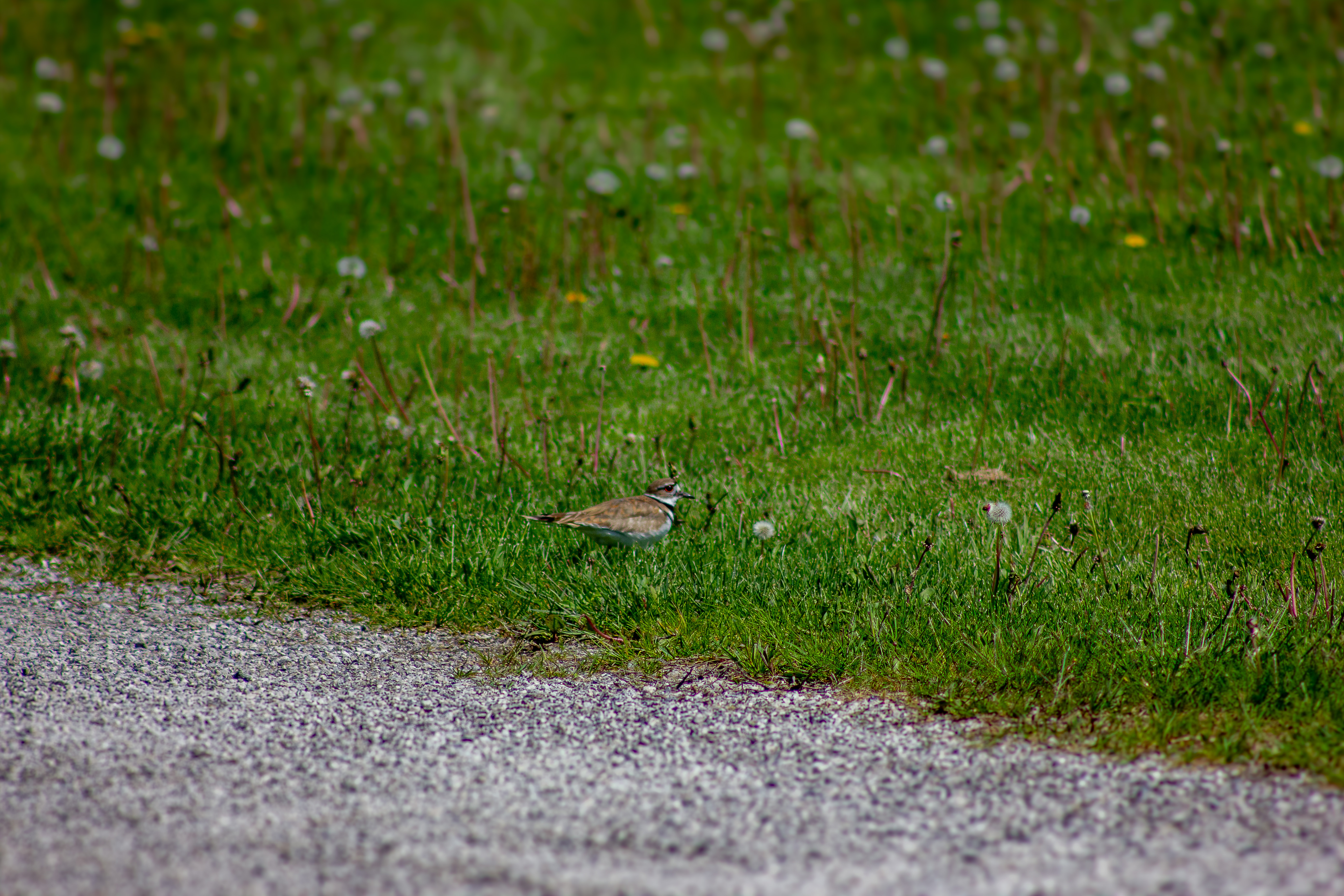
The Killdeer is a medium-sized plover that is common across much of North and Central America. Despite being a shorebird, it is often found far from water, making use of open fields, grasslands, and human-altered habitats. The name “Killdeer” comes from its loud, high-pitched call that sounds like “kill-deer! kill-deer!”
PHYSICAL DESCRIPTION
Size: 8–11 inches (20–28 cm) long.
Wingspan: 18–19 inches (46–48 cm).
Weight: 2.5–4.5 ounces (75–128 g).
Coloration: Brownish-tan upperparts. White underparts. Two distinctive black bands across the chest. Orange-buff rump visible in flight. White face with black and brown markings, large eyes with red orbital ring.
Bill: Short and black.
Legs: Long and slender, usually flesh-colored or light gray
RANGE AND HABITAT
Geographic Range: Breeds across most of the U.S., southern Canada, and Mexico.
Winters in the southern U.S., Mexico, Central America, and northern South America.
Habitats: Open fields, grasslands, golf courses, gravel roads, agricultural lands, and airports. Also found along shorelines and mudflats, though less frequently than other plovers
BEHAVIOR
Vocalizations: Very vocal; main call is a high-pitched “kill-deer” or “dee-dee-dee”. Used in alarm, flight, and territorial displays.
Feeding Behavior: Feeds on the ground by running in quick bursts and pausing to peck. Forages both day and night.
Diet: Insects (beetles, grasshoppers, ants). Worms, snails, spiders, and small crustaceans. Occasionally, seeds or other plant matter
REPRODUCTION
Nesting Season: Typically March–August.
Nest: A shallow scrape in gravel, sand, or dirt. Often lined with pebbles, grass, or debris. Commonly found in disturbed or open areas, including rooftops and gravel driveways.
Eggs: Typically 4 per clutch. Pale with dark speckling, well camouflaged.
Incubation: 24–28 days, both parents share duties.
Chicks: Precocial (able to walk and feed shortly after hatching). Covered in down with camouflaging coloration. Leave the nest within a day of hatching and are tended by both parents
DEFENSIVE BEHAVIORS
One of the Killdeer’s most famous behaviors is its “broken-wing act”:
When predators approach the nest, the adult feigns injury, fluttering along the ground while dragging a wing and calling loudly to lure predators away from the nest. Once the threat is at a safe distance, the bird quickly flies away.
MIGRATION
Northern Populations: Migrate south in winter.
Southern Populations: Tend to be resident year-round.
Migration Timing: Southward: Late summer to early fall.
Northward: Early spring.
CONSERVATION STATUS
IUCN Red List: Least Concern Population Trend: Stable overall, though vulnerable to habitat disruption.
Threats: Habitat loss due to agriculture and urbanization Nest disturbance from human activity (especially in gravel lots and roads). Pesticide use is affecting the availability of insect prey.
CULTURAL AND ECOLOGICAL NOTES
Killdeers are often the first shorebirds seen returning in spring in many parts of North America. Their loud calls and dramatic displays make them particularly noticeable and memorable to birders and casual observers alike.
Their adaptability to human-modified landscapes has helped them remain one of the most common plovers in North America.
INTERESTING FACTS
The Killdeer’s orange rump is flashed in flight as a warning to intruders. Killdeer are known to move their eggs short distances if the nesting site becomes too disturbed.
Despite often living inland, they are still classified as shorebirds due to their evolutionary lineage and morphology.

 Wild Bird Journal
Leave a comment