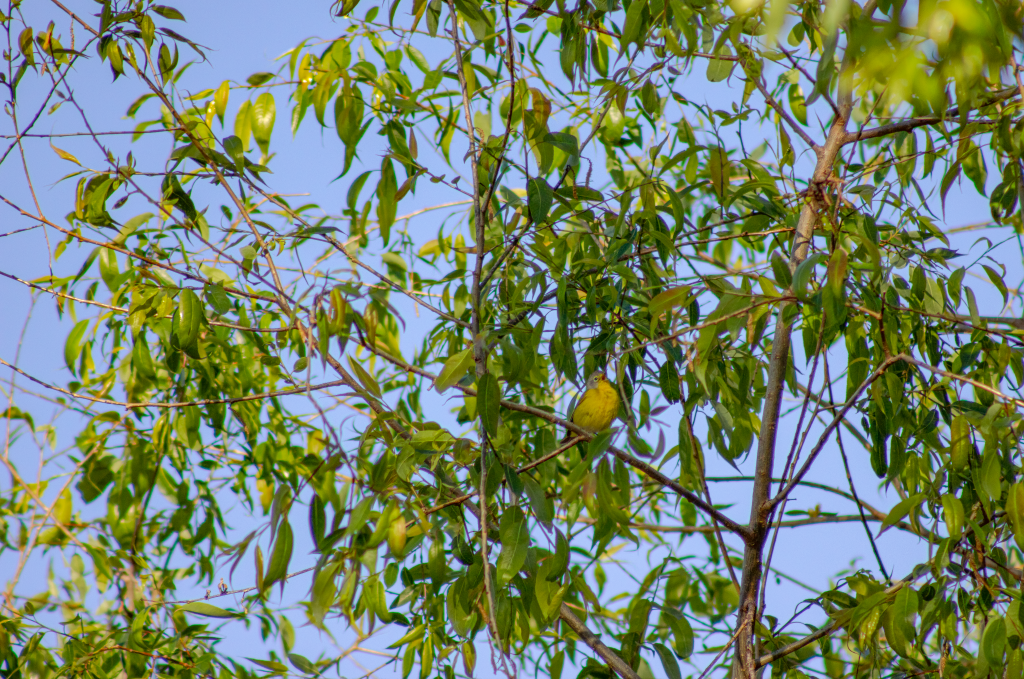


The Kirtland’s Warbler (Setophaga kirtlandii) is a rare and unique songbird that breeds primarily in Michigan, with smaller populations in Wisconsin and Ontario. Known for its striking plumage, specialized habitat requirements, and remarkable conservation success story, the Kirtland’s Warbler is one of North America’s most iconic endangered bird species. Although it has recently been removed from the U.S. Endangered Species List due to recovery efforts, it remains a notable example of conservation success.
Identification and Physical Description
Size: Medium-sized warbler (about 5.5–6 inches in length).
Plumage: Males: Slate-blue back, yellow underparts, bold black streaks along the sides, and a distinctive white eye ring. Females: Duller grayish-blue with the same yellow underside but less vivid streaking. Juveniles: Similar to females but even more muted in coloration.
Song: A loud, clear, and emphatic “chip-chip-che-way-o, chip-chip-che-way-o”—often delivered from the tops of young jack pines.
Breeding Habitat
The Kirtland’s Warbler has one of the most specialized breeding requirements of any North American songbird:
Location: Historically, almost exclusively central Michigan’s Lower Peninsula. Today, conservation programs have established smaller breeding populations in Wisconsin and Ontario.
Habitat Type: Dense, young stands of jack pine (Pinus banksiana) aged 5–20 years. Jack pine cones need fire to open, meaning the warbler’s life cycle is tied to fire ecology. Birds will not nest in older pine forests or open, clear areas.
Nesting: Ground nester, building cup-shaped nests on the sandy soil beneath low branches of jack pine. Clutch size: usually 3–6 eggs.
Migration and Wintering Grounds
Migration Route: Breeds in Michigan/Wisconsin/Ontario, migrates through the southeastern U.S.
Winter Habitat: Spends winters in the Bahamas, where it inhabits scrubby pine forests, coastal thickets, and coppice habitats.
Timing: Arrives in breeding grounds around mid-May. Departs south by late August through early September.
Behavior and Diet
Foraging: Insects dominate diet during breeding season, caterpillars, beetles, and other arthropods. In winter, diet expands to include berries and fruit.
Behavior: Often sings prominently from high perches in jack pine. Forages low to mid-canopy, gleaning insects from leaves and branches.
Conservation Status
Historic Decline: By the mid-20th century, the population fell below 500 individuals. Causes: loss of jack pine habitat (due to fire suppression and logging) and heavy nest parasitism by Brown-headed Cowbirds.
Recovery Efforts: Intensive habitat management: planting jack pine in large blocks and using prescribed fire. Cowbird control programs. Public education and restricted-access breeding areas.
Success: Population rose to over 2,000 breeding pairs by the 2010s. Removed from the U.S. Endangered Species List in 2019, though conservation continues.
Birdwatching the Kirtland’s Warbler
Best Time to See: Late May through early July, during breeding season when males are actively singing. Best Locations: Grayling, Michigan, the heart of the species’ breeding range.
Ogemaw and Oscoda Counties, MI. Expanding breeding territories in Wisconsin and Ontario. Tour Opportunities: Guided tours are offered in Michigan to protect sensitive nesting areas while allowing birders access.
Fun Facts
The Kirtland’s Warbler was one of the first bird species placed on the Endangered Species List in 1967. It depends almost entirely on jack pine ecosystems, making it a textbook example of a habitat specialist.
Its bright song is one of the easiest ways to locate it, since it often sings persistently in its territory. Nicknamed the “bird that fire built” because its survival is tied to fire-regenerated pine forests.


 Wild Bird Journal
Leave a comment