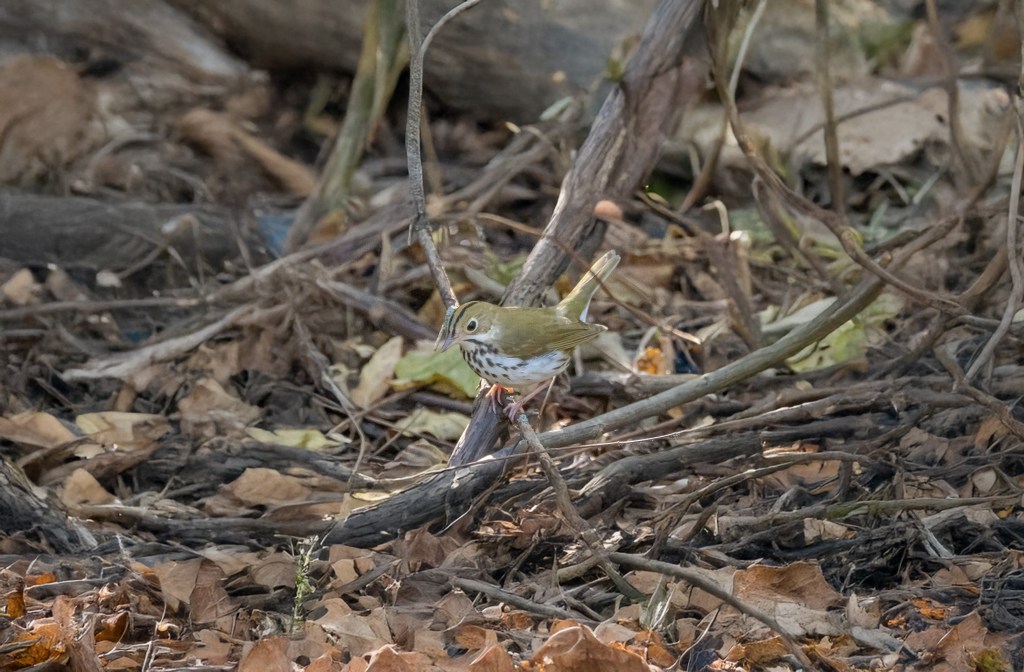
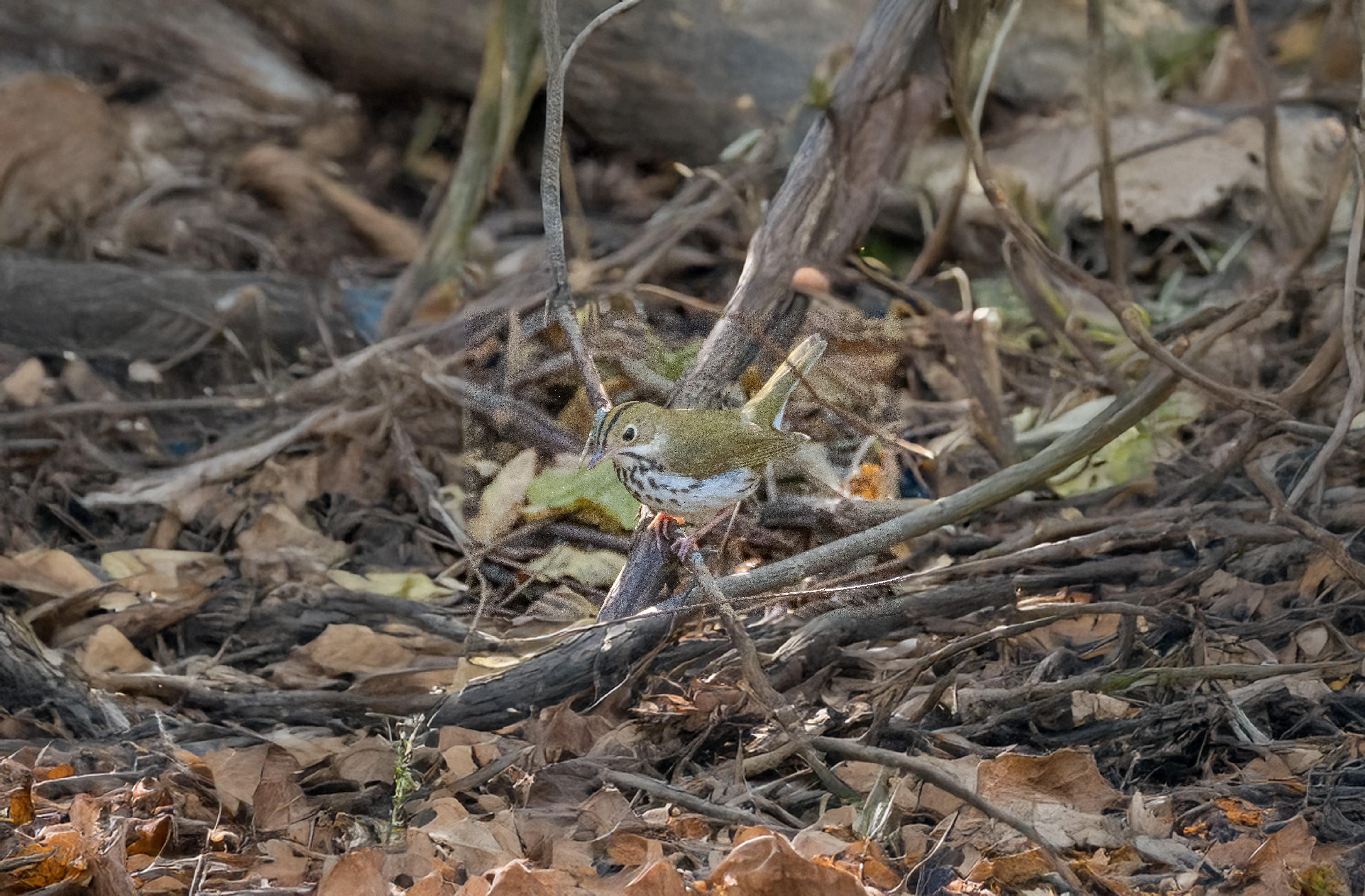
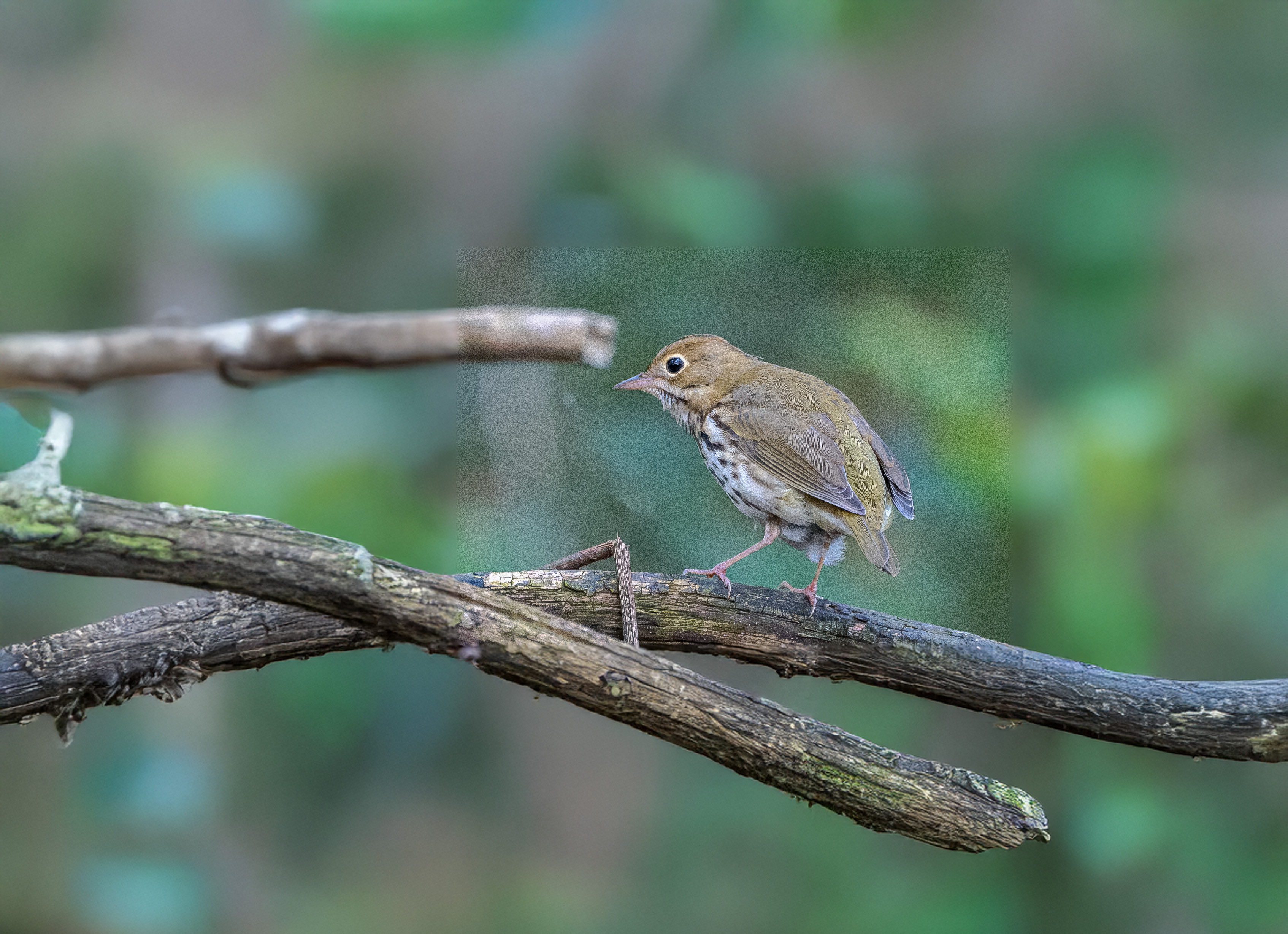

The Ovenbird (Seiurus aurocapilla) is a small, ground-dwelling warbler found throughout North America’s forests. Unlike many of its warbler cousins that prefer treetops, the Ovenbird spends most of its life on the forest floor, where its camouflage and behavior make it a quiet but fascinating resident of the woods.
Identification
Size: About 5–6 inches long, with a wingspan of 8–10 inches.
Appearance: Olive-green back, bold white underparts with dark streaks, and a distinctive orange crown bordered by black stripes.
Voice: Famous for its loud, ringing “teacher! teacher! teacher!” song that can echo through deep woodlands.
Habitat & Range
Breeding Grounds: Mature deciduous and mixed forests across much of the eastern and central U.S. and southern Canada.
Winter Range: Migrates to Central America, the Caribbean, and northern South America.
Preferred Habitat: Undisturbed forest interiors with a rich leaf-litter floor, which provides food and nesting material.
Behavior
Ground-Oriented: Walks instead of hops, foraging for insects, spiders, and other invertebrates in the leaf litter.
Secretive Nature: Often hard to spot despite its loud song, its plumage blends seamlessly into the forest floor.
Nesting: Builds a dome-shaped nest on the ground, covered in leaves and grass, resembling a small outdoor oven (hence the name Ovenbird).
Diet
Primarily insectivorous: beetles, ants, caterpillars, flies, and spiders. Will also consume snails and some plant material like seeds when insects are scarce.
Conservation & Ecology
Population Status: Still common, though declines are noted in areas where forest fragmentation occurs.
Threats: Habitat loss, climate change, and predation of ground nests by raccoons, cats, and other animals.
Ecological Role: Acts as an essential regulator of insect populations and a key indicator of forest health.
Fun Facts
Ovenbirds are among the few warblers that nest directly on the ground, making them especially vulnerable. Their “teacher! teacher!” call can be heard up to 500 feet away in dense woods. They can live up to 9 years in the wild, impressive for a small songbird.
Sea-Friendly & Eco Connection
Much like marine ecosystems, forest ecosystems rely on balance. Protecting mature forests where Ovenbirds thrive mirrors the effort to protect coral reefs and seagrass beds, both of which are vital habitats that sustain biodiversity. Choosing sustainable products, reducing drivers of deforestation, and supporting bird conservation are ways to help Ovenbirds and ocean life thrive together.


 Wild Bird Journal
Leave a comment